






Hrob a pomník obětem pochodu smrti Grave
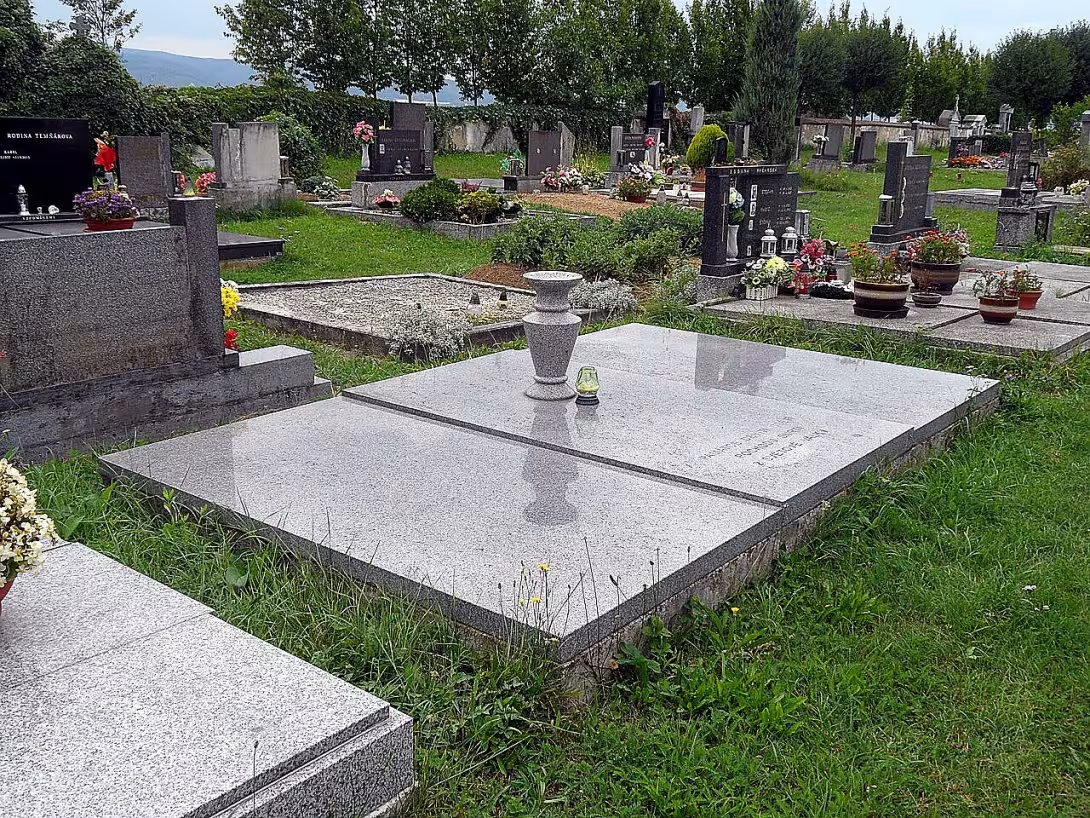
A common grave and memorial to the victims of the death march is located in a cemetery in Bernartice in Jeseník district (Olomouc Region). This cultural monument of the Czech Republic commemorates the tragic events of January 1945, when nine prisoners were shot during an evacuation transport from Auschwitz-Březinka concentration camp.
The historical context of the creation of the monument is linked to the end of World War II. As a result of the advance of the Red Army and the approaching front, the Nazis evacuated concentration camps. Thousands of prisoners had to undergo so-called death marches to the interior, accompanied by mass murders and extreme exhaustion. At the end of January 1945 the route led one of the transports of the northern part of Jesenick, namely the municipality of Bernartice, where nine prisoners were executed with a blow to the back of the head.
The original form of the piety site included a sandstone curb defining the space of approximately three graves. The monument itself was approximately 70 centimetres tall and made of artificial stone. Part of it was a black marble plate with a sign stating that there were nine victims of the Nazi regime murdered during the march of death in 1945.
Later, the grave site went through modifications. The original monument has been replaced, and today three tombstones overlap the space. In the middle of them is carved a inscription commemorating the memory of nine death victims from the Second World War.
The building is officially registered in the central register of war graves under the number CZE-7102-07451. As a cultural monument, the site is under state protection and serves as a piety reminder of the victims of Nazism.
Today, the tomb site at the Bernartic cemetery is open to the public and represents an important memento of war crimes. Visiting this place offers space to reflect tragic history and honor the memory of people whose lives were violently ended at the end of World War II.
Historical milestones
- january 1945
- Execution of nine prisoners during the death march in the village Bernartice.
- 1945-1950
- Establishment of the original pietable site with sandstone curb and monument.
- after 1950
- Adjustment of the grave site and installation of three new grave boards.
- present
- The place is a cultural monument and a war grave.
Architectural development
The original form included sandstone curb and monument made of artificial stone with black marble plate. At a later time, the grave site was modified and set with three new grave records.
Historical events
January 1945: Transport of prisoners by the municipalities Bernartice and subsequent execution of nine persons.
Points of interest
- The monument is located in a cemetery in the village Bernartice in the district of Jeseník. - In January of the year a thousand nine hundred forty-five were shot in an evacuation transport by nine prisoners. - The original monument was approximately 70 centimeters tall and made of artificial stone. - The tomb site is kept in the central records of the war graves under a specific code name. - There are now three tombs overlapping the space, with a sign on the middle that resembles the victims.
Guide
Show guide text
This text was created by artificial intelligence and has not been editorially reviewed. It may contain inaccuracies.
Welcome to this quiet and thoughtful place. You are standing in a cemetery in the village of Bernartice, in the district of Jeseník, and in front of you is the space that serves as a silent witness to tragic events from the past. You may be approached by the calm that exists here, but underneath this calm lies deep sadness and the weight of history that has taken place here, in these circumstances. Look at the grave and the monument right in front of you. It's not just an ordinary place of rest, it's a place of memory that encourages us to stop moving and to think deeply about what humanity can do. Feel the atmosphere of this place, feel its silence which is not empty but full of memories of those who remain here.
To understand why this place is standing right here, we need to go back deep into the past together, into the freezing and dark days of January of the year a thousand nine hundred forty-five. Imagine the moment, the harsh winter, when groups of people moved around the country in incredible fatigue and fear. They were prisoners who were forced to do what's called the death march. They were people who had already lost almost everything, and now faced uncertainty and death every step during their evacuation transport. It was in these loci, in the village Bernartice, that this brutal march was interrupted by violence. Nine men who came from Auschwitz and Březinka concentration camps were shot at this moment. It was not death in battle, but death in a moment of total defenceless, for they were struck by a blow to the back of the head. This event, this violent end of nine lives, is what gives this place its relentless and sad meaning.
Now pay attention to what you see right in front of you, the very form of this monument and the grave site. Notice how this place is modified today. You see three tombs that now cover this common resting place. These plates form the present appearance of the monument you are now observing. But it is important to know that this view is not what it looked like in the early years after the tragedy. If we tried to see through time, we would find that the original monument had a different face. It was made of artificial stone and had its own, specific form. It was much smaller than it might seem today because its height was approximately 70 centimeters. After a year of a thousand and nine hundred and fifty, there was a significant change when the original form of the place, including sandstone curb and original monument, was modified and replaced by today's solution with these three boards. Although materials and shapes were changing, the purpose remained the same - to preserve the memory of those who fell here.
Although the names of the nine prisoners in our view today are not mentioned, and their specific fates remain in the silence of history, we must try to bring them closer in spirit. Each of them was one of the nine who were destroyed in January of the year one thousand nine hundred forty-five. It was the people of Auschwitz and Březinka, places that are linked to the greatest suffering in our history. Imagine the invisible weight of their loss. Even if we don't know their names, their presence here is felt through this monument. They're people who haven't had a chance to talk about their fear, their fatigue or their hopes, and their only voice is now this place in Bernartics. This monument serves as their common voice, which reminds us that every lost soul is a tragedy, even if it is not spoken of every day in broad history.
It's fascinating how this place changed over time and how it became part of our common consciousness. It is interesting to see how the original, more modest pietable place with sandstone curb has become a place that is now officially held in central records as a cultural monument and as a war grave. This change of perception, from simple reminders to official preservation of the monument, shows how much we value these traces of the past. Although the monument has changed from artificial stone to contemporary plates, its significance has not diminished, but it has deepened because it is now protected as an important part of our heritage. It's like history is trying to make sure this moment never gets out of our minds.
Thank you for stopping by and paying attention to this place. We hope that this brief insight into history has helped you better understand the weight and importance of this grave site in Bernartice. Please keep here the peace and respect that belongs to this war grave and the memory of the nine victims. After searching this place, you can continue to explore the surroundings and other secrets that are hidden in this area. Goodbye.
Tips for visitors
The most appropriate time for inclusion is the spring or autumn season, when the other of the larynx calmly and appropriately honored by the memory of the victims without the Russian influence of summer heat or winter frost.
The best way to get to the village Bernartice in Jesenik district is by car. The parking lot may be in the close proximity of the master's hump, where he remembers himself. By public transport you can reach the village, please search the current traffic search.
It is a pietable spot on the ridge, we recommend choosing suitable and respectful siege. You take with you a small flower or a scrotum, if you want to honor the mother of the deviti, I'm taking from the concentration tabor.
For the purpose of a memory snapshot is an ideal morning light that will illuminate the area of the larynx. Take a photo with respect to the place and the other visitors.
The municipality Bernartice is located in Olomouck county. For children, it is appropriate to choose a route as an educational procession, for all of them you explain historically to this place and the data from January of the time devet set ctyricet pet.
Businesses nearby
Do you run a restaurant, accommodation, shop, museum, rental, wellness or other visitor service near this monument? Show yourself directly to the people heading to it — this is how they will see you in the app and on the web:
Nearby
Obec Bernartice v okrese Jeseník, Olomoucký kraj.
Accommodation nearby
Themed route
1. Municipality of Bernartice, type: village. Walk this village will lead you to the main monument. 2. Hrob a pomník obětem pochodu smrti (monument), type: memorial. This place serves to honor the victims' memory and allows for quiet brooding. 3. Around the monument, type: outdoor space. Here you can explore the place in peace and better perceive its meaning.
Seasonal recommendations
In the spring, the monument surrounds the awakening nature and fresh greenery, which creates a gentle contrast to the seriousness of this place. Light is soft in this period and pleasant for quiet contemplation. We recommend to wear more layers of clothing because the weather is variable, and visit the memory in the morning before any spring rains begin.
The summer season brings sharp sun and dense leaves of surrounding trees, which provides a welcome shadow. The atmosphere is clear and intense. Due to the high season and high temperatures it is best to arrive very early in the morning to avoid the biggest crowds. Remember light clothes, hat and plenty of drinking water.
Autumn is the most atmospheric season due to colorful leaves and frequent fog, which naturally underlines the sad importance of the monument. Nature slowly falls asleep in golden and brown tones, which deepens the feeling of melancholy. Suitable is waterproof shoes and a visit in the afternoon when the sun casts long shadows.
In winter, there is silence and absolute calm at the grave, or white snow, which highlights the shape of the monument and its purity. The environment is very strenuous and respectful. It is necessary to have warm winter clothes and count on a significantly shorter day, therefore it is advisable to plan the journey to the morning hours.
Visualizations and artistic views


The visualisations are generated by artificial intelligence and serve as inspiration.
Photos from the area
Real photos taken near the monument


Zdroj a licence jsou uvedeny u každého snímku.
Tips from visitors
No tips yet. Be the first!
Log in and add your tip.
Sources and literature
Photos: Stribrohorak / CC BY-SA 3.0 — Wikimedia Commons. The author and licence also appear when you hover over the image.
Faktickým podkladem tohoto textu byl článek na Wikipedii, jehož autory jsou přispěvatelé Wikipedie. Článek je dostupný pod licencí CC BY-SA 4.0.
Location on the map
Příběhy a pověsti
Legendy, pověsti a příběhy spjaté s touto památkou
Fotografie návštěvníků
Zatím žádné fotografie. Buďte první, kdo přidá fotografii z návštěvy!
Log in a přidejte svou fotografii nebo hodnoťte.
Za ověřenou návštěvu v aplikaci získáte víc bodů — poznáme podle GPS, že jste na místě.
Reviews and comments