



Hromadný hrob padlých vojáků v bitvě u Chlumce roku 1813 War memorial
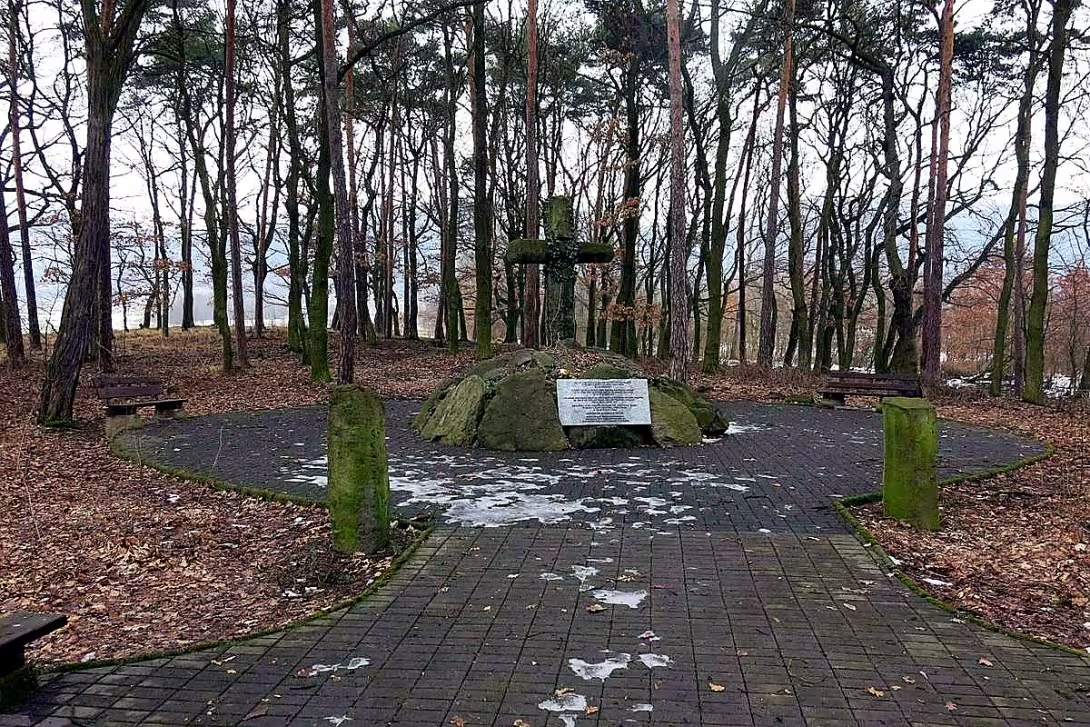
The mass grave of soldiers from the Battle of Chlumce and Prestana is the largest war grave in the Czech Republic, located in a landscape near the village of Prestanov in Ústí nad Labem district. This monument was founded in 1835 by Count Joseph Westphalen of Fürstenberg and serves as a piety place for approximately 10,000 fallen soldiers who were victims of the Battle of Chlumce and Sprestano in August 1813. The area is protected as a cultural monument and is part of the landscape monument zone.
The Battle of Chlumce and Prestana took place on 29 and 30 August 1813, when the Allied armies (Russia, Prussia and Austria) were attacked by the first French army corps under the leadership of General Dominik Vandamm following the defeat in the Battle of Dresden. The French tried to infiltrate the Czech Republic, but were stopped by the Russian Choir of General Alexander I. Ostermann-Tolstoy at Prestano. The Russian guards have maintained their positions throughout the first day of battle, allowing allied reinforcements to arrive. The next day, the situation turned to the benefit of the allies when the Prussian Corps of General Friedrich Kleist unexpectedly discovered in the Kclířov Pass, leading to the siege and subsequent defeat of the French troops. The total losses on both sides reached around 20,000 fallen and wounded.
After the battle, fallen soldiers were buried right where they died. Due to the need for a rapid burial to prevent disease spread, graves were mostly shallow. Over time, however, the remains came back to the surface, which was considered undignified by Count Josef Klement of Westphalen, the owner of the Bohemian estate. In 1835 he set aside a forest plot north of the future monument and had his subjects systematically searched the surrounding forests and fields. The skeletal remains found from shallow graves were exhumed, taken into common space in the forest near Přestán and stored in a mass grave. According to period estimates, the last resting place was found by approximately 10,000 soldiers of all nationalities.
The battlefield has become a unique landscape of military architecture and sculpture. On the scene of the battle were built monumental monuments celebrating individual armies and commanders, such as the Prussian monument of 1817, an Austrian monument dedicated to General Colloredo-Mansfeld (1825) and a Russian monument with a statue of the goddess Niké (1835-1837). In later years, the French memorial (1911) and the Jubilee memorial (1913) were added.
The area of the mass grave is conceived as a landscape unit connecting small architecture with natural elements. Access to the grave itself is provided by the road from the main road I / 13, which was modified by the slag surface in 1933 and later paved. This path is supplemented by other accompanying objects such as stone pylon from the original construction of the Russian monument and wooden winning gate, which was installed with financial support of the Krupské Orthodox village.
The dominant feature of the complex is a stone mound of a mass grave made up of an irregular pile of massive, unworked basalt boulders. At the top of the mothla is a erected Latin cross made of stone columns and commemorative plate with German inscription: "Hier ruhen die in den nahen Wäldern in neuer Zeit noch aufgefundenen Schädel und Gebeine von den an den Schlachttagen des Jahres 1813 Gebliebenen. Sie ruhen in Frieden. 1835" (Czech: "Here they rest in the surrounding forests recently found remains of the deceased from the war days of 1813. They rest in peace.").
Today, the mass grave of the soldiers from the Battle of Chlumce and Prestana is an important cultural monument that resembles the bloody clashes of 1813. The place serves as a monument and is a dignified place to remember the victims of war. Visiting this grave offers an opportunity to reflect on the history and importance of peace as well as on the appreciation of the architectural and cultural heritage of this area.
Historical milestones
- 1813
- The Battle of Chlumce and Prestana
- 1835
- The establishment of a mass grave by Count Joseph Westphalen
- 1836
- Ceremonial ordination of the place
Architectural development
In 1835 a mound was designed from massive unworked basalt stones, on which was placed a stone cross and a memorial plate. Later, a sandstone pylon was placed in the area, which originally formed an internal rigid construction of the Russian monument.
Historical events
The Battle of Chlumce and Prestana (29-30 August 1813), Ceremonial ordination of the grave (29 August 1836)
Owners
Count Josef Westphalen z Fürstenbergu (founder in 1835)
Points of interest
- The mass grave of soldiers from the Battle of Chlumce and Prestana is the largest war grave in the Czech Republic. - This monument was founded in 1835 by Count Joseph Westphalen of Fürstenberg and serves as a piety place for approximately 10,000 fallen soldiers who were victims of the Battle of Chlumce and Sprestano in August 1813. - After the battle, fallen soldiers were buried right where they died. Due to the need for a rapid burial to prevent disease spread, graves were mostly shallow. Over time, the remains came back to the surface, which the Count Joseph Klement of Westphalen thought was undignified. In 1835 he set aside a forest plot north of the future monument and had his subjects systematically searched the surrounding forests and fields. - The battlefield has become a unique landscape of military architecture and sculpture. On the scene of the battle were built monumental monuments celebrating individual armies and commanders, such as the Prussian monument of 1817, an Austrian monument dedicated to General Colloredo-Mansfeld (1825) and a Russian monument with a statue of the goddess Niké (1835-1837).
Guide
Show guide text
This text was created by artificial intelligence and has not been editorially reviewed. It may contain inaccuracies.
Welcome to this important place of history and memory where you stand before the mass grave of fallen soldiers from the Battle of Chlumce in 1813. It's a place full of seriousness and memories of those who fought and sacrificed their lives in the days of these historic events.
This grave was founded in 1835 by Count Josefov Westphalen of Fürstenberg, who wished to provide a decent burial ground for thousands of fallen soldiers. The Battle of Chlumce and Prestano, which took place in 1813 during the Napoleon Wars, was one of the most important confrontations of that time in the territory of the Czech Republic today. In the battle, the forces of Napoleon I. and the alliance against him led among others by Alexander I. Ostermann Tolst and Friedrich Kleist.
Look up at the mound structure from the unworked basalt stones that form the core of this memorable place. Notice the basalt cross and sandstone pylon that gives this grave its significant architecture. These elements express respect and respect for those who sleep here.
The key figures associated with this site are, of course, Count Josef Westphalen z Fürstenbergu, who was the initiator of the creation of this grave. Also important characters such as Napoleon I., Dominik Vandamme and Alexander I. Ostermann-Tolsta, who played decisive roles in the strategic maneuvers of this battle.
The interesting thing about this place is that it is the largest war grave in the Czech Republic. This monument serves as a piety for approximately 10,000 fallen soldiers from different sides who have been victims of the Battle of Chlumce and Prestana. It is a place that reminds us of the importance of remembering the history and education of future generations about the consequences of wars.
So let's move closer to the mound to realize its size and depth. Now pay attention to the sandstone pylon that bears the names of fallen soldiers and reminds us of the importance of remembering these historical events.
I hope this grave has inspired you to understand the history of this place. Let your journey be enriched by further exploration and insight into the rich past. Thank you for your attention and I wish you the rest of the day.
Tips for visitors
The best time to visit a mass grave is in the spring or autumn season when the weather is more pleasant and vegetation offers a beautiful background. This time of year also means fewer visitors compared to sunny summer days.
When planning your visit, bring shoes suitable for walking on more permanent soil, protective sunglasses and plenty of drinking water. If you intend to spend more time walking around, we also recommend a light meal.
For photography is the best opportunity in the early morning or evening when light is softer and monuments with special lighting. Photograph also different perspectives using different monuments around for more interesting compositions.
In the vicinity of the monument you can visit other historical monuments such as Russian, Prussian and Austrian monuments. These places are suitable for families with children who are interested in history and culture. In addition, short walks or educational programmes can be organised.
Frequently asked questions
Can the monument be visited?
This is a structure in a public space that can usually be seen from outside free of charge. We have not verified that this particular one is freely accessible.
Why is the monument protected?
It is listed in the Central List of Cultural Monuments of the Czech Republic as a cultural monument (register no. 1000155108).
Businesses nearby
Do you run a restaurant, accommodation, shop, museum, rental, wellness or other visitor service near this monument? Show yourself directly to the people heading to it — this is how they will see you in the app and on the web:
Nearby
V bezprostředním okolí se nachází ruský pomník, pruský pomník z roku 1817, rakouský pomník z roku 1825, francouzský pomník z roku 1911 a Jubilejní pomník z roku 1913.
Accommodation nearby
Trips and activities nearby
Guided tours, tickets and activities nearby from GetYourGuide
Affiliate link: if you buy from the partner, we may receive a commission. The price for you does not change.
Search tours and activities →Themed route
Thematic cruise route: Memorial of the Battle of Chlumce 1813
1.Hromadný hrob padlých vojáků v bitvě u Chlumce roku 1813 (memorial) Type: Historical monument Why is it worth a visit: This monument is the main destination of our route and serves as a reminder of the victims of the Battle of Chlumce, where the key confrontation of the Napoleon Wars took place in 1813. It's a place for meditation over the consequences of war and the historical value of the battlefield.
2. Russian memorial Type: Historical monument Why it is worth a visit: the Russian memorial is approximately 100 metres from the main grave and symbolizes Russia's involvement in an alliance against Napoleon. It is an important place to understand international cooperation in this historic event.
3. Prussian memorial from 1817 Type: Historical monument Why is it worth a visit: This monument, located about 150 metres from the Russian memorial, was built as a recognition of Prussian soldiers who fought in battle. It is a reminder of Prussian strength and strategy during this key confrontation.
4. Austrian memorial from 1825 Type: Historical monument Why is it worth a visit: The Austrian monument is located about 200 metres from Prussia and reminds of the participation of Austrian forces in the Battle of Chlumce. It's a place where you can remember the role of Austria in the alliance against Napoleon.
5. French memorial from 1911 Type: Historical monument Why is it worth a visit: This monument is approximately 250 metres from Austria and was built to honor the French soldiers who took part in the battle. It is a place to reflect the complexity of historical relations between France and its opponents.
6. Jubilee memorial from 1913 Type: Historical monument Why is it worth a visit: Located about 300 metres from the French, this monument was built to celebrate the 100-year anniversary of the battle. It's a place for understanding permanent memory and recognition of historical events.
This route offers an interesting view of history and memories associated with the battle at Chlumka, where various nations met in the fight against Napoleon's expansion.
Seasonal recommendations
Spring: In spring, the mass grave of fallen soldiers in the Battle of Chlumce in 1813 is a shining place of blooming nature. Flowers and trees begin to fill their colors, giving the monument a lively atmosphere of renewal. Since there may be more visitors at this time due to pleasant weather, we recommend visiting a monument in the early morning or later in the day to avoid large crowds. The good idea is to wear clothes suitable for mild temperature and bring protective sunglasses.
Summer: In summer the monument offers excellent conditions for walking when the weather is the hottest. The sun shines on the monument and surrounding green meadows become an ideal place to relax in nature. Large groups of tourists often appear in the main summer season, therefore it is advisable to visit the memory of the earlier in the day or choose a milder day of the week. Remember the sun protection - the umbrella and umbrella are good ideas as well as sufficient amount of drinking.
Autumn: In autumn, a mass grave in Chlumuc's romantic atmosphere takes place. The leaves of the trees turn golden and red, which gives the surroundings magic. The weather is often mild with bright days that are ideal for photos. At this time, fewer visitors are expected than in summer, which means a more comfortable walk. We recommend wearing layered clothes and perhaps an umbrella, because autumn can bring sudden precipitation.
Winter: In winter the memory of calm and quiet comes. The snow cover can provide a beautiful view, especially in the early morning or evening. It is important to have warm clothes, including shirts, blankets and protective tissues. In addition, it is advisable to wear solid shoes for comfort when walking on snow or ice.
Visualizations and artistic views

The visualisations are generated by artificial intelligence and serve as inspiration.
Photos from the area
Real photos taken near the monument

Zdroj a licence jsou uvedeny u každého snímku.
Tips from visitors
No tips yet. Be the first!
Log in and add your tip.
Sources and literature
Photos: Barocco / CC0 — Wikimedia Commons. The author and licence also appear when you hover over the image.
Faktickým podkladem tohoto textu byl článek na Wikipedii, jehož autory jsou přispěvatelé Wikipedie. Článek je dostupný pod licencí CC BY-SA 4.0.
Location on the map

Příběhy a pověsti
Legendy, pověsti a příběhy spjaté s touto památkou

Fotografie návštěvníků
Zatím žádné fotografie. Buďte první, kdo přidá fotografii z návštěvy!
Log in a přidejte svou fotografii nebo hodnoťte.
Za ověřenou návštěvu v aplikaci získáte víc bodů — poznáme podle GPS, že jste na místě.
Reviews and comments