



Hrušov Fortress
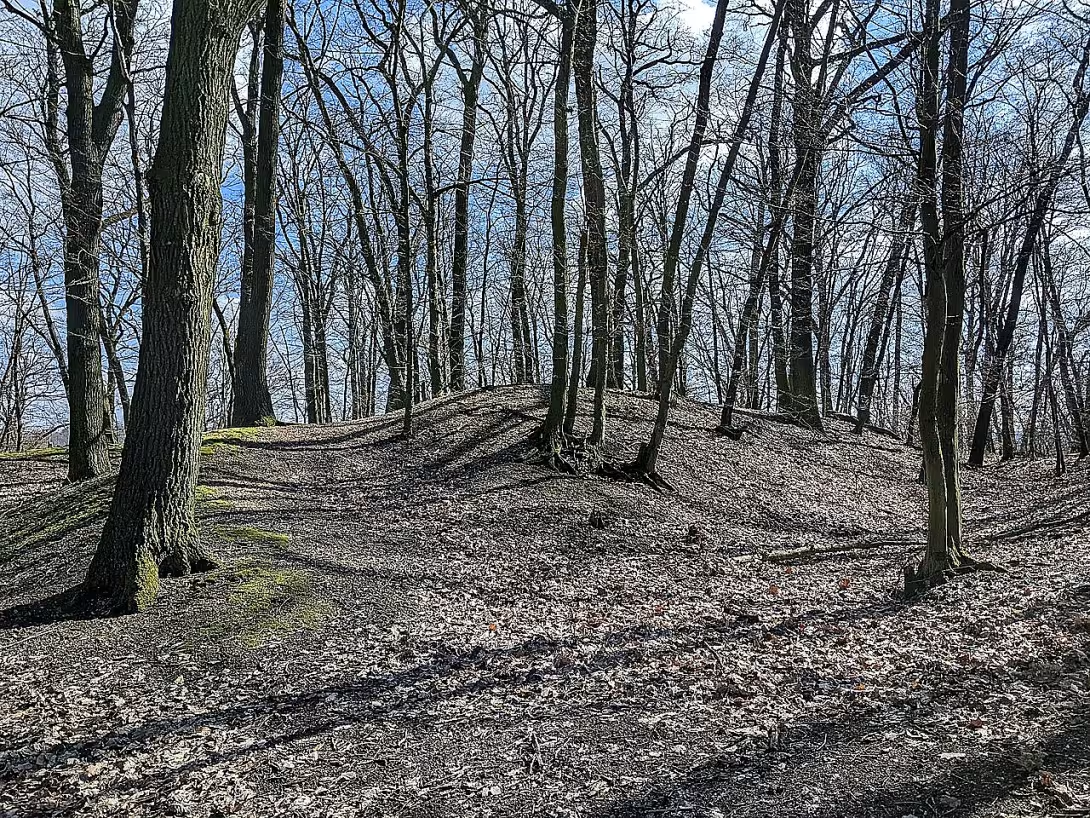
Hrušov, also known as nad Petřevka, is a extinct medieval ruin located south of Mladá Byslav in the Central Bohemian Region. This monument lies on the edge of the mouth of the Jizera and Čertovka rivers and represents the remains of two historical buildings connected with this site.
Two chateau objects are connected to Hrušov. The first, located in the area of nad Čertuvka, was probably established during the thirteenth century. We have little concrete information about his oldest history. The second object was a tower type and stood right in the village. According to historian Augustus Sedláček, this residential tower was built around 1501, but its architecture suggests that it may have come from the pre-Hussite period.
The Nánad Čertívka Chateau is separated from the neighbouring platform by a pair of slightly broken moats. The outer moat reaches a depth of one to three metres, the wall is located on its inner side. Behind this valley is a foothold with a width of approximately 15 metres, which ends with a second wall. The core of the ruins itself is separated from the foothills by a second ditch about two metres deep. A smaller modified area is found on the opousse, approximately six meters below the core. There are currently no traces of the original installation at the fortress.
In 1346, the fort of Nad Petřevka was, according to the information available, owned by the brothers Bohunk and Řehník of Hrušova. These men were probably one of the Vodradsky family of Hrušova. Later the village was owned by another family, Hrušov from Hrušova, and it is possible that both families shared the site. The tower fort in the village had a different fate because it was demolished in 1959.
This monument is characterized by its defensive system of moats and waves, which was typical of the buildings at the time. The history of the site is closely linked to the formation of power centers at a time when Europe was influenced, for example, by Hussite wars.
Today, the Třečovka Chateau is protected as a cultural monument. Although there are no fragments left of the buildings, preserved defense elements allow you to understand the original layout of the object. This historical site represents an interesting goal for interested people in medieval fortification and regional history.
Then and now
Drag the slider to compare how the landmark may have looked when it was built with the view today.
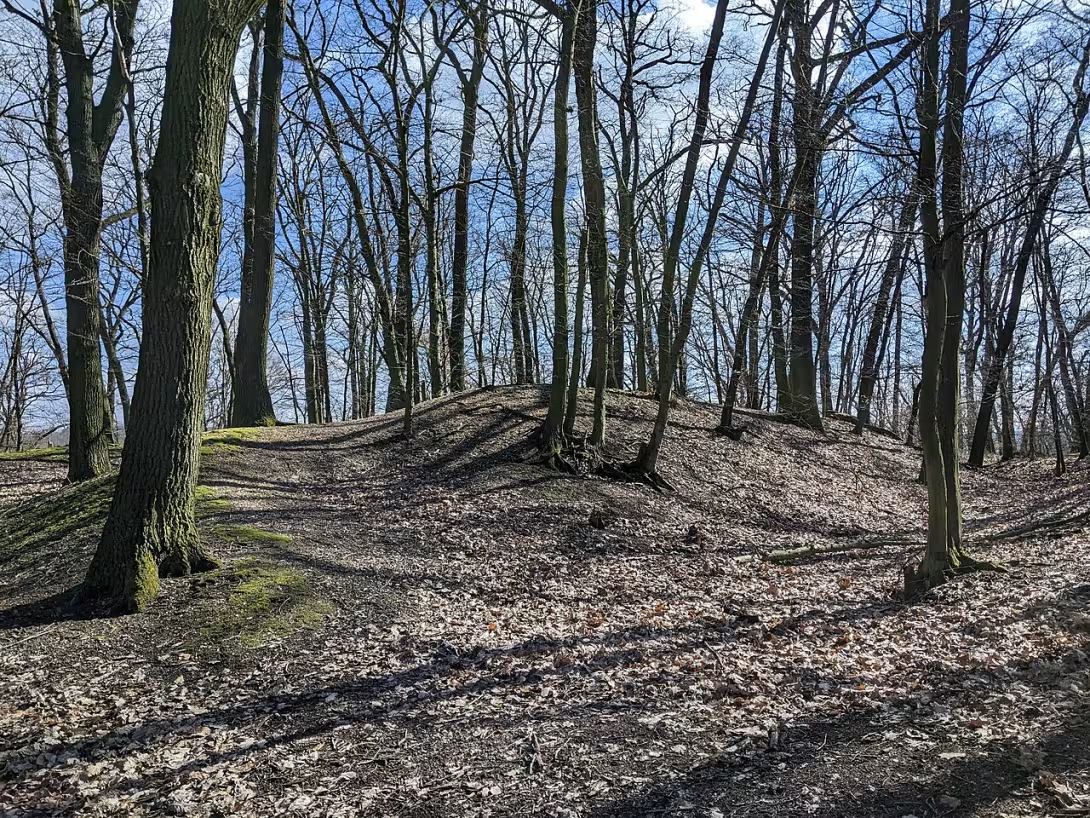
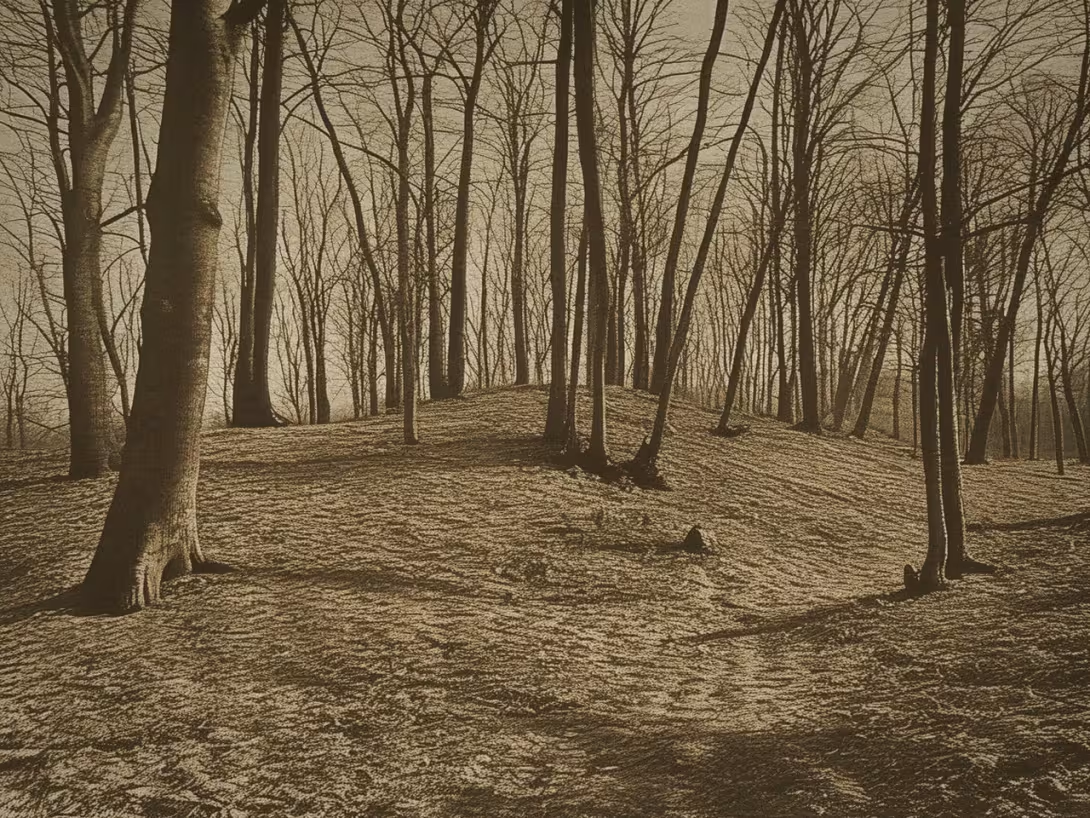
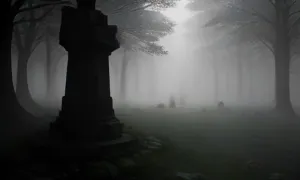
The historical appearance on the left is an AI-generated visualisation and serves as inspiration only.
Historical milestones
- 1501
- According to Auguste Sedláčka, the residential tower in the village was built around 1501.
Architectural development
The fort is protected by a double system of moats and waves, which was typical of the defensive structures of that time. The inner stronghold has no trace of the original buildings.
Historical events
- 1346
- The report that the fort belonged to the brothers Bohunk and the Greek of Hrušov.
- The Třečkovka fortress was built probably during the 13th century.
Owners
In history, the fortress belonged to the brothers Bohunk and the Řehník of Hrušova, who were probably part of the House of Vodredski of Hrušova. Later comes the Hrušov family from Hrušova.
Points of interest
- Hrušov, also known as nad Čertívka, is a extinct medieval ruin located south of Mladá Byslav in Central Bohemia. - The Trench Hound has a defensive system of moats and waves, which was typical of the buildings at the time. - In 1346, the fortress was owned by the brothers Bohunk and Řehnik of Hrušova, who probably belonged to the family Vodredski of Hrušova. - The second chateau building was built around 1501, but its architecture indicates the pre-Hussite period. - The Třeštěště Nánad Čertívku is protected as a cultural monument and represents an interesting goal for interested people in medieval fortification and regional history.
Guide
Show guide text
This text was created by artificial intelligence and has not been editorially reviewed. It may contain inaccuracies.
Welcome to the place where the power of water meets and the silence of history. You're standing right in front of a ruin that represents itself as a silent witness to ancient times. Before you go any further, stop for a moment and feel the atmosphere. Look at what's right in front of you and around you. You're in a high ground, a high ground that strategically controls the environment. If you look towards the water, you'll see a fascinating phenomenon. It is here that two currents are joined - the river Jizera and the smaller Certovka. This watercourse fusion wasn't random. It is this location, this place where the earth ascends above the surface of rivers, that gave rise to the fortress Hrušov, which is also called above the Wormwood. Feel the continuous movement of water and imagine how important this place played for anyone who wanted to control this region.
Let us now move further into the past to understand why this fortress was built here. Although the exact year of its creation remains in the fog of history, we know that this fortress has been part of the region's history since the 13th century. Imagine that time when power was built by controlling strategic points in the landscape. Hrušov was not just an ordinary residence, it was a checkpoint. Even if you see only remains today, in the heart of the medieval man, this place represented security and stability. Historical records only give us fragments, like the year 15. According to the findings of August Sedláček, a residential tower was built in the village at the time. Even though you no longer see the tower in all your okazałości, this information helps us to understand that the site remained inhabited and functional long after the original medieval elements began to change their form.
Now pay attention to what you see right below your feet or in the surrounding terrain. Even though the building was gone and there was only a fortress left, the natural face of this place still tells the story of how this fortress defended itself. Notice the landscapes you can see here. This fortress was equipped with a defense system which was absolutely typical of the buildings at the time. It's a system of ditches and ditches. Although it is time and nature has softened many of them, you can still recognize the intention of the then builders. These moats and moats were not only an aesthetic element, but a key part of protection. They were barriers that had enemies to stop before they could even reach the walls themselves. Look at these inequalities in the field and try to imagine how hard it would be for someone to overcome these obstacles at a time when there were no modern machines, but only human strength and basic tools.
However, in order to understand the true meaning of this place, we need to look at the people who once lived here and decide the fate of the area. History has left us with names that still sound in these areas. In 13-46, this fortress was owned by two brothers, Bohunka and Řehnik of Hrušova. Imagine them as the monarchs of this small but strategically important territory. Bohunek and Rahnik were not just the owners of the building, they were the people who had to ensure the safety of their family, their subjects and keep control of the river connection. Now, when you look at these remnants, remember that for them it was a household, instead of their power, and instead of their everyday life. These names, Bohunek and Rahník, are a bridge that connects us to an authentic past that was not just a dry record in chronicles, but a living story of flesh and blood.
But here is one of the greatest mysteries of this place. Even though we know about the existence of the tower of the year fifteen-one and we know about the brothers of the fourteenth century, we still don't know the exact moment when the first stone of this fortress was laid in the ground. When exactly did this fortress start being built? Why are the first builders here on this island? This uncertainty in the data gives the place special mysticism. Hrušov, or as people called it over Worm, stands as a monument to an unknown beginning. It is a place that tells us that history is not always linear and clear, but that sometimes its roots are hidden so deep in the earth that we cannot dig them out completely. This ambiguity encourages you to think for yourself and to experience your place in your own way.
Now, I want to ask you to relax and just let yourself be watched. This ruin is not just a cultural monument, it is part of the lively landscape of Central Bohemia. Even though there are no tall towers that touch the sky, nor decorative statues that impress you, this monument has its own, silent dignity. It's a beauty in decay, a beauty in how human work gradually returns to the arms of nature. Feel the harmony between the stone remains and the water flowing through Scar and Worm.
Now let's move on slowly. You don't have to worry about losing something because every place in this fortress has its own story waiting to be discovered. I suggest you take a walk around the surrounding heights and try to watch from different angles as the line of valleys and ditches are drawn against the horizon. Perhaps you can find clues that will help you better imagine how the living tower once stood or what the perimeter lines looked like.
Thank you for choosing to spend a moment right here at the ruins of Hrušov. We hope that this brief insight into the past has helped you better understand the importance of this place and its connection with water, landscape and people who once lived here. Brig you another survey of this beautiful part of our country. Explore the surroundings, feel the silence and enjoy the beauty of nature that protects this history so carefully. Goodbye.
Tips for visitors
The best time to visit are spring and autumn months, when the surrounding nature in the vicinity of the Jizera and Worm rivers offers the most beautiful colours. We recommend that you arrive in the early hours of the morning to view the atmosphere of the extinct fortress without crowds.
Since the fort is on the edge, remember to wear comfortable shoes suitable for the field and plenty of drinking water.
For the best photo images look for positions overlooking the place where the Jizera and Wortvka rivers blend. The ideal light for capturing the details of the ruins is during the golden hour shortly before sunset, when shadows are longest and the landscape is the most distinctive.
During the trip you can visit the town of Mladá Bloslav or walk along the Jizera and Worm flows. For families with children, the visit is ideal as an educational walk in nature, where children can explore the remains of historical fortification and observe the flow of rivers.
Frequently asked questions
Can the monument be visited?
This is a ruin. Such sites are often freely accessible, but some can only be visited with a guide or are closed for safety reasons. We have not verified the current situation – take care and respect any restrictions.
Where is the monument?
Location: Středočeský kraj. The map on this page shows the exact spot.
Why is the monument protected?
It is listed in the Central List of Cultural Monuments of the Czech Republic as a cultural monument (register no. 1000131790).
Businesses nearby
Do you run a restaurant, accommodation, shop, museum, rental, wellness or other visitor service near this monument? Show yourself directly to the people heading to it — this is how they will see you in the app and on the web:
Nearby
The fortress is located near Mladá Bloslav, where there are also other historical monuments and natural elements such as the Jizera and Chertůvka rivers.
Accommodation nearby
Themed route
Hrušov (ruin) Type: Historical monument Why it is worth a visit: This fortress lies in the immediate vicinity of Mladá Bloslav and offers a fascinating view of the surrounding countryside. It is an ideal place for admiring medieval architecture and a peaceful walk in nature.
Mladá Bboloslav Type: City with historical monuments Why is worth a visit: As a base for a trip, the city offers other historical monuments that can easily be combined with a visit to the ruins. This allows you to explore the region's cultural heritage in a broader context.
River Jizera Type: Natural element Why is worth a visit: This river forms an important part of the local landscape and provides an opportunity to relax at the water. Its presence enriches the overall experience of the trip with a calm atmosphere and beautiful views.
River Worms Type: Natural element Why is worth a visit: The second water flow around complements the natural nature of the area and offers additional possibilities for short stops. Together with Sizera, they form a harmonious natural framework for the entire route.
The route is designed to start with a visit to the main destination, the ruins of Hrušov. You can then continue to the center of Mladá Byslav, where other historical monuments are located. Here it is advisable to include a short walk along the river Jizera, which is one of the key natural elements around. The last point of the route could be a visit to the river Certovka, which closes the circuit and allows you to enjoy a quieter atmosphere before returning. The entire route is clear and logically arranged, with emphasis on the combination of history and nature in the immediate vicinity of Mladá Bloslav.
Seasonal recommendations
Spring - During the flowering season, a green oasis spreads around the ruins of Hrušova, when forest crops awaken and flowers highlight stone columns with fine colours. Light penetrates the trees and creates soft, scattered lighting that highlights the texture of old walls. We recommend to come early in the morning when there is not a large number of visitors and temperatures are pleasantly cold; Light waterproof clothes and solid footwear are suitable because the soil may be slippery after rain. Take water and sunglasses, but also a light jacket in case of quick cooling.
Summer - In the summer months the sun hits the stone remains with intensity, which underlines historical details, and the surrounding forest turns dark green. The atmosphere is alive, but in the main summer season more crowds are gathering on Hrušov, which can make free movement between ruins difficult. It is ideal to plan a visit for an early afternoon or later afternoon when the crowd gradually disperses. Dress air, but don't forget your hat or hat and sunscreen; solid footwear is necessary because stones can be hot. Take plenty of fluids and a light snack, because refreshments in the area are limited.
Autumn - Autumn light penetrates between fallen leaves and creates the ruins of Hrušova in warm golden tones, which gives the place a nostalgic and quiet character. The air is colder and the humidity is increasing, which can cause slippery roads after rain. We recommend arriving in the late morning when there is still enough light, but the crowds are smaller. Dress in layered dress - warm jacket, sweater and waterproof jacket are suitable as well as solid shoes with a good grip. Take a hot drink thermos and prepare for shorter opening times, which often shortens in the autumn months.
Winter - In winter, Hrušov will be wrapped in a quiet snow, and the stone remains will receive dramatic contrast between white sheets and grey walls. Light is weaker and days shorter, which creates an intimate, almost mystical atmosphere. Visitors face cold weather and partial access restrictions due to snow conditions. It is best to arrive during the morning when the most likely route is maintained. Dress warm - thermal linen, insulation sweater, winter jacket, hat, gloves and tight winter shoes with anti-slip sole. Prepare enough hot drinks and check in advance the current opening times, which often shortens in winter.
Visualizations and artistic views


The visualisations are generated by artificial intelligence and serve as inspiration.
Photos from the area
Real photos taken near the monument


Zdroj a licence jsou uvedeny u každého snímku.
Tips from visitors
No tips yet. Be the first!
Log in and add your tip.
Sources and literature
Photos: MartinVeselka / CC BY-SA 4.0 — Wikimedia Commons. The author and licence also appear when you hover over the image.
Faktickým podkladem tohoto textu byl článek na Wikipedii, jehož autory jsou přispěvatelé Wikipedie. Článek je dostupný pod licencí CC BY-SA 4.0.
Location on the map





Příběhy a pověsti
Legendy, pověsti a příběhy spjaté s touto památkou
Fotografie návštěvníků
Zatím žádné fotografie. Buďte první, kdo přidá fotografii z návštěvy!
Log in a přidejte svou fotografii nebo hodnoťte.
Za ověřenou návštěvu v aplikaci získáte víc bodů — poznáme podle GPS, že jste na místě.
Reviews and comments