






Husův sbor v Lošticích Church
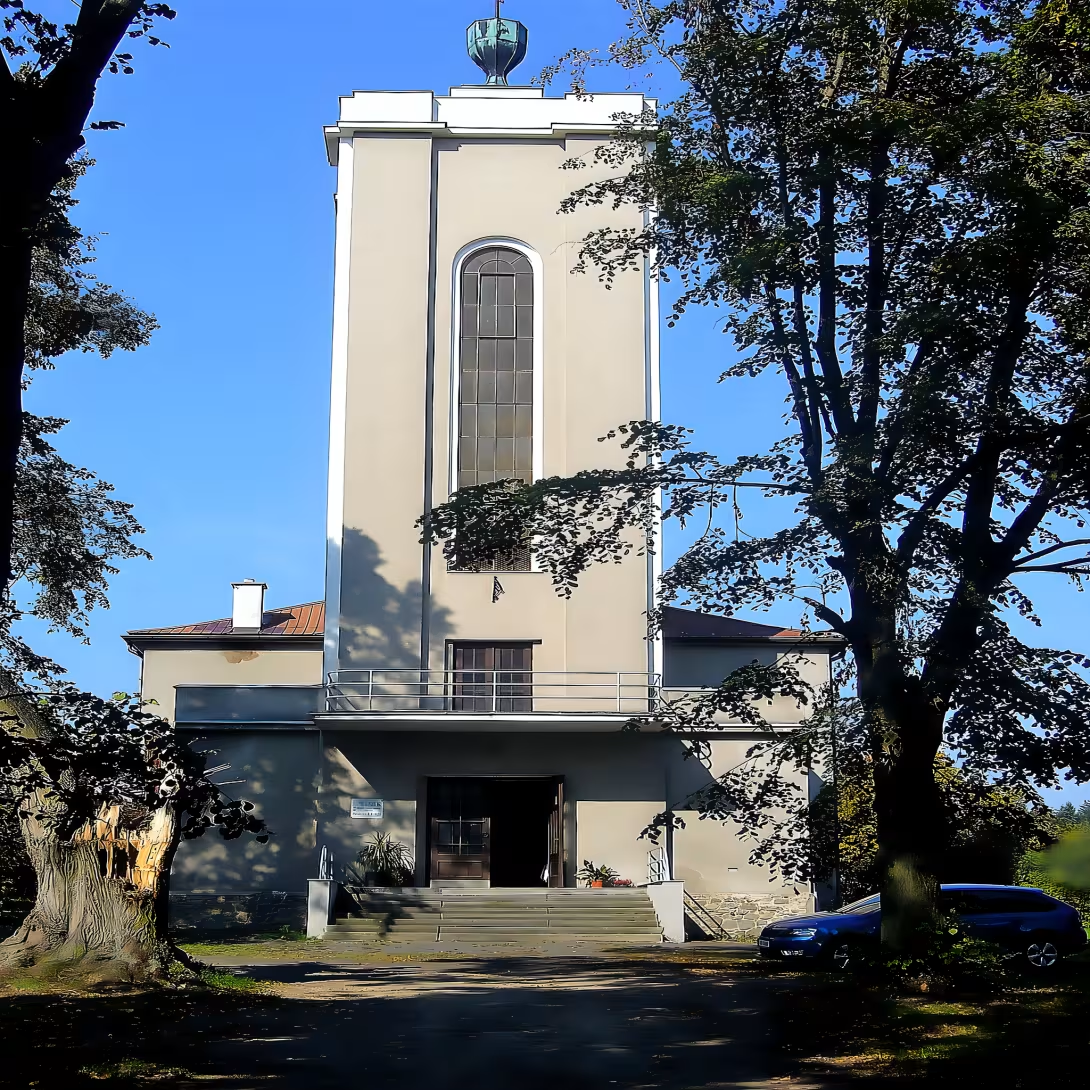
Husův sbor v Lošticích is a notable monument of modernist architecture in the Czech Republic, recognized for its unique pyramid shape and elements of new constructivism. Situated on the outskirts of Loštice in the Šumperk district of Olomoucký kraj, this church was constructed in 1933 by architect Jan Sova. It stands as a testament to the cultural renaissance of Czechoslovakia during the early 20th century, reflecting a period marked by modernist architectural developments and new artistic expressions following World War I.
The religious community of Československá církev husitské in Loštice was officially founded in 1922. Construction of Husův sbor began in June 1929, culminating in its inauguration on September 3, 1933. This era was characterized by a burgeoning national identity and cultural renaissance within Czechoslovakia, which sought to establish itself as an independent nation following the establishment of Czechoslovakia in 1918.
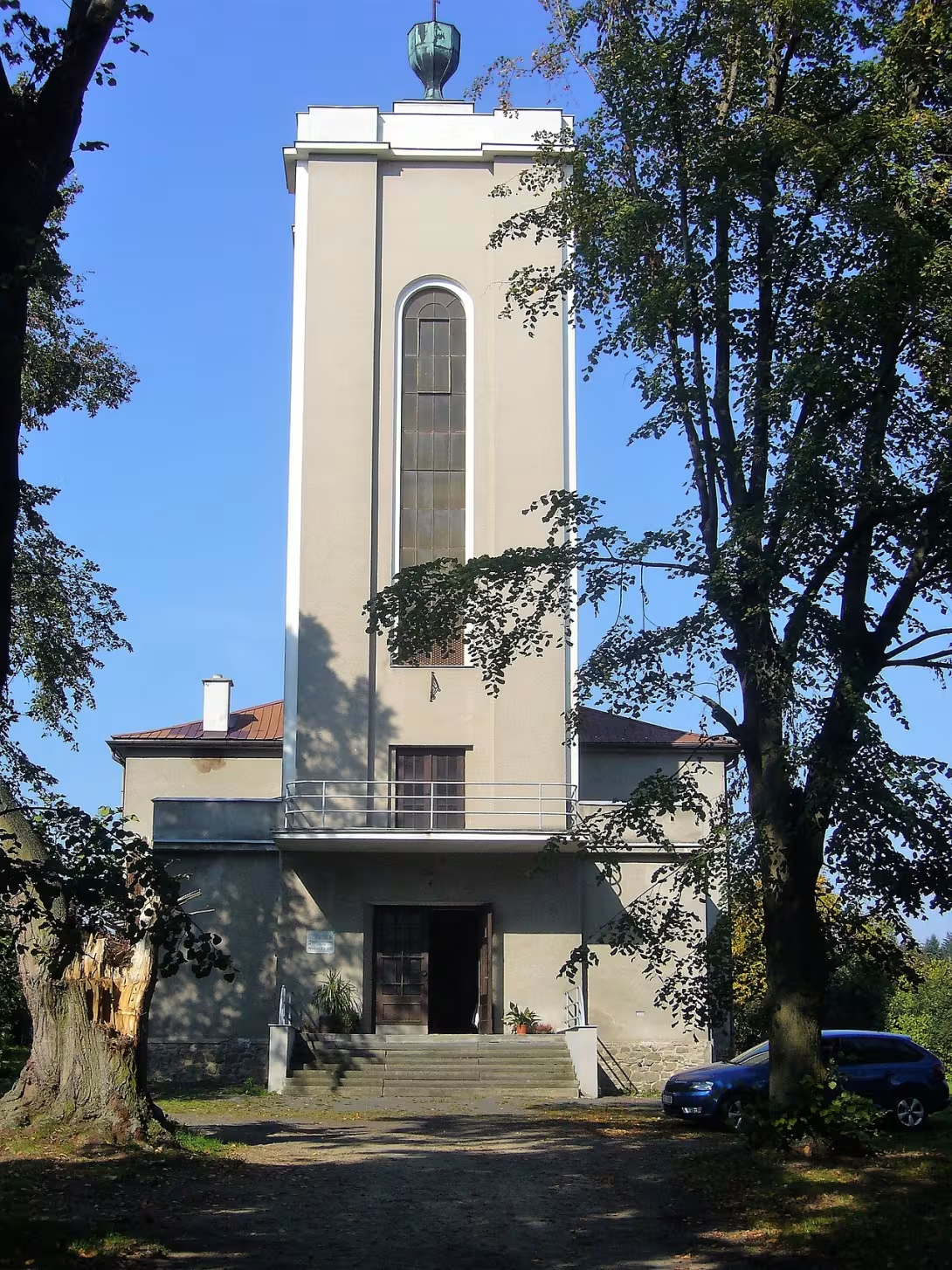
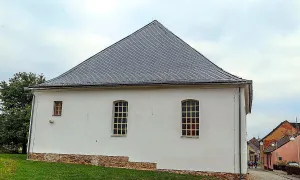
Architecturally, Husův sbor features a single-nave structure with an oblong floor plan, designed in the style of new constructivism. The church is distinguished by its high tower, reaching 33 meters and topped with an observation deck. A unique triangular stone marker adorned with a calyx and cross stands prominently on this tower. The main entrance to the church is accessed via a porch located beneath the tower, leading through a wide stone staircase. Characteristic of its design are the tall, narrow windows with semi-circular tops that add to the building's striking appearance.
In 1951, significant modifications were made to the church’s interior. A brick partition was erected to separate the main nave from the chancel area, and a large fresco by academic painter Karl Skála was added to this newly created wall. This fresco depicts the theme of preaching on the mountain, adding an artistic dimension to the space. Additionally, a winter chapel was constructed in the original altar area, and new organ pipes were installed in the choir, enhancing the church's liturgical functions.
Today, Husův sbor v Lošticích remains accessible for visitors interested in modernist architecture and Czech cultural history. Its unique design and historical significance make it a worthwhile destination for those exploring the architectural heritage of the region. The church continues to serve its community while offering insights into the innovative spirit that characterized early 20th-century Czechoslovakia.
Visitors are invited to explore this remarkable monument, which not only stands as an architectural marvel but also embodies the cultural and historical narratives of its time. Its distinctive design and rich history make Husův sbor v Lošticích a compelling site for anyone interested in modernist architecture or the broader cultural renaissance of Czechoslovakia.
Then and now
Drag the slider to compare how the landmark may have looked when it was built with the view today.
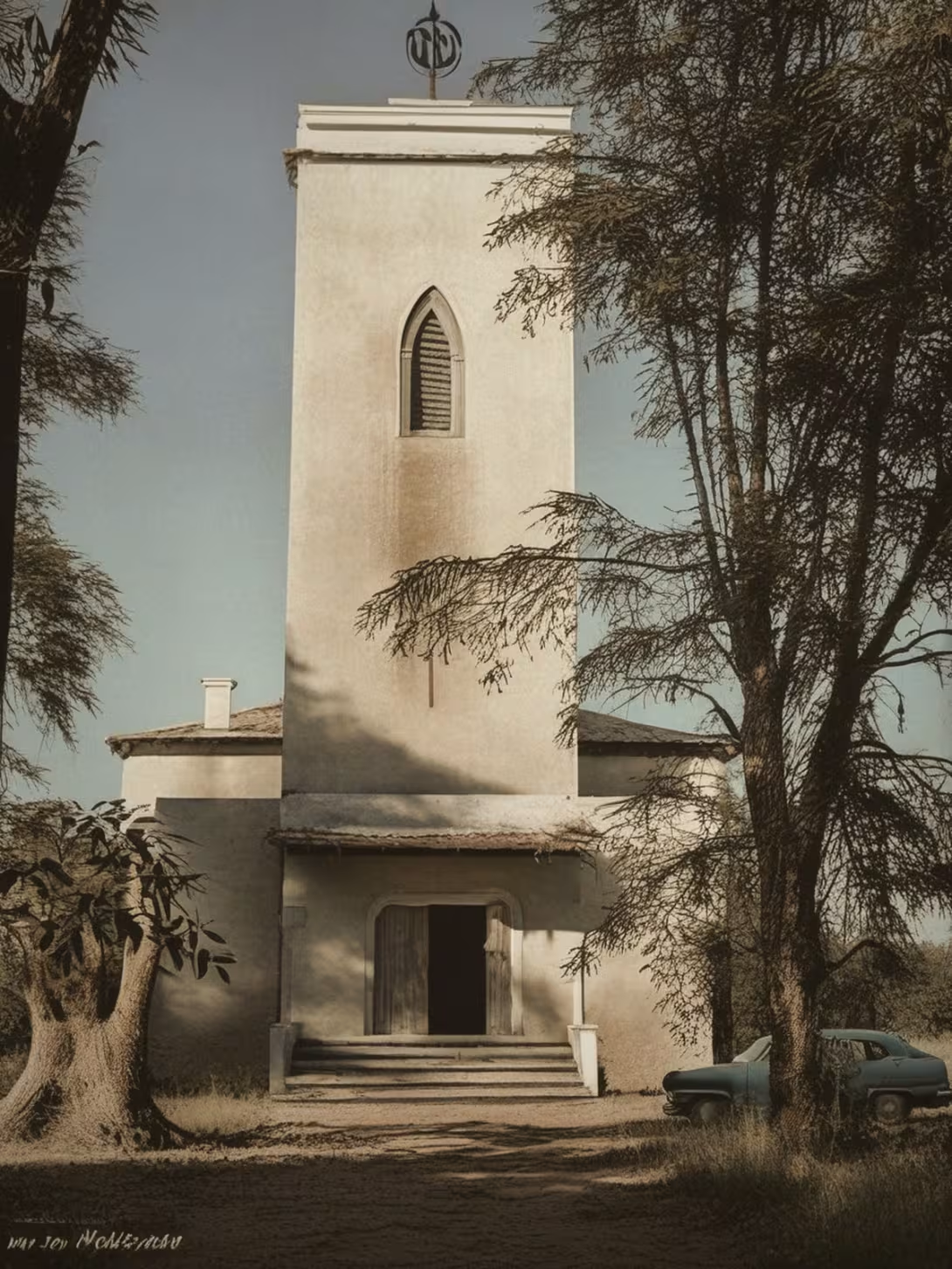
The historical appearance on the left is an AI-generated visualisation and serves as inspiration only.
Historical milestones
- 1922
- Založení náboženské obce Československá církev husitská v Lošticích.
- 1929
- Počátek stavby Husova sboru v Lošticích.
- 1933
- Inaugurace Husova sboru v Lošticích.
- 1951
- Významné úpravy interiéru kostela, včetně přidání fresky a zimní kaple.
Architectural development
The church features a single-nave structure with an oblong floor plan. In 1951, modifications included separating the main nave from the chancel area with a brick partition and adding a large fresco by academic painter Karl Skála. A winter chapel was constructed in the original altar space, and new organ pipes were installed in the choir.
Historical events
The religious community of Československá církev husitské in Loštice was officially founded in 1922.
Construction of the church began in June 1929 and it was inaugurated on September 3, 1933.
Guide
This guide is narrated by a synthetic voice generated by artificial intelligence.
Show guide text
This text was created by artificial intelligence and has not been editorially reviewed. It may contain inaccuracies.
Welcome to Lošty, home of the Husův sbor, a unique monument of modernist architecture in the Czech Republic. You stand before an exquisite church that rises like a pyramid into the sky, characterized by elements of new constructivism. Here you can feel the atmosphere of cultural renaissance in Czechoslovakia during the early 20th century.
Let's delve into history. The Lošty religious community of the Československá církev husitská was founded in 1922. Construction of Husův sbor began seven years later, in 1929. It became operational in 1933. Although the church's interior underwent significant changes in 1951, including the addition of a fresco and winter chapel, its exterior appearance remained almost unchanged.
Notice the high tower of the church, which is not only an architectural element but also a remarkable detail. Now focus on its pyramid shape, characteristic of modernist architecture. Observe how light reflects off its smooth surfaces.
Husův sbor is also associated with several interesting personalities. Although they are few in number, their existence is important for understanding the history and significance of this church. While little is known about them, their lives and activities are crucial for a better understanding of the environment in which the church was built.
An interesting fact is that despite its modernist interior design, stucco was added to the church in 1951, separating the main nave from the choir. This reflected changes in liturgical practices at the time.
We invite you to take a closer look at Husův sbor and explore its fascinating history and architecture.
Tips for visitors
The best time to visit Husův sbor v Lošticích is during late spring or early autumn when the weather is pleasant, allowing for a comfortable exploration of the site. These seasons offer clear skies and mild temperatures, ideal for appreciating the unique modernist architecture without the discomfort of summer heat or winter cold.
Visitors can drive to the location, but it's also accessible via public transport. For those using public transit, checking current routes online will ensure a smooth journey.
When visiting Husův sbor v Lošticích, it is advisable to bring comfortable walking shoes and weather-appropriate clothing, as the site may involve some walking around the church and its surroundings. A camera or smartphone for photography is recommended, especially if you wish to capture the distinctive pyramid-shaped structure of the building. Sunscreen and a hat are also useful during sunny days.
For photography enthusiasts, the best spots to capture Husův sbor v Lošticích include approaching from different angles around the church to fully appreciate its modernist design. Early morning or late afternoon light can provide dramatic shadows and highlights on the pyramid-shaped structure, enhancing the visual appeal of your photos.
While there are no significant monuments within a 5 km radius, families with children might enjoy exploring the local residential area for a more relaxed experience. The proximity to Loštice allows for quick access to any nearby amenities or attractions that cater to family needs.
Frequently asked questions
Can the monument be visited?
Religious buildings are usually open mainly during services; at other times a visit is normally arranged with the parish or the operator. We have not verified specific times.
Where is the monument?
Location: Loštice, Olomoucký kraj. The map on this page shows the exact spot.
Businesses nearby
Do you run a restaurant, accommodation, shop, museum, rental, wellness or other visitor service near this monument? Show yourself directly to the people heading to it — this is how they will see you in the app and on the web:
Events nearby
Zdroj akcí: otevřená data měst a obcí ČR (Národní katalog otevřených dat) a kalendář akcí Národního památkového ústavu.
Nearby
Located on the outskirts of Loštice, the church is surrounded by local residential buildings. The area does not feature other significant monuments or natural features within a 5 km radius.
Accommodation nearby
Trips and activities nearby
Guided tours, tickets and activities nearby from GetYourGuide
Affiliate link: if you buy from the partner, we may receive a commission. The price for you does not change.
Search tours and activities →Themed route
Loštice Church Tour
1. Husův sbor v Lošticích (kostel): This historic church is a must-visit for its unique architecture and historical significance. The church is a rare example of a Husite church in the Czech Republic. 2. Loštice: Explore the charming town of Loštice, where the church is located. The town has a rich history and offers a glimpse into traditional Czech village life. 3. Loštice Town Square: Visit the picturesque town square, where you can see the town hall and other historic buildings.
Seasonal recommendations
Jaro
In the spring season, Husův sbor in Lošty is surrounded by blooming trees and greenery, creating a pleasant atmosphere. A specific element is also the spring lighting, which gives the church a warm and cozy feel. It's also advisable to bring warm clothing, as it can still be cold inside the church during the spring months.
Léto
During the main summer season, Husův sbor in Lošty is one of the most visited sites in the region. To avoid crowds, we recommend arriving earlier than the main morning or evening hours. Summer is an ideal time to tour the church, as the weather is sunny and pleasant. Don't forget to bring sunglasses and an umbrella to protect yourself from sunburn or rain.
Podzim
In autumn, Husův sbor in Lošty is surrounded by fall colors, with tree leaves changing to yellow, orange, and red. The atmosphere is calm and quiet, ideal for touring the church. If you wish to visit the church, we recommend coming in the late afternoon to avoid crowds of tourists. Don't forget to bring warm clothing, as it can still be cold inside the church during autumn months.
Zima
In winter, Husův sbor in Lošty is surrounded by snow and tranquility. A specific element is the winter lighting, which gives the church a magical and mysterious feel.
Visualizations and artistic views


The visualisations are generated by artificial intelligence and serve as inspiration.
Photos from the area
Real photos taken near the monument

Zdroj a licence jsou uvedeny u každého snímku.
Tips from visitors
No tips yet. Be the first!
Log in and add your tip.
Sources and literature
Photos: Miroslava Fišerová / CC BY-SA 4.0, rozlišení zvýšeno umělou inteligencí — Wikimedia Commons. The author and licence also appear when you hover over the image.
Faktickým podkladem tohoto textu byl článek na Wikipedii, jehož autory jsou přispěvatelé Wikipedie. Článek je dostupný pod licencí CC BY-SA 4.0.
Location on the map
Příběhy a pověsti
Legendy, pověsti a příběhy spjaté s touto památkou
Fotografie návštěvníků
Zatím žádné fotografie. Buďte první, kdo přidá fotografii z návštěvy!
Log in a přidejte svou fotografii nebo hodnoťte.
Za ověřenou návštěvu v aplikaci získáte víc bodů — poznáme podle GPS, že jste na místě.
Reviews and comments