



Synagoga v Lošticích Synagogue
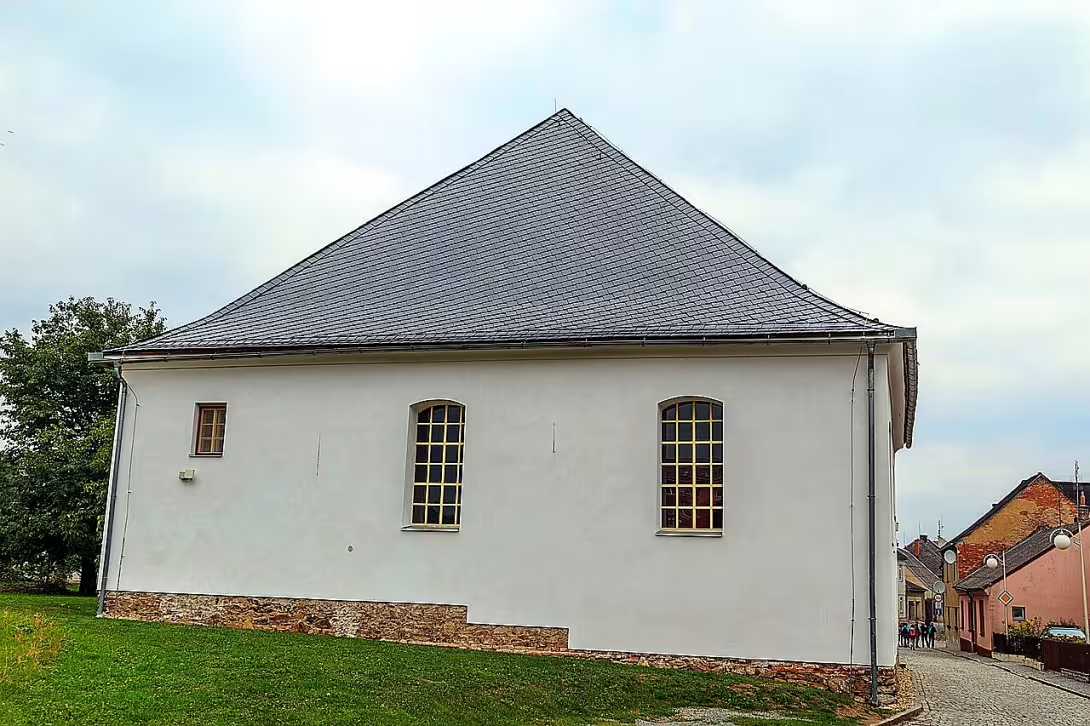
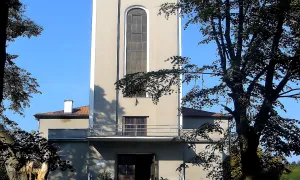
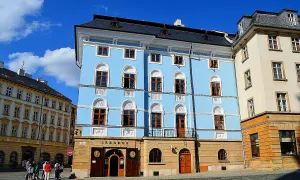
Synagoga v Lošticích is a significant Moravian landmark in classical style, located in the Lost Street in the Šumperk district. The building serves as the seat of the city museum and the library of Otto Wolf. It is historically valuable especially as a place resembling the history of a local Jewish religious community.
The Jewish village in Loštice was founded in 1581 together with the first gagged synagogue. This building probably succumbed to destruction during the Swedish raids during the Thirty Years' War. The second, again grafted, but with suspicion, was built in 1651. In 1727 the construction was dismantled in connection with the forced movement of the Jewish population to the ghetto in the area of today's Lost and Zadlovická Street. Another synagogue was created in this newly established neighborhood, which served until the end of the 18th century. After its dismantling, the wooden crov was used to build a new brick building.
The contemporary classical object was completed in 1805 after reconstruction at the turn of the 18th and 19th centuries. The construction also includes a dwelling for the rabbi and its architectural elements are still visible to this day. In the south part of the building there is a women's gallery with reconstructed paintings.
The building belongs to the city of Loštice. From 1899 to 1920 there was a rabbi, writer and Jewish scholar Azri'el Günzig who moved to Antwerp in the spring of 1920. Religious services were held in the synagogue only until the beginning of World War II; During the Nazi occupation, it was used as a warehouse. In 1964 it was declared a cultural monument. From 1966 to 1980 she served as a city museum with an exhibition on the history of the Jewish village and since 1968 she served as a basic art school.
The interior of the synagogue contains three rows of benches from the Olomouc synagogue, which were fired by local supporters of fascism in March 1939. These 21 pieces symbolically resemble 80 Holocaust victims from Loštice, Mohelnice and Usov. The first place of honour is dedicated to Rabbi Berthold Oppenheim, who worked in Olomouc and Lošice before the war and died in Treblinka in 1942. The list of victims and the dedicated locations are available in the synagogue.
The building was statically secured between 1989 and 1990 and has been gradually renovated since 2006. In 2011, a permanent exhibition of the city museum and Otto Wolf library were opened in the synagogue for the public.
Synagoga v Lošticích is an important document of local history and tragic events of the 20th century. Her visit offers an opportunity to reflect the region's historical heritage.
Then and now
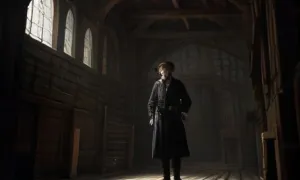
Drag the slider to compare how the landmark may have looked when it was built with the view today.
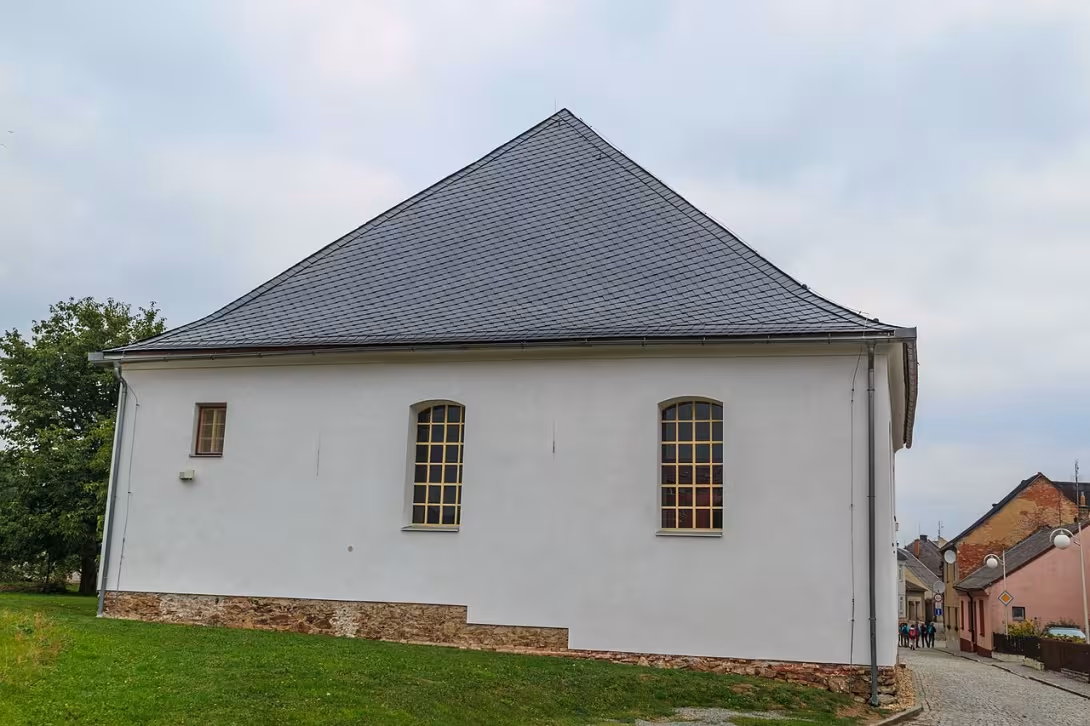

The historical appearance on the left is an AI-generated visualisation and serves as inspiration only.
Historical milestones
- 1581
- The creation of the first grafted synagogue and local Jewish community.
- 1651
- Construction of the second grafted synagogue with suspicion.
- 1727
- The dismantling of the second synagogue in connection with population transfer to the ghetto.
- 1805
- Completion of reconstruction of contemporary synagogue in classical style.
- 1964
- Declaration of the building for a cultural monument.
- 2011
- Opening of permanent exhibition of the museum of the city and library.
Architectural development
The construction went through several phases, from grafted buildings in the 16th and 17th centuries to the current brick building. At the turn of the 18th and 19th centuries, the building was rebuilt into a classical style. A women's gallery with reconstructed paintings is preserved in the southern part.
Historical events
1805: Completion of the reconstruction of the current synagogue. 1964: Announcement of the building by cultural monument. 2011: Opening of permanent museum and library exhibition.
Owners
City of Loštice
Points of interest
- Synagoga v Lošticích is a significant Moravian monument in classical style. The building serves as the headquarters of the city museum and the Otto Wolf library. - The current building was completed in 1805 after reconstruction at the turn of the 18th and 19th centuries. - The interior contains three rows of benches from the Olomouc Synagogue, which was burned by local followers of fascism in 1939. - The list of Holocaust victims and locations are available in the synagogue.
Guide
Show guide text
This text was created by artificial intelligence and has not been editorially reviewed. It may contain inaccuracies.
Welcome to Loštice. You're standing in front of one of the most important construction sites in this city, a synagogue that carries an incredible depth of time. Take a look at this building and try to feel in its walls the weight of history that has accumulated here for centuries. It's not just an ordinary object made of stone and mortar. It is a witness to the transformations that have passed through this entire Moravian landscape, a witness to the ups and downs of local communities that once lived here, believed and formed their own unique culture. Feel the atmosphere of peace and dignity that this building radiates while you prepare for her tour.
To understand what you're seeing right now, we have to go back deep into the past until there were no stone walls. Imagine the year one thousand five hundred eighty-one. This was the moment when the first Jewish community began to emerge in Loštice. At that time, however, the place on which you are now standing was not decorated by classical architecture, but by simple grafted buildings. The first synagogue was wooden, modest, but for the people back then it was the heart of their world. With time the needs of the community grew and in the year one thousand and six hundred fifty one was built the second, again grafted synagogue, which was already a bit more extensive and had a certain basic raised part, i.e. a suspect. These wooden buildings were fragile, but they carried the soul of the entire local people.
But history wasn't always about growth. In the year one thousand seven hundred twenty-seven came a major break. The second wooden synagogue had to be dismantled in relation to how the population structure changed and how people moved to the ghetto. It was a period of uncertainty and great changes in the life of local people. But even from this decay, a new beginning was born.
Now pay attention to what's right in front of you. The current form of the building you are observing is the result of a large reconstruction that was completed in a thousand eight hundred and five. In this period, a classical style has been promoted throughout Europe, which is also evident here. Notice the harmony, the balance and the quiet elegance that this style brings. It was no longer a fragile wood, but a solid, permanent architecture to reflect stability and dignity. This building was not intended only for prayers. It was part of a larger whole, which included a dwelling for the rabbi, i.e. for the spiritual leader of the village. This tells us that this place was the center of not only faith, but also everyday life and community leadership.
Looking at the building, you can imagine people moving around here. There are names in the history of this place that bear the reflection of life back then. Here we can remember personalities like Azri'el Günzig or Berthold Oppenheim. Although their specific fates may not be told in detail in every book, their presence in the history of this place reminds us that the synagogue was not just an empty building, but a home for real, living beings who had their dreams, their duties and their joys here.
Now let's move on to something that can really surprise you when you visit the interior. There is one strange thing that links this place to another history. If you ever get inside, pay attention to the benches. In the interior you will find three rows of benches that do not come from Loštice, but from Olomouc. These benches come from the synagogue there that was destroyed in the past by fire. It's a fascinating detail of how pieces of history moved from one city to another and became part of a new place. It's like the pieces of a broken mirror come together in a different painting to create something new and save the memory of what no longer exists.
But the history of this building does not only know the ascent. After World War II, this place went through a difficult time. The place where people used to pray became a simple warehouse. It was a time of silence and oblivion when the spiritual meaning of the place was almost lost in utility use. Fortunately, however, fate has decided otherwise. In a thousand and nine hundred and sixty-four, the building was officially declared a cultural monument, which was the first step towards saving it and returning to dignity.
Today, the situation is completely different. Synagoga v Lošticích came back to life, but in a different role. The city museum and the Otto Wolf library are now located here. A place that used to serve the spiritual leadership of one community now serves the whole city and all visitors as a place for the recognition, learning and storage of memory. It is a beautiful cycle of time - from wooden walls to stone fortress, to the modern centre of culture and knowledge.
Now I want to invite you to continue this journey. Let yourself be absorbed by the atmosphere of the interior, explore the exhibition of the city museum and perhaps find some peace in the library. Every corner of this building has a story waiting to be revealed. Thank you for stopping by and paying attention to this important Moravian monument. We wish you pleasant further tours and many interesting experiences when exploring the history of Loštice.
Tips for visitors
For the best experience we recommend a visit on bright days, when the sunlight will highlight the details of the historical building.
If you want to focus on photography, the best light is in the morning or in the afternoon when the light is reflected from the surrounding buildings.
Transport to the place is possible both by car and public means of transport. Please check the current connection with Internet search engines.
Take small money with you for your fees and drinks. Since the object is undergoing repair, we recommend to monitor the current state of work on site. It is good for families with children to have a calmer programme prepared because a tour of the historical object requires a little focus.
After visiting the synagogue you can take a short walk at the nearby Square of Peace in Lošice, which is an ideal place for a short rest within your walk.
Frequently asked questions
Can the monument be visited?
Religious buildings are usually open mainly during services; at other times a visit is normally arranged with the parish or the operator. We have not verified specific times. According to the heritage register restoration is under way, so access may be restricted.
Where is the monument?
Location: Loštice, Olomoucký kraj. The map on this page shows the exact spot.
Why is the monument protected?
It is listed in the Central List of Cultural Monuments of the Czech Republic as a cultural monument (register no. 1000129623).
Businesses nearby
Do you run a restaurant, accommodation, shop, museum, rental, wellness or other visitor service near this monument? Show yourself directly to the people heading to it — this is how they will see you in the app and on the web:
Events nearby
Zdroj akcí: otevřená data měst a obcí ČR (Národní katalog otevřených dat) a kalendář akcí Národního památkového ústavu.
Nearby
Náměstí Míru v Lošticích.
Accommodation nearby
Trips and activities nearby
Guided tours, tickets and activities nearby from GetYourGuide
Affiliate link: if you buy from the partner, we may receive a commission. The price for you does not change.
Search tours and activities →Themed route
Synagoga v Lošticích Type: Cultural monument, sacral building. Why is worth a visit: This historic building is proof of the region's rich Jewish heritage and offers insight into the life of the local community. Its architecture and well-preserved interior create a deep sense of respect for the past.
Peace Square in Loštice Type: Public space, urban centre. Why is worth a visit: It serves as an ideal starting point and end point of the route where the peaceful atmosphere of the village can be appreciated. Here are the basic services and you can relax after sightseeing.
Access path between synagogue and square Type: sidewalk, urban structure. Why is worth a visit: A short walk connecting the main destination with the center of the village allows you to explore the local development and atmosphere. It allows a smooth transition between the historical object and the living heart of Loštice.
Synagogue tank Type: Part of the complex, outdoor area. Why is it worth visiting: If it is accessible, it offers a quiet place to think right at the historical wall. It allows you to admire the details of the building up close without having to enter.
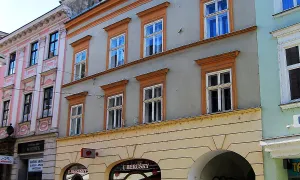
Ambient installation on the Square of Peace Type: Urban architecture, historical houses. Why it is worth a visit: Houses around the square show the typical character of the Czech rural village. They provide context for how the environment around the synagogue has changed over the centuries.
Seasonal recommendations
Spring: In spring nature awakens around the monument and soft sunlight beautifully highlights the details of the historical environment and the ongoing repairs. It's the perfect time to observe the first green breaths around. I recommend wearing layered clothes because the weather is usually variable in this period. Visitors aren't as affectionate as they were in the summer, so you'll enjoy the tour in relative peace.
Summer: During the summer months, the longest days and the sun are the most intense, offering excellent visibility for monitoring the work process. The atmosphere in Loštice is more lively and more human thanks to the warmth. Because of the heat and larger groups of people, it is best to arrive early in the morning before the greatest heat occurs. Prepare light clothes and don't forget to protect yourself from the sun while walking around the building.
Autumn: Autumn brings golden shades and foggy mornings to the area, which gives the place a peaceful and nostalgic atmosphere. The lower angle of the sun creates interesting shadows on the facades of buildings. It is advisable to wear firmer shoes in case of wet surface and warmer clothing. This period is ideal for those who seek silence and want to escape the summer rush.
Winter: The winter is quiet around the monument and the air is freezing, which can highlight the raw beauty of historical walls. Due to the ongoing repair, there may be around more scaffolding and construction equipment. It is necessary to dress thoroughly in the winter layers and to assume that the period of access to the monument is shorter. It's best to visit the place on bright, sunny days.
Visualizations and artistic views


The visualisations are generated by artificial intelligence and serve as inspiration.
Photos from the area
Real photos taken near the monument


Zdroj a licence jsou uvedeny u každého snímku.
Tips from visitors
No tips yet. Be the first!
Log in and add your tip.
Sources and literature
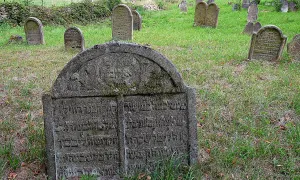
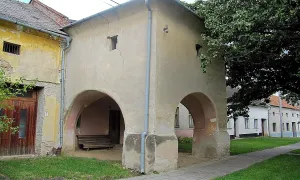
Photos: Petr1888 / CC BY-SA 4.0 — Wikimedia Commons. The author and licence also appear when you hover over the image.
Faktickým podkladem tohoto textu byl článek na Wikipedii, jehož autory jsou přispěvatelé Wikipedie. Článek je dostupný pod licencí CC BY-SA 4.0.
Location on the map
Příběhy a pověsti
Legendy, pověsti a příběhy spjaté s touto památkou
Fotografie návštěvníků
Zatím žádné fotografie. Buďte první, kdo přidá fotografii z návštěvy!
Log in a přidejte svou fotografii nebo hodnoťte.
Za ověřenou návštěvu v aplikaci získáte víc bodů — poznáme podle GPS, že jste na místě.
Reviews and comments