






Kostel svatého Prokopa (Loštice) Church
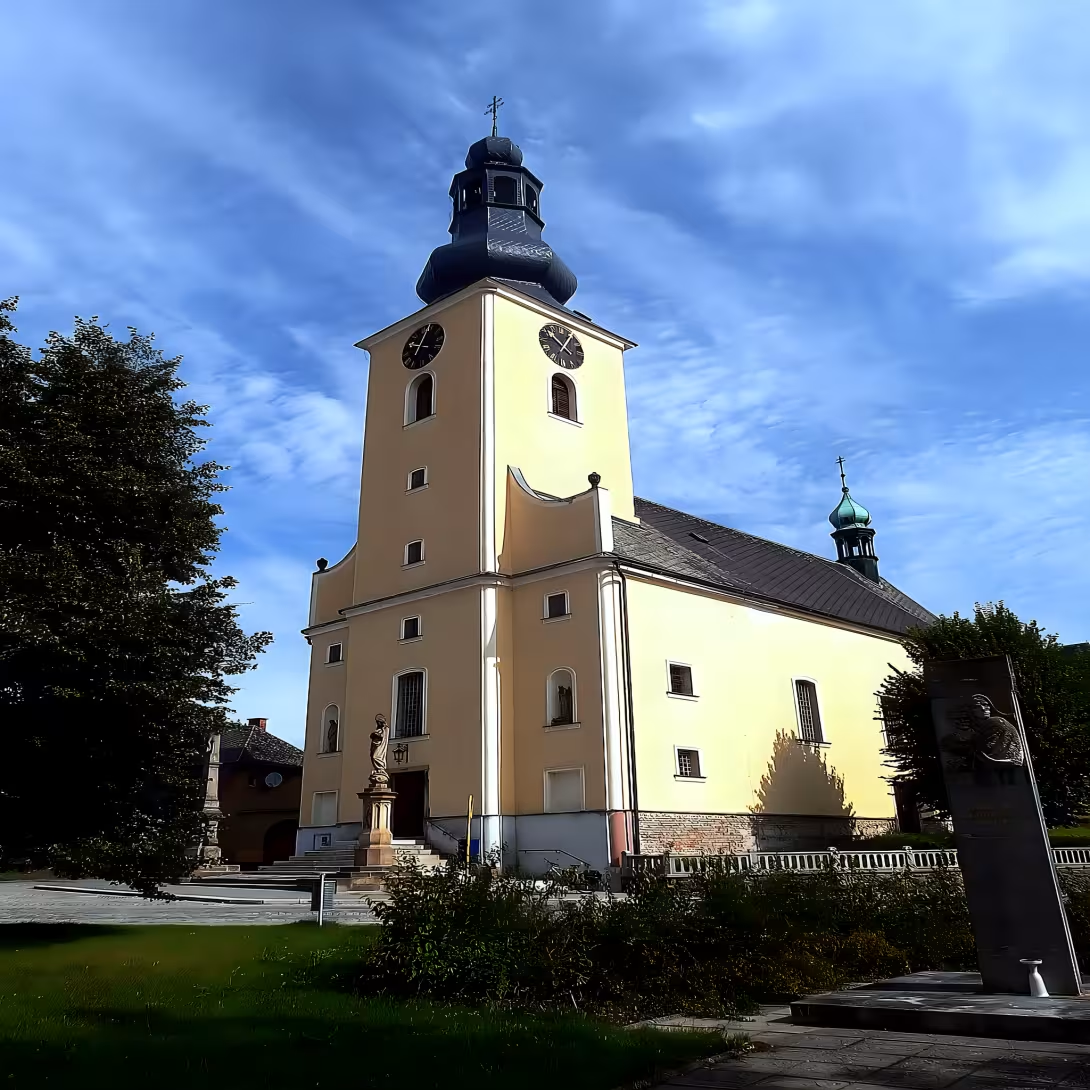
The Church of Saint Procopius in Loštice is a remarkable historical monument showcasing architectural evolution over centuries. Situated in the village of Loštice within the Olomoucký kraj region, this church blends Romanesque foundations with Baroque elegance, reflecting its construction between 1787 and 1792. The site holds significance due to its rich history and cultural importance in the Czech lands.
The origins of the Church of Saint Procopius date back to a Romanesque structure from the mid-13th century, as evidenced by fragments found during renovations. By the late 16th century, under the influence of Prokop Podstatský z Prusinovic, the church was expanded to include its main nave. The transition to its current Baroque form occurred at the end of the 17th century, marking a significant architectural transformation.
Architecturally, the Church of Saint Procopius retains Romanesque elements such as the presbytery and eastern walls of the nave. Its Baroque features include a high tower integrated into the façade and an expanded nave. The church's interior boasts Renaissance tombstones of Prokop Podstatský z Prusinovic and his wife, Kateřina Kropáčová z Nevědomí, adding to its historical richness.
Throughout history, the church has served various religious communities: initially for Catholics from 1497 to 1546, then for Czech Brethren until 1587, followed by Protestants until 1624, and finally returning to Catholic service. This reflects broader European religious shifts, particularly post-Thirty Years' War influences.
Today, the Church of Saint Procopius remains a cultural treasure, accessible to visitors interested in its architectural beauty and historical significance. Its inclusion on the list of cultural monuments since 1964 underscores its importance as a site worth exploring for those keen on understanding Czech history and architecture.
Then and now
Drag the slider to compare how the landmark may have looked when it was built with the view today.
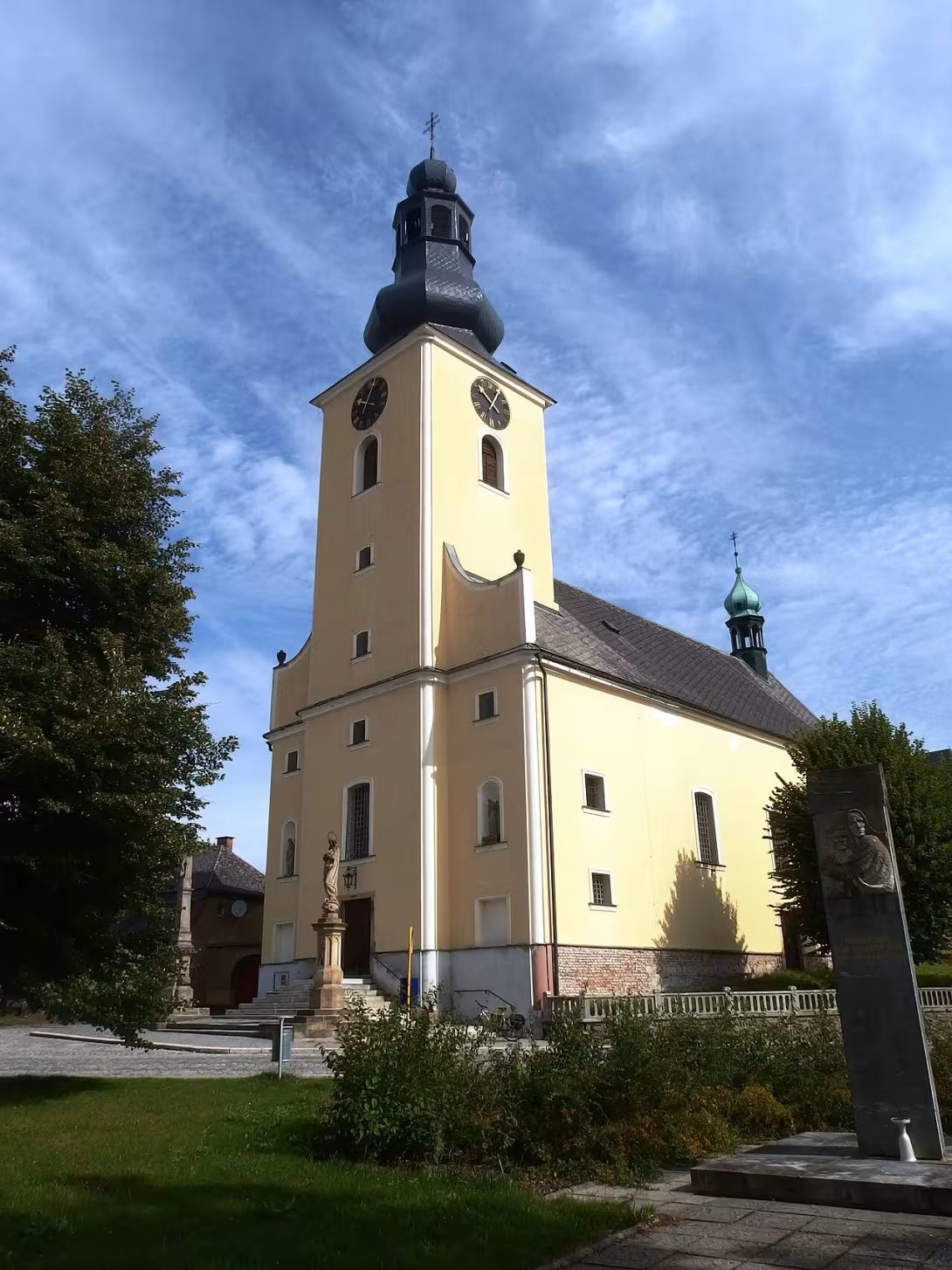
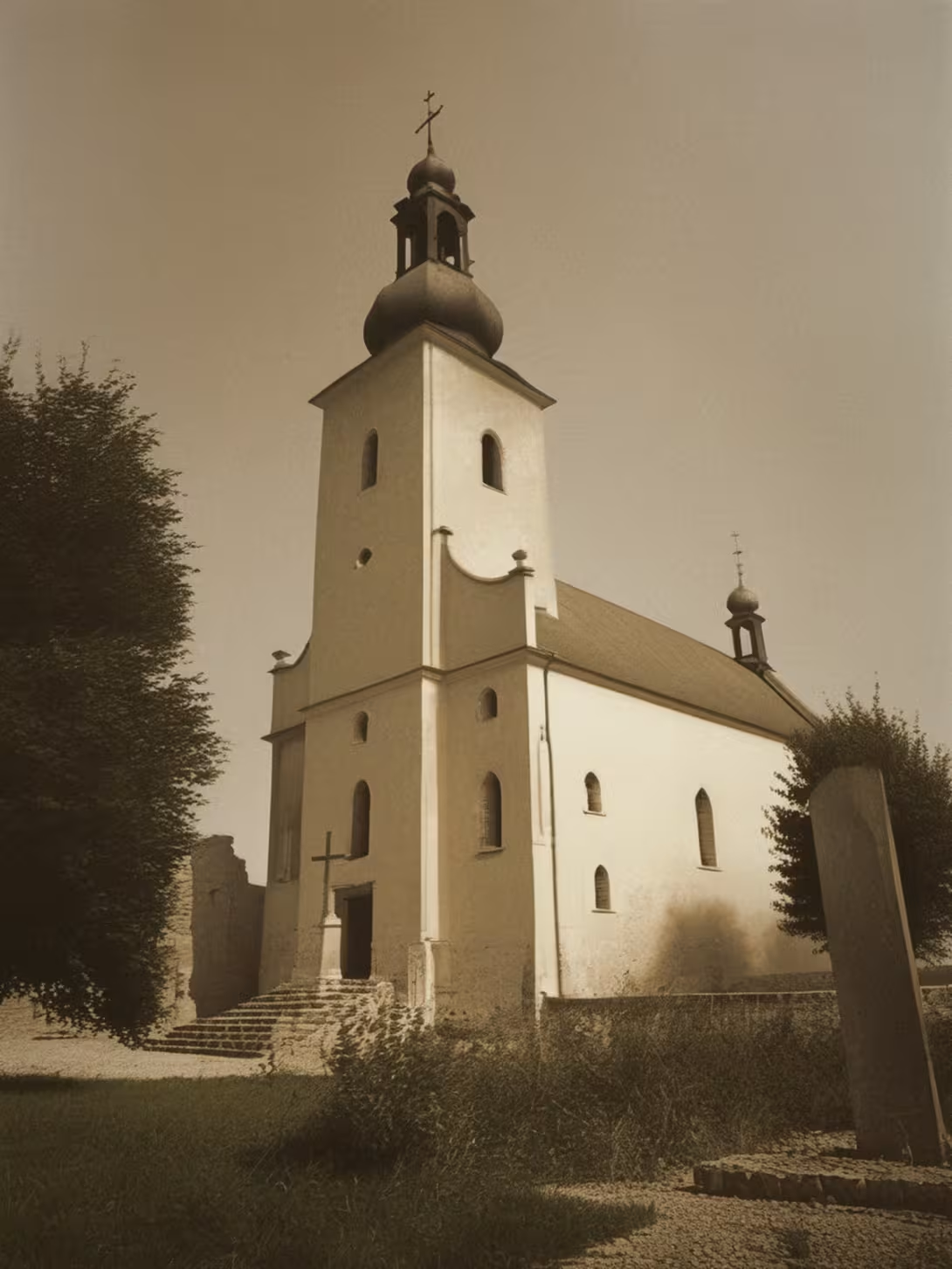
The historical appearance on the left is an AI-generated visualisation and serves as inspiration only.
Historical milestones
- kolem 1250
- Foundation of the original Romanesque structure of the church.
- 1497-1546
- Served as a Catholic church.
- 1546-1587
- Used by the Czech Brethren.
- 1587-1624
- Served as a Protestant church.
- 1624
- Return to Catholic service after the Thirty Years' War.
- 1787-1792
- Renaissance into a Baroque church.
Architectural development
The church originally featured a Romanesque core from the mid-13th century, including the presbytery and eastern walls. In the late 16th century, it was expanded under Prokop Podstatský z Prusinovic to include the main nave. The transition to its current baroque form occurred at the end of the 17th century with significant architectural modifications.
Historical events
- 1396
- First documented historical mention of the Church of Saint Procopius.
- 1787
- Construction of the current baroque structure began, incorporating existing Romanesque elements.
Points of interest
- The Church of Saint Procopius houses Renaissance tombstones of Prokop Podstatský z Prusinovic and his wife, Kateřina Kropáčová z Nevědomí, which are rare examples of such memorials in the region.
- Initially built as a Romanesque structure in the mid-13th century, fragments from this original building were discovered during renovations, providing valuable insights into medieval architectural practices.
- The church's history reflects significant religious shifts: it served Catholics, Czech Brethren, and Protestants before returning to Catholic service, mirroring broader European changes post-Thirty Years' War.
- Architecturally, the Church of Saint Procopius uniquely combines Romanesque elements like its presbytery with Baroque features such as a high tower integrated into the façade, showcasing an evolution in style over centuries.
- Despite its long history and architectural transformations, it was only added to the list of cultural monuments in 1964, highlighting its enduring significance in Czech heritage.
Guide
This guide is narrated by a synthetic voice generated by artificial intelligence.
Show guide text
This text was created by artificial intelligence and has not been editorially reviewed. It may contain inaccuracies.
The Church of Saint Prokop in Loštice is a Baroque structure built between 1787 and 1792. However, hidden within its walls is a much older core. The chancel and perimeter walls of the eastern part of the nave date back to the mid-thirteenth century, when a smaller Romanesque church stood here. Its remains were discovered during a facade renovation in 1994.
The first written mention of the church dates from 1396. In the mid-sixteenth century, Prokop Podstatský of Prusinovic, the lord of Bouzov, who also owned Loštice, expanded it to the present-day main nave. At that time, a four-sided tower still stood separately next to the church. This is how it appears in the oldest depiction on the title page of the Loštice parish register from 1650. The Baroque reconstruction then expanded the church to its current form and incorporated the tower into the facade. It measures 45 metres.
The church has passed through the hands of various denominations. According to a record by parish priest Jan Pudil from 1771, it first served Catholics, then from 1546 the Czech Brethren, from 1587 Protestants, and from 1624 Catholics again.
The building bears traces of several architectural styles. From the Romanesque period, typical ribbed masonry and red-painted windows have been preserved. The presbytery with its right-angled termination is Gothic, and the capitals of pilasters in the attic storey are Renaissance.
In the vestibule are placed Renaissance tombstones of Prokop Podstatský, who died in 1560, and his wife Kateřina from the Kropáč family of Nevědomí, who died four years later. Opposite them is a heraldic tombstone of Anna Barbara, daughter of Zigmund Půhončí of Předmostí, placed there in 1940. She died in 1682, at the age of two.
The main marble altar from 1852 was created by local master Cyril Kutzer. It is adorned with a painting of Saint Prokop by František Havelka, a native of Loštice, and wooden statues of Saint Cyril and Methodius in life size. Among the side altars, worth mentioning is the painting of the Visitation of the Virgin Mary, painted in 1746 by Felix Anton Scheffler. The pulpit from 1810 was carved by Brno woodcarver Ondřej Schweigel.
Rare are four wall paintings of the Stations of the Cross from the early seventeenth century, removed in 1957 from the attic walls. They were paid for by local guilds of tailors, potters, weavers, and butchers. Their coats of arms are still visible at the lower edge of the paintings.
Around the church extends the former cemetery with a retaining wall and balustrade. It features a classicist stone cross from 1801, an Empire-style tombstone of Rosalie Dworzakowa from 1829, and a statue of the Virgin Mary on a pillar. The church has been a cultural monument since 1964.
Tips for visitors
The best time to visit the Church of Saint Procopius in Loštice is during late spring or early autumn, when the weather is mild and pleasant for exploring both the church's interior and its surrounding landscapes. These seasons offer a comfortable climate that enhances your experience, allowing you to appreciate the architectural details without the discomfort of summer heat or winter cold. Additionally, visiting outside peak tourist seasons can provide a more tranquil atmosphere, making it easier to enjoy the serene beauty of this baroque structure with its Romanesque core.
The church is accessible by both car and public transport, ensuring that you have flexibility in how you choose to arrive.
When planning your visit to the Church of Saint Procopius, it's advisable to bring comfortable walking shoes, a hat, sunscreen, and perhaps a light jacket depending on the season. Since you'll likely be exploring both indoors and outdoors, these items will help ensure comfort throughout your day. Additionally, consider bringing a camera or smartphone with a good camera function to capture the stunning architecture and any picturesque views in the vicinity.
For photography enthusiasts, the best spots for capturing images of the Church of Saint Procopius are during the golden hours—shortly after sunrise or before sunset—when the natural light is soft and warm. This lighting can accentuate the baroque details and create a beautiful contrast with the Romanesque elements. Inside the church, look for angles that highlight the interplay between the different architectural styles, using available light to your advantage.
In terms of nearby attractions within 30 minutes, visitors might consider exploring other historical sites or natural landscapes in the Olomoucký kraj region. While specific recommendations are not provided here, a general suggestion is to look for local museums or cultural centers that offer insights into the area's rich history and traditions. For families with children, consider planning a day trip that includes both educational and recreational activities, ensuring there are opportunities for rest and play.
Frequently asked questions
Can the monument be visited?
Religious buildings are usually open mainly during services; at other times a visit is normally arranged with the parish or the operator. We have not verified specific times.
Where is the monument?
Location: Malé náměstí, Loštice, Olomoucký kraj. The map on this page shows the exact spot.
Why is the monument protected?
It is listed in the Central List of Cultural Monuments of the Czech Republic as a cultural monument (register no. 14285/8-1006).
Businesses nearby
Do you run a restaurant, accommodation, shop, museum, rental, wellness or other visitor service near this monument? Show yourself directly to the people heading to it — this is how they will see you in the app and on the web:
Events nearby
Zdroj akcí: otevřená data měst a obcí ČR (Národní katalog otevřených dat) a kalendář akcí Národního památkového ústavu.
Accommodation nearby
Trips and activities nearby
Guided tours, tickets and activities nearby from GetYourGuide
Affiliate link: if you buy from the partner, we may receive a commission. The price for you does not change.
Search tours and activities →Themed route
Tematická výletní trasa: Kostel svatého Prokopa (Loštice)
1. Kostel svatého Prokopa (Loštice) - Kostel Začněte svůj výlet u kostela svatého Prokopa, který je nejen duchovním centrem obce Loštice, ale také architektonickou perli Olomouckého kraje. Jeho historie sahá do 13. století a nabízí návštěvníkům příležitost prozkoumat bohatou historii a umělecké prvky, které se zde nacházejí.
2. Obecní úřad Loštice - Historický objekt Přibližně 5 minut chůze od kostela najdete obecní úřad Loštice. Tento historický objekt je zajímavý pro svou architekturu a dává náhled do administrativního fungování malé české vesnice. Je to místo, kde můžete zjistit více o místních událostech a historii obce.
3. Základní škola Loštice - Vzdělávací instituce Nyní se podíváme na základní školu v Lošticích, která je nejen místo učení pro místní děti, ale také architektonickým zajímavostem. Její budova a okolí nabízejí pohled na moderní vzdělávací prostředí ve spojitosti s historií obce.
4. Kaple svatého Jana Nepomuckého - Kaple Krátce od základní školy se nachází kaple svatého Jana Nepomuckého, která je známá pro svou klidnou atmosféru a krásné vnitřní dekorace. Je to místo ideální pro několik minut odpočinku a reflexe během vašeho výletu.
5. Náves Loštice - Veřejný prostor Konec trasy můžete strávit na návsi v Lošticích, kde se nachází různé malé obchody a restaurace. Tento veřejný prostor je ideální pro relaxaci po celodenním výletu a nabízí příležitost si prohlédnout místní život a kulturu.
Tato trasa vás provede skrze historii, architekturu a každodenní život obce Loštice, což vám umožní hlubší pochopení tohoto malebného místa.
Seasonal recommendations
Jaro: In the spring season, Kostel svatého Prokopa in Lošticích transforms into a tranquil and verdant oasis as blooming shrubs and trees bring vibrant life. Sunlight illuminating the church's architecture creates delicate shadows that add depth and substance to its structures. This is an ideal time for a visit, as there are usually fewer crowds than in summer. Visitors should opt for clothing suitable for mild weather and arrive early in the morning to enjoy a peaceful visit before the crowds gather. Additionally, the spring flowers in the surrounding garden provide a beautiful backdrop for photography.
Léto: In the summer, Kostel svatého Prokopa is surrounded by lush nature at its full splendor. A sunny day gives the church a golden glow and creates ideal conditions for guided tours. Summer is the peak tourist season, so visitors should arrive early in the morning to avoid long lines and cope with the warm weather. Warm clothing is recommended for comfort during the visit, along with plenty of drinking water. Furthermore, summer offers opportunities to participate in various outdoor events and activities that may take place near the monument.
Podzim: In autumn, the trees around Kostel svatého Prokopa gain colorfulness, adding a unique atmosphere to the visit. Sunny days give the church a gentle golden glow, while cooler evenings offer a more tranquil environment for visiting. With less tourism during this period, it is an ideal time for a personal and peaceful experience with the monument. Visitors should choose clothing suitable for cooler weather, including hats or scarves for sun protection and warm clothing for evening visits. Additionally, autumn is an ideal time to explore local culture, as various events related to the arrival of winter take place.
Zima: The winter season brings a sense of calm and quiet to Kostel svatého Prokopa, with snow covering the surrounding landscape. Sunlight illuminating the church creates delicate shadows on the white backdrop, adding special beauty to its structures. Winter is the period of lowest tourist growth, so visitors can expect a peaceful and intimate experience at the monument. Warm clothing is essential for comfort during the visit, including hats, scarves, and warm coats. Additionally, the winter season may be an appropriate time to participate in outdoor events related to Advent or Christmas, which add to the atmosphere.
Visualizations and artistic views


The visualisations are generated by artificial intelligence and serve as inspiration.
Photos from the area
Real photos taken near the monument


Zdroj a licence jsou uvedeny u každého snímku.
Tips from visitors
No tips yet. Be the first!
Log in and add your tip.
Sources and literature
Photos: Palickap / CC BY-SA 4.0, rozlišení zvýšeno umělou inteligencí — Wikimedia Commons. The author and licence also appear when you hover over the image.
Faktickým podkladem tohoto textu byl článek na Wikipedii, jehož autory jsou přispěvatelé Wikipedie. Článek je dostupný pod licencí CC BY-SA 4.0.
Location on the map
Příběhy a pověsti
Legendy, pověsti a příběhy spjaté s touto památkou
Fotografie návštěvníků
Zatím žádné fotografie. Buďte první, kdo přidá fotografii z návštěvy!
Log in a přidejte svou fotografii nebo hodnoťte.
Za ověřenou návštěvu v aplikaci získáte víc bodů — poznáme podle GPS, že jste na místě.
Reviews and comments