






Janův hrad Ruin
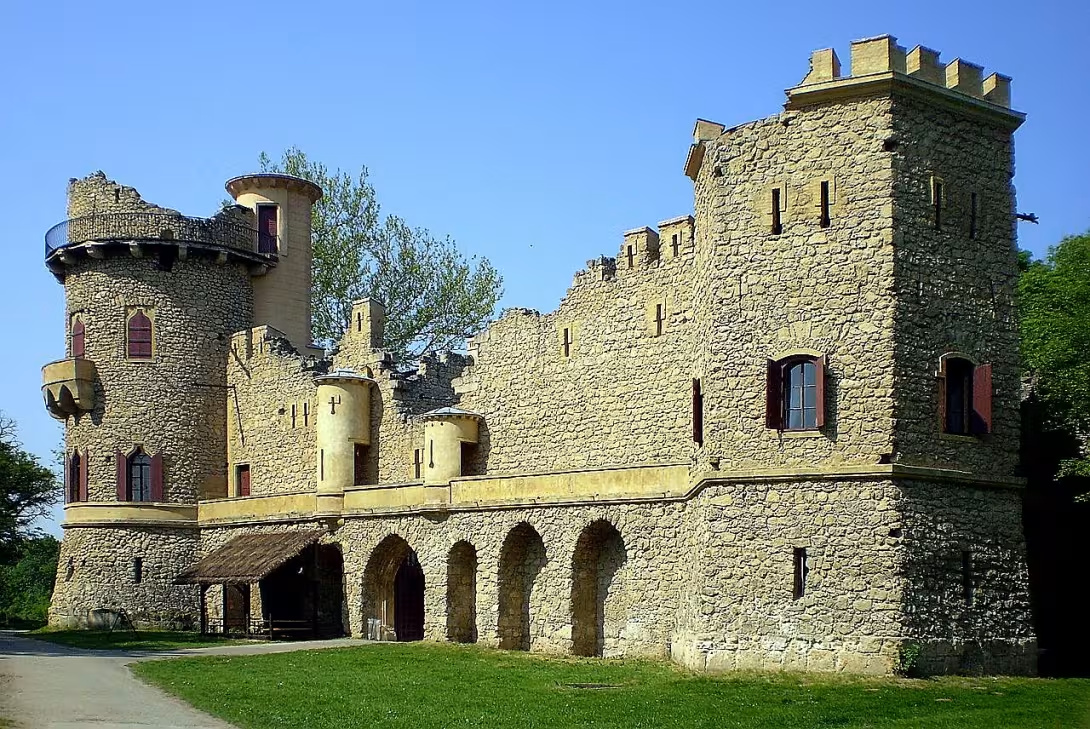
Janův hrad, also known as Janohrad, is an artificial ruin in the Lednice-Valtice Area near Podivín, Jihomoravský kraj. Constructed between 1801 and 1808 during a period when Romanticism influenced European architecture, this pseudogothic structure exemplifies the era's fascination with medieval styles. It stands as a cultural monument under state ownership, managed by the National Heritage Institute, reflecting both historical significance and architectural ingenuity.
The origins of Janův hrad are rooted in the early 19th century when Romanticism inspired a revival of medieval architecture across Europe. Commissioned by Prince Alois I. of Lichtenstein and completed by his brother Jan Josef I., albeit in a reduced form, it was named after Jan I. z Lichtenštejna, the first owner of the Lednice estate. It served as a hunting lodge for the Lichtenstein family until 1945. The design was entrusted to architect and inventor Josef Hardtmuth.
Architecturally unique in its pseudogothic style, Janův hrad was designed not merely as a ruin but as an inhabitable structure. Built on unstable swamp forest ground, it required wooden beams for stabilization, with stones sourced from the nearby Great Moravian fortress Pohansko. The architecture features three spiral staircases that turn in opposite directions, typical of medieval castles. Unlike other contemporary ruins, Janův hrad was designed to be functional, serving as a hunting lodge and love seat during its time.
Ownership transitioned from the Lichtenštejn family, who maintained it until 1945, to state ownership thereafter. The estate has been preserved as a cultural monument, reflecting both historical continuity and change over the centuries. Its significance is underscored by notable events such as the hunting of a large deer weighing 350 kg, with its antlers displayed within the lodge.
Today, Janův hrad stands between Lednice, Podivín, and Ladná near the Lednice Castle, nestled in swamp forests on an island in the Staré Dyje river. It is accessible via green tourist trails from Lednice to Břeclav or by a yellow-marked path leading from Lednice around the Lovecký zámeček towards Ladná. Visitors can also reach it by boat from the minaret in the Lednice park. The site offers parking approximately 70 meters before the ruin, with additional signage guiding visitors to the entrance.
Janův hrad is a testament to the Romantic era's architectural vision and its enduring appeal as a cultural monument. Its unique design and historical significance make it a worthwhile destination for those interested in exploring the intersection of history, architecture, and nature. Visitors are invited to experience this remarkable site, where the past comes alive amidst the serene landscape of the Lednice-Valtice Area.
Then and now
Drag the slider to compare how the landmark may have looked when it was built with the view today.
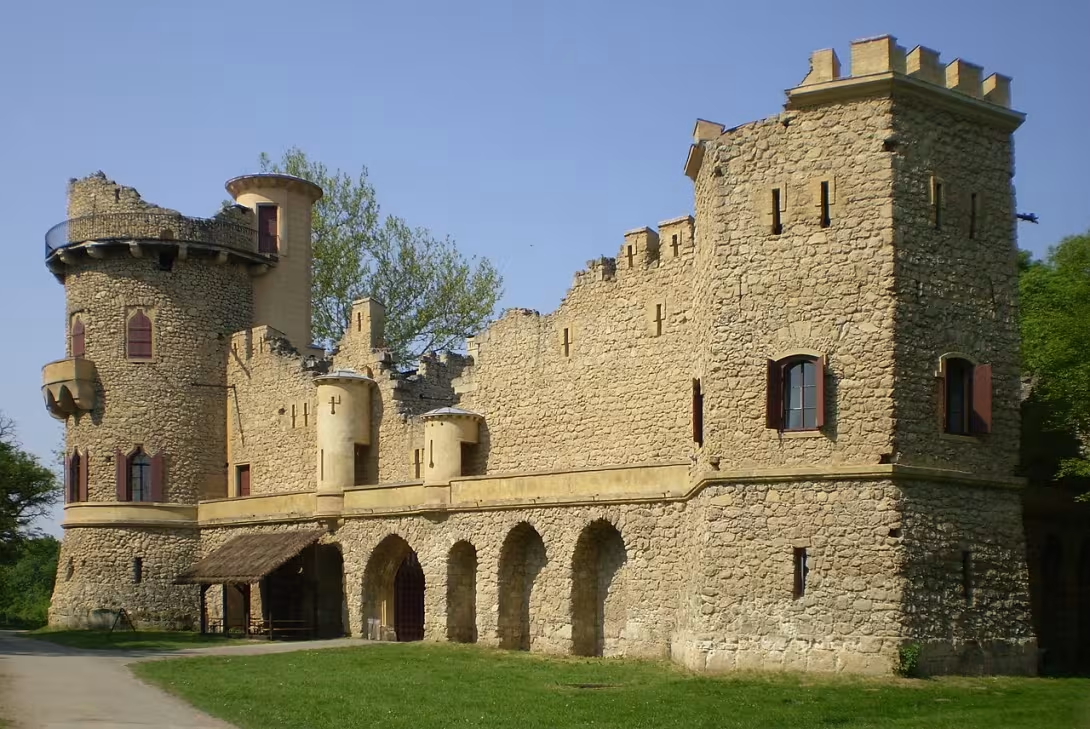

The historical appearance on the left is an AI-generated visualisation and serves as inspiration only.
Historical milestones
- 1801
- Začátek stavby Janova hrade.
- 1808
- Dokončení stavby Janova hrade.
- 1945
- Přechod vlastnictví na stát po druhé světové válce.
Architectural development
Janův hrad was designed as an inhabitable structure, unlike other contemporary ruins. Built on unstable swamp forest ground, it required wooden beams for stabilization and used stones from the nearby Great Moravian fortress Pohansko. The architecture features three spiral staircases made to turn in opposite directions, a detail typical of medieval castles.
Historical events
Construction began in 1801 by Prince Alois I. and was completed by his brother Jan Josef I. in a reduced form.
The largest deer ever hunted at the site weighed 350 kg, with its antlers displayed in the hunting lodge.
Owners
The estate belonged to the Lichtenštejn family from its construction in 1801 until 1945, after which it became state property.
Points of interest
– Janův hrad was originally designed as an inhabitable structure, unlike other ruins from the Romantic period which were purely decorative and not meant for living. This unique functionality allowed it to serve effectively as a hunting lodge.
– The construction of Janův hrad required innovative engineering solutions due to its location on unstable swamp forest ground. Wooden beams were used to stabilize the foundation, showcasing an early example of adapting architectural design to challenging environments.
– The stones used in building Janův hrad were sourced from the nearby Great Moravian fortress Pohansko, linking this 19th-century structure with ancient history and utilizing materials that carried historical significance.
– One of the most intriguing features of Janův hrad is its three spiral staircases that turn in opposite directions, a design choice typical of medieval castles but rare for structures built during the Romantic period. This architectural curiosity adds to the site's mystique and complexity.
– A notable event associated with Janův hrad was the hunting of an exceptionally large deer weighing 350 kg, whose antlers are displayed within the lodge. This historical anecdote highlights the site’s role in local aristocratic traditions and its connection to nature.
Guide
This guide is narrated by a synthetic voice generated by artificial intelligence.
Show guide text
This text was created by artificial intelligence and has not been editorially reviewed. It may contain inaccuracies.
Welcome to Janův Hrad, a unique artistic sculpture located in the heart of the Lednice-Valtice Area. You stand before a pseudo-Gothic ruin that symbolizes the Romanticism of the late 18th century. It was constructed here between 1801 and 1808 under the direction of Josef Hardtmuth, who also contributed to the construction of the nearby minaret.
Let's delve into the historical context. Janův Hrad was originally designed as a residential structure, which is an exception among similar ruins from the Romantic period that were mostly decorative and not intended for habitation. This unique function was utilized by the Lichtenstein family as a hunting lodge until 1945.
Now, pay attention to the architecture. Notice the pseudo-Gothic details typical of Romanticism. The façade is richly decorated with many windows and arcades. Given that Janův Hrad was originally residential, there are many details indicating its practical use. For example, the entrance gate is designed as a separate structure so that one could conveniently enter the castle on horseback.
Janův Hrad is connected to many interesting personalities. Jan I of Lichtenstein, Alois I of Lichtenstein, and Jan Josef I of Lichtenstein—all spent time here and used this hunting lodge. It's interesting that Janův Hrad was designed as a place where the family could gather and entertain themselves before returning to their main residence.
An intriguing aspect is that Janův Hrad was one of the first structures of its kind designed to be both residential and practical. Instead of being merely decorative, it served as an actual home where people could live and stay. This is why Janův Hrad is such a unique example of Romanticism.
Today, when you stop here, you can notice how Janův Hrad stands out in the surrounding landscape. Its unique architecture and history make it an exceptional place worth noticing. Whether you like it or not, Janův Hrad will be a place that stays with you long after your visit.
Tips for visitors
The best time to visit Janův hrad is during the spring and summer months when the surrounding swamp forests are in bloom, creating a picturesque backdrop for the artificial ruin.
Parking is available near the castle, but be aware that the area can get crowded during peak tourist season. It's recommended to use public transportation, which is available from nearby towns such as Lednice and Podivín.
Visitors should bring comfortable walking shoes, as the terrain can be uneven and muddy in some areas. It's also a good idea to bring a camera, as the unique atmosphere and scenic views make for great photography opportunities.
The best spots for photography are around the castle's perimeter, where the ruins blend seamlessly into the surrounding landscape. The golden hour, just before sunset, is ideal for capturing the castle's romantic atmosphere.
For families with children, Janův hrad offers a unique and educational experience. The castle's history and the surrounding nature make it an excellent spot for a family outing. Don't forget to explore the nearby Lednice Castle, which offers a more extensive collection of historical artifacts and interactive exhibits.
Frequently asked questions
Can the monument be visited?
Yes. We verified the opening hours or admission on the official website (9. 8. 2026); you will find them in the visitor information on this page. Please double-check with the operator before you travel.
What are the opening hours and admission?
Details verified on the official website (9. 8. 2026) are listed in the visitor information on this page. Official website: https://www.januv-hrad.cz/
Where is the monument?
Location: Janův hrad 348, Podivín, Jihomoravský kraj. The map on this page shows the exact spot.
Why is the monument protected?
It is listed in the Central List of Cultural Monuments of the Czech Republic as a cultural monument (register no. 36133/7-1646).
Businesses nearby
Do you run a restaurant, accommodation, shop, museum, rental, wellness or other visitor service near this monument? Show yourself directly to the people heading to it — this is how they will see you in the app and on the web:
Events nearby




Zdroj akcí: otevřená data měst a obcí ČR (Národní katalog otevřených dat) a kalendář akcí Národního památkového ústavu.
Nearby
Janův hrad is situated between the towns of Lednice, Podivín, and Ladná near the Lednice Castle. It is nestled in swamp forests on an island in the Staré Dyje river.
Accommodation nearby
Themed route
Tour 1: Janův Hrad and Surroundings
1. Janův hrad (ruins) - An interesting castle complex located on an island in the Stará Dyje River. It is a unique example of medieval architecture and a romantic ruin. 2. Lednicko-Valtický areál (access to park) - Approximately 1 km from the castle lies the Lednicko-Valtický Park, which is part of UNESCO's World Cultural Heritage. 3. Lednice (town) - The town is located about 2 km from the castle and offers visitors opportunities for refreshments and shopping.
Seasonal recommendations
Jaro
Spring is the ideal time to visit Janův Hrad, as nature around the castle is in full bloom. The forests and surroundings are green and full of life. The atmosphere is relaxed and calm, allowing you to explore the castle without crowds. We recommend visiting the castle in May or June when the weather is typically sunny and warm. Clothing should be comfortable and suitable for walks in nature.
Léto
In the summer months, Janův Hrad is a very popular tourist destination, so it's best to arrive early to avoid large crowds. The best time to visit the castle is in July or August when the weather is warm and sunny. We recommend bringing drinks and snacks with you, as outdoor seating is available during the summer season. Don't forget to bring sunscreen and an umbrella.
Podzim
The autumn period is a beautiful time to visit Janův Hrad, as nature is in full color. The forests are green and yellow, and the air is fresh and cool. The atmosphere is calm and relaxed, allowing you to explore the castle without crowds. We recommend visiting the castle in September or October when the weather is typically sunny and chilly. Clothing should be more suitable for cooler weather.
Zima
The winter season is an ideal time to visit Janův Hrad if you enjoy snowy landscapes. The castle is open year-round, but its opening hours are shorter, so it's a good idea to purchase tickets in advance. We recommend visiting the castle in January or February when the weather is typically cold and snowy. Don't forget to bring warm clothing and suitable boots for walking in the snow.
Visualizations and artistic views


The visualisations are generated by artificial intelligence and serve as inspiration.
Photos from the area
Real photos taken near the monument


Zdroj a licence jsou uvedeny u každého snímku.
Tips from visitors
No tips yet. Be the first!
Log in and add your tip.
Sources and literature
Photos: Michal Klajban / CC BY-SA 4.0 — Wikimedia Commons. The author and licence also appear when you hover over the image.
Faktickým podkladem tohoto textu byl článek na Wikipedii, jehož autory jsou přispěvatelé Wikipedie. Článek je dostupný pod licencí CC BY-SA 4.0.
Location on the map

Příběhy a pověsti
Legendy, pověsti a příběhy spjaté s touto památkou
Příběh: Janův hrad
Bylo to v pondělí ráno, kdy Martin, nádenník z Podivína, se probudil ze svého dřevěného lehnadla pod stíny starých líp u Janova hrade. Povětří ještě vylalo d…
Číst příběh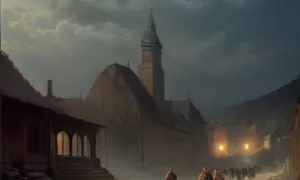
Pověst: Janův hrad
Traduje se, že když lichtenštejnský kníže Alois I. rozhodl o stavbě nové romantické zříceniny v lužním lese u Podivína, jeho stavitelé se potýkali s potížemi…
Číst příběhFotografie návštěvníků
Zatím žádné fotografie. Buďte první, kdo přidá fotografii z návštěvy!
Log in a přidejte svou fotografii nebo hodnoťte.
Za ověřenou návštěvu v aplikaci získáte víc bodů — poznáme podle GPS, že jste na místě.
Reviews and comments