



Jarošův mlýn Museum building
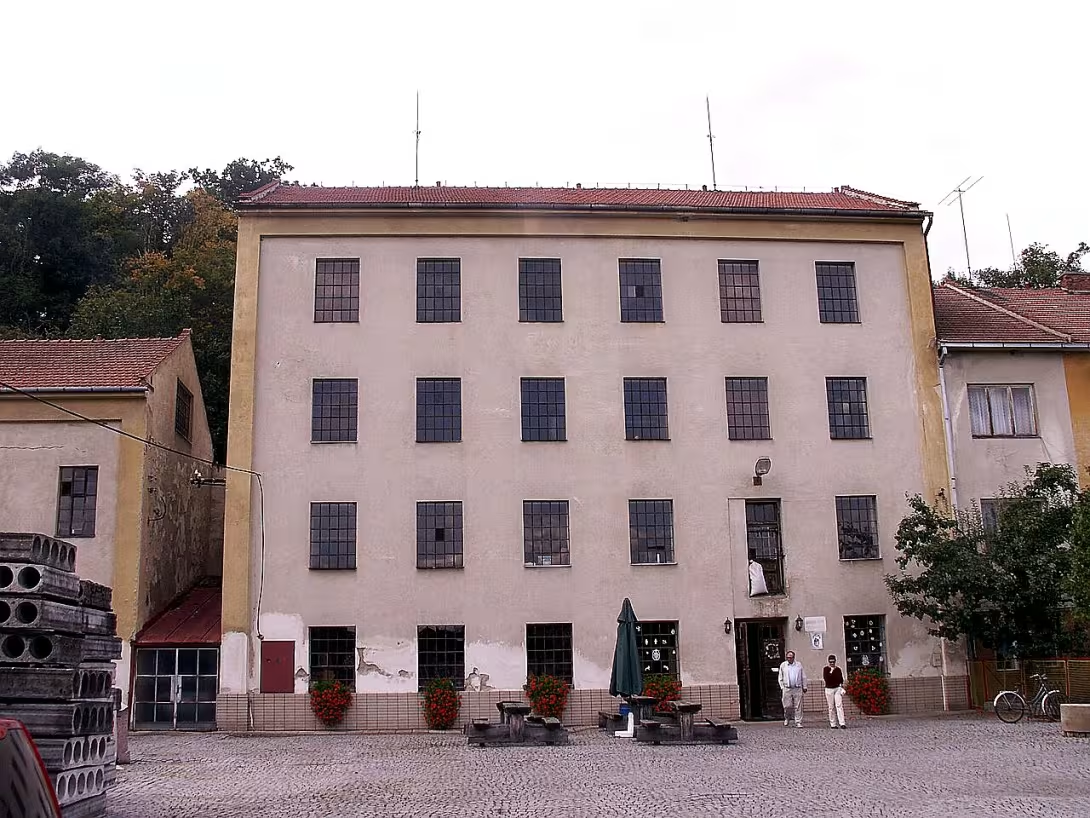
Jarošův mlýn, located in Veverské Bíteška, is a historical miller building and a museum. Since 2002 it has been protected as a cultural monument of the Czech Republic. This mill has a rich history dating back to 1635, when it was first mentioned in writing. In 1937-1938 the Jaroš family rebuilt the mill to its present form, making it a unique monument with modern equipment for its time.
The first mention of Jaroš's mill dates back to 1635. At that time, it was part of many mills on the flow of the White Creek, serving the population of the Vever Bítěšky and surrounding areas. The reconstruction took place in 1937- 1938 on the initiative of Blanka and Maximilian Jaroš, descendants of the mill families Pippal and Jaroš. This process included the demolition of the old building and the construction of a new four-storey building with the latest technology provided by Josef Prokop and the sons of Pardubice. The turbine water came from a lifting drive leading to a water tank.
The mill ownership has changed over the years. After the Jaroše family, the right to operate on the Economic cooperative in Brno in 1951 and subsequently the national enterprise of the Central Moravian Mill Brno in 1953. After 40 years of maintenance, the mill returned to the Jaros family in 1991 and remained in operation until 2002 when it was declared a cultural monument. This year it was also made available to the public as a museum.
Jarošův mlýn is now accessible by the blue tourist sign from the centre of Veverské Bítěška or the valley of the White Creek. There is a parking lot in front of the mill, which makes it easier to visit. The mill is an important monument thanks to its history and technological progress from the period of reconstruction. It's a place where a visitor can learn about the history and technology of grinding.
Jarošův mlýn is not only a monument to our past, but also a witness to technological progress. His presence in Veverské Bíteška resembles the importance of miller craft for the region and its history. Visiting this museum is not only a way into the past, but also an inspiration to understand the importance of industrial innovation and its impact on people's lives. Jarošův mlýn is worth visiting not only for historians, but also for any quitter who is interested in the rich culture and heritage of the Czech Republic.
Historical milestones
- 2002
- Declaration for the cultural monument of the Czech Republic.
Architectural development
The original mill was rebuilt by the Jaroš family in 1937- 1938. The old building was demolished and a new four-storey building was built with modern equipment supplied by Josef Prokop and sons of Pardubice.
Historical events
- 1635
- First written mention of the mill.
- 1937-1938
- Rebuilding to the present form of the Jaroš family.
- 1951
- The right to operate has been transferred to the Economic Cooperative in Brno.
- 2002
- Declared a cultural monument and made available as a museum.
Owners
- 1635
- 1937-1938
- 1951
- 1953
- 1991
- 2002
Points of interest
- Jarošův mlýn is a historical miller building and a museum. - Since 2002 it has been protected as a cultural monument of the Czech Republic. - The first mention of Jaroš's mill dates back to 1635. - The reconstruction took place in 1937- 1938 on the initiative of Blanka and Maximilian Jaroše. - After 40 years of maintenance, the mill returned to the Jaros family in 1991.
Guide
Show guide text
This text was created by artificial intelligence and has not been editorially reviewed. It may contain inaccuracies.
Welcome to the Squirrel Witch. You are standing right in front of a place that carries deep peace and a fascinating story of human effort and tradition. Before your eyes is Jarošův mlýn, a historical object that has dominated this part of the landscape for decades. Please feel this atmosphere. Do you feel how you are dealing with a past here that is not just a simple record in textbooks, but a living part of this space? This mill is not just a building made of wood and stone, it is a witness of many centuries that has survived changes in times, technological revolution and the fate of individual families. Before you go any further, stop for a moment and just look at his presence. Feel its stability and how firmly it has planted its roots in this country.
Let's move further into time together and understand where this mill really comes from. The first clues that lead us to this place are surprisingly old. The first mention of Jaroš's mill dates back to the year six hundred thirty-five. Imagine a world back then, a world where the mill was the key point of every village. It wasn't just a machine, it was the heart of the community, a place where people met, where grain was processed and where there was a foundation for the survival of many families. Since then, centuries have passed, nearly everything around us has changed since the year six hundred and thirty-five, but this miller object is still here and still teaches us about the history of its craft. It's a fascinating idea that you stand by something that was a part of life over 300 years ago.
Now pay attention to the very form of the building you are currently observing. Although the roots of the mill are very deep, the form you see right now is the result of a very specific and important period. Pay attention to the appearance of your eyes. Between a thousand and nine hundred and thirty-seven and a thousand and nine hundred and thirty-eight, there was a major reconstruction which breathed into the mill its present character. It is interesting that despite its importance and uniqueness, we do not know the names of the particular architects who oversaw this reconstruction. Yet in every detail of his present form we can feel the effort for harmony and functionality. Feel how the older traditions combine in this construction with the modern idea of what modern, efficient miller traffic should look like. This reconstruction was a key moment that allowed the mill to move into a new era and to retain its dignity even in the difficult times that followed.
However, this transformation was not only the unknown plan, but, above all, specific people. And that's where history meets a personal story. This fundamental reconstruction was not random, it was an initiative of the Jaros family. Pay attention to the names that are inherent in this place. Blanka Jarošová and Maxmilián Jaroš were the ones who decided that the mill would get its present form. Imagine their courage and their vision. It wasn't just the owners, it was the people who put their energy, their efforts and their care into this place so that the mill could continue to serve and excel. Their names today carry this object to the next generation. It is thanks to their decision and their work that we can today admire this unique miller object that has become a symbol of their family's determination and love of craft.
You may now wonder how this historical object has behaved until today. The answer lies in its immense value, which the government also recognised. In the year two thousand and two, Jarošův mlýn was officially declared a cultural monument of the Czech Republic. This is proof that the place you are standing in front of is not just an ordinary building, but an untouchable heritage of our culture. This protection allows us to see the mill today not only as a historical object, but also as a fascinating museum of miller craft. Today you can explore the grinding technique and understand how complex and fascinating the process became with the processing of the grain. It is a way back to a time when people had to work closely in line with the natural forces and mechanical principles that helped them.
There's one more thing that might interest you if you look at this whole thing. Jarošův mlýn is not only a static museum, it is a place where history meets technical precision. It is a fascinating contrast between ancient craft, which is rooted in the seventeenth century, and technical equipment that has been improved for centuries. This continuity, this constant movement from old to new, is what makes this place so special. Every element you see here is the result of the long evolution of the milling industry.
Now I won't keep you any longer. A world full of history, technology and human stories opens up before you. I invite you to come in, explore the space and let yourself be carried away by the atmosphere of this unique museum. Let yourself be inspired by the work of Blanka and Maximilian Jaros and try to find in every detail a reflection of that ancient time. Enjoy your tour and I believe that Jarošův mlýn will leave you with an unforgettable impression and new views of the history of our craft. Thank you for being with us.
Tips for visitors
Jarošův mlýn in Veverské Bíteška is ideal to visit in the morning when there is a quieter atmosphere and sunlight ideally illuminates the historical facade of this cultural monument. We recommend that you monitor the official website for the current operating hours and input information to plan your visit as best as possible. If you prefer active movement, you can walk to the monument on a blue tourist sign leading either directly from the centre of the Veverské Bítěška or the picturesque valley of the White Creek; for precise connection by public transport we recommend using local search engine. Take with you comfortable shoes suitable for walking along the surrounding tourist routes and also drinking water, especially if you plan a longer hike through the valleys. The lovers of photography appreciate the exterior of the mill from the morning view from the driveway or details of historical architecture that best excel in the side light. In the immediate vicinity of the monument you can use the blue tourist brand to walk into the nature through the valley of the White Brook or the center of the village Veverská Bítýška. Families with children will appreciate a light walk accessible by blue brand, which can be easily handled by even the smallest visitors, and enough space around the mill for safe movement.
Frequently asked questions
Can the monument be visited?
Some buildings of this kind are open for guided tours, others serve another purpose or are privately owned. We have not verified whether and when this monument is open – please ask the operator.
What are the opening hours and admission?
We have not verified the opening hours or admission. Current information is published by the operator. Official website: http://www.jarosuvmlyn.cz/
Where is the monument?
Location: Veverská Bítýška, Jihomoravský kraj. The map on this page shows the exact spot.
Why is the monument protected?
It is listed in the Central List of Cultural Monuments of the Czech Republic as a cultural monument (register no. 1000471948).
Businesses nearby
Do you run a restaurant, accommodation, shop, museum, rental, wellness or other visitor service near this monument? Show yourself directly to the people heading to it — this is how they will see you in the app and on the web:
Events nearby


Zdroj akcí: otevřená data měst a obcí ČR (Národní katalog otevřených dat) a kalendář akcí Národního památkového ústavu.
Nearby
The mill is accessible by blue tourist sign from the centre of the Veverské Bítěška or the valley of the White Brook.
There's a parking lot outside the mill.
Accommodation nearby
Trips and activities nearby
Guided tours, tickets and activities nearby from GetYourGuide
Affiliate link: if you buy from the partner, we may receive a commission. The price for you does not change.
Search tours and activities →Themed route
1. Centrum Veverské Bítešky Type: Default point Why is it worth a visit: The center of the village serves as an ideal starting point for your trip, where you can go on your way to the main destination.
2. Blue tourist marks Type: Tourist route Why is it worth a visit: This marked journey will comfortably bring you from the centre of the village directly to the mill and offer a pleasant walk.
3. Valley White Flood Type: Natural valley Why is it worth a visit: The valley represents a picturesque natural path that can be used to access the mill and enjoy the surrounding nature.
4. Parking in front of the mill Type: Landing area Why is worth a visit: Parking is located right in front of the mill and provides comfortable parking for visitors arriving by car.
5.Jarošův mlýn Type: Mill Why is it worth a visit: The main destination of the whole trip is the historic mill, which is accessible by the blue tourist sign or by the valley of the White Creek and is situated in the parking lot.
Seasonal recommendations
Spring at the Jaroš Mill in Veverské Bíteška brings awakening nature around the river Bíteška and fresh green colors that perfectly contradict historical wonder in perfect condition. The sun's rays penetrate the trees' crowns and create a fine shadow game on wooden elements. In this period there is a calm and rewarding atmosphere ideal for the perception of the quiet murmur of water. On weekends it is slightly fuller, therefore I recommend to start the morning immediately after opening. Put on fixed shoes in humidified spring terrain and a lighter jacket because cold wind can still blow at the water.
The summer opens the gates of Jaroš's mill in full force, when dense crowns of surrounding trees provide a welcome shadow and the sun waters the whole complex with bright, sharp light. The air smells of resin and warm soil and the atmosphere is alive, full of humming insects and cheerful voices of hikers. In the main summer season, count on the largest number of visitors, which is why the best time for an early morning or late afternoon tour is to avoid the biggest heat. Don't forget the sunglasses, headgear, plenty of drinking water and airy clothes made of natural materials.
Autumn transforms the surroundings of Veverské Bíteška into a colourful mosaic of shades of yellow, red and brown, reflecting on the surface of the drive. The low sun creates warm, golden lighting with long shadows, which gives the whole place a melancholy yet warm atmosphere. The crowds of tourists have already thinned considerably, so you can enjoy the tour in complete peace. Practical advice includes layered clothing, because the wounds are usually foggy and cold, but the afternoon can still be pleasant. It suits waterproof shoes for falling, morning dew full of leaves.
Winter covers Jarošův mlýn into silence and often also into a snow blanket that dampens sounds and makes authentic details of the old craft architecture stand out. The lighting is short and cold in the winter months, while the low sun draws sharp silhouettes into the snowy landscape. In advent time and during winter weekends, holiday pilgrims come here for a quiet walk. It is necessary to choose really warm winter clothes, hat, gloves and quality winter shoes with anti-slip soles, because access routes can freeze. Due to the shorter opening time, plan your arrival for lunch hours when it is the hottest outside.
Visualizations and artistic views


The visualisations are generated by artificial intelligence and serve as inspiration.
Photos from the area
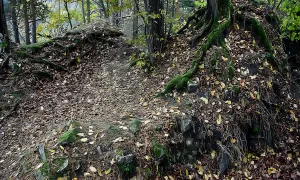
Real photos taken near the monument

Zdroj a licence jsou uvedeny u každého snímku.
Tips from visitors
No tips yet. Be the first!
Log in and add your tip.
Sources and literature
Photos: BíláVrána / CC BY-SA 4.0 — Wikimedia Commons. The author and licence also appear when you hover over the image.
Faktickým podkladem tohoto textu byl článek na Wikipedii, jehož autory jsou přispěvatelé Wikipedie. Článek je dostupný pod licencí CC BY-SA 4.0.
Location on the map


Příběhy a pověsti
Legendy, pověsti a příběhy spjaté s touto památkou
Fotografie návštěvníků
Zatím žádné fotografie. Buďte první, kdo přidá fotografii z návštěvy!
Log in a přidejte svou fotografii nebo hodnoťte.
Za ověřenou návštěvu v aplikaci získáte víc bodů — poznáme podle GPS, že jste na místě.
Reviews and comments