



Jenštejn Ruin
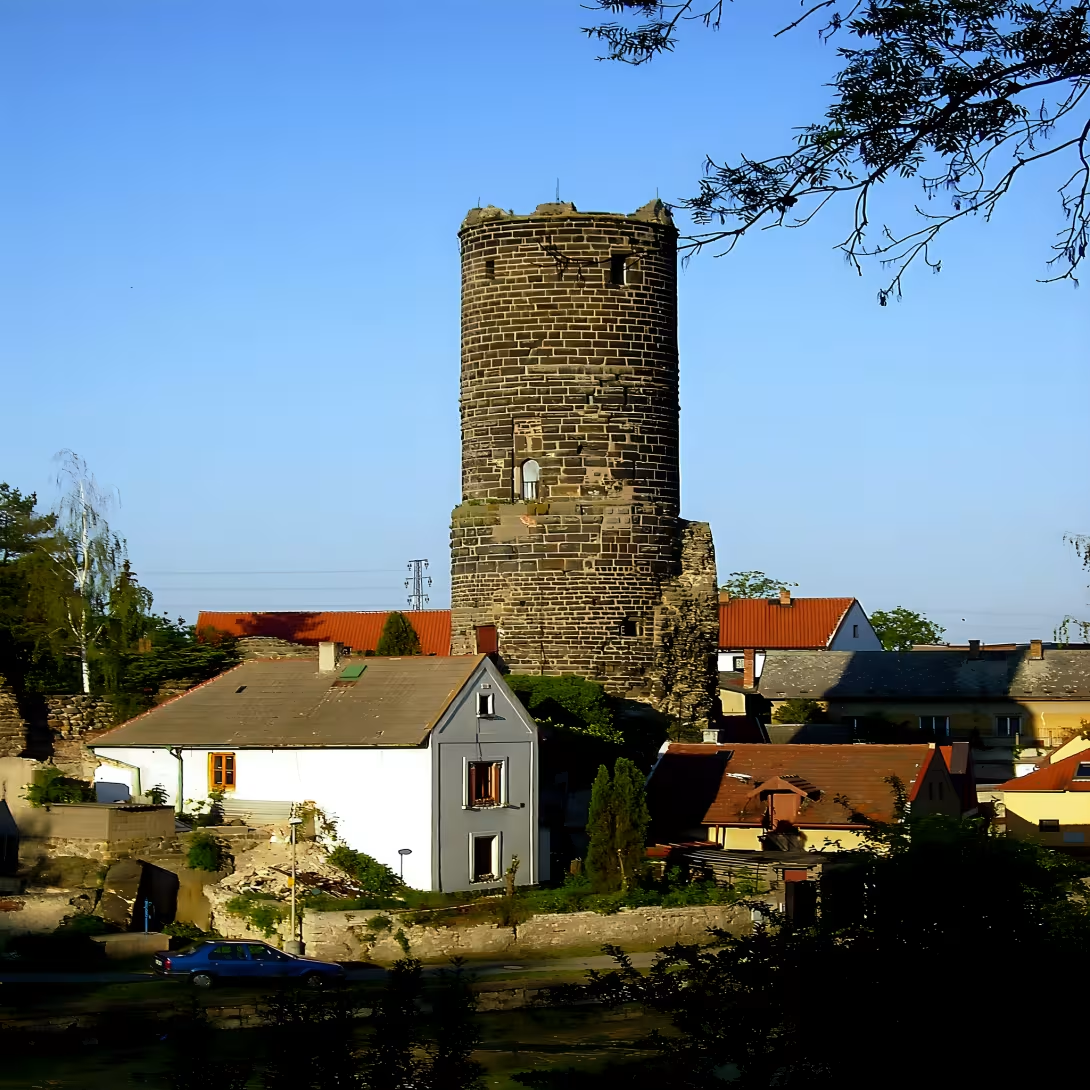
Jenštejn Castle is a medieval ruin located in Jenštejn, within Prague-East District of the Central Bohemian Region in the Czech Republic. This historical site reflects the region's rich past and its strategic importance over centuries. Founded in the early 14th century by Jenc of Janovice, it was initially built as a water-protected castle on a low sandstone rock with a deep moat that could be filled from nearby lakes at Vinoř Creek. Today, Jenštejn Castle is notable for its unique oval shape and a 28-meter-high tower, which serves as an observation point offering panoramic views of the surrounding landscape.
The origins of Jenštejn Castle trace back to Jenc of Janovice in the early 14th century, who established it with a small castle. The site's name derives from its founder, reflecting his influence and status at the time. By 1368, the castle was documented as being owned by Pavel of Vlašim, marking the beginning of its association with the Jenštejn family. This period saw significant architectural enhancements under Jan of Jenštejn, who transformed it into a representative structure befitting his scholarly and social stature. The castle's design incorporated distinctive staufer-style brickwork for aesthetic purposes, reflecting the prestige of its owners.
Architecturally, Jenštejn Castle is characterized by its strategic location in a valley on a sandstone rock, with remnants of a deep moat that once surrounded it. Its layout features an unusual oval shape and a prominent tower that dominates the landscape. The oldest parts include the lower section of the tower and adjacent walls constructed from regular ashlar. Over time, three palace wings were added around a small courtyard, though much has been lost to history. Surviving elements highlight the architectural evolution during Jan of Jenštejn's tenure, including a private chapel on the second floor of the tower.
Throughout its history, Jenštejn Castle experienced numerous changes in ownership and fortune. After Jenc of Janovice, it was acquired by Pavel of Vlašim, who initiated the transition to the Jenštejn family name. The castle later became associated with notable figures such as Jan of Jenštejn, a prominent scholar and Prague Archbishop. However, disputes with King Wenceslaus IV led to its confiscation in 1390 and subsequent ownership by various individuals, including Sigismund Huller and Oldřich of Černice. The castle's significance waned over time, culminating in its abandonment and eventual destruction during the Thirty Years' War.
Key events at Jenštejn Castle include its initial construction in the early 14th century and subsequent enhancements by Jan of Jenštejn. Its confiscation by King Wenceslaus IV in 1390 marked a turning point, leading to a series of ownership changes and eventual decline. The castle's destruction during the Thirty Years' War further contributed to its ruinous state. Despite these challenges, it remained a symbol of historical significance, inspiring the village flag with elements from the Jenštejn family coat of arms.
Today, Jenštejn Castle stands as an open-air monument protected since 1958 and accessible to the public following reconstruction efforts in 1977. Visitors can explore its ruins and view an exhibition at the Regional Museum of Prague-East, which offers insights into life within the castle through period paintings and a model. The tower continues to serve as a lookout point, providing sweeping views of the local landscape. Jenštejn Castle's historical significance and architectural remnants make it a compelling destination for those interested in exploring Czech history.
Jenštejn Castle remains a valuable cultural heritage site that offers a glimpse into the medieval past of the Central Bohemian Region. Its preservation allows visitors to connect with the stories and lives of those who once inhabited this strategic stronghold. Whether drawn by its historical significance or the panoramic views it provides, Jenštejn Castle is well worth a visit for anyone interested in exploring the rich tapestry of Czech history.
Then and now
Drag the slider to compare how the landmark may have looked when it was built with the view today.
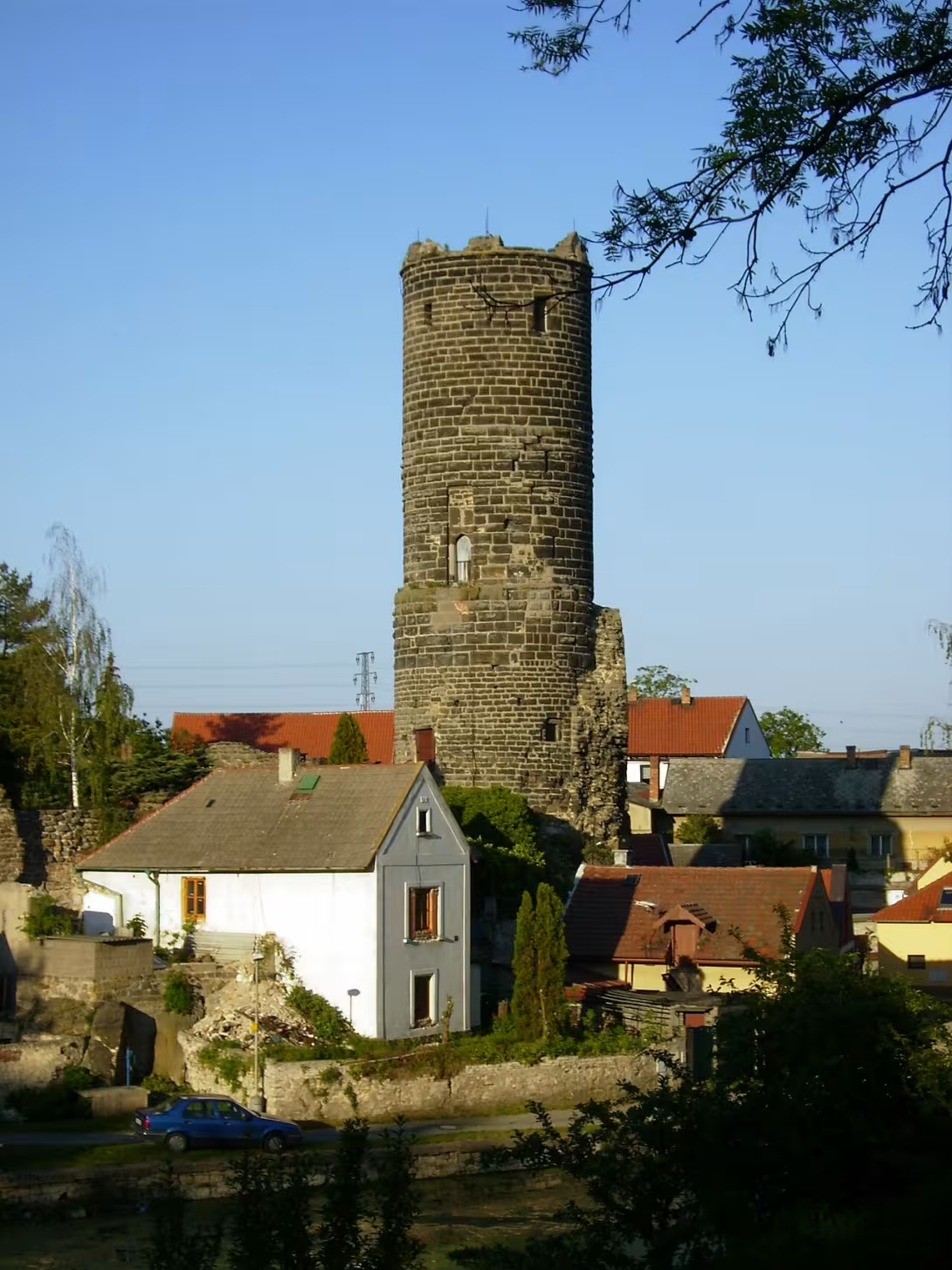

The historical appearance on the left is an AI-generated visualisation and serves as inspiration only.
Historical milestones
- 1341
- First documented mention of Jenštejn.
- 1390
- Confiscation by King Wenceslaus IV.
Architectural development
Jenštejn Castle underwent significant architectural development during the reign of Jan z Jenštejna, who enhanced its prestige with a representative reconstruction. The castle features distinctive staufer-style brickwork used for aesthetic purposes.
Historical events
First documented mention in 1341.
Confiscated by King Wenceslaus IV in 1390.
Owners
Jence z Janovic (1341),
Pavel, notář královské komory (circa 1368-1375),
Jan z Jenštejna (post-1375),
Zikmund Huler z Orlíku (1390),
Oldřich ze Černčic (early 15th century),
Ctibor z Jenštejna (?),
Jindřich z Cách (post-1410),
Aleš Škopek z Dubé (post-1426, documented in 1431),
Jan Zachař z Plotišť (died 1521),
Ladislav ze Šternberka (1521),
Jan Litoborský z Chlumu (1526),
Jan Hrušovský z Hrušova (1526-1539),
Mikuláš Rendl z Úšavy (1539),
Václav a Mikuláš Hrzánové z Harasova (1542),
Points of interest
- Jenštejn Castle's unique oval shape and 28-meter-high tower were designed not only for defense but also to reflect the prestige of its owners, incorporating distinctive staufer-style brickwork that was quite unusual for the region at the time.
- The castle's deep moat, which could be filled from nearby lakes at Vinoř Creek, highlights an advanced understanding of medieval engineering and strategic defensive planning, making it a formidable stronghold during its peak.
- Despite its initial construction in the early 14th century by Jenc of Janovice, Jenštejn Castle became a symbol of scholarly prestige when Jan of Jenštejn, one of its notable owners, served as Prague Archbishop and was renowned for his intellectual contributions to medieval Europe.
- The castle's history includes an intriguing episode where it was confiscated by King Wenceslaus IV in 1390 due to disputes with Jan of Jenštejn, illustrating the complex political dynamics of medieval Bohemia and how personal conflicts could impact property ownership.
- After its destruction during the Thirty Years' War, parts of Jenštejn Castle were repurposed for local use, including being used as a quarry, which led to the loss of much of its original structure but also contributed to the preservation of some elements that have become historical curiosities today.
Guide
This guide is narrated by a synthetic voice generated by artificial intelligence.
Show guide text
This text was created by artificial intelligence and has not been editorially reviewed. It may contain inaccuracies.
The ruins of Jenštejn castle are located in the municipality of the same name in the Prague-East district. The first written record dates back to 1341. At that time, the castle was owned by Jenec of Janovic, probably its founder, and he named it after himself. The name Jencestein means Jenec's stone.
Around 1368, the castle was purchased by Pavel, a notary of the royal chamber and brother of the Prague archbishop Jan of Vlašimi. He soon began using the surname of Jenštejn. The lords of Jenštejn later derived their name from the castle. Pavel's son Jan himself later became the Prague archbishop. He was an important scholar and needed a residence that would match his position. He had the castle rebuilt. The tower bears characteristics typical of castles built by the royal construction workshop. These include profiled portals and deliberately used Staufen ashlar masonry, which served mainly an aesthetic function.
However, Jan soon became involved in disputes with King Václav the Fourth after the rebuilding. The king attacked the castle and in 1390 he confiscated it. Later that same year, the new lord became Zikmund Huler of Orlík, the chamberlain.
Then the owners changed hands frequently. At the beginning of the 15th century, the castle was acquired by Jindřich of Cách, who attached it to the estates of Čelákovice and Mochov. After 1426, Aleš Škopek of Dubé purchased it. In the 16th century, Jenštejn changed hands even more rapidly. In 1542 it belonged to the Hrzán brothers of Harasov, and in 1560 Jan Dobřichovský of Dobřichov purchased it. He sold the castle in 1568 to Ladislav the Elder of Lobkovice. However, since he did not have it registered in the land records, he could not hand it over to him.
Since 1966, Jenštejn has been protected as a cultural monument. It belongs to the municipality of Jenštejn, which also maintains it. After restoration, it was opened to the public in 1977. The East Prague Regional Museum has an exhibition in the castle about life in the castle with period illustrations and a model of the castle. The castle tower rises above the surrounding flat landscape and serves as a lookout point. A red-marked hiking trail runs around the castle from Vinoř to Miškovic.
Tips for visitors
The best time to visit Jenštejn Castle is during late spring or early autumn when the weather is mild, making it perfect for exploring the ruins without the discomfort of summer heat or winter cold. These seasons also offer beautiful natural scenery with vibrant foliage in autumn and blooming flowers in spring, enhancing your experience at this historical site.
Parking near Jenštejn Castle can be found along the roads leading to the castle, but spaces may be limited due to its popularity among tourists. Public transportation is a viable option; you can reach Jenštejn by train or bus and then follow the red-marked tourist trail that leads directly to the site. For the most current travel options, it's recommended to check online resources or local transport websites.
When visiting Jenštejn Castle, bring comfortable walking shoes as the terrain around the castle can be uneven due to its natural landscape setting. A hat and sunscreen are advisable for protection against the sun, especially during peak daylight hours. Additionally, carrying a water bottle will help keep you hydrated throughout your visit.
For photography enthusiasts, the best spots at Jenštejn Castle include the panoramic views from the castle's highest points where you can capture both the ruins and the surrounding flat landscape. The soft light of early morning or late afternoon provides ideal conditions for taking photos with minimal shadows and enhanced colors. Don't forget to bring a camera or smartphone with a good lens for capturing these moments.
Nearby attractions within 30 minutes include the picturesque village of Jenštejn, where you can explore local shops and enjoy traditional Czech cuisine at nearby restaurants. The area is also known for its scenic walking trails that offer further exploration opportunities in nature. These spots provide additional context to the historical significance of the castle and allow visitors to immerse themselves in the region's culture.
For families with children, Jenštejn Castle offers a fun day out with plenty of space for kids to run around safely. The site includes an exhibition that provides insights into medieval life, which can be both educational and engaging for younger visitors. Be sure to bring snacks or a packed lunch as there are limited food options directly at the castle, making it convenient for families to enjoy their own meals while exploring.
Frequently asked questions
Can the monument be visited?
Yes. We verified the opening hours or admission on the official website (5. 10. 2026); you will find them in the visitor information on this page. Please double-check with the operator before you travel.
What are the opening hours and admission?
Details verified on the official website (5. 10. 2026) are listed in the visitor information on this page. Official website: https://www.hrad-jenstejn.cz/
Where is the monument?
Location: Jenštejn, Středočeský kraj. The map on this page shows the exact spot.
Why is the monument protected?
It is listed in the Central List of Cultural Monuments of the Czech Republic as a cultural monument (register no. 22288/2-2072).
Businesses nearby
Do you run a restaurant, accommodation, shop, museum, rental, wellness or other visitor service near this monument? Show yourself directly to the people heading to it — this is how they will see you in the app and on the web:
Nearby
Jenštejn Castle is surrounded by a flat landscape and is accessible via a red-marked tourist trail. The area offers scenic views and historical context.
Accommodation nearby
Trips and activities nearby
Guided tours, tickets and activities nearby from GetYourGuide
Affiliate link: if you buy from the partner, we may receive a commission. The price for you does not change.
Search tours and activities →Themed route
Jenštejn Thematic Tour
1. Jenštejn Castle Ruins
Type: Historical Site
Jenštejn Castle is a captivating medieval fortress ruin offering panoramic views of the surrounding flat landscape. Its historical significance as a strategic stronghold in the region makes it an essential visit for history enthusiasts and those interested in architectural heritage.
2. Red-Marked Tourist Trail
Type: Scenic Walk
Starting from the castle, follow the red-marked tourist trail that winds through the picturesque countryside. This path provides not only a leisurely walk but also enriches your understanding of the area's historical context and natural beauty.
3. Castle Park
Type: Historical Landscape
Within the immediate vicinity of Jenštejn Castle, explore the castle park. The grounds offer a serene setting to reflect on the past while enjoying the tranquil environment that complements the ruins' majestic presence.
This thematic tour offers a blend of history and nature, providing an enriching experience through accessible paths and informative landscapes surrounding Jenštejn Castle.
Seasonal recommendations
Spring: The Jenštejn Castle ruins come alive with vibrant colors as spring breathes new life into the surrounding landscape. Wildflowers carpet the grounds, and fresh greenery adorns the ancient stones, creating a picturesque scene that is both serene and inspiring. This season offers a unique interplay of light and shadow, enhancing the mystical atmosphere of the ruins. Visitors should be prepared for occasional rain showers, so carrying an umbrella or wearing a waterproof jacket is advisable. The weather can be unpredictable, with temperatures ranging from cool to mild. Early mornings are ideal for exploring when the site is less crowded, allowing you to fully appreciate the awakening nature and tranquil ambiance.
Summer: Summer at Jenštejn Castle is characterized by long daylight hours and warm temperatures, making it a popular time for visitors seeking outdoor adventures. The lush greenery provides a stunning backdrop to the castle's ruins, while birdsong fills the air, creating an idyllic setting. However, this season also brings larger crowds, especially during peak tourist months. To avoid the heat of midday and the busiest times, it is recommended to visit early in the morning or later in the afternoon. Comfortable walking shoes, sun protection such as hats and sunscreen, and plenty of water are essential for a pleasant experience.
Autumn: Autumn transforms Jenštejn Castle into a canvas of fiery reds, oranges, and yellows. The changing leaves create a breathtaking spectacle that enhances the historical ambiance of the ruins. The cooler temperatures make it an ideal time to explore without the summer crowds, offering a more peaceful visit. As daylight hours shorten, bringing along a light jacket or sweater is advisable for comfort during your exploration. Early mornings are particularly magical, with mist often enveloping the site and adding to its mystical allure.
Winter: Winter at Jenštejn Castle offers a stark yet beautiful contrast, as snow blankets the ruins and surrounding landscape in a serene white. The quiet of the off-peak season allows for an intimate experience, where one can truly appreciate the solitude and history of the site. However, access may be limited due to weather conditions, so it's important to check ahead regarding opening hours. Dressing warmly with layers is essential, along with sturdy boots for navigating potentially icy paths. The soft winter light creates a unique atmosphere that captures the castle in a timeless moment of tranquility.
Visualizations and artistic views


The visualisations are generated by artificial intelligence and serve as inspiration.
Photos from the area
Real photos taken near the monument

Zdroj a licence jsou uvedeny u každého snímku.
Tips from visitors
No tips yet. Be the first!
Log in and add your tip.
Sources and literature
Photos: Petr Vilgus / CC BY 2.5, rozlišení zvýšeno umělou inteligencí — Wikimedia Commons. The author and licence also appear when you hover over the image.
Faktickým podkladem tohoto textu byl článek na Wikipedii, jehož autory jsou přispěvatelé Wikipedie. Článek je dostupný pod licencí CC BY-SA 4.0.
Location on the map





Příběhy a pověsti
Legendy, pověsti a příběhy spjaté s touto památkou
Fotografie návštěvníků
Zatím žádné fotografie. Buďte první, kdo přidá fotografii z návštěvy!
Log in a přidejte svou fotografii nebo hodnoťte.
Za ověřenou návštěvu v aplikaci získáte víc bodů — poznáme podle GPS, že jste na místě.
Reviews and comments