






Jenštejnský dům v Berouně House
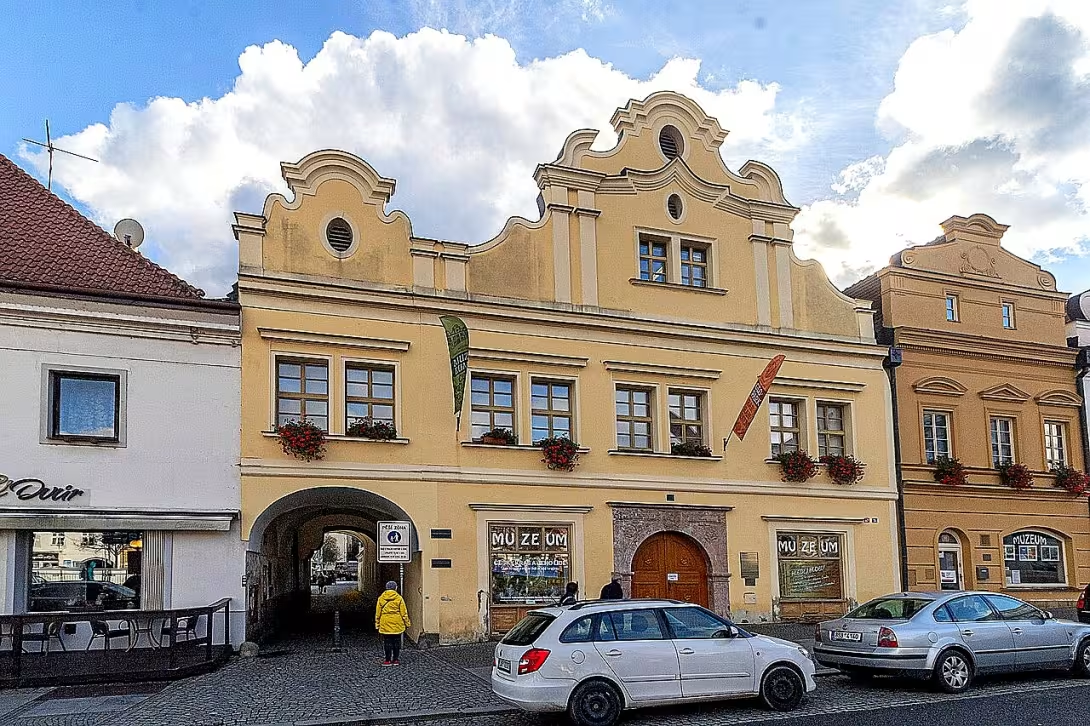
The Jenštejn House is an important Baroque monument at the Hus Square in Beroun, which since 1968 serves as an exhibition of the Museum of the Czech Karst. It is one of the most important historical buildings in the city centre.
The construction was built after the town was restored after the fire of 1599. The investor was imperial speedster Jindřich Čížek z Jenštejna, and the implementation led by Jiří Táborský.
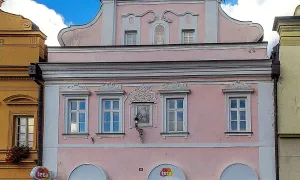
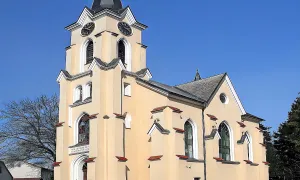
The house is single storey, row and eight-axis. Its present form was acquired in the first half of the 18th century after the fire in 1735 when it was rebuilt into a late Baroque style. A characteristic element is the intricately shaped main shield divided by pilasters. The eastern two-axis part of the house contains an underpass with a vaulted vault and ends with a smaller separate shield. From the late Renaissance period of 1612 the marble entrance portal remained with a request for the blessing of the house and its inhabitants.
He remained in the family of Čežky z Jenštejna's house until 1652 when he was confiscated due to debts by Jan Václav Saláto, the husband of the granddaughter Catherine. Then the owners often took turns. In the second half of the 19th century it was owned by the Jewish family Roubíčková, which operated a hardware store on the ground floor. The last owner of this family, Kamila Roubíčková, died in a concentration camp. After 1948 the house became state owned; there was a hardware store on the ground floor and the floor was used for living.
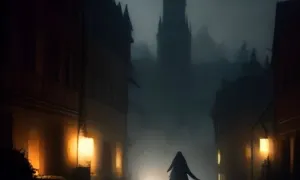
The facade and ground floor were repaired in 1956- 1957, and since 1958 the building has been protected as a cultural monument. In 1994 a general repair of the roof structure took place and in 1996 new spaces were built in the attic. There's a legend with the house about a white lady, the spirit of a executed maid who's been wandering the last day of the year with a bunch of keys. According to the legend, the maid uncarefully locked the house owner's children in the arched basement, which subsequently fell into the well in darkness and drowned.
Since 1968, the Museum of Czech Karst has been in the house. This monument represents valuable architectural evidence of the development of Beroun from Renaissance to Baroque to modern times. Visiting this museum offers insight into the history of the region within an authentic historical environment.
Historical milestones
- 1612
- creation of marble input portal
- 1735
- fire and subsequent baroque reconstruction
- 1958
- declaration of cultural monument
- 1968
- location of exhibition Museum of Czech Karst
Architectural development
Originally a late Renaissance building with marble portal from 1612. In the first half of the 18th century the house was rebuilt into a late Baroque style. It is an eight-axis single-storey terraced house with a complex shaped shield and underpass with a coiled vault.
Historical events
1599: The Beroun fire leading to the building of the house. 1735: Fire and subsequent Baroque reconstruction. 1968: Establishment of an exhibition of the Museum of the Czech Karst.
Owners
Jindřich Čížek z Jenštejna (until 1652), Jan Václav Salát (from 1652), Roubíčková family (2nd half of the 19th century), State (from 1948)
Points of interest
- Since 1968 it serves as a seat of the exhibition of the Museum of the Czech Karst. - The building was built after the town was restored after the 1599 fire. - The present form was acquired in the first half of the 18th century after the fire in 1735. From 1612, the marble entrance portal remained with a request for blessing. According to the legend of the building, the spirit of the executed maid is wandering with a bunch of keys.
Guide
Show guide text
This text was created by artificial intelligence and has not been editorially reviewed. It may contain inaccuracies.
Welcome to Hus Square in the heart of Beroun, where the architectural pearl - Jenstein House is spread out in front of you. This Baroque building is a real chapter of local history and artistic heritage. Look up at the facade that greets you with a beautiful marble portal from 1612. This detail is the only survivor of the original building and the testimony of the rich traditions of the past.
Let's move on to the beginning of this historic journey. The house of Jenstein was created in response to a devastating fire from 1599, which nearly destroyed the city. Jindřich Čížek z Jenštejna, then an influential figure, decided to build a new residence, which led to the birth of this formidable house. However, the fateful fire in 1735 brought about further changes when the house underwent a radical baroque reconstruction that gave it its present form.
Now pay attention to architectural details. Observe the complexity and elegance of baroque design, which bravely manifests itself in stylized windows and decorated portals. This house is an extraordinary example of the skill of architect Jiří Táborský, whose work left an unmistakable mark on Beroun's face.
Key personalities associated with this monument were important for its historical development. Jindřich Čížek z Jenštejna not only initiated construction, but also became part of local cultural and economic life. Kamila Roubíčková, another important character, has contributed to the development of its activities.
The interesting thing about this place is the legend of invisible beings who are said to be wandering in its corridors. This mysterious idea gives the place another layer of mystery and attraction for every visitor.
And so, if you feel enlightened by the history and stories of this place, do not hesitate to immerse yourself in the exhibition of the Museum of Czech Karst, which is based here. This institution opens the door to fascinating worlds of nature and geology.
Thank you for your visit to the house in Beroun. We hope that local history has become lively and inspiring for you. We wish you a good day and a pleasant journey!
Tips for visitors
The best time to visit the Jenštejn House is an early spring or late autumn day, when fewer people are there and sunlight illuminates Baroque architecture in beautiful shades. This time of year also brings a peaceful moment for knowing the history of the place.
Parking and transport: The place is easily accessible by car and public transport. Parking is located near Husova Square. For those travelling by bus or tram, it is advisable to check the current connection before going home.
What to take with you: It is recommended not to sleep with water and sunflower, especially during the summer months. In addition, it is a good idea to bring a map of the centre of Beroun or use GPS on your phone for easier orientation.
Photography: The best places for photos are from Hus Square, where the Jenštejn House is characterized by its Baroque features. A sunny morning or evening is an ideal time to capture the beauty of the building in the best lit conditions.
What to visit in the area: Near the Jenštejnská house is located the historical centre of Beroun, which offers other interesting sights and alleys with character. Husovo Square is ideal for walking and exploring local culture.
Tips for families with children: The site offers interesting educational programs that are also suitable for younger visitors. Moreover, the surrounding historical centre is full of opportunities to discover and play.
Businesses nearby
Do you run a restaurant, accommodation, shop, museum, rental, wellness or other visitor service near this monument? Show yourself directly to the people heading to it — this is how they will see you in the app and on the web:
Events nearby
Zdroj akcí: otevřená data měst a obcí ČR (Národní katalog otevřených dat) a kalendář akcí Národního památkového ústavu.
Nearby
Husovo náměstí v Berouně a okolní historické centrum města.
Accommodation nearby
Trips and activities nearby
Guided tours, tickets and activities nearby from GetYourGuide
Affiliate link: if you buy from the partner, we may receive a commission. The price for you does not change.
Search tours and activities →Themed route
Travel Route: Beroun-Centrum
1. Main objective: Jenštejnský dům v Berouně (museum) Type: Historical monument and museum Why is it worth a visit: Jenštejn House is one of the oldest residential houses in Beroun, which served as a museum. It offers valuable information about the history of the city and its architecture.
2. Hus Square in Beroun Type: Historical Square Why is worth a visit: This central square is the heart of the city and offers beautiful views of historical architecture. It is an ideal place to relax and explore surrounding buildings.
3. The surrounding street in the historical centre of Beroun Type: Historical areas Why is it worth a visit: Walking the streets around the Jenštejn House reveals a number of interesting buildings with rich history. Every step here is the way to the past, and many of these buildings have unique architecture.
4. Beautiful shops in the centre of Beroun Type: Business street Why is it worth a visit: In addition to historical monuments, the Beroun Centre also offers many modern shops and restaurants where you can buy a memory or enjoy outdoor food.
5. Parks around the square Type: Green rest zone Why is it worth a visit: Small parks and green areas around the centre of Beroun provide an ideal place to relax after walking through the city. These are places where you can enjoy the peace and beauty of nature in the middle of a historic environment.
This route offers a combination of history, architecture and relaxation in the centre of Beroun.
Seasonal recommendations
Spring: Jenštejnský dům v Berouně offers a beautiful opportunity to explore historical monuments when nature wakes up from winter sleep. Trees and shrubs begin to frown and the flowering filling offers beautiful colors and smells. The sun's rays illuminate the interior of the house with a special light, adding a sense of renewal and hope to the atmosphere. Spring is the perfect time to visit because the crowd is not much, so you can relax to see the exhibitions. We recommend wearing clothes suitable for mild temperatures and be prepared for suddenly shrinking or magnifying clouds.
Summer: During the summer season Jenštejnský dům v Berouně is a popular place for tourists looking for a sunny and warm visit. The sun illuminates interiors with long rays, which increases the attractiveness of exhibitions and building details. There may be crowds of tourists in the outdoor area, especially in the main summer season, so we recommend arriving at the museum early in the morning or later in the evening. You should be a wearer of suitable clothes for warm weather, with emphasis on sun protection. Summer is also an ideal time to explore the surrounding green nature and enjoy outdoor events.
Autumn: Autumn offers a unique atmosphere for the Jenštejn house in Beroun, where tree leaves turn into golden and red colors, which adds a romantic touch to the picture. The sun's rays light up long-bowed rays that illuminate the interior of the house in softer light and increase its calmness. Autumn is a period with smaller crowds than in summer, which allows a comfortable visit. Recommended clothing should be suitable for colder weather and the possibility of rainy days, with emphasis on warm coat or plaid. Autumn is also an ideal time for an attractive walk in the surrounding park and relaxed sightseeing.
Winter: In winter, Jenštejnský dům v Berouně offers visitors a peaceful atmosphere where interior lighting is less intense and shady. Freezing air increases the sense of historical environment and creates a romantic touch. The winter season is often less visited, which makes it easier for a comfortable tour without long queues. We recommend wearing warm clothes, including hat and gloves, and be ready for a shorter opening time of the museum due to winter conditions. Winter is also an ideal time to visit on advent days or when you want to relax to see the exhibitions without many other tourists.
Visualizations and artistic views


The visualisations are generated by artificial intelligence and serve as inspiration.
Photos from the area
Real photos taken near the monument

Zdroj a licence jsou uvedeny u každého snímku.
Tips from visitors
No tips yet. Be the first!
Log in and add your tip.
Sources and literature
Photos: VitVit / CC BY-SA 4.0 — Wikimedia Commons. The author and licence also appear when you hover over the image.
Faktickým podkladem tohoto textu byl článek na Wikipedii, jehož autory jsou přispěvatelé Wikipedie. Článek je dostupný pod licencí CC BY-SA 4.0.
Location on the map

Příběhy a pověsti
Legendy, pověsti a příběhy spjaté s touto památkou
Fotografie návštěvníků
Zatím žádné fotografie. Buďte první, kdo přidá fotografii z návštěvy!
Log in a přidejte svou fotografii nebo hodnoťte.
Za ověřenou návštěvu v aplikaci získáte víc bodů — poznáme podle GPS, že jste na místě.
Reviews and comments