






Radnice v Berouně Town hall
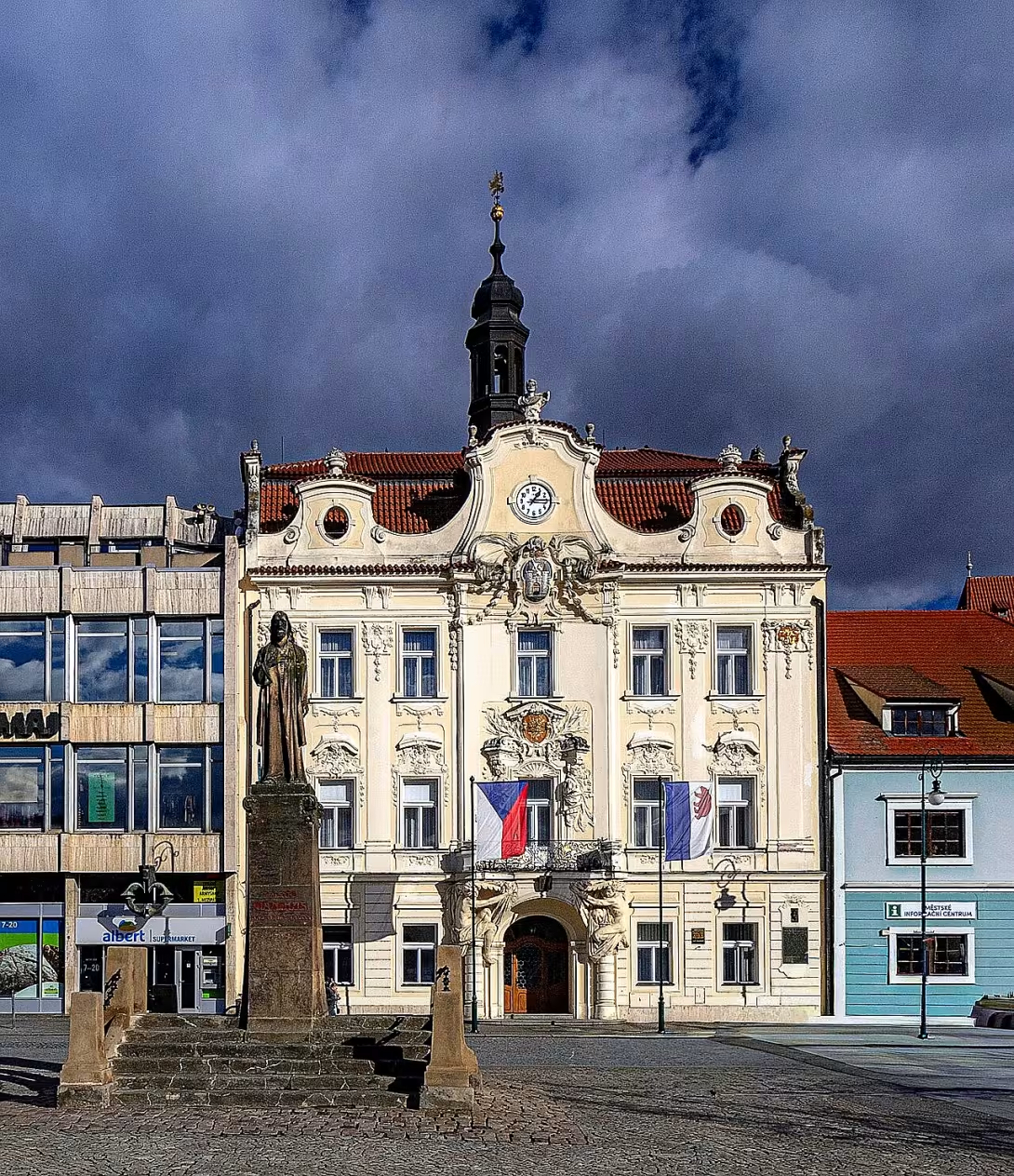
Radnice v Berouně is a cultural monument with rich stucco and sculpture decoration. It stands on the east side of Hus Square in the heart of the city. The current form of the building is the result of a neo-Baroque reconstruction from 1903. The building is protected as a cultural monument of the Czech Republic and its history dates back to the Middle Ages.
The original building in this place was probably built in the Middle Ages. Over the centuries, it has been rebuilt and rebuilt several times after the fires, confirming its continued importance to Beroun. In the years 1560-1564 she obtained Renaissance form according to the plans of the stonemason Jiří Táborský. The Baroque reconstruction was carried out in 1735 by architect Václav Bíšovec, followed by further modifications in 1781.
Architecturally, it is a two-storey building with a saddle mansard roof and a slender lid with a lantern. The facade is decorated with rich stucco, designed by sculptor Wilhelm Amort. The entrance portal is lined with superlife figures of a man and a woman supporting the balcony. Women's characters (hermes), cannons, coats of arms and plant motifs are located on the sides of the balcony door. In the basement and ground floor there are preserved gothic elements with valuable vaults.
The building has served various purposes over time. After the transfer of the city office to the municipal house U Černý hora in 1867 there was a boys' school and later the barracks of the Earth's defence. In 1903 a costly new Baroque reconstruction was carried out according to plans of Beroun native František Coufal. This adjustment significantly changed the appearance of the town hall and included the construction of the rear tract.
An interesting feature is the Pixie Pixie figurine carved by the ceiling on the ground floor. According to legend, it is the spirit of the mayor who refused to issue the city's treasury during the hostile invasion and was tortured by soldiers. This figure and decoration of the ceiling of the meeting hall are the work of William Amorto.
Today the town hall serves not only as a historical and architectural unique but also as a place of cultural events. The penetration of art and history makes it a unique attraction for visitors. The town hall's visit offers insight into Beroun's history and architectural heritage, making it a mandatory stop for every traveler.
Historical milestones
- 1903
- Neo-Baroque city hall reconstruction.
Architectural development
Radnice v Berouně has undergone several architectural phases. Originally medieval construction was restored and rebuilt into Renaissance style, then modified in a Baroque way. In 1903, a costly new Baroque reconstruction took place, which significantly changed its shape.
Historical events
- 1560-1564
- Renaissance building according to plan of stonemason Jiří Táborský.
- 1735
- Baroque reconstruction carried out by Václav Bíšovec.
- 1903
- Neo-Baroque reconstruction according to plans by František Coufal.
Points of interest
- Radnice v Berouně is a cultural monument with rich stucco and sculpture decoration. - The current form of the building is the result of a neo-Baroque reconstruction from 1903. - Over the centuries, it has been rebuilt and rebuilt several times after the fires, confirming its continued importance to Beroun. - Women's characters (hermes), cannons, coats of arms and plant motifs are located on the sides of the balcony door. - The figure of the leprechaun, carved at the ceiling on the ground floor, is, according to legend, the spirit of the mayor, who refused to release the city treasury during the hostile invasion and was tortured by soldiers.
Guide
Show guide text
This text was created by artificial intelligence and has not been editorially reviewed. It may contain inaccuracies.
Welcome to the very heart of Beroun. Stop for a moment, take a breath and look ahead. Right now, you're standing in front of one of the most important buildings in the city, outside Berun City Hall. It is a place that carries a century of history, a decision that has affected the lives of thousands of people, and above all a great deal of aesthetic care. When you look at her facade like that, maybe you perceive a sense of stability and dignity. This building is not just an administrative centre, it is a real cultural gem, which in its form tells the story of how Beroun evolved, how he grew and how he managed to rise even after severe injuries.
Now let's go back in time together. To understand what we see today, we must go deep into the past, all the way to the Middle Ages. This is where the town hall was standing at the earliest time. Imagine Beroun back then, narrow streets, market noise and city hall as the main point of orientation and power. But the history of this building is very dramatic. Beroun, like many other Czech cities, has been hit by devastating fires over the centuries. The fire was the biggest enemy of urban development at the time. The town hall burned down several times, was picked up or damaged several times, but each time its inhabitants decided to renew it. That tells us very important things today about the character of people in this city. Town Hall was not just a building, it was a symbol of duration and identity. Every new layer of stone and every new facade was a victory over disaster.
Now, if you look at the overall appearance of the building, you see the result of a long architectural development. City Hall is not the work of one person or one single time. It's more of a conversation between different styles. It began in the Renaissance when Jiří Táborský joined her creation in the years one thousand five hundred sixty to one thousand five hundred sixty-four. He was an experienced stonemason who put his craft knowledge into the foundations and construction. The Renaissance has brought a new sense of space and harmony to the cities, and even though only traces are visible from this time today, they form the necessary basis for everything that surrounds us.
The time passed and with it came the era of the Baroque, which is known for its playfulness, dynamism and desire for representativeness. In the year one thousand seven hundred thirty-five the architect Václav Bíšovec joined the fate of the building. The Baroque influences have given the city hall a new dimension and paved the way for the future wealth of detail. Notice how the building gradually turned from a simple office into a monumental building to celebrate the importance of the city.
However, what you are seeing right now is primarily the result of a major change in the early twentieth century. In the year one thousand nine hundred and three there was a major neo-Baroque reconstruction. This project was taken by architect František Coufal. Novobaroko was a very popular style at the time, combining old Baroque elements with modern technical possibilities of the time. It is thanks to Francis Coufalo that the town hall has its present, so elegant and noble form.
Now I'd like to ask you to pay attention to the details. Look carefully at the surface of the building. Note the rich stucco and sculpture decoration. The stucco, the fine plastic decoration, gives the facade depth and rhythm. It's like a stone lace that covers the walls of a building. This decoration is not just an ornament, it's an expression of prestige. At that time it was believed that the City Hall building must look so that every visitor of the city immediately felt that he had come to a prosperous and cultural centre.
Try to focus your view on the balcony door area now. It is on the sides of this door that you will find details that are the real testimony of the art trade. Here comes William Amort's personality. He was a respected sculptor whose work decorated space in the nineteenth century until the beginning of the twentieth century. Its sculpting elements give the building a human dimension and softness. When you look at these shapes, imagine the hours of patient work that the sculptor spent with a chisel in his hand to create something so light and lovely in hard material.
It's fascinating to realize that this building is actually like a layered pie. The memories of Baroque Bíšovka, Renaissance Tábor and much older medieval walls are hidden under the Neo-Baroque leather of the year one thousand nine hundred and three. Each of them added its part, each of them responded to the needs of its time. So this town hall is living proof that history is not something static that is only in books, but something that we can touch and see right in front of us.
Now you might wonder why this building was so important that people built it again and again after the big fires. The answer lies in the very meaning of City Hall. At a time when there was no Internet or modern communication, the town hall was the only place to decide the fate of the city. This is where the councilmen met, this was where the laws were made, this was how to protect the walls or how to improve trade. Standing in front of this building means standing in front of the center of Berun's old life.
The interesting thing that may interest you is the constant transformation. Few buildings can move from one style to another so fluently while maintaining their integrity. The Neo-Baroque face of a thousand nine hundred and three is not just a mask, but a celebration of everything Beroun has been through. It's like the city tells the whole world that even though the fire destroyed him, he will return even more beautiful and noble. This ability to regenerate is perhaps the greatest mystery and at the same time the greatest force in this place.
Now that you've seen the main facade and learned about the people who created this building, I suggest you take a walk around it slowly. Feel the atmosphere of this square. Imagine how people in hats and long dresses walked through here in the year one thousand nine hundred and three, how they marveled at the new form of their town hall and how proud they looked at its decorations.
Radnice v Berouně remains today a dominant factor that links the past to the present. It's a monument that teaches us patience and respect for the craft. From the stonemason Jiří Táborský to the architects Bíšovka and Coufalo to the sculptor Wilhelm Amorta, all these men left a part of their soul in this stone.
Thank you for stopping by this beautiful building for a moment. I hope you now see more in this building than just walls and windows, but the real story of courage, art and love for the hometown. We now invite you to explore Beroun again. Go through the surrounding alleys, look for more clues of history, and let the atmosphere of this picturesque city drift. I wish you a pleasant continued journey and many new discoveries. Goodbye.
Tips for visitors
The best time to visit Radnice v Berouně is early spring or late autumn when the weather is pleasant and fewer people. This period offers ideal light for shooting rich stucco decorations and sculptures.
Parking is possible to find near the centre of Beroun, but due to limited parking capacity we recommend using public transport. The location can be easily reached by bus or tram; the current connection can be found in the online search engine.
When visiting City Hall, bring your shoes with good soles, because the corridor can be rocky. It is also advisable to bring with you sunglasses and protective clothing, especially in winter or spring due to variable weather.
To photograph the town hall, choose the time close to noon for maximum lighting. The best places for photography include the inner courtyard and facade, where it is possible to capture details of stucco decoration.
In the vicinity of the town hall there are several interesting places for holidays. Near you can visit the historic church of St. Nicholas or walk along the river Berounka, which is ideal for families with children.
Businesses nearby
Do you run a restaurant, accommodation, shop, museum, rental, wellness or other visitor service near this monument? Show yourself directly to the people heading to it — this is how they will see you in the app and on the web:
Events nearby

Zdroj akcí: otevřená data měst a obcí ČR (Národní katalog otevřených dat) a kalendář akcí Národního památkového ústavu.
Nearby
🏰 Historic sites (132)
- Jan Hus 0.0 km
- Alfred Pik 0.0 km
- Kateřina Piková 0.0 km
- Klára Benešová 0.0 km
- Otto Michalovský 0.1 km
- Pražská Brána 0.1 km
- Valerie Friedová 0.1 km
- Jiří Fried 0.1 km
- Otilie Reichmannová 0.1 km
- Adéla Reichmannová 0.1 km
- Jana Friedová 0.1 km
- Ludvík Fried 0.1 km
- Emma Reichmannová 0.1 km
- Jan Nepomucký 0.2 km
- Kamila Roubíčková 0.2 km
- Muzeum Českého krasu v Berouně 0.2 km Husovo nám. +420 311 624 101 web
- Marta Frenklová 0.2 km
- Emil Frenkl 0.2 km
- Jiří Frenkl 0.2 km
- Výstavní síň Konírna 0.2 km Slapská
🍽️ Restaurants and dining (248)
- Pizzeria & Ristorante Gioseffe 0.1 km Husovo nám. 2 +420777588227
- Restaurace Alena 0.1 km Husovo nám. 1 +420 311 624 085 web
- U Aleny 0.1 km
- Šťastná koza 0.1 km Husovo nám. 28
- Budka.cafe 0.1 km Pivovarská 170 +420 777 928 879 web
- Cafe Creperie Strakatý Králík 0.1 km Na Ostrově 9/2 web
- Super döner kebab 0.1 km Česká 13
- Český Dvůr 0.1 km Husovo nám. 86/14
- Kozlovna Beroun 0.1 km Na Ostrově 3/15 +420601537896 web
- BlackDog 0.1 km Česká 140 +420 773 380 280 web
- La Paz 0.2 km Havlíčkova 20
- JAKI Sushi House 0.2 km Pivovarská 11
- Cafe Klaun 0.2 km Na Příkopě 74/7 web
- Bowling Sport Bar 0.2 km Husovo nám. 36
- COLABS Bar & Shisha 0.2 km Na příkopě 74/7 606 086 026 web
- Feng Yuan 0.2 km Palackého 90
- ISTRA restaurant - kavárna 0.2 km Slapská 130
- Namastaey 0.2 km Politických vězňů 200 +420 723 456 717 web
- Kafejn - kavárna - bistro 0.2 km Slapská 131
- Čínská restaurace 0.2 km
🏨 Accommodation (44)
- Venedik 0.1 km Na Příkopě 8
- Central Apartments 0.1 km Husovo nám. 26
- U Koně 0.1 km Česká 176/11
- Český Dvůr 0.1 km Husovo nám. 86/14
- Maxim 0.2 km Politických vězňů 200 +420 737 472 195
- Hotel PUK 0.3 km Kostelní 4/7
- Na Ostrově 0.3 km Na Ostrově 816
- Hotel Parkán 0.3 km Hornohradební 4
- Best Western Hotel Grand 0.4 km Nám. M.Poštové 49
- Autocamp Na Hrázi 0.5 km
- Autocamp Na Hrázi 0.6 km
- Penzion Tomáš Potůček 0.6 km Pražská 380
- Penzion PUK 0.7 km Slavašovská 4
- Pension Nostalgie 0.9 km Nerudova 879
- Pension Primus 0.9 km Na Cibulce 665 +420 721 500 000 web
- Hotel Beroun Golf Club 1.1 km
- Penzion Panorama 1.2 km Pod Kapličkou 1520
- Autokemp Plešivec 2.4 km
- Camp Srbsko 5.0 km +420 775 985 576;+420 777 733 363 web
- Motel Jetel 5.0 km
🚲 Rentals and sport (33)
- dhCYCLING 0.2 km Česká 54/22
- Tyran 0.2 km
- Cyklocentrum.cz 0.3 km V Plzeňské bráně 1
- NH Fitness 0.4 km Politických vězňů 40
- Lokomotiva 0.6 km
- Studio Kytka s.r.o. 1.1 km
- Beroun - nemocnice 1.5 km
- Koupaliště 2.0 km web
- Sportcentrum Eden 2.0 km
- Sokolovna Tetín 2.1 km web
- Sportisimo 2.7 km
- VELO CAFÉ GARÁŽ 2.8 km Hradní +420724877571
- Tělocvična ZŠ 3.6 km
- 45402 Králův Dvůr Sportovní hala 3.7 km
- Sportovní hala Králův Dvůr 3.7 km web
- Střelnice Litohlavy 4.2 km
- Martes Sport 4.9 km Obchodní 542 +420 703 377 841
- broková střelnice 7.6 km
- Koupaliště Města Zdice 10.2 km web
- Cykloservis ve stodole 10.8 km Hlavní 41 774 963 184 web
🥾 Hiking and nature (208)
- Geopark Barrandien 0.2 km Slapská +420311624101 web
- Geopark Barrandien 0.2 km
- Městská hora 0.7 km
- Rozhledna Městská Hora 0.7 km
- bývalé depo KBK 1.1 km
- Boží voda 1.3 km
- Ostrý (jižní vrchol) 1.4 km
- Ostrý 1.6 km
- Ratinka 1.8 km
- Damil 2.1 km
- Vyhlídka 2.1 km
- Nad Zdejcinou 2.7 km
- Herinky 2.8 km
- Děd 2.9 km
- Nad Zdejcinou 3.1 km
- Plešivec 3.2 km
- náměstí Míru 3.4 km
- Za lípou 3.4 km
- Háj 3.5 km
- Martina 3.5 km
Accommodation nearby
Trips and activities nearby
Guided tours, tickets and activities nearby from GetYourGuide
Affiliate link: if you buy from the partner, we may receive a commission. The price for you does not change.
Search tours and activities →Themed route
1. Town Hall, a historical building, represents the heart of the city and offers a view of interesting architecture from the outside. 2. City Hall, outdoor area, allows you to see the details of the building up close. 3. Town Hall Tower, a view point, offers a beautiful view of the whole city. 4. The inner parts of the town hall, the inner spaces, allow you to explore historical rooms and details inside the building.
Seasonal recommendations
Spring brings freshness and awakening nature to the Beroun Centre in the surrounding streets. The light is soft and pleasant in this period, allowing beautiful observation of the details of the town hall without sharp shadows. It is best to choose the morning hours for the visit. We recommend taking layered clothes because the weather can be variable and the morning cold can quickly rotate with heat.
In the summer months the atmosphere in the center is very lively and full of people. The strong sun highlights the colors of the historic building, but at the same time it can create unpleasant reflections. Due to higher temperatures and larger crowds, it is best to arrive immediately after opening or in the early morning. Don't forget light clothes, headgear and plenty of fluids.
Autumn in Beroun offers melancholy beauty and golden shades around the town hall. The morning fog and low sun create an unrepeatable atmosphere that highlights the historical nature of the place. It is advisable to wear a warmer jacket and high-quality shoes because the pavement can be wet or slippery. The best time for a tour is in the morning when the light is most stable.
Zimą works very calmly and thanks to frost or snow its architecture is even more impressive. Days are very short, so plan your visit to take place in maximum amount of daylight. Get ready for the cold and dress very warm and flat. The opening time is shorter in this period, so check in advance.
Visualizations and artistic views

The visualisations are generated by artificial intelligence and serve as inspiration.
Photos from the area
Real photos taken near the monument


Zdroj a licence jsou uvedeny u každého snímku.
Tips from visitors
No tips yet. Be the first!
Log in and add your tip.
Sources and literature
Photos: VitVit / CC BY-SA 4.0 — Wikimedia Commons. The author and licence also appear when you hover over the image.
Faktickým podkladem tohoto textu byl článek na Wikipedii, jehož autory jsou přispěvatelé Wikipedie. Článek je dostupný pod licencí CC BY-SA 4.0.
Location on the map

Příběhy a pověsti
Legendy, pověsti a příběhy spjaté s touto památkou
Fotografie návštěvníků
Zatím žádné fotografie. Buďte první, kdo přidá fotografii z návštěvy!
Log in a přidejte svou fotografii nebo hodnoťte.
Za ověřenou návštěvu v aplikaci získáte víc bodů — poznáme podle GPS, že jste na místě.
Reviews and comments