






Jezuitská kolej v Telči School building
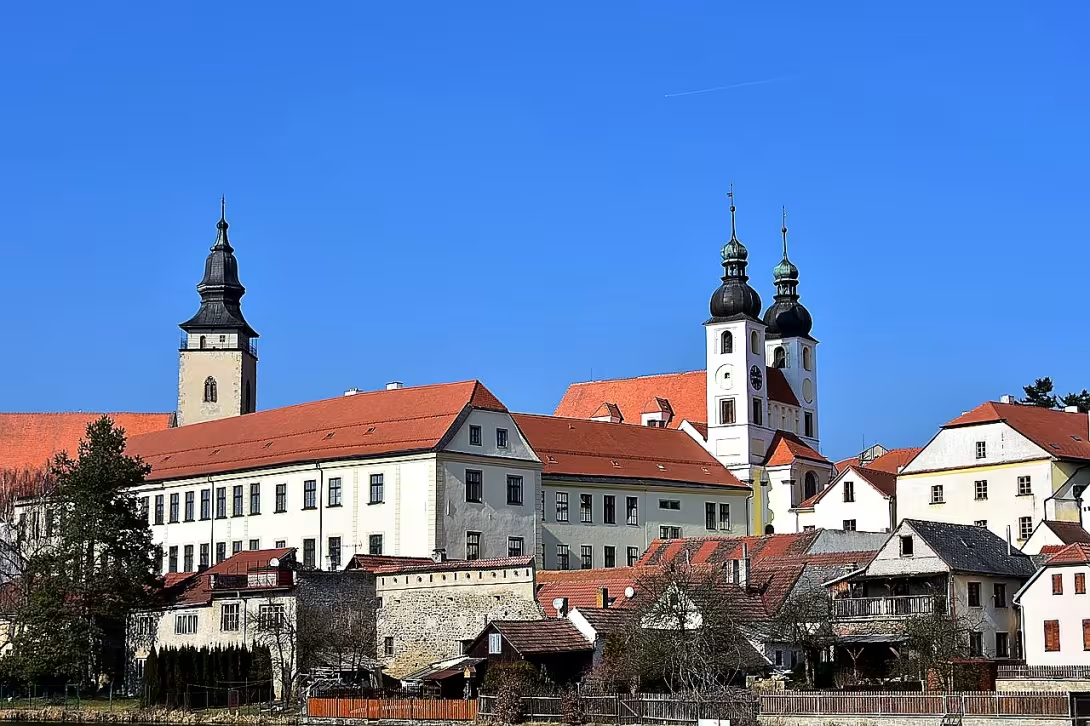
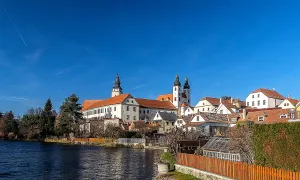
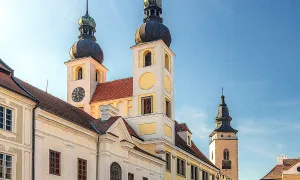
Jezuitská kolej v Telči is a Baroque monument located in Jihlava district in Vysočina Region. This historical object, consisting of a convention, the church of Jesus and the Convikt of Holy Angels, was built in the middle of the 17th century on the site of earlier houses. Today it is protected as a cultural monument and serves as a seat of the University Centre Telč, part of Masaryk University.
The creation of the Jesuit College in Telč was inspired by the reCatholics of Czech countries and the bloom of baroque architecture. The owner Telč, Opařán and Freistadt, Countess Marie Františka Slavatová z Meggau, purchased several houses near the castle of Telč for the purposes of establishing the track. On 26 July 1651 the foundation stone of the new Jesuit college building was laid, which took the form of a two-storey Baroque building with three wings surrounding an irregular courtyard. The complex was built at the west end of the marketplace and together with the telch castle formed the largest architectural building in the city.
Architecture Jesuit tracks are characteristic of Baroque style, which is reflected in its two-storey builders and cross vaults on the ground floor and the first floor. The original form of the building was changed during the reconstruction in 1906, which gave it the present form.
The history of the college is rich in changes in ownership and purposes. After she was founded, she served as a college for the Tovarishdom of Jesus, where the future priests were taught. In 1688, Countess Slavatová had the Convikt of the Holy Angels built near the track. After the abolition of the Jesuit Order by Emperor Joseph II in 1773, the building was transferred to the military barracks where it served until 1883. Then she became a girls' school and then a museum.
The important personalities associated with this track were Františka Slavatová z Meggau, the track fundator, Vitus Scheffer, Adam Gilg and Kašpar Knitl. The college had support in the form of a gift of 50 000 gold and income from the farm.
Today Jezuitská kolej v Telči is accessible to visitors who can appreciate its historical value and architectural appearance. The site of the University Centre Telč brings new life to the old building, which has preserved its original character despite many changes over the centuries.
Jezuitská kolej v Telči is not only a monument to architecture and spiritual history, but also a witness to the transformation of Czech countries. Its presence in the market of Telč still resembles the rich past of the city and its important position in the region. Visiting this monument offers a unique view of history and culture, which were shaped by both spiritual and worldly forces.
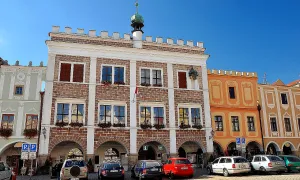
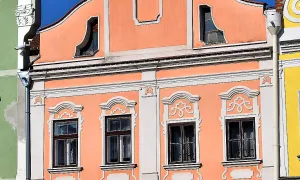
Then and now
Drag the slider to compare how the landmark may have looked when it was built with the view today.
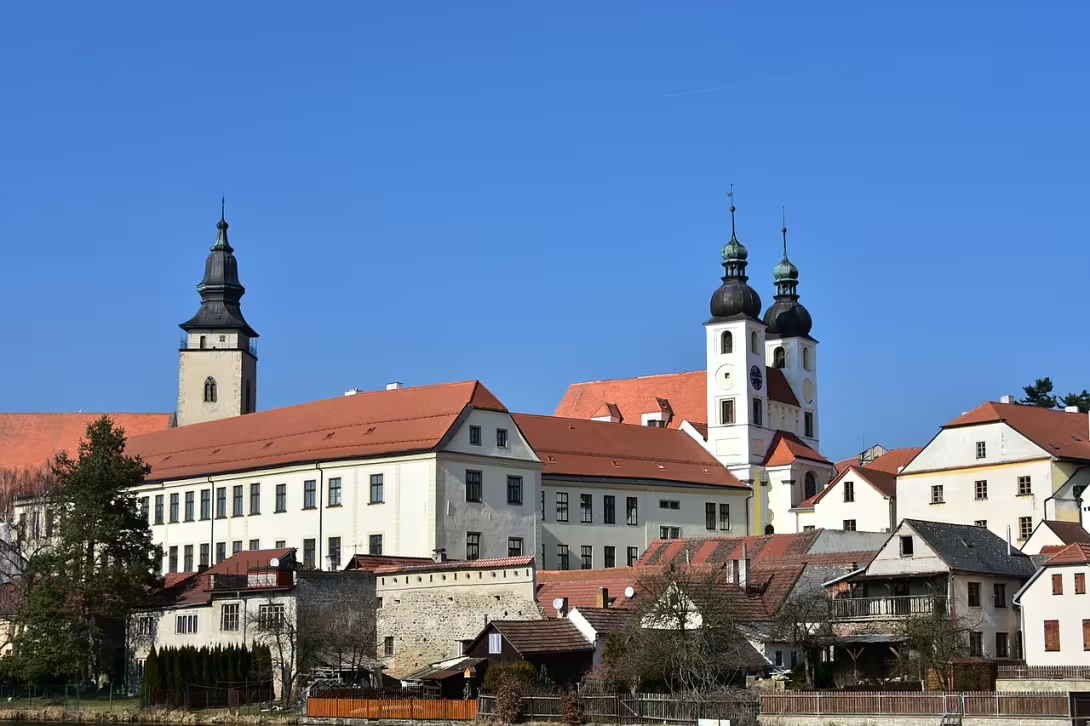
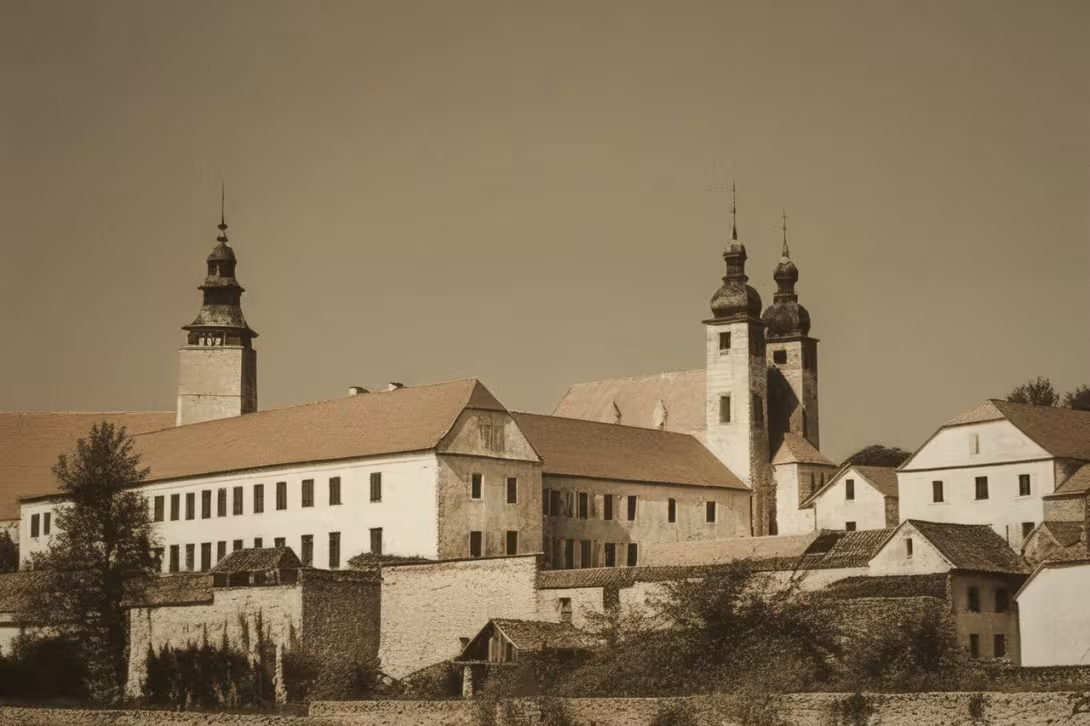
The historical appearance on the left is an AI-generated visualisation and serves as inspiration only.
Historical milestones
- 1651
- Laying of the base stone of the track building
- 1688
- Status of the Holy Angels Convikt
- 1773
- Cancellation of Jesuit Order and use of the building as barracks
- 1906
- Reconstruction of the building to present form
Architectural development
Originally, it was a two-storey Baroque building with three wings surrounding the courtyard. On the ground floor and the first floor were originally cross vaults. The building underwent a major reconstruction in 1906, which gave it its present form.
Historical events
1651: laying of the base stone of the new building; 1688: construction of the Convikt of the Holy Angels; 1773: abolition of the Jesuit Order and use of the building as barracks; 1906: extensive reconstruction of the building.
Owners
Marie Františka Slavatová z Meggau (founder), Tovarishstvo Jesus, army (since 1773), school and museum (since 1883), Masaryk University (present).
Points of interest
- Jezuitská kolej v Telči is a Baroque monument located in Jihlava district in Vysočina Region. - This historic building was built in the middle of the 17th century on the site of earlier houses and serves as the headquarters of the University Centre Telč, part of Masaryk University. - The creation of Jesuit College in Telč was inspired by the reCatholics of Czech countries and the bloom of Baroque architecture; The foundation stone of the new building was laid on 26 July 1651. - After she was founded, she served as a college for Tovarysch Jesus, then became a military barracks and then a girls' school and museum. - An important person associated with this track was Františka Slavatová z Meggau, the college fundator.
Guide
Show guide text
This text was created by artificial intelligence and has not been editorially reviewed. It may contain inaccuracies.
Welcome to one of the most beautiful cities in the Czech Republic, in the historic heart of Telč. Right now, standing here in the inner city circle, you have something extraordinary and very powerful ahead of you. Take a look at this vast, baroque entity that is right in front of your eyes. It's a Jesuit dorm. Feel the weight, the presence, and the incredible size that radiates from this building. This building is not just an ordinary house or a mere group of walls. It's a monumental architecture that carries walls full of ancient stories and human effort. This baroque complex is one of the largest urban buildings in the whole of Telč and only the local chateau can be compared with its large superiority. Feel the atmosphere of a place that dominates the whole neighborhood and has been determining the face of this city for centuries.
In order to really understand why this Baroque complex is so important and why it seems so impressive, we need to go back deep into the past together. Imagine half the 17th century. This was the time when new and important chapters began to be written in Telč. In a place where there were former simple, ordinary urban houses, this magnificent building began to be born. The whole process, which required a huge amount of work and planning, began in 1651 when the foundation stone of this building itself was laid. It wasn't just the beginning of the building, it was the beginning of a new era for the whole city. A space for spiritual life and study began to develop from ordinary urban buildings, which at the time meant a huge shift throughout the region.
Now pay attention to how this whole is arranged and what it consists of. Although it may seem like one big, continuous building to you, it's actually a very complex and rich Baroque complex. It consists of several important parts which form a harmonious and integrated whole together. Within this space you will find a convention that served as a place of being and everyday life, the Church of Name Jesus, which was the spiritual center of the whole place, and also the Convikt of Holy Angels. This convikt was built a little later, namely in 1688, and added another dimension and importance to the complex. This whole architecture is typical of its era, seeking greatness and creating a sense of stability and strength.
Every place that has survived for centuries has its heroes and characters that breathe in its life. Even though we don't know the names of the people who worked these stones themselves or who did the construction work, we know the personalities whose names are inseparably linked to this place. Here we can remember Františka Slavatova of Meggau, Vitus Scheffer, Adam Gilg or Kaspar Knitl. These people were part of this living organism that has been constantly evolving and changing here since the middle century. Their tracks, even though they are invisible today, are imprinted into the very spirit of this place.
But the history of this place isn't just about a quiet life in a monastery. History is often full of shock changes and unexpected twists. In 1773 a moment came that fundamentally changed the direction of life in these areas. The Jesuit Order was abolished and this place, which until then was dedicated to prayer, silence and study, had to find a new use. The building became barracks. Imagine the huge contrast that people had to experience back then. Instead of silence and spiritual search, soldiers' actions, rumbling of military life and strict rules of the military order began to be heard here. A spiritual sanctuary has become a military residence. This turn in history shows how much the fate of one building can change depending on the political and religious changes of the time.
But then came another important chapter that brought us a building, as you see it now. In 1906 extensive reconstruction took place, which gave the building its present form. This renewal was crucial so that this historical object could be fully integrated into the city's life in a new form. And what's most fascinating is how this historical object managed to adapt to modern times. Today, military life and monastery rituals no longer take place here, but the life of knowledge and education. The University Centre Telč, which is part of the Masaryk University, is now based in this Baroque complex. The place where scholars and clergymen once lived is now shaping the minds of students and serving science. It's an incredible bridge between the past and the future.
You are standing in front of a place that has survived centuries, which has been constantly changing from houses to monastery, from monastery to military barracks and from barracks to modern center of science. It's a place that carries all these layers of time. Let yourself be absorbed by this place, see its surroundings, feel the atmosphere of this historic heart of Telč and realize how much history is alive. I wish you a beautiful further walk around this city and other interesting experiences while discovering its secrets. Thank you for being with us.
Tips for visitors
The best time to visit is in the spring or autumn season when the weather is pleasant and fewer people are here. Baroque architecture of the college radiates its beauty in warm sunlight.
Parking can be found near the market or near the Telč Castle, where parking is available. For those travelling by public transport, the location is well accessible by bus and tram connections; current information about routes can be found in the online search engine.
When visiting, take with you suitable shoes for walking on stoneways, sun umbrellas and sunscreen clothing. In winter it is recommended to wear a warm coat.
The best places for photography are the inner courtyard of the college, where Baroque architecture and sun rays intersect perfectly. Don't forget about the church Name Jesus, which offers beautiful interiors for photos.
The Telč Castle and its parks can be visited in the vicinity of the track. For families with children, a walk on the market in Telč, where children can enjoy a view of historical buildings and perhaps some entertainment program.
Businesses nearby
Do you run a restaurant, accommodation, shop, museum, rental, wellness or other visitor service near this monument? Show yourself directly to the people heading to it — this is how they will see you in the app and on the web:
Events nearby
Zdroj akcí: otevřená data měst a obcí ČR (Národní katalog otevřených dat) a kalendář akcí Národního památkového ústavu.
Nearby
Telčský zámek, kostel Jména Ježíš, telčské tržiště.
Accommodation nearby
Trips and activities nearby
Guided tours, tickets and activities nearby from GetYourGuide
Affiliate link: if you buy from the partner, we may receive a commission. The price for you does not change.
Search tours and activities →Themed route
Thematic cruise route from Telč
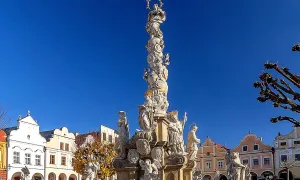
1. Telč marketplace - historical town square We will start with our tour shop at the Telč marketplace, which is the largest and best preserved part of the Old Town Square in the Czech Republic. It is an ideal place to know the local architecture and atmosphere of the 17th century, when Telč was the center of business.
2. Church Names Jesus - sacral construction A short walk brings us to the church Name Jesus, which is located near the marketplace. This Baroque temple is famous for its rich architecture and historical value. Its interior offers visitors a view of beautiful sculptures and frescoes.
3. Telč castle - historical residence We are now going to Telč Castle, which is just a few minutes' walk from the church. The castle is a key part of the cultural heritage of the city and offers a view of the surrounding countryside. His history dates back to the 13th century, making him an interesting target for history lovers.
4. Jezuitská kolej v Telči (monastery) - main destination In the end we have the Jesuit College, which is the most important monument of the city. This Baroque building was in the past the seat of the Jesuit monastery and today it serves as a museum. Its beautiful architecture and historical importance make its tour an essential part of our route.
This route offers a compact view of the cultural wealth of Telč, with an emphasis on its historical and architectural monuments.
Seasonal recommendations
Spring: In the spring season, a beautiful flower flower appears around the Jesuit track in Telč, which brings a lively and colorful atmosphere to the city. Sun rays illuminate the architecture by their warm radiation, creating ideal conditions for photography. This season it is recommended to visit the tracks in the morning or on Wednesday week when the crowd can handle themselves easier and you can enjoy a quieter tour. Sufficient clothes should be mild - short gloves and warm scarf are suitable for colder days, while sunglasses will help during long walks around the city.
Summer: Summer in Telč offers a warm and lively atmosphere where every corner of the city is full of tourists. The sunlight illuminates the architecture of the tracks in a special way, creating beautiful photographic moments. In the main summer season it is recommended to come to the dorm early or later in the day to avoid the biggest crowds. The important thing is to have sun cream and water with you, because warm weather can be challenging. Short clothes and wide hats will help to maintain comfort while walking around the inner city.
Autumn: In autumn, Telč becomes a place with a magical atmosphere, when leaves on trees gain live colors and the lighting is soft and warm. This season is ideal for a peaceful visit to the tracks, because the crowd is decreasing considerably. It is advisable to visit the city in early afternoons or on Wednesday week when it is possible to see the sights without obstacles to the crowd. Warm clothes and umbrella are useful because the weather can be unstable and colder.
Winter: During the winter period Telč is getting a quiet and quiet atmosphere. The sun's rays illuminate the wheels with their fine light, creating views full of peace and beauty. Visiting the tracks is the most comfortable morning or later in the day when the crowd of people can handle themselves more easily. The important thing is to carry warm clothes - fur coat and gloves are the key to a comfortable walk around the city, while short visits to the buildings will help maintain body temperature.
Visualizations and artistic views


The visualisations are generated by artificial intelligence and serve as inspiration.
Photos from the area
Real photos taken near the monument

Zdroj a licence jsou uvedeny u každého snímku.
Tips from visitors
No tips yet. Be the first!
Log in and add your tip.
Sources and literature
Photos: Richard Mortel from Riyadh, Saudi Arabia / CC BY 2.0 — Wikimedia Commons. The author and licence also appear when you hover over the image.
Faktickým podkladem tohoto textu byl článek na Wikipedii, jehož autory jsou přispěvatelé Wikipedie. Článek je dostupný pod licencí CC BY-SA 4.0.
Location on the map
Příběhy a pověsti
Legendy, pověsti a příběhy spjaté s touto památkou

Fotografie návštěvníků
Zatím žádné fotografie. Buďte první, kdo přidá fotografii z návštěvy!
Log in a přidejte svou fotografii nebo hodnoťte.
Za ověřenou návštěvu v aplikaci získáte víc bodů — poznáme podle GPS, že jste na místě.
Reviews and comments