



Jezuitská rezidence Stará Boleslav Jesuit residence
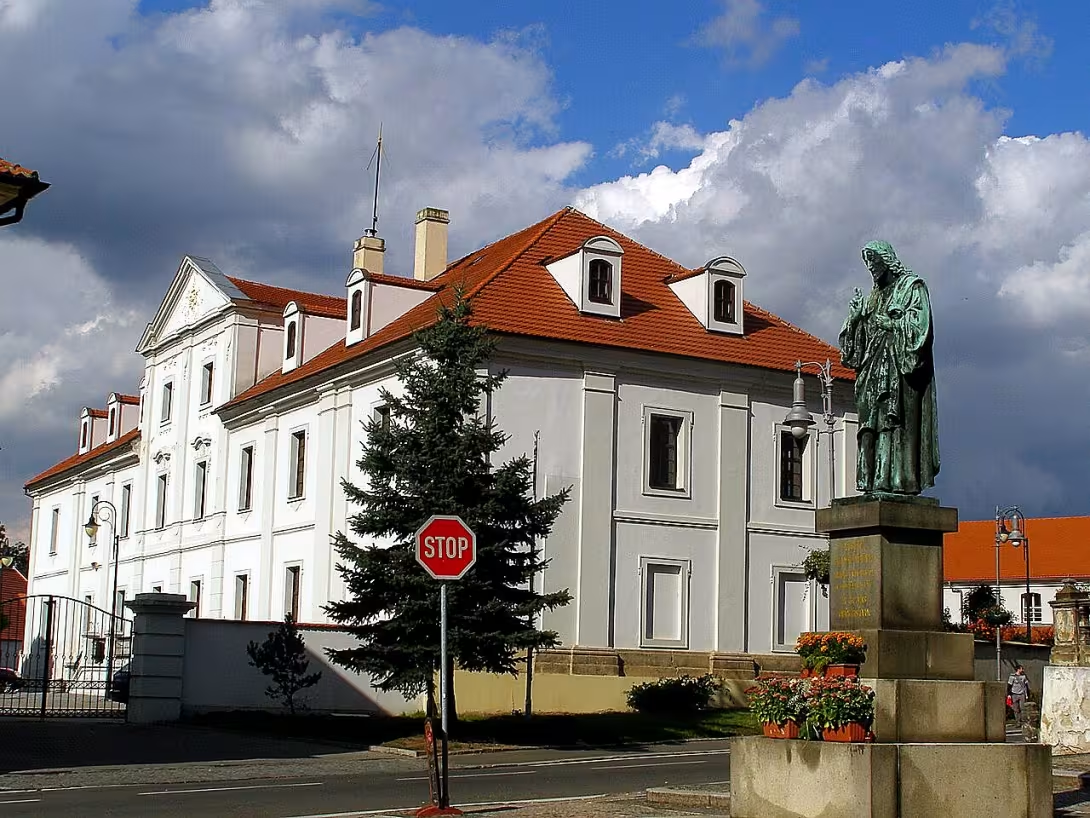
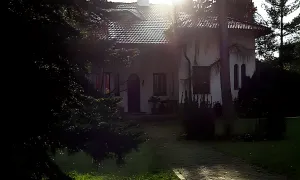
The former Jesuit residence in Staré Byslav, located next to the Church of the Ascension of the Virgin Mary and the Basilica of St. Wenceslas, presents an early Baroque architecture from the 17th century. This monument is important not only for its historical value but also thanks to its location in the village Stará Boleslav, which makes it a key part of the local cultural heritage. Its architectural elements and history are closely linked to the Jesuit Order and their role in the Czech countries.
The residence was built as a dorm for Jesuits who settled in Staré Byslav in 1658. The city was chosen because of its position as the oldest Marian pilgrimage place in the country, which attracted many pilgrims. The plans for construction came from Italian architect Giovanni Domenico Orsi and were implemented between 1670-1676, although the construction process was slowed down by a lack of funding. The fires in 1679 and 1680 damaged the building, but the southern part of the residence was quickly restored.
The architecture of the residence is characterized by a brick rectangular plan with a profiled cordon and crown ledge, a valb roof with grooves and plastic window frame. The central risalite on the main facade is decorated with stucco decoration, which adds its distinctive baroque character to the building. Orsi's original plans included a more ambitious project with two wings and Il Gesù chapel, but were implemented in reduced form.
The residence ownership has undergone several changes. After the abolition of the Jesuit Order in 1773, the building went into the hands of the army and served as a barracks for the Dragoon regiment. During the years, adjustments were made to the roof and interior adaptation. In the 20th century the residence was used by the company Agricultural machinery n. Praha, before it became private property after 1989.
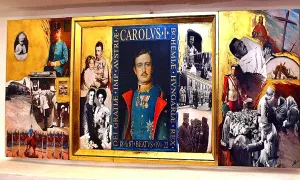
The key event in the residence history was the destruction of the library during the fire of 1680. In 1688 the building was completed and an altar with the painting of St. Ludmila was placed in the chapel. The residence was also hosted by Archduke Charles, who served in military service at the Dragoon regiment between 1908-1912.
Today, the former Jesuit residence in Staré Bloslav is a monument protected object that attracts attention with its historical and architectural value. Its importance as an important element of local cultural heritage makes it worth a visit, allowing it to look into the rich history of the Jesuit Order and its influence on the region. Visiting this monument offers an opportunity to appreciate not only its architectural beauty, but also the deep historical context surrounding the residence.
Historical milestones
- 1654
- The Emperor gave the Jesuits a place to build a residence.
- 1668
- The laying of the base stone of the building.
- 1680
- A city fire that destroyed the library at the residence.
- 1688
- Completion of the construction of Jesuit residence.
Architectural development
The foundations were built in 1670-1671 according to the simplified plans of Giovanni Domenico Orsi. In the 18th century, there were other modifications, especially on the facade, where the chabrac ornaments were created on the head of Pilastres. The original ambitious project consisted of two wings and a Il Gesù chapel, but was implemented in reduced form.
Historical events
In 1680 there was a big fire in the city, which destroyed the library in the residence. In 1688 the building was definitively completed and an altar was taken to the chapel with the painting of St. Ludmila.
Owners
Jesuits (since 1658)
Points of interest
- The former Jesuit residence in Staré Bloslav presents an early Baroque architecture from the 17th century. - The residence was built as a dorm for Jesuits who settled in Old Bloslav in 1658. - The construction plans came from Italian architect Giovanni Domenico Orsi and were implemented between 1670-1676, although the construction process was slowed down by a lack of funding. - After the abolition of the Jesuit Order in 1773, the building went into the hands of the army and served as a barracks for the Dragoon regiment. - Today, the former Jesuit residence in Staré Bloslav is a monument protected object that attracts attention with its historical and architectural value.
Guide
Show guide text
This text was created by artificial intelligence and has not been editorially reviewed. It may contain inaccuracies.
Welcome to the former Jesuit residence in Staré Bloslav, one of the most famous monuments of this historic area. You are standing in front of an elegant brick rectangular object whose valb roof is turned off to the blue sky, while the center risalite with a stunning stucco decoration captures your view. This house was once home to Jesuit priests and served as an educational centre that attracted many visitors from all over the country.
Let's dive into the history of this residence. In 1654, the Emperor gave the Jesuits a place to build this important building, a strategic decision placed near the oldest Marian pilgrimage site in the country. The base stone was laid in 1668, and although the city fire in 1680 was an unfortunate incident that destroyed the library of the residence, the construction continued. The completion of this architectural work took place in 1688.
Now notice the stucco decoration of the central risality, one of the most distinctive elements of this building. The plans for this residence came from Italian architect Giovanni Domenico Orsi, whose artistic idea is visible in every detail. This early Baroque style is characteristic of the 17th century and the residence remains one of the best examples of this period.
Among the key figures associated with this monument is Ondřej Schambogen, whose contribution to educational and religious activities of the residence was invaluable. His efforts helped strengthen the position of Jesuits in Staré Bloslav, which turned the city into an educational center.
The interesting feature of this residence is its historical role as a railway house for Jesuits. Since 1658, this institution has become an important place not only for religious but also for intellectual life in the region. The Jesuits acted here as teachers and preachers, attracting students and pilgrims from all corners.
When you are going to continue to explore Old Bloslav, keep in mind that this residence is only one of the many historical gems that this area offers. Try other pilgrimage places or walks on the streets of this beautiful city and enjoy its rich history and culture. Thank you for your attentive listening and we hope that this monument has entered into your heart.
Tips for visitors
The best time to visit the former Jesuit residence in Staré Bloslav is in the spring or autumn season when the weather is pleasant and the light of sunlight allows a beautiful photo. The Baroque architecture of the residence appears in this light in its full glory.
We recommend using both car and public transport to access the monument. Vaclav.
When visiting, bring a photo to record the beautiful details of the residence and the surrounding church. It is also important to take with you a protective umbrella or umbrella, because the weather in the Czech Republic can suddenly be variable.
Photography of the residence and surrounding monuments is the best of various angles. In particular, it is recommended to photograph in the sunlight when the colours are more pronounced. Also remember the panoramic places around the Church of the Assumption of the Virgin Mary and the Basilica of St. Wenceslas.
In the vicinity of the residence there are two historical sacral objects: Church of the Assumption of the Virgin Mary and Basilica of St. Wenceslas. These places are ideal for a visit within one day, especially if you are interested in the history of the Czech Church and Baroque architecture.
For families with children, visiting the former residence together with the Old Painful Church is an interesting option. Children can appreciate the historical environment and stories associated with these monuments, while parents enjoy beautiful architectural details.
Frequently asked questions
Can the monument be visited?
We have not verified whether this monument is accessible. Please ask the owner or operator, or the local municipal office.
Where is the monument?
Location: Stará Boleslav. The map on this page shows the exact spot.
Why is the monument protected?
It is listed in the Central List of Cultural Monuments of the Czech Republic as a cultural monument (register no. 1000138716).
Businesses nearby
Do you run a restaurant, accommodation, shop, museum, rental, wellness or other visitor service near this monument? Show yourself directly to the people heading to it — this is how they will see you in the app and on the web:
Nearby
Kostel Nanebevzetí Panny Marie a bazilika sv. Václava.
Accommodation nearby
Trips and activities nearby
Guided tours, tickets and activities nearby from GetYourGuide
Affiliate link: if you buy from the partner, we may receive a commission. The price for you does not change.
Search tours and activities →Themed route
Thematic cruise route from Old Bloslav
1.Jezuitská rezidence Stará Boleslav
Type: Historical object
Why is it worth a visit: Jesuit residence is an architecturally important piece of art that attracts interested people in Baroque art with its history and beauty. It is not only a monument, but also the centre of the cultural life of the city.
2. Church of the Assumption of the Virgin Mary
Type: Church
Why is worth visiting: This church is not only a spiritual centre, but also an architectural pearl with a rich history. Its decoration and artistic elements represent an important part of the cultural heritage of Staré Bloslav.
3. St. Wenceslas Basilica
Type: Basilica
Why is it worth visiting: Basilica is the oldest church in the Czech Republic and a monument to the first Czech prince. It is a place where history and tradition meet, and offers a view of unique artistic elements.
Visiting order: - Start your trip to Jesuit residence, where you can explore historical architecture and learn its importance. - Then move to the Church of the Assumption of the Virgin Mary. Its proximity allows for easy walking and viewing of its rich decoration. - Entrust your trip to St. Wenceslas's Basilica, where you can enjoy the view of the oldest church of the country and explore its historical significance.
This route offers a compact survey of the cultural monuments of Staré Bloslav, which are connected by both history and proximity.
Seasonal recommendations
In the spring the surrounding area of the monument comes to life fresh greenery and flowering trees. Soft spring light touches the facades gently, creating an optimistic atmosphere. It is recommended to wear layered clothes so that visitors can react to the variable weather. The best time for a walk is in the morning when the air is the cleanest.
The summer season brings radiant sun and deep shadows in the surrounding gardens. Nature is in full bloom and the surroundings are very lively. It is advisable to choose light and breathable substances and not forget the sun protection. High temperatures make it best to avoid hot noon.
Autumn is characterized by golden leaves and frequent morning fog that give the place a mysterious touch. The colors of the surrounding landscape are rich and the atmosphere is more peaceful. Moisture-resistant shoes and a warm jacket are practical. The ideal is a visit in late afternoon, when the sun paints the walls into warm tones.
In winter, there is silence around and the landscape is stripped of leaves, which reveals a clean line of construction. Freezing air and any snow cover create a rough but impressive contrast. It is necessary to wear warm thermal underwear, gloves and a hat. Given the short days, it is advisable to leave immediately after sunrise.
Visualizations and artistic views

The visualisations are generated by artificial intelligence and serve as inspiration.
Photos from the area
Real photos taken near the monument


Zdroj a licence jsou uvedeny u každého snímku.
Tips from visitors
No tips yet. Be the first!
Log in and add your tip.
Sources and literature
Photos: Michal Kmínek / CC BY-SA 3.0 — Wikimedia Commons. The author and licence also appear when you hover over the image.
Faktickým podkladem tohoto textu byl článek na Wikipedii, jehož autory jsou přispěvatelé Wikipedie. Článek je dostupný pod licencí CC BY-SA 4.0.
Location on the map

Příběhy a pověsti
Legendy, pověsti a příběhy spjaté s touto památkou
Fotografie návštěvníků
Zatím žádné fotografie. Buďte první, kdo přidá fotografii z návštěvy!
Log in a přidejte svou fotografii nebo hodnoťte.
Za ověřenou návštěvu v aplikaci získáte víc bodů — poznáme podle GPS, že jste na místě.
Reviews and comments