



Stará Boleslav Hillfort
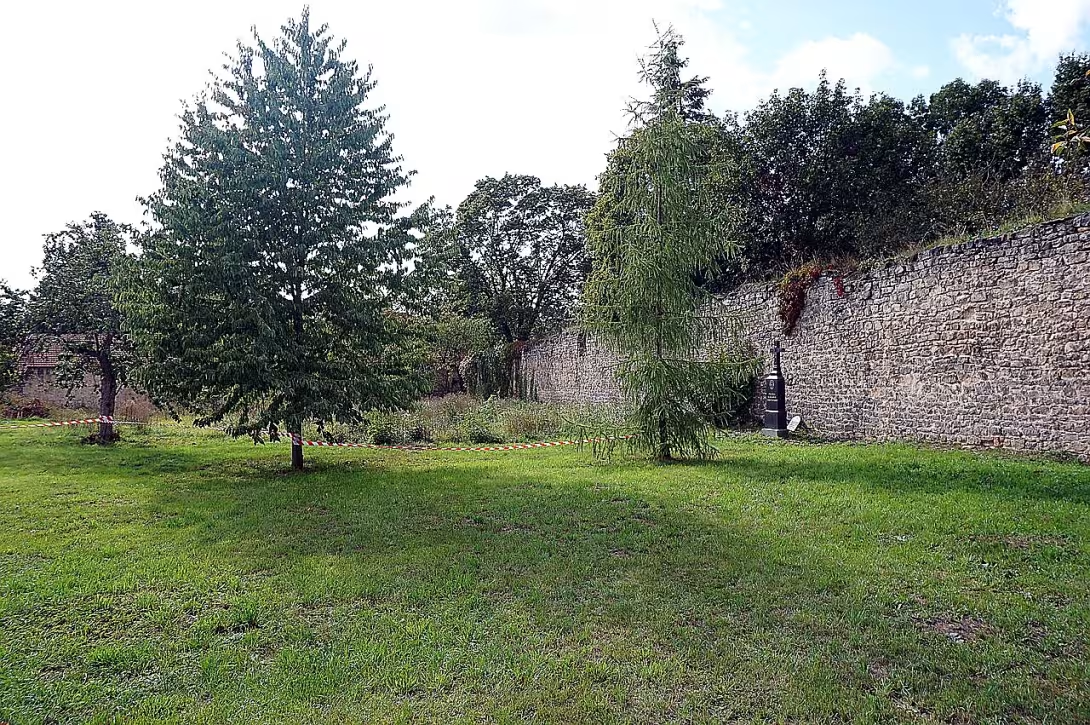
Objekt se nedochoval — na místě dnes nestojí. Následující text popisuje jeho historii, ne současnou návštěvu.
Stará Boleslav was one of the most important centres of the early Czech state. The mornings of the medieval castle arose at the beginning of the tenth century, when it was probably founded by Prince Spytizrál on an already populated position near an important ford through the Elbe. The site was not selected by accident - its terrain position on the terraced surface naturally protected the acropolis from attacks. In the south, she was defended by the passing Elbe, in the east by the Jizera flow, northwest by the marsh terrain. Thus, access was only possible from the northeast, making it easily defensible.
During the tenth century, the initial woodclay fortification was replaced by a new wall built from sandstone blocks connected with mortar. This change remained in the memory of the Chronicator of the Comas, who recorded it as a "Roman way" construction. The width of the reconstructed wall was approximately 2.5 to 3 metres. In 1993, archaeological surveys found the remains of this fortification in the dean's garden. It is the oldest preserved wall wall in the Czech Republic - an expression of the time when the construction technology had just changed.
The most important event in the history of the castle was the death of Prince Václav. On 28 September 935 here at the door of the church of St. Koms and Damian was murdered, probably as a result of a family dispute. The church was probably wooden and stood on an acropolis, which was the heart of the entire fortress. Part of the acropolis was the extensive Boleslav's courtyard and other shrouds arranged in separate yards.
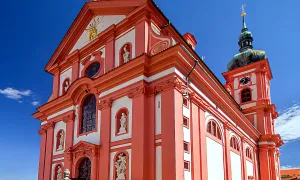
After Václav's death didn't just become the piety of his memory. Prince Břítislav built the Basilica of St. Václava after 1039, where the remains of the Five Brothers were stored, which he brought from his invasion of Poland. Around this basilica there was another church complex in the end of the eleventh century. The church of St. Clemente was built here and the археologically documented church, whose floor plan is still marked in the tiles of St. Václava Square. A church was built on the forefront where the Baroque Temple of the Assumption of the Virgin Mary was later built. All these churches used to be a burial ground, which suggests that Stará Boleslav was an important spiritual centre.
The actual fort spread over more than ten hectares. It was divided into smaller acropolis and a larger foothold, which was probably protected by a woodclay wall. The exact form of the fortifications remains unclear.
Today the archaeological location of the castle is protected as a cultural monument. The building remains are hidden under a new building, but several archaeological research, especially in the 1980s and 1990s, under the leadership of Jan Frolik and Jaroslav Špáček, brought valuable knowledge. The visitor does not see a massive fortress here, but he can imagine how the heart of an early Czech state beat here thousands of years ago - a place where some of the most important aspects of our history were written.
Then and now
Drag the slider to compare how the landmark may have looked when it was built with the view today.
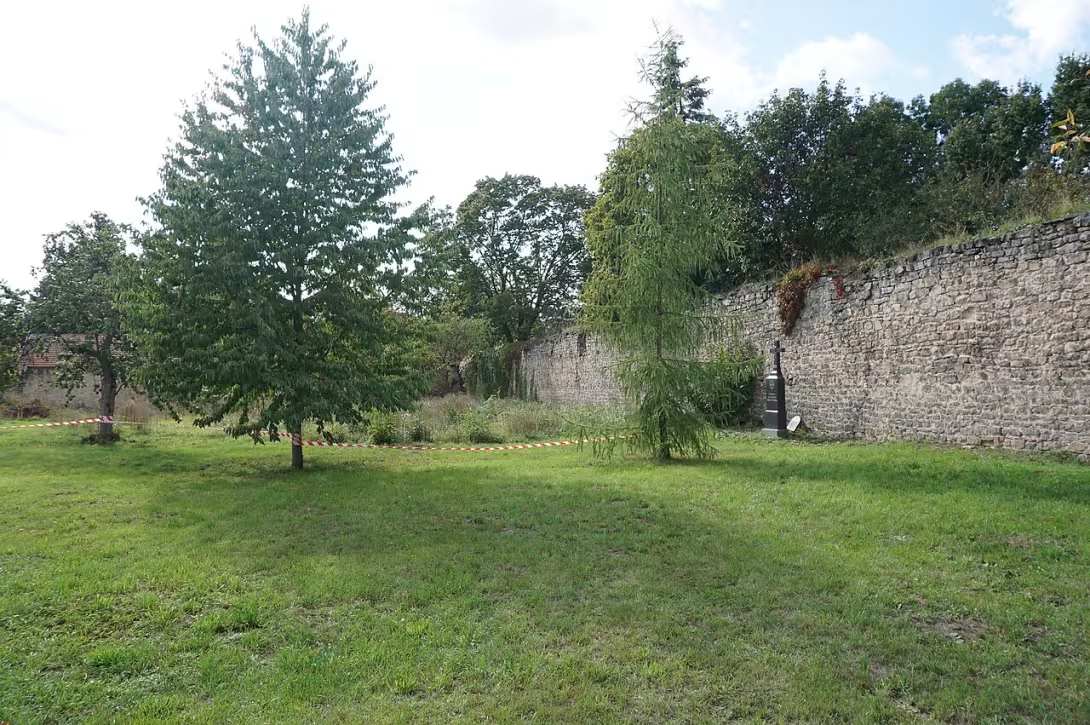

The historical appearance on the left is an AI-generated visualisation and serves as inspiration only.
Historical milestones
- 935
- The murder of Prince Václav at St. Moses and Damian.
- 1039
- The foundation of St. Václav Basilica.
Architectural development
The fort began as a wooden clay wall which was later rebuilt into a stone wall built from sandstone blocks connected by mortar. This construction is the oldest wall wall in the Czech Republic. The acropolis of the fort contained the church of St. Koms and Damian, the Boloslav's courtyard and other shroud buildings.
Historical events
- 935
- The murder of Prince Václav at St. Moses and Damian.
- 1039
- The foundation of St. Václav's Basilica by Prince Břetslav.
Points of interest
- Stará Boleslav was one of the most important centres of early Czech state.
- The fort was established at the beginning of the tenth century, probably founded by Prince Spytihraz I, and its location protected the acropolis from attacks.
- The initial wooden aluminium fortification was replaced by a wall built from sandstone blocks connected with mortar, which is the oldest preserved brick wall in the Czech Republic.
- On 28 September 935 Prince Václav was murdered here at the door of the church of St. Moses and Damian, the most important event in the history of the castle.
- After 1039, the Basilica of St. Václav was built in Old Bloslav, where the remains of the Five Brothers were stored.
Guide
This guide is narrated by a synthetic voice generated by artificial intelligence.
Show guide text
This text was created by artificial intelligence and has not been editorially reviewed. It may contain inaccuracies.
Stará Boleslav is an early medieval fortified settlement, which today is covered by the development of the city of the same name in the Prague-East district. The stronghold, called Boleslav at that time, was probably founded at the beginning of the tenth century by Duke Spytihněv I. He chose a location that had been inhabited earlier and lay at an important ford across the Labe river.
The fortified settlement stood on a terraced hill, three to five meters above the Labe floodplain. From the south it was protected by a meandering course of the Labe, from the east by the Jizera, and from the northwest by marshland. Access therefore led only from the northeast. The fortified settlement was divided into a smaller acropolis and a more extensive outer ward, and together measured over ten hectares.
The acropolis was initially protected by a timber and clay rampart with a stone facing wall. Still in the tenth century, it was replaced by a rampart made of sandstone blocks connected with mortar, two and a half to three meters wide. The chronicler Kosmas writes about it that it was built in the Roman manner, and legend connects its founding with Boleslav I. Part of this rampart was found in 1993 in the dean's garden. It is the oldest brick rampart in Bohemia. On the acropolis stood an extensive court of Boleslav and other timber buildings arranged in smaller courtyards. How the outer ward was fortified is unclear. It was most likely protected by a timber and clay rampart, but it could also have been a simpler enclosure.
The fortified settlement is connected with the murder of Duke Václav, which took place on September 28, 935 at the doors of the church of Saints Cosmas and Damian. This church was probably made of wood. On its site, Duke Břetislav founded a basilica of Saint Václav after 1039. He placed in it the relics of the Five Holy Martyrs, which he brought back from his raid into Poland.
At the end of the eleventh century, two more churches were added to the acropolis: the church of Saint Clement next to the basilica and a church whose ground plan is marked today in the paving of Svatého Václava square. A third church was built in the outer ward. On its site stands today the Baroque church of the Assumption of the Virgin Mary. Cemeteries were usually located near all these churches.
We learn about the appearance of the fortified settlement mainly through archaeology. Research has been carried out since the first third of the twentieth century. The most knowledge was brought by rescue excavations by Jan Frolík and Jaroslav Špaček in the nineteen eighties and nineties.
For kids
Imagine going back to the past, when the Czech countries were filled with castles and castles. And among them is one that has a special role - Stará Boleslav.
This place used to be a castle where people lived in a dense building. It was like a game where everyone played their part. Who lived here? They say there were families here who used to feed on agriculture and business. Whether there was a reason they came here, one thing is certain - people lived here in harmony with nature.
Businesses nearby
Do you run a restaurant, accommodation, shop, museum, rental, wellness or other visitor service near this monument? Show yourself directly to the people heading to it — this is how they will see you in the app and on the web:
Nearby
Ambient landscape
Visualizations and artistic views


The visualisations are generated by artificial intelligence and serve as inspiration.
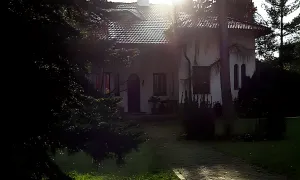
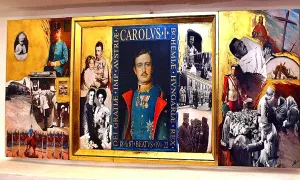
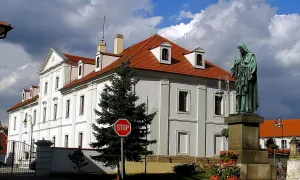
Photos from the area
Real photos taken near the monument


Zdroj a licence jsou uvedeny u každého snímku.
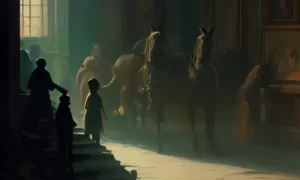
Atmosphere of the place
This atmospheric visualisation of the place and period was generated by artificial intelligence. It is not real footage of the location.
Tips from visitors
No tips yet. Be the first!
Log in and add your tip.
Sources and literature
Photos: MartinVeselka / CC BY-SA 4.0 — Wikimedia Commons. The author and licence also appear when you hover over the image.
Faktickým podkladem tohoto textu byl článek na Wikipedii, jehož autory jsou přispěvatelé Wikipedie. Článek je dostupný pod licencí CC BY-SA 4.0.
Location on the map

Příběhy a pověsti
Legendy, pověsti a příběhy spjaté s touto památkou
Fotografie návštěvníků
Zatím žádné fotografie. Buďte první, kdo přidá fotografii z návštěvy!
Log in a přidejte svou fotografii nebo hodnoťte.
Za ověřenou návštěvu v aplikaci získáte víc bodů — poznáme podle GPS, že jste na místě.
Reviews and comments