



Kaceřov Castle
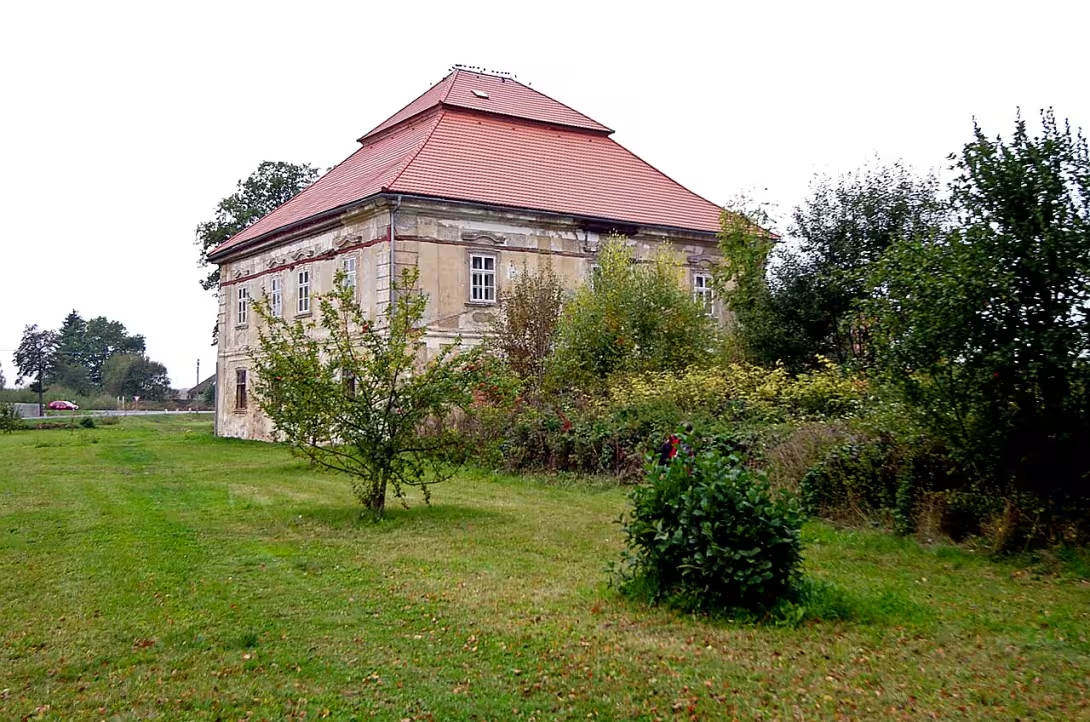
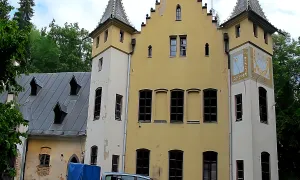
Kaceřov Castle is a remarkable Baroque structure located in Kaceřov village, within the Sokolov District of the Karlovy Vary Region in the Czech Republic. Originally built on the site of a late Gothic fortress in the early eighteenth century, it holds cultural and historical significance as a recognized monument of the Czech Republic. The castle features an adjoining economic courtyard and a park with remnants of the original fortress.
The origins of Kaceřov Castle date back to a period marked by significant political and religious changes in Bohemia during the early eighteenth century, following the Thirty Years' War. This era saw the reassertion of Catholicism across Europe. The transition from Gothic to Baroque architectural styles reflects broader cultural shifts.
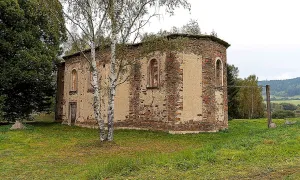
Architecturally, Kaceřov Castle is characterized by its single-story Baroque design, measuring 20 by 18 meters. Its facades feature mezzanine and cornice moldings, while the ground floor rooms have vaulted ceilings with lunettes. Parts of the northern wall and sections of the eastern and western perimeter walls date back to earlier Gothic and Renaissance phases, showcasing a blend of architectural influences.
Ownership of Kaceřov Castle has changed hands several times throughout history. Götz Perglár z Perglasu is first mentioned in 1474, followed by Volf Perglár in 1520. Jan Fabián Perglár inherited part of the estate in 1607 and was penalized for supporting the Bohemian Revolt, though his punishment was lifted after converting to Catholicism. During the Thirty Years' War, Volf Kašpar Perglár acquired the devastated estate and worked to free it from manorial obligations. The castle eventually passed through many owners, with Karel František Perglár selling it in 1795 to four peasants, leading to a rapid increase in ownership changes.
Key events at Kaceřov Castle include Jan Fabián Perglár's involvement in the Bohemian Revolt and his subsequent conversion to Catholicism. After being sold by Karel František Perglár, the castle experienced a significant shift with its number of owners increasing rapidly to 44.
Today, Kaceřov Castle remains accessible for visitors interested in exploring its historical and architectural significance. The park contains remnants of the original fortress, offering insights into its storied past. As a cultural monument, it provides valuable perspectives on the region's history and architectural evolution, making it a worthwhile destination for those keen to delve into Czech heritage.
Kaceřov Castle stands as a testament to the rich tapestry of Bohemian history, offering visitors an opportunity to connect with the past through its preserved architecture and storied legacy. Its cultural significance and historical depth make it a compelling site worth exploring for anyone interested in the evolution of European castles and the broader historical context of the Czech Republic.
Then and now
Drag the slider to compare how the landmark may have looked when it was built with the view today.
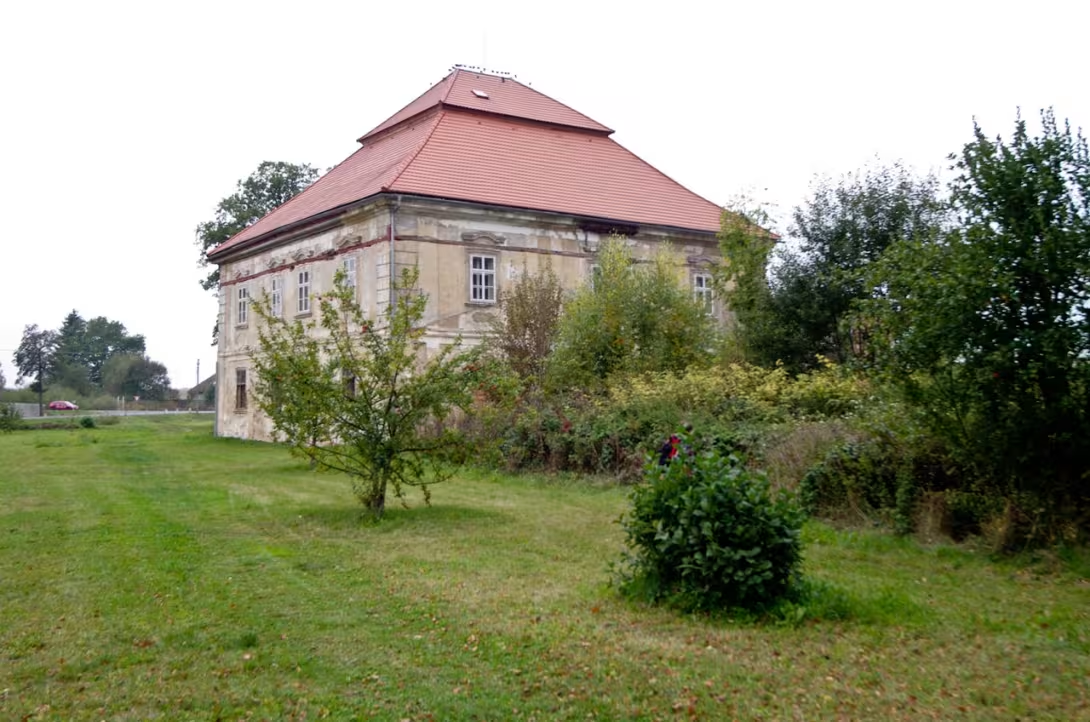
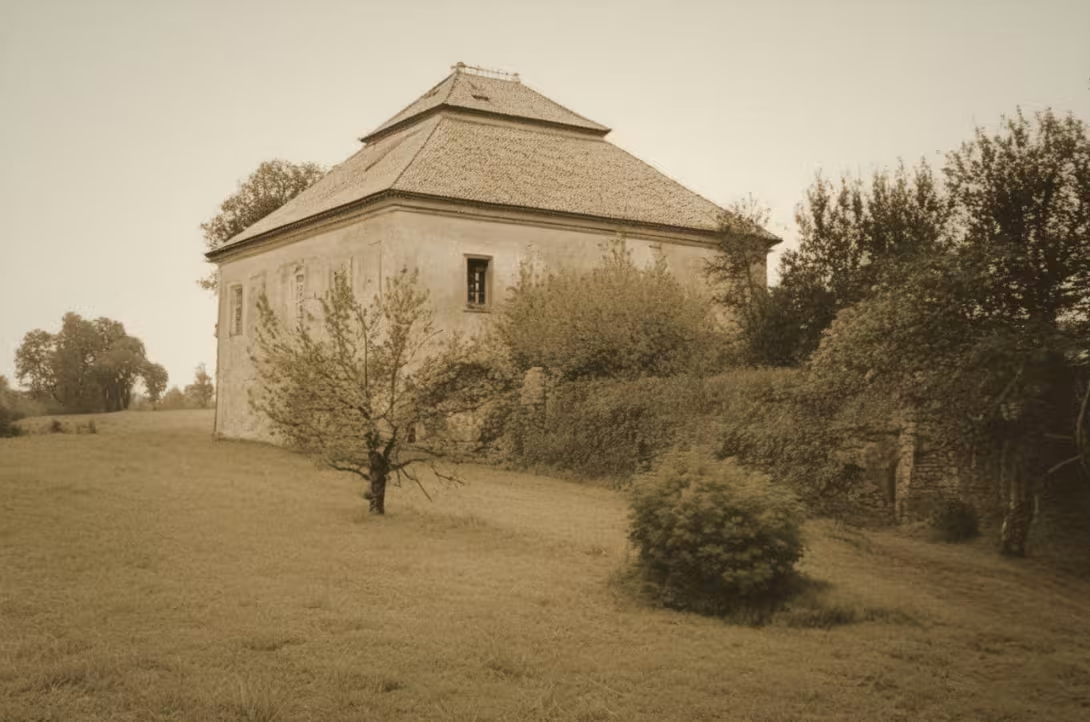
The historical appearance on the left is an AI-generated visualisation and serves as inspiration only.
Historical milestones
- 1474
- Götz Perglár z Perglasu is mentioned in three documents.
- 1520
- Volf Perglár is mentioned as the owner.
- 1607
- Jan Fabián Perglár inherits a portion of the estate.
- 1795
- Karel František Perglár sells Kaceřov to four peasants.
Architectural development
The castle's current baroque structure was built in the early eighteenth century on the site of a late Gothic fortress. The single-story building has dimensions of 20 by 18 meters, with facades divided by mezzanine and cornice moldings. Its ground floor rooms are vaulted with lunettes, while parts of the northern wall and adjacent sections of the eastern and western perimeter walls date back to an earlier Gothic and Renaissance phase.
Historical events
Jan Fabián Perglár was penalized for supporting the Bohemian Revolt but had his punishment lifted after converting to Catholicism.
During the Thirty Years' War, Volf Kašpar Perglár acquired the devastated estate and later freed it from manorial obligations.
Owners
Götz Perglár z Perglasu (1474)
Volf Perglár (1520)
Kryštof Perglár (post-1523)
Jan Fabián Perglár (1607)
Josef Ferdinand Perglár (1715-1747)
Karel Antonín Perglár
Karel František Perglár (sold in 1795)
Points of interest
- Kaceřov Castle's transition from a late Gothic fortress to a Baroque structure mirrors the broader cultural and religious reassertion of Catholicism in Europe after the Thirty Years' War.
- The castle's ownership history is marked by its rapid change, with 44 different owners within just a few years following its sale by Karel František Perglár in 1795, highlighting the turbulent nature of property rights and aristocratic fortunes during that period.
- Jan Fabián Perglár’s involvement in the Bohemian Revolt and his subsequent conversion to Catholicism is an intriguing tale of political rebellion followed by personal religious transformation, reflecting the complex interplay between politics and religion in early 18th-century Bohemia.
- The architectural blend at Kaceřov Castle, featuring Gothic and Renaissance elements alongside Baroque design, showcases how historical structures often embody multiple layers of cultural influences over time.
- Despite its tumultuous history, including devastation during the Thirty Years' War and numerous changes in ownership, Kaceřov Castle has been preserved as a cultural monument, offering insights into the region's architectural evolution and serving as a tangible link to Bohemian heritage.
Guide
This guide is narrated by a synthetic voice generated by artificial intelligence.
Show guide text
This text was created by artificial intelligence and has not been editorially reviewed. It may contain inaccuracies.
Kaceřov is a manor with an agricultural courtyard in the village of the same name in the Sokolovsko region. It originated in the first half of the 18th century on the site of an older late Gothic fortress. A park adjoins the manor, and in its eastern part lies an earthwork, a remnant of the oldest Kaceřov fortress. The manor is protected as a cultural heritage site.
The old fortress was abandoned during the 15th century. Kaceřov was then attached to the manorial system of Loket castle, and its holder became Götz Perglár z Perglasu, mentioned in 1474. He probably founded a new late Gothic fortress in place of an older agricultural courtyard. The Perglár family then held Kaceřov for almost three hundred years. After 1523, the brothers Kryštof and Volf divided the property, and Kaceřov fell to Kryštof. In 1607 it was acquired by Jan Fabián Perglár. For supporting the Estates Rebellion, he was supposed to lose a third of his property, but because he converted to Catholicism, the punishment was forgiven. However, when he supported the attackers during the Saxon invasion of Bohemia, he had to pay a fine of six hundred Rhine gold coins.
Shortly after 1648, Volf Kašpar Perglár took over the estate, which had been destroyed by the Thirty Years' War. He managed to have it released from manorial duties. The Baroque manor is generally considered to have been built by Karel Antonín Perglár, who inherited the estate in 1747. According to building surveys, however, the manor stood there earlier. The last Perglár, Karel František, sold Kaceřov in 1795 to four subjects.
The number of co-owners quickly grew to forty-four. The community became indebted, and in 1845 it handed over the estate for life to Josef August Hecht. His grandsons sold Kaceřov in 1868, and it subsequently changed hands several times. The last private owner was the company Jan Lehrmann a synové from Plesná, which owned the estate until the end of the Second World War. From 1948 the manor with the courtyard was used by a mountain pastoral cooperative, and from 1951 by a unified agricultural cooperative. This neglected maintenance and the estate fell into severe disrepair. After 1990 the manor was acquired by the municipality.
The single-storey manor building has dimensions of twenty by eighteen metres. The façades are articulated by cornices and rusticated corners. The windows on the floor are separated by flat pilasters, and above them are pierced cornices. The entrance leads from the north into a corridor, around which are rooms and stairs. All spaces on the ground floor have barrel vaults with segments. The northern wall and adjacent parts of the side walls still date from the Gothic and Renaissance building.
Frequently asked questions
Can the monument be visited?
Some buildings of this kind are open for guided tours, others serve another purpose or are privately owned. We have not verified whether and when this monument is open – please ask the operator.
What are the opening hours and admission?
We have not verified the opening hours or admission. Current information is published by the operator.
Where is the monument?
Location: č.p. 1, Kaceřov, Karlovarský kraj. The map on this page shows the exact spot.
Why is the monument protected?
It is listed in the Central List of Cultural Monuments of the Czech Republic as a cultural monument (register no. 17823/4-611).
Businesses nearby
Do you run a restaurant, accommodation, shop, museum, rental, wellness or other visitor service near this monument? Show yourself directly to the people heading to it — this is how they will see you in the app and on the web:
Accommodation nearby
Trips and activities nearby
Guided tours, tickets and activities nearby from GetYourGuide
Affiliate link: if you buy from the partner, we may receive a commission. The price for you does not change.
Search tours and activities →Themed route
Kaceřov Thematic Tour
1. Zámek Kaceřov
Type: Castle
Why Visit: The Zámek Kaceřov, with its rich history and stunning architecture, offers a glimpse into the past of this region. Visitors can explore beautifully preserved interiors that reflect centuries-old traditions.
2. Kaceřov Church
Type: Religious Site
Why Visit: Located near the castle, the church is renowned for its architectural beauty and historical significance. It provides insight into the religious heritage of Kaceřov and offers a serene place for reflection.
3. Zámek Park
Type: Park
Why Visit: The park surrounding Zámek Kaceřov is perfect for leisurely walks, offering picturesque landscapes and well-maintained gardens that complement the castle's grandeur. It's an ideal spot to relax and enjoy nature.
4. Kaceřov Historical Exhibition
Type: Museum/Exhibition
Why Visit: This exhibition provides a deeper understanding of Kaceřov's history, showcasing artifacts and stories from its past. It’s a must-see for those interested in the cultural evolution of this area.
5. Castle Grounds Exploration
Type: Outdoor Area
Why Visit: The expansive grounds around Zámek Kaceřov are perfect for exploration. Visitors can enjoy scenic views and discover hidden corners that reveal more about the castle's historical context.
This tour offers a comprehensive experience of Kaceřov, focusing on its rich history and cultural heritage while providing opportunities to relax in beautiful surroundings.
Seasonal recommendations
Spring: The arrival of spring at Kaceřov Castle is marked by a rejuvenation of the surrounding landscape, with blossoming flowers and fresh greenery creating a picturesque setting for visitors. The soft light of longer days enhances the beauty of the castle grounds, making it an ideal time to explore its historical architecture in a serene atmosphere. As nature awakens, you may encounter fewer crowds compared to peak tourist seasons, allowing for a more tranquil visit. Practical advice includes wearing comfortable walking shoes and layers that can be adjusted as temperatures fluctuate between cool mornings and warmer afternoons.
Summer: Summer at Kaceřov Castle is characterized by vibrant greenery and an abundance of sunlight, which accentuates the castle's architectural details and lush gardens. This season is perfect for outdoor activities such as picnics in the scenic surroundings or leisurely strolls along well-maintained paths. However, with summer being a popular time for tourists, it’s advisable to arrive early to avoid larger crowds. Comfortable attire suitable for warm weather, including hats and sunscreen, is recommended to ensure an enjoyable experience.
Autumn: Autumn transforms Kaceřov Castle into a stunning tapestry of reds, oranges, and yellows as the leaves change color in the surrounding forests. The cooler temperatures create a cozy atmosphere that complements the historic charm of the castle, making it a picturesque destination for photography enthusiasts. While this season attracts visitors eager to witness fall foliage, it is generally less crowded than summer months. Practical tips include dressing warmly in layers and bringing a light jacket or sweater as evenings can be brisk.
Winter: In winter, Kaceřov Castle offers a unique experience with its snow-covered grounds and the enchanting ambiance of shorter days lit by crisp sunlight. The castle's architecture takes on an ethereal quality against the backdrop of frosty landscapes, providing a magical setting for visitors. This season typically sees fewer tourists, allowing for a more intimate exploration of the site.
Visualizations and artistic views


The visualisations are generated by artificial intelligence and serve as inspiration.
Photos from the area
Real photos taken near the monument


Zdroj a licence jsou uvedeny u každého snímku.
Tips from visitors
No tips yet. Be the first!
Log in and add your tip.
Sources and literature
Photos: Lubor Ferenc / CC BY-SA 3.0 — Wikimedia Commons. The author and licence also appear when you hover over the image.
Faktickým podkladem tohoto textu byl článek na Wikipedii, jehož autory jsou přispěvatelé Wikipedie. Článek je dostupný pod licencí CC BY-SA 4.0.
Location on the map
Příběhy a pověsti
Legendy, pověsti a příběhy spjaté s touto památkou
Fotografie návštěvníků
Zatím žádné fotografie. Buďte první, kdo přidá fotografii z návštěvy!
Log in a přidejte svou fotografii nebo hodnoťte.
Za ověřenou návštěvu v aplikaci získáte víc bodů — poznáme podle GPS, že jste na místě.
Reviews and comments