






kaple (Město Touškov) Chapel
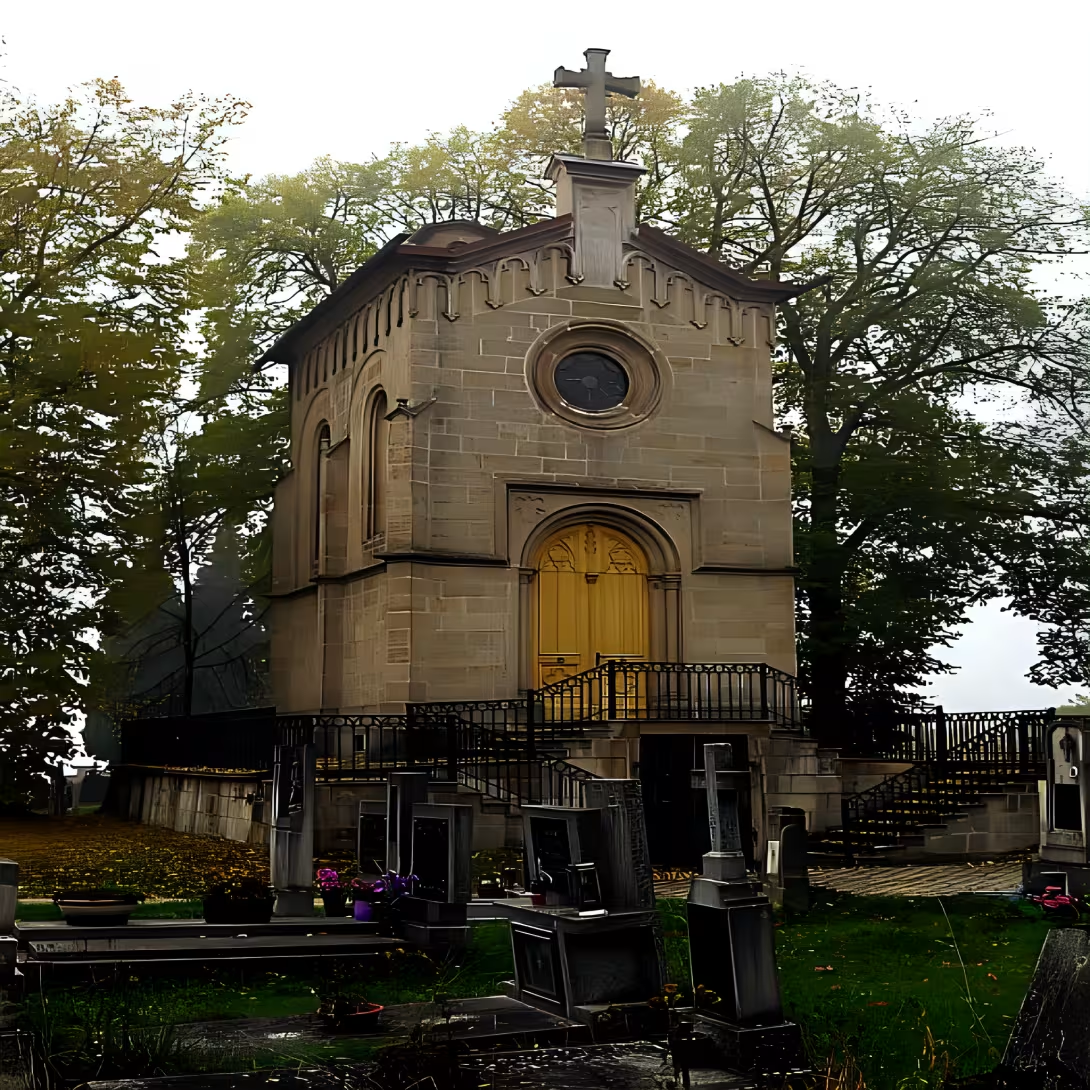
The chapel of the Holy Cross stands at the Touschek cemetery in the Plzeň-sever district. It is a New Romanesque family tomb with chapel, which was built in 1858-1859 by owners of the Czech estate Jan Antonín Starck and his family. The construction gained the status of cultural monument on 16 December 1998 and represents a typical example of aristocratic piety and building ambitions of the second half of the nineteenth century.
The origin of the chapel was linked to the influence and wealth of her family. Jan Antonín Starck, whose Město Touškov fell under its Chinese manor, had built a magnificent tomb in the new-Romanesque style. Ludvík Wildt participated in stone works. The total budget of the project reached twelve thousand gold - the amount of the project's ambition. In 1883, her initiator himself was buried in the tomb. During the second half of the twentieth century, the chapel became the target of burglary attempts in the 1950s and 1960s. The first substantial repairs were made in 1992 when the roof and stone ornaments were restored. In April 2025, a larger reconstruction started with the support of the Pilsen Region, associated with an anthropological survey of the remains of Starck family members. Personal items including the wedding rings of Jan Antonín and Anezka Starck and historical medals were found in the research.
The architecture of the chapel is reflected in its characteristic appearance. The building grows from unworked sandstone blocks and has a rectangular plan with a lower semi-circular finish reminiscent of the apside. The entrance facade dominates the semi-circle of the arched pseudo-Romanesque portal with two half-pillars with decorative heads. The front door is double-winged and decorated with stylized four sheets and circles; There was originally a Starck character that didn't behave. A circular stained glass window is spread over the entrance. The roof is closed by a triangular shield and above the lower semi-circular end is placed a bell bell covered with tin templates. Around the building there is a terrace with cast iron railing, accessible by two-arm staircase. The facade is decorated with a cordon and crown ledge, under which an arc frieze takes place. There are headrest in the corners. The interior of the chapel carries statues of St. John the Evangelist and Virgin Mary by Gabriel Max. With its concept, the chapel corresponds remotely to the Domanín Schwarzenberg tomb.
The visitor in Touškov City enters the architectural testimony of the last century, the memory of the Starck family and the example of artistic and building skills. The chapel currently undergoing renewal remains a living part of the region's cultural heritage.
Historical milestones
- 1858
- Opening of the chapel in the cemetery for Count John Antonín Starck.
- 1859
- Completion of the chapel with 12,000 gold costs.
- 1883
- The funeral of builder Louis Wildt to the chapel.
- 1998
- Declaration of the chapel for a cultural monument.
- 2025
- Opening of the reconstruction of the chapel with anthropological survey.
Architectural development
The chapel was built in 1858-1859 in a new Romanesque style with a terrace and cast iron railing. The tomb was robbed in the 1950s and 1960s. The first repair of the roof and stone ornaments took place in 1992. In 2025, extensive reconstruction started, including grave exploration and interior reconstruction. The construction is built from unworked sandstone blocks with terrace and support in corners.
Historical events
- 1858
- Opening of the chapel in the cemetery in Touškov town for Count Jan Antonín Starck.
- 1883
- The burial of builder Louis Wildt and the first Starck family members in the chapel.
- 1998
- The chapel was declared a cultural monument.
- 2025
- Opening of the reconstruction of the chapel with anthropological exploration and pietetic burial of the Starck family remains.
Owners
{'1858-1883': 'Jan Antonín Starck (owner of the Czech estate)', '1883-present': 'The Starck family (exact inheritance not mentioned)'}
Points of interest
- The chapel of the Holy Cross was built in 1858-1859 as a family tomb for the owners of Jan Antonín Starck and his family.
- The building stands at the Touschev cemetery and has acquired the status of cultural monument on 16 December 1998.
- During the second half of the 20th century, the chapel was the target of burglary attempts in the '50s and' 60s.
- In 1883, her initiator Jan Antonín Starck was buried here.
- Personal items were found during the reconstruction in 2025, such as the wedding rings of Jan Antonín and Anezka Starck and the historical medal.
Guide
This guide is narrated by a synthetic voice generated by artificial intelligence.
Show guide text
This text was created by artificial intelligence and has not been editorially reviewed. It may contain inaccuracies.
Welcome to this unique historical monument, which now opens up to you as an open book of the past. You are standing in front of the chapel of the Holy Cross in Touškov, located in the courtyard of a long-occupied cemetery, where the peace of your environment will awaken your imagination. This small, but significant building, built from unworked sandstone blocks, has been housed between trees and stones as a ghost pie maker in a white rose. Its terrace with cast iron railing and pseudo-Romanesque portal, which seemed to be the largest skeptic called to respect the past, yells you into a world where architecture speaks as loudly as human destinies.
So let's look at what surrounds this chapel and what makes it so memorable. In 1858, when the world was still wandering around in the mood of industrialization and change, something was built here that was different from everything else. This place became Jan Antonín Starck, the Earl of the Czech Manor, for whom this chapel was created as a family tomb. He wanted a place that would last for ages, and he chose this slightly romantic style, which in his time awakened memories of ancient times. The construction lasted only one year, completed in 1859, and stood unimaginable for that period twelve thousand gold. The money was like an investment in memory that was meant to last beyond the power of time.
The architect of this form was Ludvík Wildt, a man whose work was not lost here. Look at the facade where the pseudo-Romanesque portal welcomes your eyes with its finely curved tribes and decorative motifs that resemble a stone dress. The window inside hits the light as a blue powder, which is projected on the floor and walls, where the sculptures complement the atmosphere of peace. Feel how the stones bond with nature, how the patio and cast iron railing create boundaries between the world of the living and the dead. This architecture is not only about aesthetics, but about the desire to preserve the very nature of the relationship between man and his place.
Now let's look at the stories that left traces in this place. Jan Antonín Starck was a man who wanted to control his death. His family will find rest here, not only in this chapel, but also in nearby cemetery lakes, where his relatives and friends will find a place between the stones. But this story is nothing simple. Ludvík Wildt, the architect who created this chapel, was himself buried here in 1883. His grave, laid in the corner of the cemetery, is like the last message of his work. You know that even though his name is not so loudly known as other architects, his work here survived as proof of his art and devotion.
What might surprise you are the events that took place here in the second half of the twentieth century, where we stand today. The chapel became the target of burglaries who wanted to destroy what was important. Vandalism can only be superficial malice, but it turns out that even such unwanted events can help to preserve the memory. In 1998, this chapel was officially declared a cultural monument, which was a confirmation that its value remained beyond the power of time. And now, in 2025, there is a reconstruction that includes anthropological research. This is like a new chapter in a book where scientists explore what stones and foundations can say about the people who lived here and died.
Let's move on to something you might be interested in. Do you know that this chapel is not only a place for funerals, but a place where memories and stories were collected? The chapel of the Holy Cross was built as a family tomb for John Antonín Starck and his family, but over the years it also became a symbol of their power and influence. Every stone, every window, every detail was chosen knowing that this building should persist. And it lasted. Although the world was changing, although politics and society were changing, this chapel remained a fixed point in the map of history.
Now, when you turn around, look at the surrounding cemetery. You see other graves, other stories, other names that have disappeared here. The chapel of the Holy Cross is like a center around which many lives revolve. Your visitor, who stands before him, is part of this story. Your questions, your interest, your quest to understand the past - it all helps to keep this monument from losing its soul.
If you're more interested, look at the surrounding graves, where you'll find other stories of the Starck families and others who lived here. Look at the facade, see the atmosphere that persists here. The chapel of the Holy Cross is not only about architecture, but about the people who created it and who loved it. Her story is your story, because history is like a current that never ends.
Thank you for looking at this wonderful memory today. I wish you many experiences and memories that will accompany you for a long time. Let this chapel let you think about what remains, even if everything around it changes. May the journey bring you new discoveries and new stories. Sincerely, and I hope to see you again soon.
Tips for visitors
{'paragraph': 'The best time to visit the Holy Cross Chapel in Touškov is in the spring or autumn when the weather is pleasant and the chapel is surrounded by a calm atmosphere. In spring you can admire the blooming surroundings, while in autumn there is a beautiful golden shiny light. In summer the place is often visited, so avoid hot noon hours. The chapel is ideal for walking in peace and enjoying the historical environment without crowds.'}
{'paragraph': 'Chapel is available by car, parking is possible in the nearby area, a specific location is appropriate to find out in advance on the official site of the monument. The location can also be reached by public transport, find out the current connection in the traffic search engine. It is recommended to bring your own transport because the chapel is located in a small town and connections by bus or train are not very common.'}
{'paragraph': 'When visiting the chapel, wear comfortable clothes and shoes, because the terrain in the area can be uneven. It is also important to bring enough water, especially in the summer months. If you plan to take pictures, don't forget the sunglasses and hat because the sun can be strong. The chapel is built from sandstone blocks that can be very dazzling in direct sunlight.'}
{'paragraph': 'The best places for photography are the entrance part of the chapel with terrace and interior with family graves. It is recommended to photograph in the morning or afternoon light when the light is softer and creates pleasant shadows. In the interior of the chapel it is possible to capture detailed architecture and historical elements. External photos are the most successful with clear skies without strong shadows.'}
{'paragraph': 'In the vicinity of the chapel of the Holy Cross is worth visiting the Čemický château, which is located about five kilometers from Touškov Town. The chateau is a Baroque mansion with rich history and significant cultural value. It is an ideal place for those interested in history and architecture. Another interesting thing in the area is the pilgrimage place of the beautiful mountain, which is popular for its quiet surroundings and historic church buildings.'}
{'paragraph': 'Holy Cross Chapel is also suitable for families with children. The children can see the historical graves and hear the stories of Count John Antonín Stark. In the vicinity of the chapel it is possible to find quiet places for a picnic and children can play on small areas nearby. It can also be interesting for children to visit the nearby Čemický chateau, where cultural events and tours are often held.'}
Frequently asked questions
Is the Holy Cross Chapel open to the public in Touškov?
Yes, the chapel is open to the public. The tour is free.
How do I get to the place by car / public transport?
The chapel of the Holy Cross is located in the heart of Touškov Town. By car you can reach the road II / 249, public transport can use line 401 from Pilsen.
How much is the entrance fee and is it paid on the spot?
Admission is free. There's no accepted tender in place.
Is the tour suitable for children and seniors?
Yes, the chapel of the Holy Cross is accessible to all ages. The tour is suitable for families with children as well as for seniors.
How long does the tour take?
The Holy Cross Chapel tour takes approximately 30 minutes.
What are the opening times and booking is required?
The Holy Cross Chapel is open all year round, open from 9: 00 a.m. to 5: 00 p.m. Reservation is not necessary.
What's interesting in the immediate vicinity?
In the immediate vicinity there is a cemetery where you can visit other historical monuments as well as the local church of St. James.
For kids
Imagine going back to the past. Město Touškov is a small town northwest of Pilsen. There was a cemetery where the chapel of the Holy Cross stood today. And right here in this cemetery, this beautiful chapel was built in 1858 and 1859.
It was like a game where everything changed. Město Touškov was a small village house back then. People lived here in cottages, farming and trading. The chapel was built for Jan Antonín Starck, who was a rich nobleman. Back then, people prayed to God and the chapel was their sanctuary.
Businesses nearby
Do you run a restaurant, accommodation, shop, museum, rental, wellness or other visitor service near this monument? Show yourself directly to the people heading to it — this is how they will see you in the app and on the web:
Nearby
{'sights': [{'name': 'Čemický château', 'outtakes': 'Chemick Chateau, which was owned by the Starck family, is located about 5 km from Touškov Town. It is a Baroque residence with significant historical value.', 'distance': '5 km'}], 'natural elements': [{'name': 'Beautiful Mountain', 'distance': 'pilgrimage place with the Church of the Assumption of the Virgin Mary and a monastery located about 10 km from Touškov. It is famous for its picturesque views and historical architecture.', 'distant': '10 km'}]}
Accommodation nearby
Trips and activities nearby
Guided tours, tickets and activities nearby from GetYourGuide
Affiliate link: if you buy from the partner, we may receive a commission. The price for you does not change.
Search tours and activities →Themed route
Thematic cruise route: Baroque and pilgrimage tradition around Touškov City
1. Chapel in Touškov City * Type: * Sacral construction with regional history. * Why visit? * Unique chapel, connected with local legends and peaceful atmosphere of rural architecture. Ideal for short meditation or photography.
2. Chamomile lock * Type: * Baroque chateau with historical significance. Why visit? One of the most important houses of the Starck family, which retains the original interiors and park design. Suitable for lovers of architecture and history.
3. Beautiful Mountain * Type: * Pilgrimage place with church and monastery. * Why visit? * An important Baroque monument with rich decoration and spiritual atmosphere. The monastery offers peace and the opportunity to know Pilsen pilgrimage traditions.
* The route is designed to combine sacral and secular monuments in a logical order from the point of origin (chapel) through the chateau (5 km) to the pilgrimage point (10 km). *
Seasonal recommendations
Spring In spring, the chapel in Touškov offers a unique atmosphere where the surrounding nature awakens to life. A bright afternoon, when the sun shines through the young leaves of trees and is reflected in the chapel, creates a peaceful and meditative environment. The surrounding area is still quite quiet because the tourist season has not yet started fully. It is recommended to visit the chapel in March or April when nature is the most beautiful, but not yet large crowds. The clothes are suitable for changing weather - light jackets, umbrellas and comfortable shoes. The best time is the afternoon when the sun shines directly into the interior and the chapel acts as an oasis of peace.
Summer In the summer months the chapel is surrounded by green and warm sun, which creates a pleasant but often busy atmosphere. In the main summer season the surroundings of the chapel are visited by families with children and tourists who enjoy the nature of Pilsen. It is recommended to come early in the morning to avoid crowds, or late in the afternoon when the sun is not so hot. Light, breathable clothes and sunglasses are suitable. Due to the reconstruction of the chapel, it is necessary to check the current opening times as some parts may be closed.
Autumn Autumn brings rich leaves and cooler air around the chapel, which surrounds the chapel with a mysterious and nostalgic atmosphere. The golden and red shades of trees are reflected in the glass filling chapel, creating picturesque light effects. There are fewer tourists in this period, but the weather may be unstable. It is recommended to wear warmer clothes such as sweaters and waterproof shoes, and visit on dry days when nature is the most beautiful. The best time is the afternoon, when the sun still shines enough, but the air is pleasantly cold.
Winter In winter the chapel is surrounded by a quiet, snowy landscape that gives it a fairy tale character. The snow covers the surrounding trees and roof cover, which creates a unique atmosphere, especially in sunlight, when snow crystals shine. Due to the cold weather, the traffic may be lower, but the chapel can be closed due to reconstruction or have limited opening hours. Hot, laminated clothing, gloves and tight shoes are recommended. The best time is the afternoon when there's more light out and temperatures aren't that extreme.
Visualizations and artistic views


The visualisations are generated by artificial intelligence and serve as inspiration.
Photos from the area
Real photos taken near the monument

Zdroj a licence jsou uvedeny u každého snímku.
Atmosphere of the place
This atmospheric visualisation of the place and period was generated by artificial intelligence. It is not real footage of the location.
Tips from visitors
No tips yet. Be the first!
Log in and add your tip.
Sources and literature
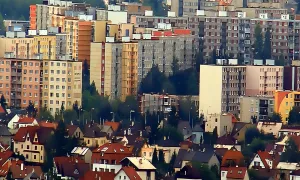
Fotografie: Sovicka169 / CC BY-SA 4.0, rozlišení zvýšeno umělou inteligencí — Wikimedia Commons. The author and licence also appear when you hover over the image.
Faktickým podkladem tohoto textu byl článek na Wikipedii, jehož autory jsou přispěvatelé Wikipedie. Článek je dostupný pod licencí CC BY-SA 4.0.
Location on the map

Příběhy a pověsti
Legendy, pověsti a příběhy spjaté s touto památkou
Fotografie návštěvníků
Zatím žádné fotografie. Buďte první, kdo přidá fotografii z návštěvy!
Přihlaste se a přidejte svou fotografii nebo hodnoťte.
Za ověřenou návštěvu v aplikaci získáte víc bodů — poznáme podle GPS, že jste na místě.
Reviews and comments