






kaple Nejsvětější Trojice (Svítkov) Chapel
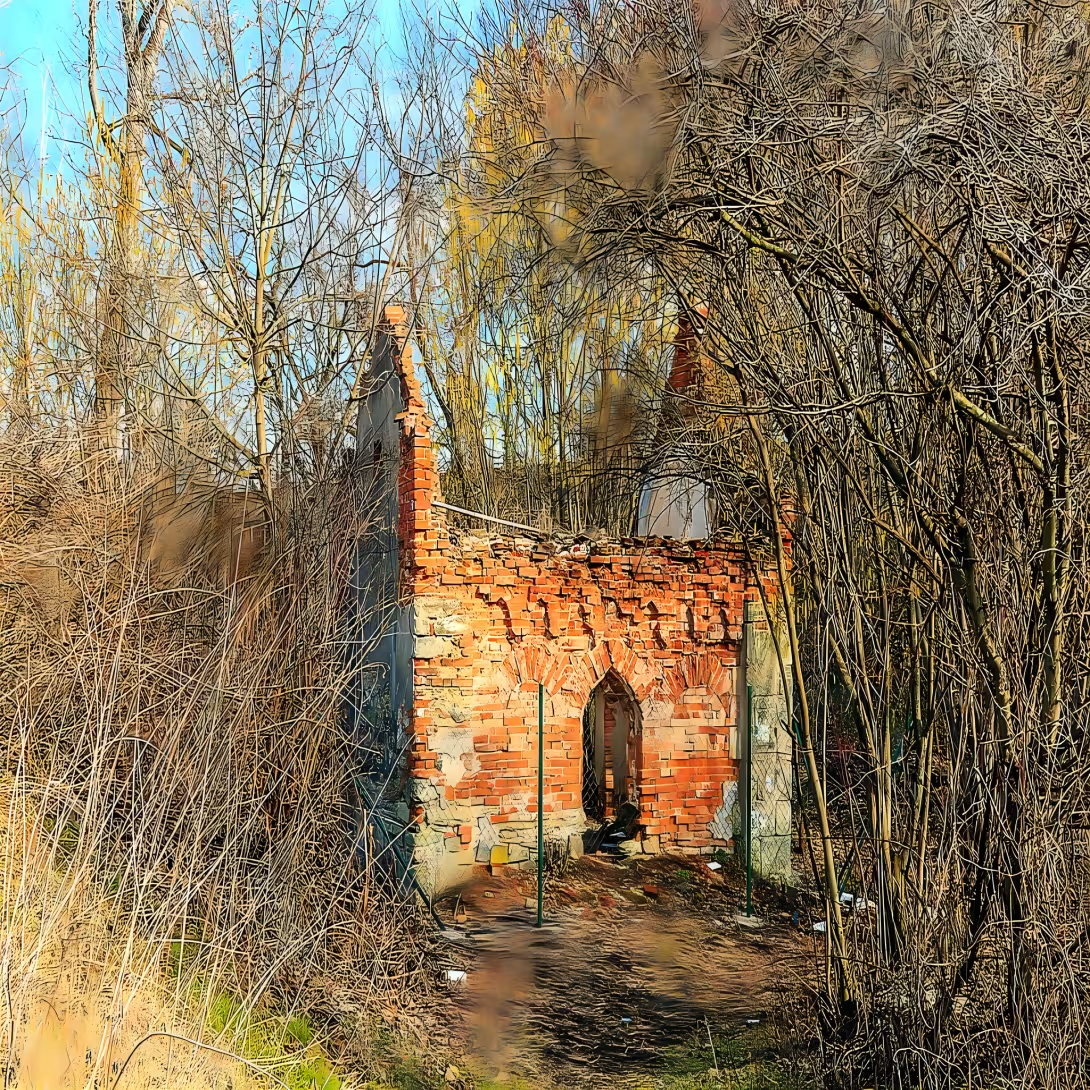
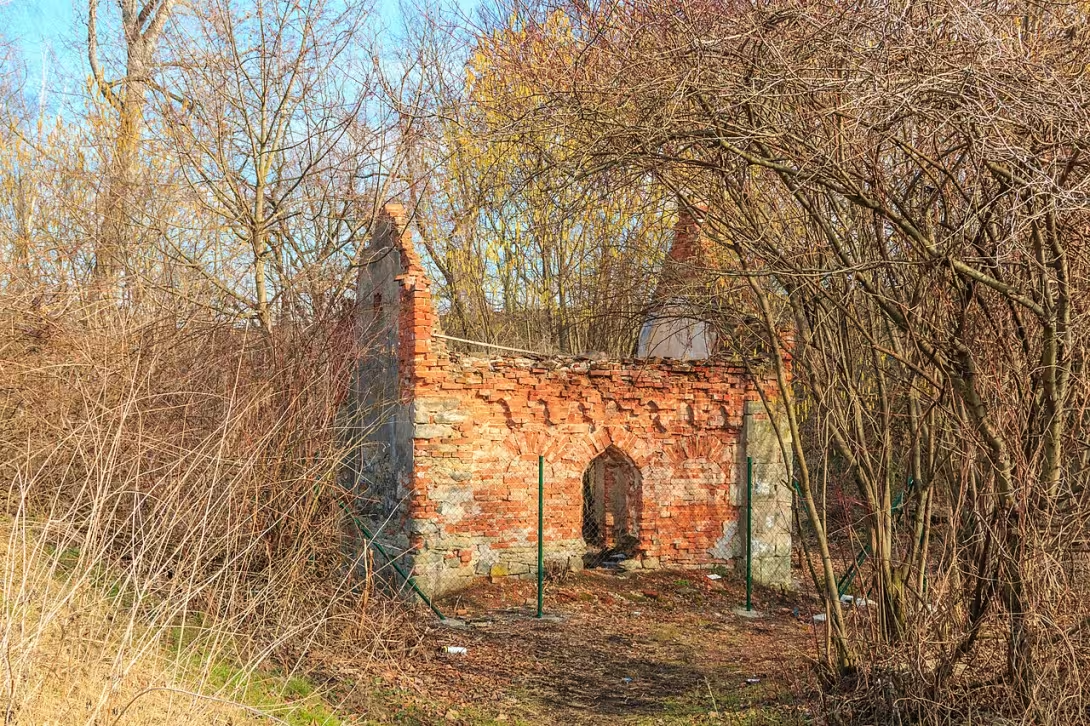
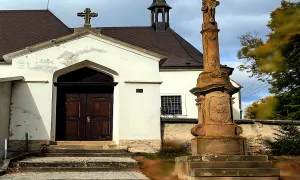
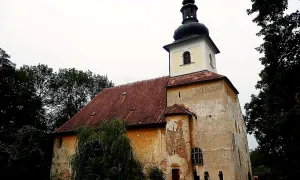
The Holy Trinity Chapel is a historic sacral building in the Pardubice district of Saint Trinity, which belongs to the cadastral territory of Svítkov. This walled pseudo-gothic monument from 1860 today consists only of a torso without a roof and sadly illustrates the gradual decay of regional monuments.
The history of the place began in 1797, when the first wooden chapel of the same initiation was created here. Its existence was closely related to the local baths that used the local healing spring. After the collapse of the spa operation, the area was affected in 1860 by a fire in which the wooden building was destroyed. A new brick object was subsequently built in its place, the author of which was Antonín Mrňávek.
Architecturally, the chapel belongs to pseudogotry, which was a popular means of expressing religious feelings and respect for traditions in the mid-19th century in Czech countries. The construction used to be an important local point to which it was directed annually through the procession. According to this shrine, the entire neighborhood, formerly known as the Rev, has acquired its name.
During the 20th century the chapel gradually lost its function and faded. Although the roof cover was repaired in 1990, this measure could not stop further degradation of the building. By 2020, the monument is registered as a ruin without a roof on private property.
The building is technically accessible through the entrance between the gardens of U Trinity Street. There are currently discussions about the next fate of this building. Despite the dismal state, the chapel of the Holy Trinity remains an important historical witness to the transformation of the Pardubice suburb and a reminder of the fallen spa tradition. Visiting this place encourages you to reflect on the value and fragility of our cultural heritage, which requires attention and care.
Then and now
Drag the slider to compare how the landmark may have looked when it was built with the view today.
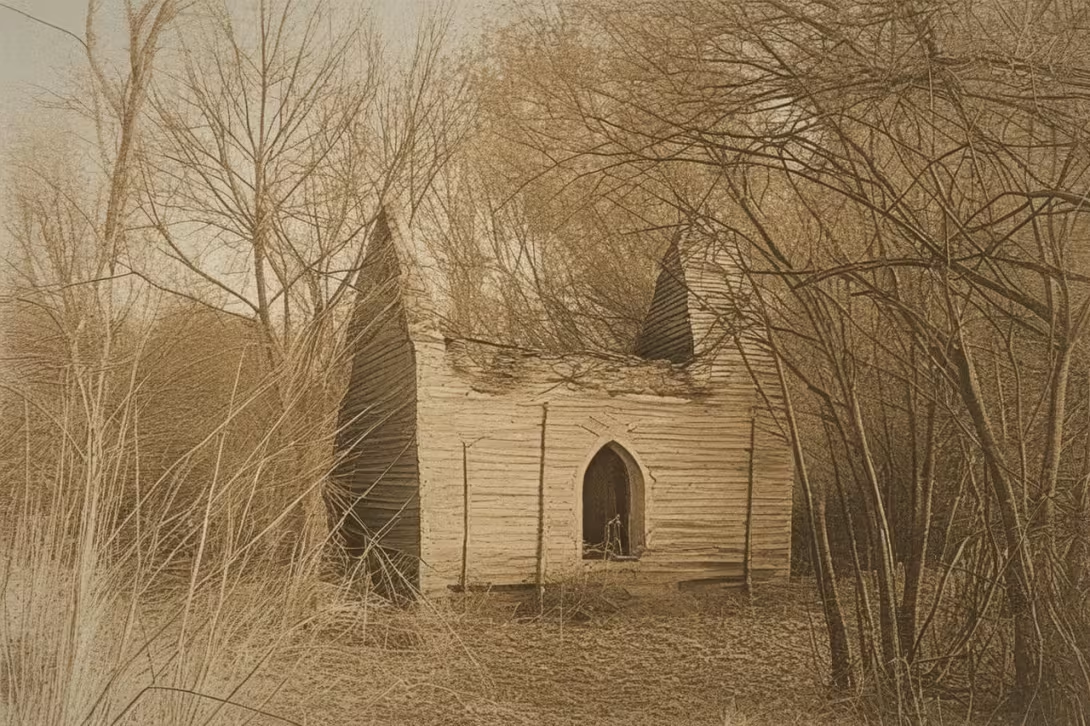
The historical appearance on the left is an AI-generated visualisation and serves as inspiration only.
Historical milestones
- 1797
- Establishment of the first wooden chapel at the healing spring.
- 1860
- The fire of the spa and the construction of a new brick chapel in a pseudo-gothic style.
- 1990
- Installation of a new roof cover, which however did not save the construction from further decaying.
- 20
- The building is registered as a wreck without a roof.
Architectural development
The original wooden structure was replaced after the fire by a walled construction in pseudo-gothic style. The project was created by Antonín Mrňávek. The roof was renovated in 1990, but it is now completely extinct.
Historical events
1797: Establishment of the first wooden chapel at the healing spring. 1860: The fire of the spa and the original chapel, the subsequent construction of a brick pseudogotic building. 1990: Repair of roofing cover was carried out, but it did not prevent further decaying.
Points of interest
- The first wooden chapel at this place was established in 1797 and its existence was related to local baths using a healing spring. - After the fire of the wooden building in 1860, a new brick building was built in its place, the author of which was Antonín Mrňávek. - According to this shrine, the entire neighborhood was named, which was formerly known as the Sovereign. - The construction used to be an important local point to which it was directed annually through the procession. - By 2020 the monument is registered as a ruin without a roof, located on private property.
Guide
This guide is narrated by a synthetic voice generated by artificial intelligence.
Show guide text
This text was created by artificial intelligence and has not been editorially reviewed. It may contain inaccuracies.
Welcome. You are standing in a place that tells a quiet and mildly melancholy story about the rise, tragedy, and the inevitable permeability of human endeavor. Before your eyes are the ruins of the chapel of the Holy Trinity, which today acts as a silent witness to the ancient glory of this place. Perhaps at first glance you can see only the crumbling walls and the empty space where the holy object used to stand, but let us try to stop together and perceive the atmosphere of this place, which is deeply linked to nature and human destiny.
Imagine what this place looked like over 200 years ago. The whole story of this place, known today as the Holy Trinity, began in 1797. At the time, there was no walled building, but a modest wooden chapel. Her existence wasn't random. It was closely, until inseparably, linked to local baths and, above all, to the proximity of the healing spring that was emerging here. People came here to heal the body and soul, and this small wooden structure served as a spiritual anchor for all who sought help in the healing waters. It was a place of hope where sacrum met the natural power of the spring.
But everything changed in 1860. In that year, fate struck in the form of a devastating fire that destroyed the original wooden chapel and part of the spa. This event was a huge blow to the local community, but it also triggered an effort to rebuild. A new, much more durable chapel was built on the site of the old wooden building. This time, it wasn't wood, it was solid wall. The architect Antonín Mrňávek was behind the design and implementation of this new building. He's the one who decided that the chapel would be built in a pseudo-gothic style.
Now when you look at the rest of the object, try to realize what this style meant at that time. The pseudogotic style was not only an aesthetic choice, it was an attempt to connect with the past, to create a sense of grandeur and spiritual depth through specific shapes and lines. Even if you see only fragments today, in these ruins you can still perceive the effort for verticality and to make the building seem to be heading towards the sky. Notice the texture of the masonry that survived the fire and decades of neglect. Even in this disintegrating state, the architectural ambition that Mr. Little Carrot has put into this place is felt.
Over time, however, the fate of the chapel began to change. As people's needs changed and the spa developed, the chapel gradually lost its original function. It was no longer the living center of the village or the spa area, but rather a forgotten corner. Throughout the twentieth century, we watched the object gradually deteriorate. It was a sad waste, when architecture, which was supposed to be eternal, gave in to the power of time and lack of care.
There was a rescue attempt. In 1990 it was believed that by installing a new roof cover, the decaying process could be stopped and the construction could be saved from further disintegration. It was a gesture of efforts to restore, to preserve the memory for future generations. Unfortunately, these measures proved insufficient. The roof has protected the interior space for some time, but the relentless time and absence of total maintenance did not put the building behind failure.
Today, when you stand here, you see the truth about this place in its purest form. According to the records from 2020, this building is already considered to have been broken down without a roof. The place that once protected the faithful under a solid structure is now open directly to the sky. This absence of a roof creates strange, yet unearthly feelings. If you look up, you won't see the ceiling, but the infinite space, which paradoxically highlights the spiritual essence for which the chapel was originally built.
But there is also one interesting thing that links this ruin to the whole area. You may not realize that this whole neighborhood that you're in right now has its name because of this shrine. Name of Saint The Trinity is not just a random location designation, it is a reference to the importance that this place had for its inhabitants and visitors. Even if the chapel as a building dies, her name and her legacy remain imprinted in the identity of this place.
When you look at these walls, feel their silence. It's not the silence of emptiness, but the silence of history that tries to speak through every crack in the stone. It's a reminder of how fragile our culture can be and how important it is to take care of what our ancestors left us.
Thank you for stopping by and paying attention to this forgotten memory. Wait a little longer, feel the atmosphere of this place and then you can move on to your trip around. Every step in this neighborhood can lead you to the next traces of history that are still waiting for your discoverers. Goodbye.
Tips for visitors
The best time to visit is during the day in good light, when you can easily see the exterior of the ruins. Since this is a free-access monument in the building, it is not limited by opening times, but we recommend a visit when you do not disturb the local population.
The location is available by car and by public transport; Check the current connection in the search engine. Parking is possible in adjacent streets around family houses, but make sure you do not block the entrance to local residents.
Take fixed shoes and a charged camera to visit. As this is a ruin, the terrain can be uneven and overgrown, so be careful when moving near the building. Soft afternoon light is ideal for photography, which highlights masonry texture.
In the area there is the construction of family houses in the Svítkov, which offers a peaceful walk. For families with children the location is more suitable as a stop during a longer trip after Pardubice, due to the state of the monument it is necessary to keep an adult under constant supervision for safety.
Frequently asked questions
Is kaple Nejsvětější Trojice (Svítkov) open to the public?
Yes, the chapel is generally accessible to visitors. However, it is important to check the current information on the official website or local office.
How do I get to the place by car / public transport?
The location is available both by car and public transport. We recommend checking the current connection with a search engine or local public transport schedule.
How much is the entrance fee and is it paid on the spot?
Admission fees are usually paid when visiting. The current prices can be found on the official site of the sights or on personal enquiry.
Is the tour suitable for children and seniors?
The tour is generally suitable for children and seniors, but it should be remembered that the terrain can be impenetrable. We recommend appropriate clothes.
How long does the tour take?
A visit to the chapel usually takes about 30 minutes, depending on how much you want to explore the site.
What are the opening times and booking is required?
Opening hours can be seasonal. We recommend checking the current information on the official website or in case of a personal request to make a reservation.
What's interesting in the immediate vicinity?
In the vicinity of the chapel you can visit the historical location of the spa and other sights in nearby villages. Explore the natural environment or look at animals on farms can be interesting for families with children.
For kids
About 166 years ago, a small place Svítkov was built where people still feel at home - the chapel of the Holy Trinity. But it wasn't an ordinary building! It was like a magical magical chateau in medieval stories that appeared at the site of an old wooden temple and spa. People were swirling into mysterious healing springs at the time, just like the heroes in the books enjoy witch potions.
Businesses nearby
Do you run a restaurant, accommodation, shop, museum, rental, wellness or other visitor service near this monument? Show yourself directly to the people heading to it — this is how they will see you in the app and on the web:
Events nearby
Zdroj akcí: otevřená data měst a obcí ČR (Národní katalog otevřených dat) a kalendář akcí Národního památkového ústavu.
Nearby
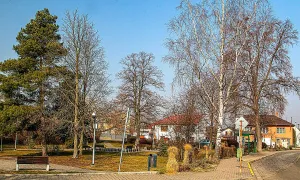
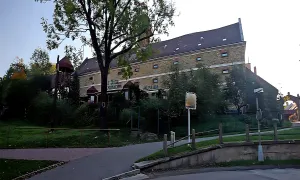
The chapel is located in the Svítkov cadastral on the west edge of Pardubice, near the building of family houses.
Accommodation nearby
Themed route
1. The outer space of the chapel of the Holy Trinity - Architecture. Admire the facade and the location of the building in the village Svítkov. 2. Interior of the chapel of the Holy Trinity - Sanctuary. Explore the inner space and perceive the spiritual atmosphere of the monument. 3. The immediate area of the chapel - the surrounding area. Take a look around the building near the family houses.
Seasonal recommendations
Spring: The Chapel of the Holy Trinity in the spring season offers visitors a celebration of new life and green nature when the surrounding forests dress up in fresh leaves. Sunshine days are the perfect time to explore these historic ruins, because the sun illuminates their details and adds a calm touch to the atmosphere. During spring you can expect a mild crowd load, especially on Saturday days, so we recommend visiting the chapel early in the morning. Due to the sudden changing weather, it is advisable to bring clothes that allow quick adaptation of temperature changes.
Summer: Summer in the chapel of the Holy Trinity offers long sunny days and warm evenings that are ideal for relaxing walks. In the main summer season the number of visitors may increase significantly, especially on Sundays and leisure days. To avoid crowds it is best to visit the memory early in the morning or later in the afternoon. Thanks to the warm weather we recommend to wear light clothes, protective sunglasses and plenty of drinking water because you can be out for a while.
Autumn: In autumn, the chapel of the Holy Trinity offers a unique atmosphere with colorful leaves and mild temperatures that increase comfort during walks. This time of year is less visited than spring and summer, making it easier to explore ruins without more crowd pressure. The sunny days are ideal for visiting while the roads can be uncomfortable in the rain. We recommend wearing layered clothes and protective shoes to help you withstand rapid temperature changes.
Winter: Winter visit to the chapel of the Holy Trinity offers a peaceful atmosphere with freezing wounds and the opportunity to explore historical ruins without crowds. Short sunny days create unique lighting that highlights the structure of ruins. However, due to the cold and shorter opening times it is important to come well prepared. We recommend wearing warm clothes, including fur hats or scarves and protective shoes. Visiting a memory in the early afternoon can be especially convenient, because the sun's rays light up the ruins a few hours longer.
Visualizations and artistic views


The visualisations are generated by artificial intelligence and serve as inspiration.
Photos from the area
Real photos taken near the monument


Zdroj a licence jsou uvedeny u každého snímku.
Tips from visitors
No tips yet. Be the first!
Log in and add your tip.
Sources and literature
Fotografie: Petr1888 / CC BY-SA 4.0, rozlišení zvýšeno umělou inteligencí — Wikimedia Commons. The author and licence also appear when you hover over the image.
Faktickým podkladem tohoto textu byl článek na Wikipedii, jehož autory jsou přispěvatelé Wikipedie. Článek je dostupný pod licencí CC BY-SA 4.0.
Location on the map

Příběhy a pověsti
Legendy, pověsti a příběhy spjaté s touto památkou

Fotografie návštěvníků
Zatím žádné fotografie. Buďte první, kdo přidá fotografii z návštěvy!
Přihlaste se a přidejte svou fotografii nebo hodnoťte.
Za ověřenou návštěvu v aplikaci získáte víc bodů — poznáme podle GPS, že jste na místě.
Reviews and comments