






kaple (Nivy) Chapel
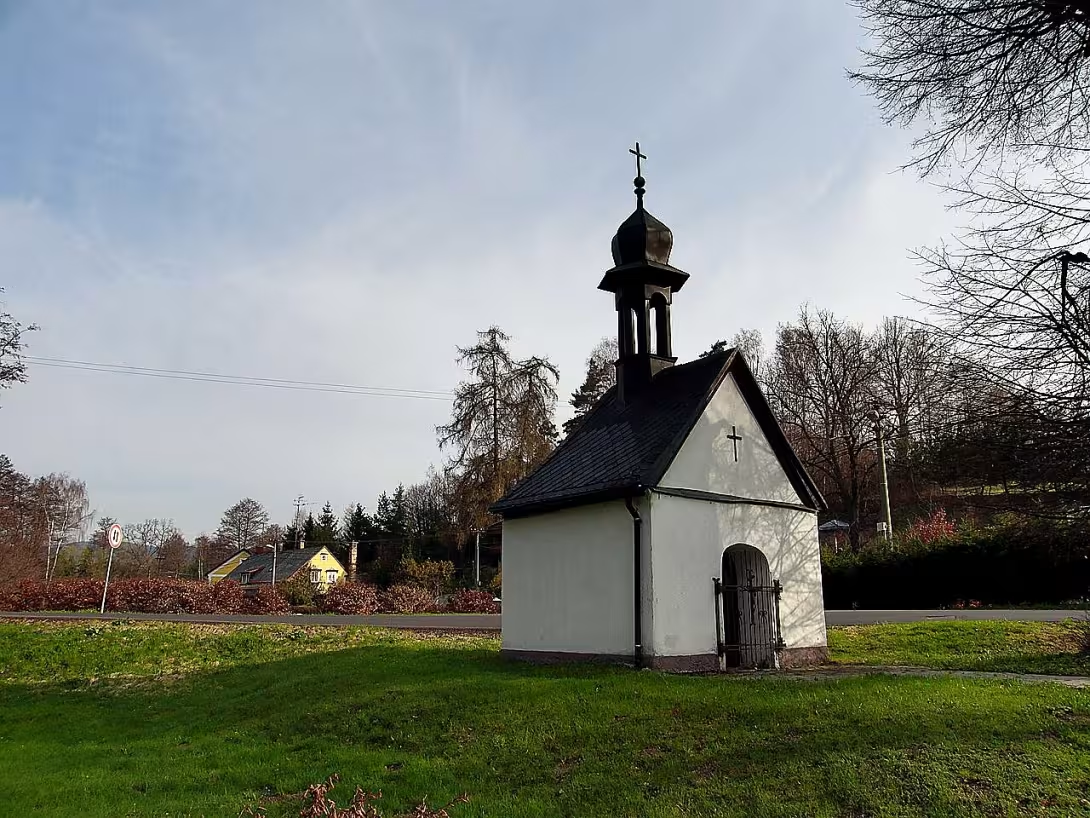
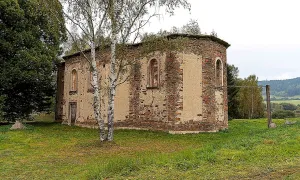
The chapel in Niva is a Baroque small building dating back to the 18th century. Its creation is at a time when local religious prayer houses were built in rural villages. The building is located in the district of Karlovy Vary, specifically in the municipality of Nivy, where it occupies its place in the middle of the village on the left bank of the Viticulture. The road connecting Otovice to Děpoltovice leads the chapel to the left. This interesting element of the landscape is a rare part of the landscape even today - in the religious background of the village is supplemented by a memorable tree, Lipa near the chapel, which grows near the chapel.
The construction represents a self-standing brick object built on the ground plan of a rectangle with a triangular conclusion. The roof is saddled, covered traditionally with shale. The most characteristic element of the chapel is the high six-sided pillar bell tower located on the ridge of the roof, which ends with a baroque tinned bell roof. This bell tower gives the building a distinctive look and makes it easily recognizable in the landscape.
The entrance facade of the chapel contains a rectangular entrance with a segmental enchantment. The facade is separated from the triangular shield by a crown ledge that divides the facade into two parts. The facade is designed simply and efficiently - it is smooth without windows, which is typical of small sacral structures of this type. The inner space is encapsulated by a compressed vaults that creates a harmonious simple space intended for prayer and spiritual thinking.
The chapel was officially declared a cultural monument in 1998, which recognises its historical and architectural value. To this day, it is possible to see the quality manual work of the builders of the 18th century, which combines the Baroque architectural language with the practical requirements of the rural community.
Then and now
Drag the slider to compare how the landmark may have looked when it was built with the view today.
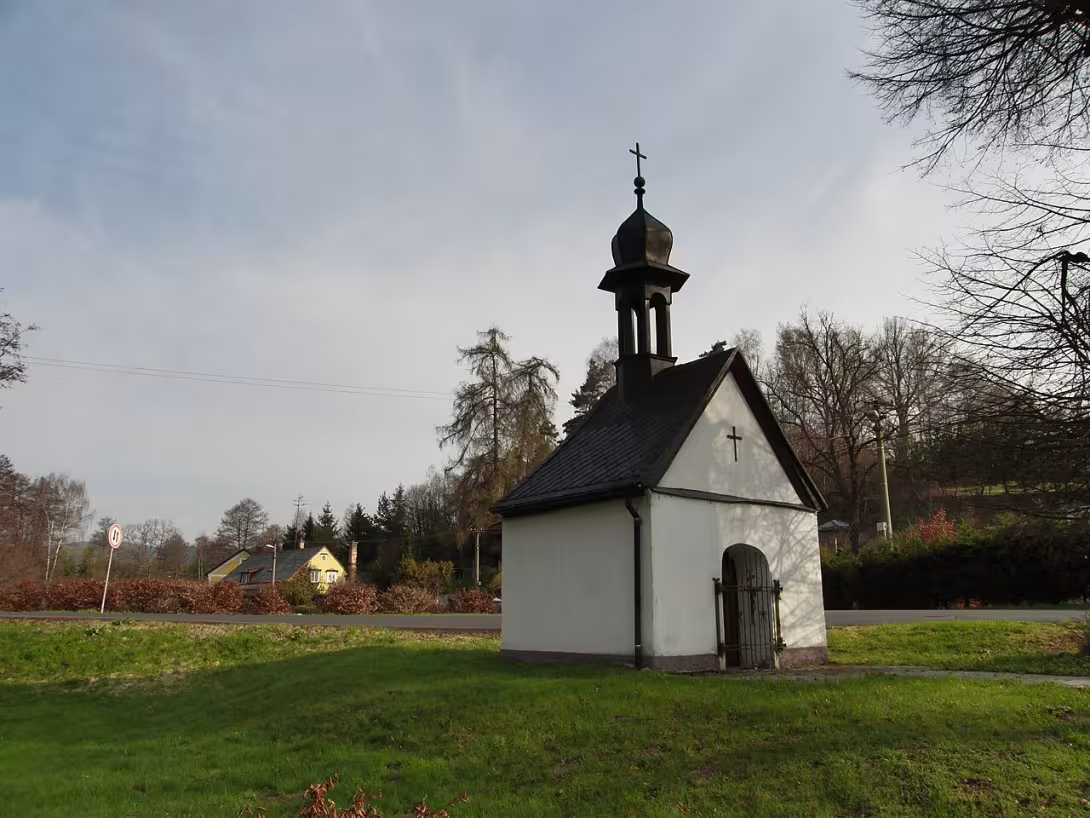
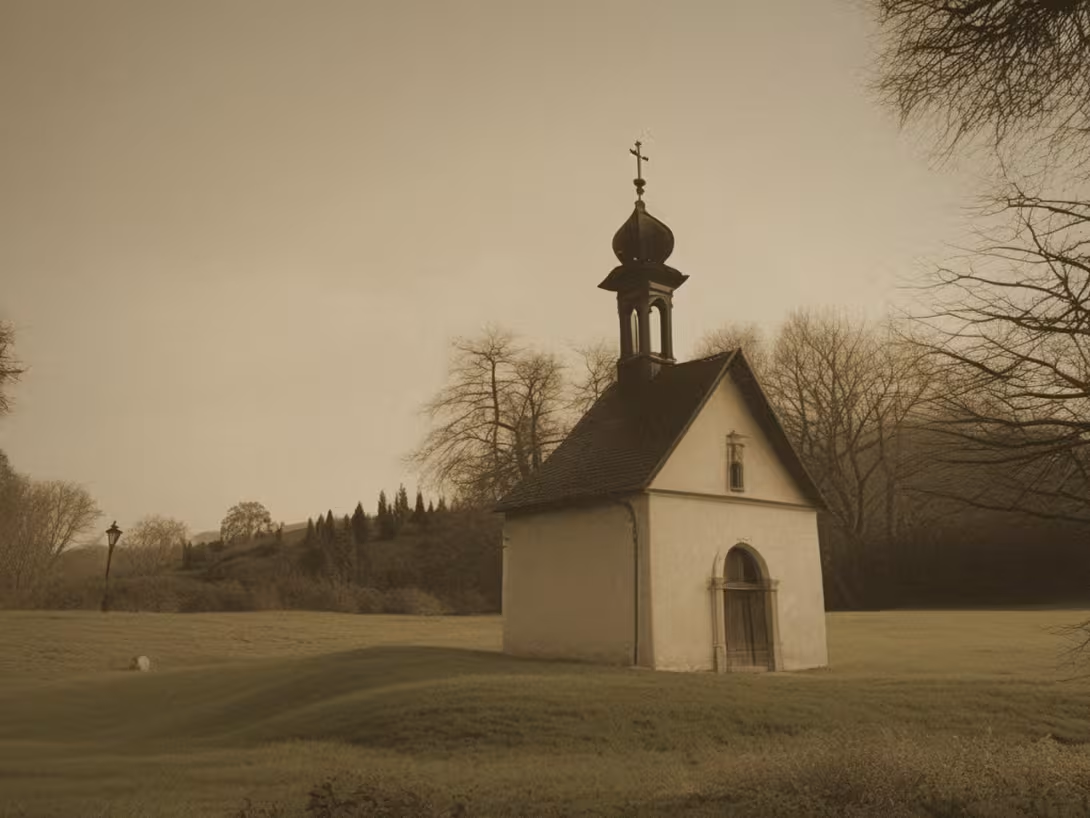
The historical appearance on the left is an AI-generated visualisation and serves as inspiration only.
Historical milestones
- Around 1700-1750
- The position of the Baroque Chapel in Niva as a rural prayer house for local residents.
- 18th Century
- Completion of the building with typical baroque elements such as the pillar bell tower on the roof.
- 1998
- Declaration of the chapel for a cultural monument, recognition of its historical and architectural value.
Architectural development
The chapel was built as a Baroque building in the 18th century. In 1998 it was declared a cultural monument. The construction is simple, without significant reconstructions, and retains the original characteristic elements of Baroque sacral architecture.
Historical events
In 1998 it was declared a cultural monument.
Points of interest
- The chapel is a Baroque building from the 18th century, built as a country prayer house for local believers.
- It is located in the village Nivy on the left bank of the Vitician creek, in the middle of the village, and is supplemented by a memorable tree - Lípá near the chapel.
- The construction has a distinctive appearance thanks to a high six-sided baroque bell tower on the ridge of the roof, finished with a tinned bell roof.
- The facade of the chapel is smooth and windowless, the interior covered with a compressed vaulted vault.
Guide
This guide is narrated by a synthetic voice generated by artificial intelligence.
Show guide text
This text was created by artificial intelligence and has not been editorially reviewed. It may contain inaccuracies.
Welcome. You are now standing in the middle of the village Nivy, and in front of you stands a tiny but impressive Baroque chapel from the eighteenth century. This self-standing walled building is located on the left bank of the Vitika creek and has been used since a long time ago as a quiet centre of the ghost and as an unforgettable landmark. That is why they could declare it a cultural monument in 1998, not only for its architectural value, but also for its role in the history of this village. Let's move on with time and see what you're right in front of you.
If you look at the chapel, notice its layout. It is a rectangular building with a triangular conclusion, which is typical of Baroque sacral architecture. Above the whole building is a saddle roof, on top of which you will find a high six-sided bell tower. This bell tower is actually a visual trademark of the chapel and can be recognized from far away in the surrounding landscape. The facade is smooth and windowless, which gives it a modest and mysterious character. The inner space is surrounded by a compressed vaulted vault, an interesting architectural element that evokes the time when it was built with great precision and emphasis on spatial impression.
As regards the creation of this chapel, the sources talk about the period around 1700 to 1750. It was then built as a country prayer house for local believers who needed a place for spiritual refuge in the region. At that time, the rural chapel was often built as private or general projects that served to pray together and express the faith of the people. Unfortunately, the author of the building is not documented, architects and important personalities associated with the chapel remain unknown. Yet the very existence of this work suggests that the community had a strong sense of belonging and wanted to keep a visible memory that would survive a generation.
Now pay attention to the details you can actually see. Look at the smooth façade, whose simplicity is touched by the baroque elegance, which does not need unnecessary ornaments to work. Raise the view up to the six-sided bell tower, which is the unique dominant feature of this place. And if you move around the chapel, you will see that it is supplemented by a memorable tree, Lip by the chapel, which adds peace and eternity to the whole space. This tree is a kind of living part of the historical whole and reminds us that the chapel is not only a building, but also a part of the nature and landscape that has evolved around it for centuries.
Although we do not know the names of those who built the chapel, nor the particular historical figures associated with it, the very fact that it survived for almost three centuries is a story in itself. The chapel stood through times, through changes in the landscape and in the life of the inhabitants of the village. Its declaration as a cultural monument of 1998 was a natural recognition of the value it represents. It is not a grandiose structure, but a small, honest expression of faith and community that deserves attention.
The interesting thing is that the chapel serves not only as a sacral space but also as an orientation point in the landscape. People can see it from a distance and use it as a reference in the surrounding terrain. This feature is typical and very important for rural construction. The chapel thus combines the spiritual dimension with practical use, which is actually a story about how the sacral architecture adapted to the needs of ordinary people.
Let's stop for a moment and see the atmosphere this place has to offer. You're standing in front of a smooth facade with no windows, but still with some openness that attracts you to stop. Behind these walls is a space of compressed rolled vaults that has provided people with space for contemplation and prayer for centuries. Note how the construction is divided into individual elements, how the saddle roof passes into a six-sided bell tower and how the whole complex forms a harmonious whole. It's a beautiful example of how a tiny building can be full of meaning.
And so I would like to turn to you with the wish that you would take a closer look at this chapel, if you do not know. Walk carefully and better at the chapel, which is an integral part of this place. Turn around and light up how the chapel stands in the landscape, how it flows into her story. This is where history, architecture and nature meet, and where every stop can be exceptional. Thank you for sharing this journey with us, and I wish you the very rest of your visit to the Niva.
Tips for visitors
{'paragraph': 'The best time to visit the chapel in Niva is during spring and summer months when the weather is pleasant and the surrounding nature is in full glory. The Baroque architecture of the chapel is best reflected in sunny weather, where shadows are played on the facade and it creates a picturesque atmosphere. It is recommended to visit the chapel in the morning or late afternoon, when the place is quieter and you can enjoy silence without distracting.'}
{'paragraph': 'Chapel is available by car, parking is possible in public parking lots near the village Nivy. It is recommended to arrive by car because public transport to this remote location is not regular. If you are travelling by bus, check the current connection in the traffic search engine as the lines do not come often. It is also recommended to carry a map or navigation to avoid loss of path.'}
{'paragraph': 'Take comfortable shoes when visiting the chapel because the path to the chapel often leads on uneven terrain. It is also appropriate to take a small umbrella or raincoat with you, because rain moisture may occur in the surroundings. If you plan to stay longer, bring water and a light snack as there are no shops around the chapel.'}
{'paragraph': 'For photography is the most suitable place in front of the chapel where there is a small area overlooking the Viticulture stream. The best light for photography is in the morning or in the evening when the sun shines oblique and creates interesting shadows. The chapel itself offers several details, such as baroque elements and window fillings, which are worth capturing. In the vicinity of the chapel there is also the possibility to take photos of the memorable tree Lipa near the chapel.'}
{'paragraph': 'Around the chapel in Niva there are several interesting places worth visiting within 30 minutes' drive. You can visit the villages of Otovice and Depoltovice, which are part of the same region and offer picturesque surroundings with historic houses and natural beauties. Also interesting is the Vitician stream, which flows around the chapel and offers possibilities for short walks or nature observation. '}
{'paragraph': 'For families with children a visit to the chapel in Niva is a great opportunity to explore history and nature. Children can look at the small sacral structure and learn about Baroque art. In the vicinity of the chapel there is also an opportunity to explore nature, such as the Vitician stream or the memorable tree of Lípu near the chapel. It may also be interesting for children to observe local fauna and flora, which may be an interesting activity during the trip.'}
Frequently asked questions
Is kaple (Nivy) open to the public?
Yes, the chapel is open to the public. The opening hours are 9: 00 to 5: 00.
How do I get to the place by car / public transport?
The chapel (Nivy) is located in the centre of the village of Děpoltovice. The nearest parking lot is located in front of the chapel. Public transport is available from nearby cities.
How much is the entrance fee and is it paid on the spot?
Payment is made directly at the entrance.
Is the tour suitable for children and seniors?
Yes, the kaple (Nivy) tour is also suitable for families with children and seniors. The chapel has accessible staircases and flat areas that allow easy walking.
How long does the tour take?
The kaple (Nivy) tour takes approximately 30 minutes. However, you can also sit down and relax in a nearby park.
What are the opening times and booking is required?
The chapel (Nivy) is open from 9: 00 to 17: 00. Reservation is not necessary, but for larger groups it is recommended to contact the chapel administrator in advance.
What's interesting in the immediate vicinity?
There are several other historical monuments and objects nearby. You can visit the local church, chateau or browse the surrounding forests.
For kids
Imagine going back to the past when the chapel in the Niva was still young and full of life. It was like a little village where people lived and worked in the fields.
There were a lot of people there who lived on agriculture, craft or business. There was a forest nearby where people gathered to tell stories and share food. The chapel was in the center of the village where weddings, funerals and other important events took place.
Businesses nearby
Do you run a restaurant, accommodation, shop, museum, rental, wellness or other visitor service near this monument? Show yourself directly to the people heading to it — this is how they will see you in the app and on the web:
Nearby
In the vicinity of the chapel there is a Vitico stream and a memorable tree Lipa near the chapel. The villages of Otovice and Děpoltovice, which are part of the same region, are in sight.
Accommodation nearby
Trips and activities nearby
Guided tours, tickets and activities nearby from GetYourGuide
Affiliate link: if you buy from the partner, we may receive a commission. The price for you does not change.
Search tours and activities →Themed route
1. Nivy - chapel Type: church monument Why is it worth a visit: The main destination of the trip where our journey begins. In close proximity to the chapel, the historic tree of Lipa is growing near the chapel and there is a vitician stream nearby.
2. Lime by the chapel - memorable tree Type: natural interest Why is it worth a visit: This memorable tree forms with chapel a picturesque and harmonious whole right in the village Nivy. It is an ideal place for a moment of rest at the Vitician stream on Nivy.
3. Otovice - village Type: regional seat Why is it worth a visit: This neighbouring village in the region offers a view of the rural development near the starting point of Nivy.
4. Děpoltovice - village Type: regional seat Why is it worth a visit: Another adjacent village in the wider area that completes the characteristic character of the landscape associated with the village Nivy.
Seasonal recommendations
Spring The chapel in the Niva region of Karlovy Vary awakens to life in the spring months when the surrounding meadows and forests dress in green and yellow shades. The light of the sun, which is prolonged at this time, creates fine shadows on the stone walls and gives the interior a calm, meditative atmosphere. The air is fresh and slightly moist, often accompanied by the sounds of birds nesting in the surrounding nature. It is an ideal time for a visit where the monument appears untouched by the crowd and visitors can enjoy its architecture and historical significance in peace. It is recommended to wear comfortable shoes and light layers of clothing because the weather can be variable - from sunny days to sudden rain. The best time to visit is early in the morning or in the afternoon when the chapel is lit with pleasant, soft light and the surrounding landscape offers the most beautiful views.
Summer In the summer months the chapel in Niva becomes a popular destination for tourists who come here not only for its historical value, but also for a pleasant environment surrounding nature. Warm sunny days and longer daylight create sharp shadows on the stone walls of the chapel and bring to the fore its details which remain hidden in other seasons. The surrounding forests and meadows are in full bloom, which gives the visit a sense of a harmonious connection with nature. In the main summer season, however, the chapel can be visited by larger groups of people, so it is advisable to come early in the morning or late in the afternoon to avoid the biggest crowds. Light, breathable clothing and sun protection are recommended, as temperatures in the Karlovy Vary Region may rise to 30 ° C during the summer months.
Autumn Autumn visit to the chapel in Niva offers a unique atmosphere where the surrounding forests and meadows dress up in red, orange and brown shades. The chapel, illuminated by the sun, which at this time boils down to the horizon, receives warm, golden tones that create a pleasant and cozy environment in the interior. The air is colder and cleaner, often accompanied by the scent of fallen leaves and moisture that emerges after morning dew. It is a time of peace and reflection, when the chapel appears to be a hidden treasure that visitors can enjoy without the greater interest of tourists. It is recommended to wear layered clothing because temperatures can be variable and evenings cold. The best time to visit is in the afternoon when light becomes softer and the landscape offers the most beautiful colors.
Winter Winter visit to the chapel in Niva is an experience for those who value peace and mysterious atmosphere. The snow covers the surrounding forests and meadows, which gives the landscape a fabulous look and the chapel is surrounded by a quiet, snowy landscape. The sun, which rises lower than the horizon in the winter, creates long shadows on the stone walls of the chapel and brings its architectural details to the forefront. The air is clean and cold, often accompanied by the sounds of cracking ice and rustling snow. In winter months, the chapel is visited less often, allowing visitors to explore its interior and surroundings in peace. It is recommended that warm, layered clothing, because temperatures may fall below the freezing point, and firm shoes, because roads may be slippery. The best time to visit is in the afternoon when the chapel is lit with pleasant, soft light and surrounding landscape offers unique winter views.
Visualizations and artistic views


The visualisations are generated by artificial intelligence and serve as inspiration.
Photos from the area
Real photos taken near the monument


Zdroj a licence jsou uvedeny u každého snímku.
Tips from visitors
No tips yet. Be the first!
Log in and add your tip.
Sources and literature
Fotografie: Mejdlowiki / CC BY-SA 3.0 — Wikimedia Commons. The author and licence also appear when you hover over the image.
Faktickým podkladem tohoto textu byl článek na Wikipedii, jehož autory jsou přispěvatelé Wikipedie. Článek je dostupný pod licencí CC BY-SA 4.0.
Location on the map
Příběhy a pověsti
Legendy, pověsti a příběhy spjaté s touto památkou

Fotografie návštěvníků
Zatím žádné fotografie. Buďte první, kdo přidá fotografii z návštěvy!
Přihlaste se a přidejte svou fotografii nebo hodnoťte.
Za ověřenou návštěvu v aplikaci získáte víc bodů — poznáme podle GPS, že jste na místě.
Reviews and comments