






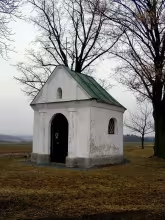
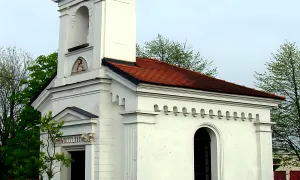
The Chapel of Saint Francis Seraphicus is a Roman Catholic chapel on Varta Hill in Velká Jesenice, within the Královéhradecký kraj region. Built in 1868 in the neo-Romanesque style, it replaced an earlier wooden cross erected in 1820 to honor priest Nikolaj Hradecký. The chapel is architecturally significant and has been a protected cultural monument since 1995. It serves as a prominent landmark visible from various parts of the town and features on Velká Jesenice's emblem and flag since 2004.
The chapel's origins are rooted in local history. In 1820, a wooden cross with double metal arms was erected to commemorate priest Nikolaj Hradecký, who was killed by a landowner from Roztok in 1645. This marked the site as a memorial place. By 1868, the wooden cross was replaced with a more permanent chapel featuring an Old Slavonic cross. Farář Jan Evangelista Havelka oversaw its construction, assisted by kněze Ignáce Budiny and místního kaplana Václava Uhlíře. This transition reflects the community's desire to honor their history permanently.
Architecturally, the chapel is characterized by its neo-Romanesque style, prevalent in mid-19th century Bohemia when it was part of the Austrian Empire. The period saw cultural and architectural developments influenced by historicism, mirroring broader European trends. Its semicircular design and orientation towards the village are distinctive features that enhance its aesthetic appeal. Renovations occurred between 1974-1975 and again in 2008 to ensure its preservation.
Throughout history, the chapel has been more than a place of worship; it served as a local landmark with historical significance. Varta Hill, where the chapel is situated, was historically known as 'U svatého Františka' and functioned as a lookout point and military signal station. This dual role underscores its importance to both the spiritual life and strategic significance of Velká Jesenice.
Today, the Chapel of Saint Francis Seraphicus remains accessible for visitors, offering panoramic views from Varta Hill. Its status as a cultural monument and inclusion in the town's emblem highlight its enduring value to the community. The chapel is not only a testament to local history but also a symbol of Velká Jesenice’s heritage. Visitors are invited to explore this site, appreciating both its architectural beauty and historical significance, making it a worthwhile destination for those interested in Czech culture and history.
Historical milestones
- 1645
- The killing of priest Nikolaj Hradecký.
- 1820
- Erection of a wooden cross in memory of priest Nikolaj Hradecký.
- 1868
- Construction of the chapel of Saint Francis of Assisi.
- 1995
- Preservation of the chapel as a protected cultural monument.
- 2004
- Incorporation of the chapel into the emblem and flag of the municipality Velká Jesenice.
Architectural development
Originally constructed in 1868, the Chapel of Saint Francis Seraphicus underwent renovations between 1974 and 1975, with further restoration completed in 2008. The chapel is designed in a neo-Romanesque style, characterized by its semicircular shape.
Historical events
- 1820
- A wooden cross with double metal arms was erected on Varta Hill in memory of priest Nikolaj Hradecký.
- 1868
- The chapel was built to replace the earlier wooden cross, featuring a staroslovanský (Old Slavonic) cross.
Points of interest
- The wooden cross that originally marked the site of the Chapel of Saint Francis Seraphicus was notable for its double metal arms, a unique feature commemorating priest Nikolaj Hradecký's legacy.
- Farář Jan Evangelista Havelka not only oversaw the chapel's construction but also played a significant role in shaping the spiritual and cultural landscape of Velká Jesenice during his tenure.
- Varta Hill, where the chapel is located, served as a military signal station historically known as 'U svatého Františka,' highlighting its strategic importance beyond religious functions.
Guide
Show guide text
Welcome to the serene and historic Chapel of Saint Francis Seraphicus, nestled on Varta Hill in Velká Jesenice. As you stand here, take a moment to absorb the tranquil atmosphere surrounding this neo-Romanesque chapel with its distinctive semicircular design facing towards the village. This site is not just an architectural marvel but also a testament to the enduring legacy of local history and faith.
The origins of this sacred place date back to 1645 when priest Nikolaj Hradecký met a tragic fate, being killed in these parts. In his memory, a wooden cross was erected on this very spot in 1820, featuring unique double metal arms—a poignant reminder of the reverence held for him. This simple yet powerful symbol stood until 1868 when it was replaced by the current chapel, constructed to honor and commemorate Father Hradecký's legacy more fittingly.
As you look around, notice how the chapel harmoniously blends into its surroundings with its neo-Romanesque style, a design choice that reflects both tradition and reverence. Though the architects remain unknown, their work has created a space that invites reflection and admiration. The chapel’s semicircular shape is particularly striking as it faces towards the village, creating a visual connection between this sacred site and the community it serves.
This place holds stories of significant figures such as Jan Evangelista Havelka, who not only oversaw its construction but also played an instrumental role in shaping the spiritual landscape of Velká Jesenice. Alongside him were Ignác Budina and Václav Uhlíř, whose contributions have left a lasting impact on this community.
A fascinating detail to note is the chapel's earlier wooden cross with its double metal arms—a unique feature that marked the site before the current structure was built. This element highlights how deeply ingrained Father Hradecký’s memory is in the fabric of this place.
Since 1995, the Chapel of Saint Francis Seraphicus has been protected as a cultural monument, underscoring its historical and architectural significance. In 2004, it became an integral part of Velká Jesenice's identity by being incorporated into the town’s emblem and flag—a testament to its enduring importance.
As you conclude your visit here, allow yourself to be inspired by the history and stories that this chapel embodies. We invite you to explore further, perhaps wandering through the village or delving deeper into the tales of those who have walked these paths before you. Thank you for joining us on this journey, and may your exploration continue with curiosity and wonder.
Tips for visitors
The best time to visit the Chapel of Saint Francis Seraphicus is during late spring or early autumn, when the weather is mild and pleasant for outdoor activities. During these seasons, you can enjoy the beautiful natural surroundings without the summer crowds or winter cold. The chapel's neo-Romanesque architecture also looks particularly striking against the backdrop of changing foliage in these months.
Parking near Varta Hill is limited, so it’s advisable to use public transportation if possible. Alternatively, there are parking areas nearby where you can leave your car and walk up to the hill. For those driving from further away, consider using a navigation app to find the nearest available parking spot. Public transport options should be checked in advance for the most convenient route.
When visiting the chapel, it's recommended to bring comfortable walking shoes as there may be some uneven paths leading up to Varta Hill. Additionally, carrying a light jacket is advisable since temperatures can drop slightly at higher elevations. A water bottle and snacks are also useful if you plan to spend time exploring the area around the hill.
For photography enthusiasts, the best spots for capturing stunning views of the chapel and surrounding landscape are from the top of Varta Hill. The early morning or late afternoon light provides a soft glow that enhances the natural beauty and architectural details of the chapel. Be sure to bring your camera with a good zoom lens if you want to capture both close-up details and wide panoramic shots.
Nearby, within 30 minutes' travel from Velká Jesenice, are several interesting sites worth visiting. The area around Varta Hill includes lush forests that offer opportunities for hiking and nature walks. Exploring these natural features can be a delightful addition to your visit to the chapel, providing both relaxation and adventure.
For families with children, visiting the Chapel of Saint Francis Seraphicus can be an enjoyable experience if planned well. The walk up Varta Hill is manageable but do ensure that younger children are comfortable with the distance. Once at the top, they will appreciate the panoramic views and the serene atmosphere. Consider bringing a small picnic to enjoy in the scenic surroundings.
Businesses nearby
Do you run a restaurant, accommodation, shop, museum, rental, wellness or other visitor service near this monument? Show yourself directly to the people heading to it — this is how they will see you in the app and on the web:
Nearby
Varta Hill is a prominent feature in Velká Jesenice, offering panoramic views of the surrounding landscape. The area includes natural features such as forests and serves as a local landmark.
Accommodation nearby
Themed route
Thematic Walking Tour: Velká Jesenice
1. Capela de São Francisco Serafim (Capela) - Type: Religious Site - Why Visit: Begin your journey at the heart of Velká Jesenice with this charming chapel dedicated to Saint Francis of Assisi. Its serene atmosphere and beautiful architecture make it a perfect starting point for reflection and appreciation of local religious heritage.
2. Varta Hill (Hill) - Type: Natural Landmark - Why Visit: Just a short walk from the chapel, Varta Hill offers breathtaking panoramic views of Velká Jesenice and its surrounding landscapes. This natural feature is ideal for photography enthusiasts and those seeking a peaceful spot to enjoy nature's beauty.
3. Local Forests (Forest) - Type: Natural Area - Why Visit: Explore the lush forests that envelop Varta Hill, providing an immersive experience in nature. These woods are perfect for leisurely walks or picnics, offering tranquility and a chance to connect with the local flora and fauna.
4. Return Path through Village Center (Village) - Type: Cultural Route - Why Visit: Conclude your tour by strolling back through the charming village center of Velká Jesenice. This path allows you to appreciate the quaint architecture and community spirit, rounding off a day filled with natural beauty and cultural insights.
This thematic walking tour combines spiritual reflection, stunning natural views, and local culture into an enriching experience in Velká Jesenice.
Seasonal recommendations
Spring: Visiting the Chapel of Saint Francis Seraphim during spring offers a serene experience as nature awakens around Velká Jesenice. The landscape is adorned with blooming flowers and fresh greenery, creating a picturesque setting that enhances the chapel's tranquil atmosphere. This time of year often brings mild weather, making it ideal for exploring the surrounding natural beauty on foot or by bike. However, be mindful of potential rain showers, so wearing layers and carrying an umbrella can ensure comfort during your visit.
Summer: Summer is the peak season to explore the Chapel of Saint Francis Seraphin, with longer daylight hours and warm weather inviting visitors to enjoy both the chapel's spiritual ambiance and the vibrant outdoors. The lush greenery around Velká Jesenice provides a perfect backdrop for leisurely walks or picnics in nearby parks. Given that this is a popular time for tourists, it's advisable to visit early in the morning or later in the afternoon to avoid larger crowds. Don't forget sun protection and comfortable footwear as you explore.
Autumn: Autumn brings a magical transformation to the Chapel of Saint Francis Seraphin with its warm hues of reds, oranges, and yellows painting the landscape around Velká Jesenice. The cooler temperatures make it an ideal time for long walks through the scenic countryside or enjoying hot beverages in local cafes. As the days begin to shorten, planning your visit during daylight hours will allow you to fully appreciate the chapel's beauty against the autumnal backdrop. Layered clothing is recommended to adapt to fluctuating temperatures.
Winter: The Chapel of Saint Francis Seraphin takes on a serene and almost mystical quality during winter in Velká Jesenice. Snow-covered grounds and bare branches create a peaceful, contemplative atmosphere that enhances the spiritual experience within the chapel. While the colder weather may limit outdoor activities, it offers a unique opportunity to appreciate the quiet beauty of the landscape. Visitors should dress warmly in layers and check opening hours as they might be shorter during this season. Early morning visits can also provide a chance to witness the tranquil beauty of sunrise over the snow-covered hills.
Visualizations and artistic views


Vizualizace jsou generovány umělou inteligencí a slouží jako inspirace.
Tips from visitors
No tips yet. Be the first!
Log in and add your tip.


Reviews and comments