






zámek Rychnov nad Kněžnou Chateau
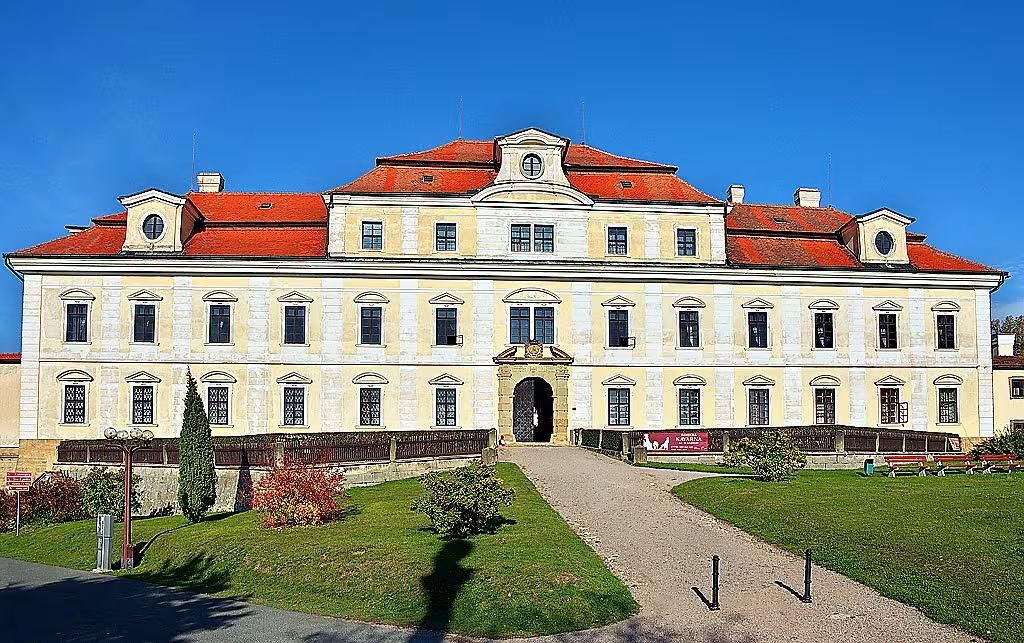
Chateau Rychnov nad Kněžnou is a prime example of Baroque architecture in the Czech Republic. Situated on a gentle plateau above the river Kněžná in Rychnov nad Kněžnou, it was designed by architect Jan Blažej Santini-Aichel. This chateau forms one of the largest Baroque complexes in the country. Its grandeur and historical significance are enhanced by its proximity to the Church of the Holy Trinity, together creating a dominant architectural ensemble that has earned the town the nickname "Rychnovské Hradčany." Today, the chateau is not only an architectural marvel but also houses exhibitions from the Museum and Gallery of the Orlické Mountains. These feature an extensive collection of Czech and international paintings dating back to the mid-15th century.
The origins of Chateau Rychnov nad Kněžnou trace back to before 1258, when a fortress belonging to Heřman z Rychnova stood on the site. Over centuries, ownership changed hands multiple times, reflecting the turbulent history and shifting fortunes of noble families in Bohemia. By the late 17th century, František Karel I. Libštejnský z Kolowrat initiated a significant transformation by demolishing an older structure to erect a new Baroque edifice. This period marked a flourishing era for Baroque architecture across Europe, including Bohemia, where cultural and artistic development was significantly influenced by prominent families like the Kolowrats.
Architecturally, Chateau Rychnov nad Kněžnou is distinguished by its symmetrical layout featuring a central courtyard surrounded by four wings. The chateau's design includes a heraldic fountain with an orlicí Kolowrat on the façade of the stables, symbolizing the family's legacy. After a devastating fire in 1704, reconstruction efforts led by Jan Blažej Santini-Aichel between 1720 and 1724 further refined its Baroque aesthetics, integrating elements typical of Santini’s distinctive style.
Throughout its history, Chateau Rychnov nad Kněžnou has seen various owners who have shaped its destiny. The chateau was initially acquired by Albrecht Libštejnský z Kolowrat in 1640 and later passed to František Karel I. Libštejnský z Kolowrat, who played a pivotal role in its Baroque transformation. After the extinction of the Liebsteinská line of Kolowrats in 1861, ownership transitioned to the Krakowská branch, which continued to influence the chateau's legacy until it was nationalized post-World War II. In 1992, restitution returned the property to the Kolowrat family, with Jan Egon Kolowrat Krakowský Liebsteinský currently serving as its owner.
The chateau is not only a testament to architectural evolution but also houses an impressive art collection that includes works by renowned artists such as Karel Škréta and Hans von Aachen. This extensive gallery offers visitors a glimpse into the artistic heritage of both Czech and international masters from the mid-15th century onwards, making it a cultural treasure trove.
Today, Chateau Rychnov nad Kněžnou is accessible to the public, inviting visitors to explore its rich history and architectural splendor. The chateau's exhibitions provide an engaging experience for art enthusiasts and history buffs alike. Its strategic location overlooking the river Kněžná in the foothills of the Orlické Mountains adds to its allure, making it a must-visit destination for those interested in Baroque architecture and Czech cultural heritage.
Chateau Rychnov nad Kněžnou stands as a remarkable testament to the artistic and architectural achievements of its era. Its historical significance, combined with its stunning design and rich collections, make it an invaluable part of the Czech Republic's cultural landscape. Visitors are encouraged to explore this magnificent site, where history and art converge in a captivating display of Baroque grandeur.
Then and now
Drag the slider to compare how the landmark may have looked when it was built with the view today.
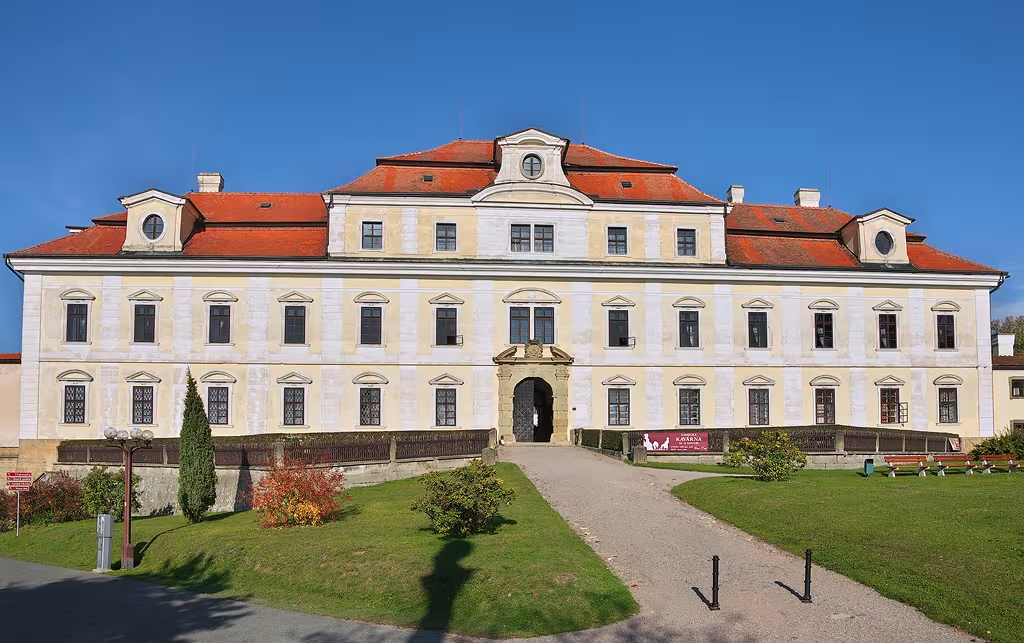
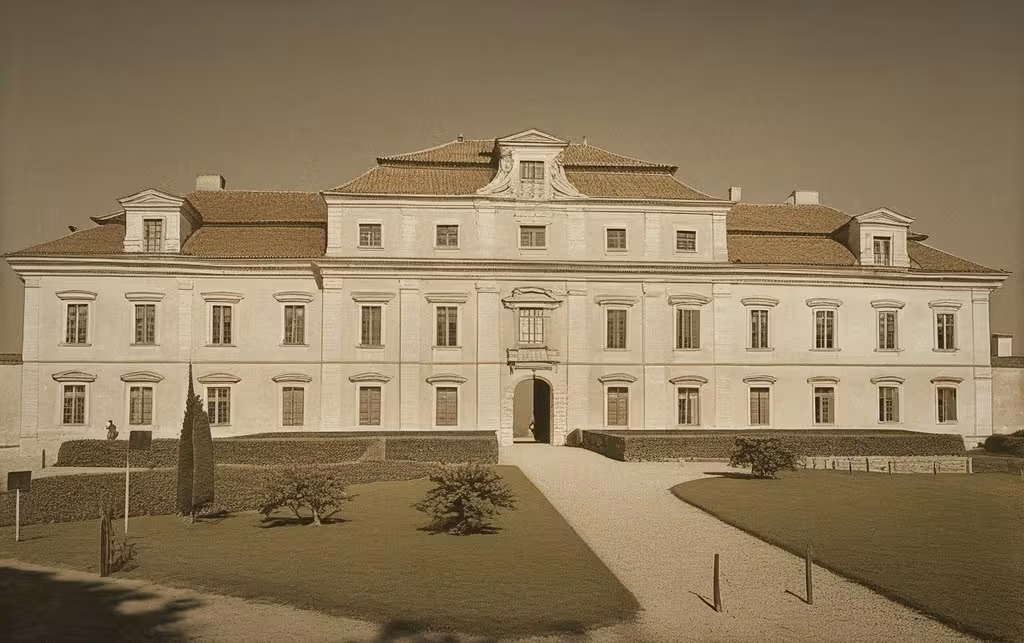
The historical appearance on the left is an AI-generated visualisation and serves as inspiration only.
Historical milestones
- 1676
- Demolition of the original chateau.
- 1704
- Fire leading to reconstruction.
- 1720
- Start of reconstruction under Santini-Aichel's design.
- 1724
- Completion of reconstruction.
Architectural development
The original Renaissance chateau was replaced by a new Baroque structure initiated by František Karel I. Libštejnský z Kolowrat in 1676. After a fire in 1704, the chateau underwent reconstruction under Jan Blažej Santini-Aichel's design between 1720 and 1724. The chateau features a symmetrical layout with a central courtyard and a heraldic fountain.
Historical events
The original chateau was likely demolished in 1676 by František Karel I. Libštejnský z Kolowrat.
A fire in 1704 led to a significant reconstruction of the chateau, completed between 1720 and 1724.
Owners
Albrecht Libštejnský z Kolowrat (1640)
František Karel I. Libštejnský z Kolowrat (1676)
Jan Egon Kolowrat Krakowský Liebsteinský (1992-present)
Points of interest
- Despite its Baroque grandeur today, Chateau Rychnov nad Kněžnou was originally a fortress dating back to before 1258, highlighting the strategic importance of its location even in medieval times.
- The chateau's heraldic fountain featuring an orlicí Kolowrat is more than decorative; it symbolizes the enduring legacy and influence of the Kolowrat family over centuries, marking their contribution to Bohemian history.
- A devastating fire in 1704 led to significant reconstruction efforts by Jan Blažej Santini-Aichel, whose distinctive style not only restored but also enhanced the chateau's Baroque aesthetics, making it a unique architectural masterpiece.
- The transition of ownership from the Liebsteinská line to the Krakowská branch of the Kolowrat family in 1861 reflects the complex history and shifting power dynamics among noble families in Bohemia during that era.
- The art collection housed within Chateau Rychnov nad Kněžnou includes works by Karel Škréta, a prominent Czech artist, whose pieces offer insight into the rich cultural tapestry of the region from the mid-15th century onwards.
Guide
This guide is narrated by a synthetic voice generated by artificial intelligence.
Show guide text
This text was created by artificial intelligence and has not been editorially reviewed. It may contain inaccuracies.
The castle in Rychnov nad Kněžnou stands on a gently sloping plateau above the steep slope of the Kněžna stream, in the northwestern part of the city. Rychnov lies in the foothills of the Orlické mountains, approximately thirty-two kilometers east of Hradec Králové. The castle together with the facade of the Church of the Holy Trinity forms one of the largest Baroque complexes in Bohemia and a striking landmark of the city. That is why Rychnov is called the Rychnov Hradčany.
Already before the year twelve fifty-eight, there stood a fortified house here belonging to the royal chamberlain Herman of Rychnov, later called a castle. In fourteen ninety-seven, the brothers from Rychnov sold it to the Pernstein family. In fifteen fifty-six, they sold it further because of debts. In the second half of the sixteenth century, the castle ceased to be inhabited. In fifteen seventy-seven, Rudolf Burjan Trčka of Lípa purchased the estate and built an old Renaissance castle with a brewery and malt house. The next owner, Kryštof Betengel, rebuilt the Church of the Holy Trinity near the castle.
In sixteen forty, Albrecht Libštejnský of Kolowrat acquired the estate. His son František Karel had the old castle probably demolished in sixteen seventy-six and built a new early Baroque building near the church. It was a symmetrical single-story structure with four wings around a square courtyard. A transverse courtyard adjoined the courtyard, closed by a lower wing of a stable. On its facade is a fountain with the Kolowrat eagle and with an inscription announcing the completion of the building in the year sixteen ninety-six.
After a fire in seventeen hundred and four, it was necessary to rebuild the castle. The reconstruction took place between seventeen twenty and seventeen twenty-four and its design is attributed to the architect Jan Blažej Santini-Aichel. His presence in Rychnov is not documented by archives and does not follow from the preserved correspondence with the builder. However, Santini had worked for the Kolowrats before and the building bears the marks of his distinctive style.
In the eighteenth century, an extensive gallery developed at the castle. Besides the family gallery of the Kolowrats, it contains works by domestic and world painters, among them Karel Škréta and Hans von Aachen. The castle also houses a collection of firearms from the eighteenth century, original furniture of the family, and an exhibition of the Museum and Gallery of the Orlické Mountains.
The Libštejnská branch of the Kolowrats died out in the male line in eighteen sixty-one and Rychnov passed to the Kraków branch. During the Second World War, the Germans imposed forced administration on the estate. The family took it back in nineteen forty-five, but three years later it was nationalized. In restitution, the castle returned to the Kolowrats in nineteen ninety-two.
Tips for visitors
The best time to visit Zámek Rychnov nad Kněžnou is during the late spring or early autumn months, when the weather is mild and pleasant for exploring both the chateau grounds and surrounding natural landscapes. During these times, you'll also enjoy vibrant gardens and fewer crowds, allowing a more intimate experience of this Baroque masterpiece. Additionally, visiting in the fall can offer stunning views as the foliage changes color, providing a picturesque backdrop to your visit.
For the most current travel routes and schedules, use a reliable online search tool prior to your visit.
When visiting Zámek Rychnov nad Kněžnou, it's recommended to bring comfortable walking shoes as you'll likely be exploring both indoor and outdoor areas. A light jacket or sweater is also advisable due to varying weather conditions, especially in the evenings. Don't forget a water bottle to stay hydrated during your visit, and consider bringing a camera to capture the stunning architecture and landscapes.
For photography enthusiasts, some of the best spots include the chateau's grand facade, which looks particularly striking at sunrise or sunset when the lighting is soft and golden. The interior courtyards offer great opportunities for capturing architectural details and reflections in the water features. Additionally, the Church of Nejsvětější Trojice nearby provides a beautiful setting with its historical significance and serene atmosphere.
In the vicinity of Zámek Rychnov nad Kněžnou, within a 30-minute drive or walk, you can explore the natural beauty of the Orlické Mountains. This area offers hiking trails suitable for all levels, providing scenic views and opportunities to enjoy the local flora and fauna. For those interested in history, the Church of Nejsvětější Trojice is a must-see with its rich architectural heritage.
Families visiting Zámek Rychnov nad Kněžnou will find plenty to engage children, from exploring the expansive gardens to discovering interactive exhibits within the chateau. The open spaces are perfect for family picnics or leisurely strolls. Additionally, the nearby natural landscapes offer opportunities for outdoor activities like hiking and bird watching, making it a great destination for families seeking both cultural enrichment and adventure.
Frequently asked questions
Can the monument be visited?
Some buildings of this kind are open for guided tours, others serve another purpose or are privately owned. We have not verified whether and when this monument is open – please ask the operator.
What are the opening hours and admission?
We have not verified the opening hours or admission. Current information is published by the operator. Official website: http://www.kolowrat.com/
Where is the monument?
Location: Rychnov nad Kněžnou, Královéhradecký kraj. The map on this page shows the exact spot.
Why is the monument protected?
It is listed in the Central List of Cultural Monuments of the Czech Republic as a cultural monument.
Businesses nearby
Do you run a restaurant, accommodation, shop, museum, rental, wellness or other visitor service near this monument? Show yourself directly to the people heading to it — this is how they will see you in the app and on the web:
Events nearby
Zdroj akcí: otevřená data měst a obcí ČR (Národní katalog otevřených dat) a kalendář akcí Národního památkového ústavu.
Nearby
Rychnov nad Kněžnou Chateau overlooks the river Kněžná in the foothills of the Orlické Mountains. The nearby Church of the Holy Trinity adds to the historical and architectural significance of the area.
Accommodation nearby
Themed route
Thematic Tour Itinerary: Rychnov nad Kněžnou Chateau and Surroundings
1. Rychnov nad Kněžnou Chateau
Type: Historical Monument
Why Visit: Begin your journey at the heart of Rychnov nad Kněžnou with a visit to the iconic chateau that overlooks the river Kněžná. This majestic structure, nestled in the foothills of the Orlické Mountains, offers a glimpse into the region's rich history and architectural evolution. Explore its grand halls and learn about its historical significance.
2. Church of the Holy Trinity
Type: Historical Church
Why Visit: A short walk from the chateau, the Church of the Holy Trinity is an architectural gem that complements the historical narrative of Rychnov nad Kněžnou. Its stunning design and serene atmosphere provide a perfect opportunity to appreciate the religious and cultural heritage of the area.
3. Castle Overlook
Type: Scenic Viewpoint
Why Visit: From the chateau grounds, make your way to the overlook that offers breathtaking views of the river Kněžná and the surrounding Orlické Mountains. This spot is ideal for photography enthusiasts and those looking to enjoy a moment of tranquility amidst nature's beauty.
4. Castle Grounds
Type: Historical Park
Why Visit: Spend some time strolling through the chateau's expansive grounds, which are rich with history and natural charm. The well-maintained gardens and pathways provide a peaceful setting for reflection or a leisurely walk, allowing visitors to immerse themselves in the historical ambiance of Rychnov nad Kněžnou.
5. Castle Tower
Type: Historical Structure
Why Visit: Conclude your visit with an ascent to the chateau tower, offering panoramic views that highlight the strategic importance and architectural prowess of this historic site. The climb is not only a physical journey but also a symbolic one, connecting visitors with centuries of history from a unique vantage point.
This itinerary provides a comprehensive exploration of Rychnov nad Kněžnou Chateau and its immediate surroundings, ensuring an enriching experience for all who visit.
Seasonal recommendations
Spring: As spring arrives, the chateau of Rychnov nad Kněžnou awakens with vibrant colors and fresh blooms, creating a picturesque setting for visitors. The natural surroundings are particularly lush during this time, as wildflowers dot the landscape and trees begin to bud, enhancing the historical charm of the site. With milder temperatures and longer days, spring is an ideal season for exploring the chateau grounds without the summer crowds. Visitors should dress in layers, as mornings can still be cool while afternoons warm up. Arriving early allows you to enjoy a quieter experience before larger groups gather, making it perfect for photography enthusiasts wanting to capture the site's natural beauty.
Summer: Summer at Rychnov nad Kněžnou is marked by vibrant greenery and long daylight hours, offering ample time to explore both the chateau and its extensive grounds. The peak tourist season means that the chateau can be bustling with visitors, especially during weekends and holidays. To avoid crowds, it's advisable to visit early in the morning or later in the afternoon. Comfortable walking shoes and light clothing are recommended due to warmer weather, and don't forget a hat and sunscreen for sun protection. This is also an excellent time to enjoy outdoor activities and events that take place around the chateau area.
Autumn: Autumn transforms Rychnov nad Kněžnou into a stunning tapestry of warm colors as leaves turn shades of orange, red, and gold. The cooler temperatures create a cozy atmosphere perfect for leisurely strolls through the historic grounds. This season is less crowded than summer but still attracts visitors who come to appreciate the picturesque scenery. Layered clothing is essential, as mornings can be chilly while afternoons remain mild. It's an ideal time for photography and enjoying outdoor events that celebrate the harvest season.
Winter: Winter at Rychnov nad Kněžnou offers a unique charm with its serene snow-covered landscape. The chateau takes on a magical appearance against the backdrop of crisp, white surroundings, providing a different perspective from other seasons. Warm clothing is essential, including coats, hats, gloves, and sturdy boots. Planning your visit during weekdays can help avoid larger crowds that may gather on weekends. Despite the cold, winter offers a peaceful experience with fewer tourists, allowing for quiet reflection amidst the historic architecture.
Visualizations and artistic views


The visualisations are generated by artificial intelligence and serve as inspiration.
Photos from the area
Real photos taken near the monument


Zdroj a licence jsou uvedeny u každého snímku.
Tips from visitors
No tips yet. Be the first!
Log in and add your tip.
Sources and literature
Photos: Tommick / CC BY-SA 3.0 — Wikimedia Commons. The author and licence also appear when you hover over the image.
Faktickým podkladem tohoto textu byl článek na Wikipedii, jehož autory jsou přispěvatelé Wikipedie. Článek je dostupný pod licencí CC BY-SA 4.0.
Location on the map
Příběhy a pověsti
Legendy, pověsti a příběhy spjaté s touto památkou
Fotografie návštěvníků
Zatím žádné fotografie. Buďte první, kdo přidá fotografii z návštěvy!
Log in a přidejte svou fotografii nebo hodnoťte.
Za ověřenou návštěvu v aplikaci získáte víc bodů — poznáme podle GPS, že jste na místě.
Reviews and comments