






kaple svatého Jana Křtitele (Ledce) Chapel
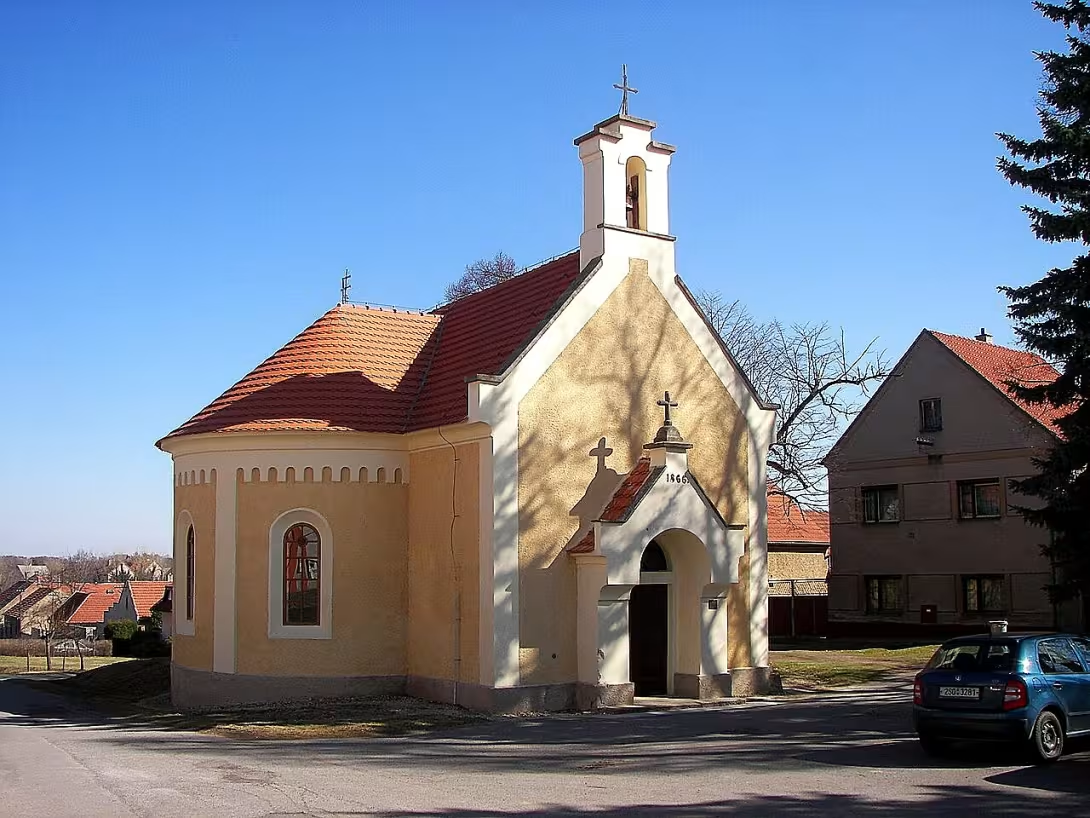
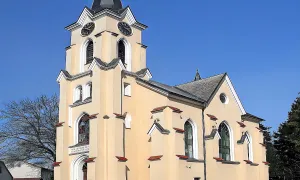
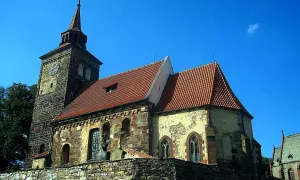
The chapel of St. John the Baptist in Ledce in the district of Kladno is a Roman Catholic sacral building from 1872, which combines the late Baroque origin with the new Romanesque style. The building is protected as a cultural monument and stands on the village Ledce.
Originally, it was a late baroque one-ship building. In the second half of the 19th century, when historism prevailed in Czech countries and the effort to revise older architectural styles, the chapel underwent a fundamental change. In 1866 the building was expanded and modified into a pseudo-Romanesque style. The whole process was led by Achille Wolf, who acted as an architect of Clam- Martinique.
It is an architectural object with a transept and a priesthood with tributaries. During the reconstruction of 1866, the construction was symmetrically extended by two semicircular side chapel. The facade is characterized by new Romanesque decorative elements. The interior features an organ from 1913.
The chapel is currently the property of the municipality Ledce. Since 2003, it has been officially protected as a cultural monument. In 2006, its reconstruction was launched, designed by Otakar Hrdlička.
There have been several inventory changes over the years. The original altar was moved to St. Havel's church in Tuchlovice. A similar fate met the original bell, which was placed in a museum in Ledce because of its condition. The new bell, purchased from the donations of the inhabitants of the village, was set on 15 December 2011. Right at the chapel, there are two memorable lepers.
The chapel is standing on a beach near the municipal office. It represents a demonstration of historical architecture in the region of Central Bohemia and is a valuable witness to local history. Visiting this object means seeing a specific transformation of baroque space into a new Romanesque entity.
Then and now
Drag the slider to compare how the landmark may have looked when it was built with the view today.
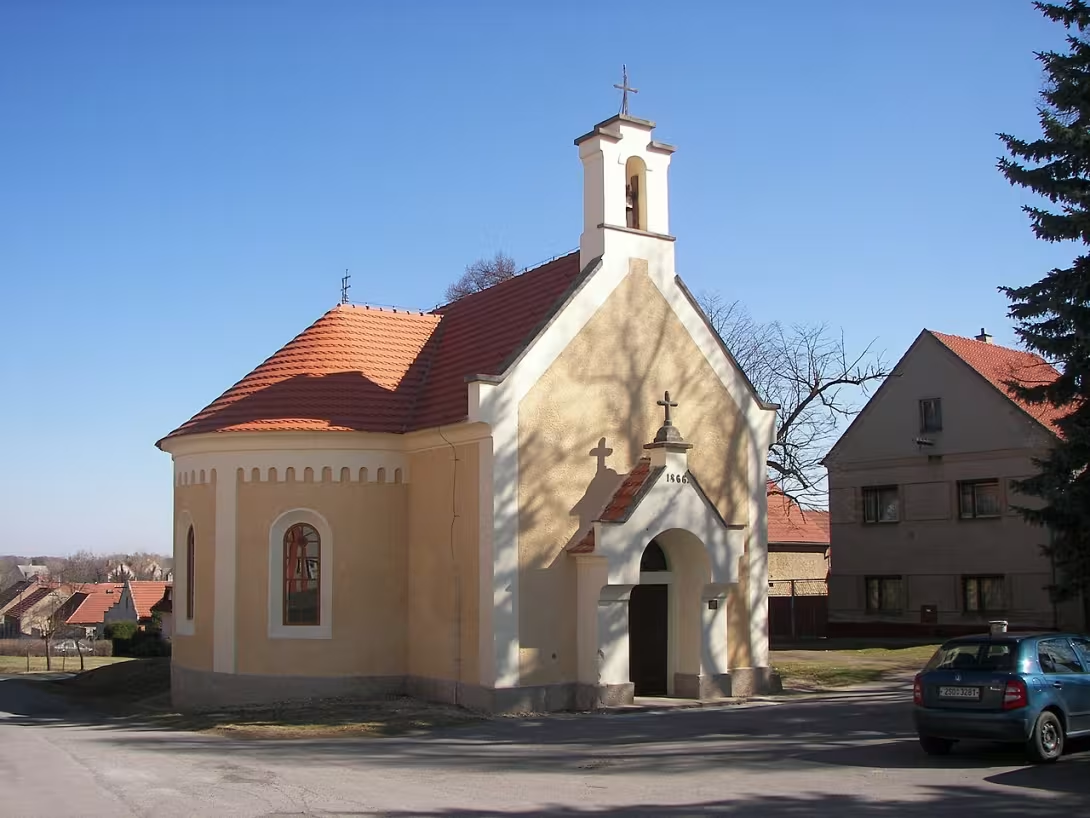
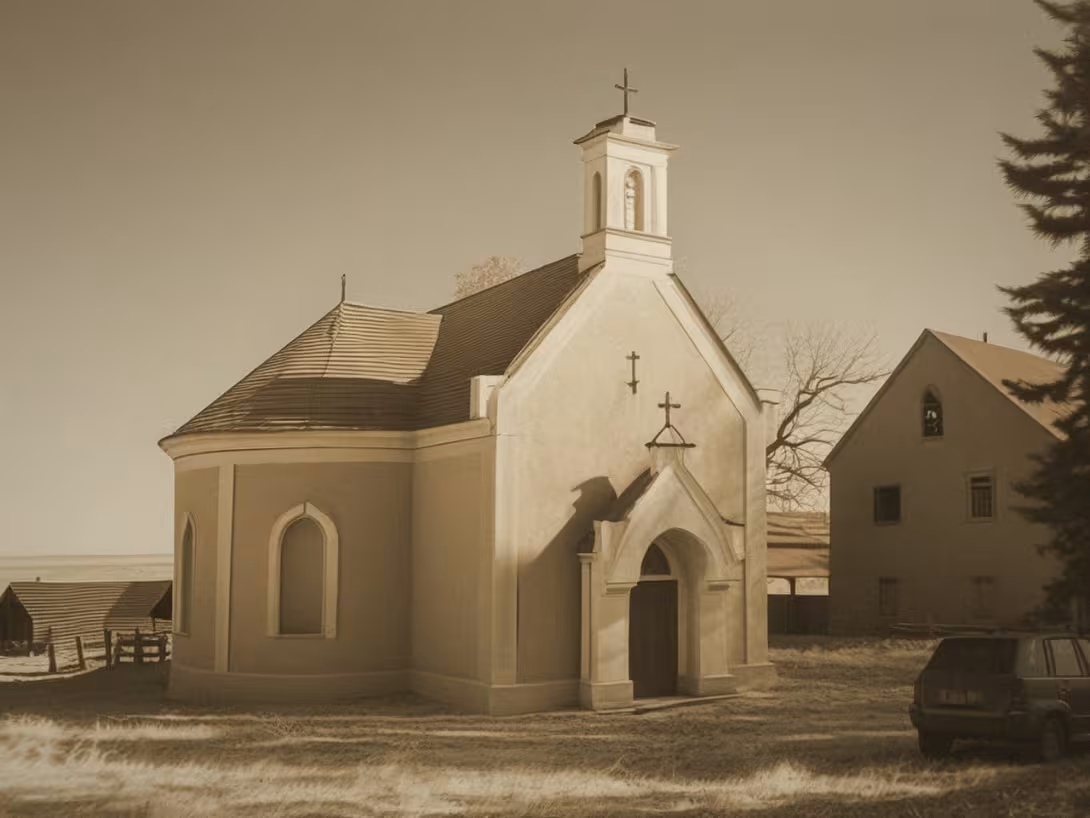
The historical appearance on the left is an AI-generated visualisation and serves as inspiration only.
Historical milestones
- 1866
- Expansion of the chapel by two semicircular chapel and modification into pseudo-Romanesque style.
- 1913
- Organ planting.
- 2003
- Declaration of the chapel cultural monument.
- 2006
- Commencing repair of the chapel according to the design of Otakara Hladlíčky.
- 2011
- The planting of a new bell purchased from the gifts of citizens.
Architectural development
The originally late Baroque one-storey building was extended in 1866 by two semicircular chapel and adapted to the new Romanesque style. The architecture is characterized by a transept and decorative elements on the facade. During the 20th century the chapel was supplemented by an organ from 1913.
Historical events
In 1866 the chapel was expanded and rebuilt into a pseudo-Romanesque style. In 2006 the reconstruction of the chapel started according to the design of Otakar Hrodlíčka. On December 15, 2011, a new bell was planted in the chapel purchased from the gifts of citizens.
Owners
Municipality of Ledce
Points of interest
- The construction combines the late Baroque origin with the new Romanesque style. - In 1866, the architect Achille Wolf expanded it and modified it into a pseudo-Romanesque style. The interior has an organ from 1913. - The original altar was moved to St. Havel's church in Tuchlovice. - The new bell, purchased from the donations of the inhabitants of the village, was mounted on 15 December 2011.
Guide
This guide is narrated by a synthetic voice generated by artificial intelligence.
Show guide text
This text was created by artificial intelligence and has not been editorially reviewed. It may contain inaccuracies.
Welcome to the Ledges, the place where time stopped and where every building tells its own story. Right now, you're standing on a beach, and in front of you is the chapel of St. John the Baptist. It is a place that carries the quiet humility of the village environment, but also a trail of great architectural ambitions. The first impression that comes out of it is a sense of stability and peace. Take a look at its overall form and perceive the atmosphere of this place. This sacral structure is not only a religious sanctuary, but also a silent witness to the changes that this village has been going through over the decades.
To understand exactly what you see, we have to go back in time. The chapel as we know it today is not the result of one single time. It's a fascinating layer of history. Originally, this building was carried out in a late Baroque style, which means that in its foundations and original spirit, it has the elegance and dynamics of the Baroque. However, there was a fundamental change in 1866. At that time, there was an interest in architecture in returning to elements from the ancient past, to the so-called Romanesque style. It was this year that the chapel was significantly expanded and overall adapted to the pseudo-Romanesque style.
This transformation was neither random nor amateur. The famous architect Achille Wolf, who worked for the Clam- Martinique family, was behind the construction. So imagine that this small village chapel was in the hands of a man who designed buildings for one of the most important families in the region. That explains why the chapel looks so meticulous and thoughtful. Wolf brought his experience into the project and in 1866 extended the chapel by two semicircular chapel, which gave it a new, more complex form.
Now please look carefully at the architecture itself. Notice the elements that are typical of the pseudo-Romanesque style. It's those rounded shapes and half-circle elements that architect Wolf incorporated into the building. It is these details that make the chapel unique because the combination of the original baroque nucleus and later historism still persists. Look at the facade and see how these two worlds intersect. It's like a conversation between two different centuries that takes place in stone and plaster.
When we think about the personalities associated with this place, Achille Wolf remains the main character that gave the chapel its present face. His work for the Clam- Martinique family left many traces in the landscape, and this chapel is one of them. But the construction history doesn't end here. In 2006 another expert, architect Otakar Hrdlička, joined the memorial care, who prepared a proposal to repair the chapel. Thanks to his work and subsequent repairs, we can admire the construction today in such good condition. It is proof that generations of architects and inhabitants of the village care for the memory.
Let us now look into the inner world of the chapel, even if we remain in its immediate surroundings. In the interior there is one very valuable object, which is the organ. They were set here in 1913. Try to imagine how the organ tones sounded in this small space over a century ago, how they filled the walls with music during the festive hours. The organ is a symbol of the continuity and spiritual life of the Ledce community.
But there is also an interesting story about loss and movement. The original altar, which once decorated the interior of this chapel, is no longer here. He was moved to St. Havel's church in Tuchlovice. It is fascinating to think that part of this chapel today serves believers in the neighboring village, creating an invisible bond between Leddies and Tuchlovice. It is a reminder that sacral objects often travel and find a new home where they can continue to perform their duties.
But one of the most touching attractions is the bell. In 2011, the chapel was fitted with a new bell. What is special about this bell is not its material or its size, but the way it was taken. It wasn't bought from some government fund or a big grant, but it was paid out of donations from the community. That says a lot about local people's relationship to their memory. The bell is not only a tool to announce time or call for prayer, but a symbol of the belonging and love of the Ledgers to their home. Whenever you hear his sound, you hear the voices of the people who wanted this chapel to continue to live.
In 2003, the chapel was officially declared a cultural monument. That means the state has recognized its irreplaceable value for our history and architecture. Today the chapel belongs to the property of the village, which makes it the real jewel of the locals. It's a place where the noble architecture of the Clam-Martinique meets with simple faith and care of the villagers.
Now that you know the story of this building, I suggest you take a moment and just walk around it. Note how the chapel is inserted into the area of the baits. Try to imagine the year 1866 when Achille Wolf stood in this place with plans in hand and decided how to expand the Baroque object to match the new trends of his time. Feel the contrast between the silence of the surroundings and the rich history that lies within these walls.
This chapel of St. John the Baptist is small, but it carries great importance. It is an example of how style can change, how altars can travel and how the community can join forces to preserve its heritage for future generations. It's a place that teaches us patience and respect for what our ancestors have left us.
Thank you for accompanying me on this short journey through the history of St. John the Baptist Chapel in Ledce. I hope you're interested in her story, and that you now see more than just an ordinary building on the beach. I will now invite you to explore the surroundings of the village and discover other hidden corners of this beautiful region. I wish you a pleasant continuation of your journey and many new, inspiring experiences. Goodbye.
Tips for visitors
For the best experience of visiting the chapel we recommend a visit during clear days when pseudo-Romanesque architecture is the most distinctive. It is ideal to use the afternoon light to photograph the facade, which will highlight the details of the building beautifully.
You can transport by car and public transport to the memory. Please check the current transport connections and parking possibilities in the village via internet search engines or the carrier's website.
When visiting, we recommend taking with you refreshments and comfortable shoes suitable for walking around. If you plan to photograph the details of the chapel, prepare a technique that can handle soft light in the sacral space.
Families with children can take advantage of the quiet atmosphere while walking through the village baits in Ledce. As an addition to the trip you can visit the Museum in Ledce or go to the nearby church of St. Havel in Tuchlovice.
To plan the whole trip, it is advisable to combine a tour of the chapel with a visit to the surrounding areas available in a short period of time.
Frequently asked questions
Is kaple svatého Jana Křtitele (Ledce) open to the public?
Yes, the chapel is open to the public. The tour is suitable for all visitors.
How do I get to the place by car / public transport?
The chapel is available by car and public transport. Check the current connection in the search engine.
How much is the entrance fee and is it paid on the spot?
Admission is paid on site, the current price list can be found on the official site of the sights.
Is the tour suitable for children and seniors?
Yes, the chapel is accessible to all ages. The tour is also suitable for families with children.
How long does the tour take?
The tour takes approximately 30 minutes. We assume that visitors will be interested in a detailed tour of the chapel.
What are the opening times and booking is required?
The opening times of the chapel vary according to the season. The current information can be found on the official site of the sights. Reservation is not necessary.
What's interesting in the immediate vicinity?
In the immediate vicinity of Ledgers you find no other significant historical monuments.
For kids
The shade of the past was drawn like a scarf around the Ledgers, a small village in the heart of the Central Bohemia Region. And among them stood a miracle - the chapel of St. John the Baptist, which was built 154 years ago.
It was like in a game where heroes come on stage and they start to develop a story. Back then, Ledce was a small village where people who lived from the ground and lived on agriculture lived. The chapel was their sanctuary, where religious ceremonies took place and where people gathered to talk about their problems and joys.
Businesses nearby
Do you run a restaurant, accommodation, shop, museum, rental, wellness or other visitor service near this monument? Show yourself directly to the people heading to it — this is how they will see you in the app and on the web:
Nearby
The village facilities in Ledce, the museum in Ledce and the church of St. Havel in Tuchlovice.
Accommodation nearby
Themed route
Thematic trip route from Ledce
1. Municipal baits in Ledce (type: historical center) - Visiting the village of Ledce is a great opportunity to explore the calm and original character of local life. This place offers a unique view of the architecture of the rural village, where there are many historic houses with a rich tradition.
2. St. John the Baptist Chapel (Ledce) (type: chapel) - The main aim of the trip is to visit the chapel of St. John the Baptist, which is not only the spiritual centre of the village, but also the architectural pearls. This small chapel attracts attention with its historical elements and peaceful environments.
3. Museum in Ledce (type: museum) - After visiting the chapel it is recommended to visit the local museum, which offers valuable information about the history and culture of the village. The exhibits here represent life in the region for centuries and provide a deeper insight into the local heritage.
4. Church of St. Havel in Tuchlovice (type: church) - The final point of the route is a visit to St. Havel's church in nearby Tuchlovice. This church is famous for its historical architecture and provides a view of the rich spiritual tradition of the area. Visiting this church is a great opportunity to see the inside and enjoy the quiet surroundings.
This route offers a comprehensive view of the cultural heritage of Ledci and its surroundings, each of the points visited bringing its unique value.
Seasonal recommendations
Spring: The Chapel of St. John the Baptist in Ledce offers a unique atmosphere in the spring when nature wakes up from a freezing holiday. The lighting is warm and sunny, highlighting the green color of the newly growing vegetation around the chapel. At this time, there are usually no large crowds, so this is the perfect time for a peaceful visit. It is recommended to bring a light coat and denim as the temperature can be medium with rain options. The best time for a tour is usually in the afternoon when the sun lights the chapel in the most beautiful light.
Summer: Summer is the main season of the sightseeing. The chapel becomes a center of attention for local and tourists who enjoy long summer days and warm sunlight. The atmosphere is full of life, with a distinctive sound of birds and flowering surroundings. Due to the large number of visitors, it is recommended to come earlier in the afternoon to enjoy a quieter tour. In clothing it is advisable to be light and practical, such as ties or sweaters that help on warm days. Don't forget to bring sunglasses and UV protection.
Autumn: In autumn, the chapel of St. John the Baptist in Ledce offers visitors the magical colour of the crescent leaves. The sunny and less warm days bring a magical atmosphere that is particularly attractive in quiet afternoons. When visiting, it is recommended to be careful of rising cold and possible rain crossings, so it is advisable to carry a warmer coat or sweater. Due to the decreasing temperatures, visitors are usually in fewer numbers, allowing them to explore the memory more calmly.
Winter: The Winter Chapel of St. John the Baptist offers a completely different view. Lighting is cold and freezing, which creates a dramatic atmosphere along the snowy roads around the chapel. At this time visitors are very rare, so you can enjoy quiet and intimate tours. It is necessary to bring warm clothes such as fur or blankets, and suitable shoes for cold surfaces. The opening times of the monument may be shortened, so it is important to check the current information before visiting. The best time to explore is usually in the afternoon, when the sun lights the chapel in the most beautiful light and the freezing air is slightly warmer.
Visualizations and artistic views


The visualisations are generated by artificial intelligence and serve as inspiration.
Photos from the area
Real photos taken near the monument

Zdroj a licence jsou uvedeny u každého snímku.
Tips from visitors
No tips yet. Be the first!
Log in and add your tip.
Sources and literature
Photos: Edisteewr / CC BY-SA 3.0 — Wikimedia Commons. The author and licence also appear when you hover over the image.
Faktickým podkladem tohoto textu byl článek na Wikipedii, jehož autory jsou přispěvatelé Wikipedie. Článek je dostupný pod licencí CC BY-SA 4.0.
Location on the map
Příběhy a pověsti
Legendy, pověsti a příběhy spjaté s touto památkou
Fotografie návštěvníků
Zatím žádné fotografie. Buďte první, kdo přidá fotografii z návštěvy!
Log in a přidejte svou fotografii nebo hodnoťte.
Za ověřenou návštěvu v aplikaci získáte víc bodů — poznáme podle GPS, že jste na místě.
Reviews and comments