



Kaple svatého Jana Nepomuckého (Letohrad) Chapel
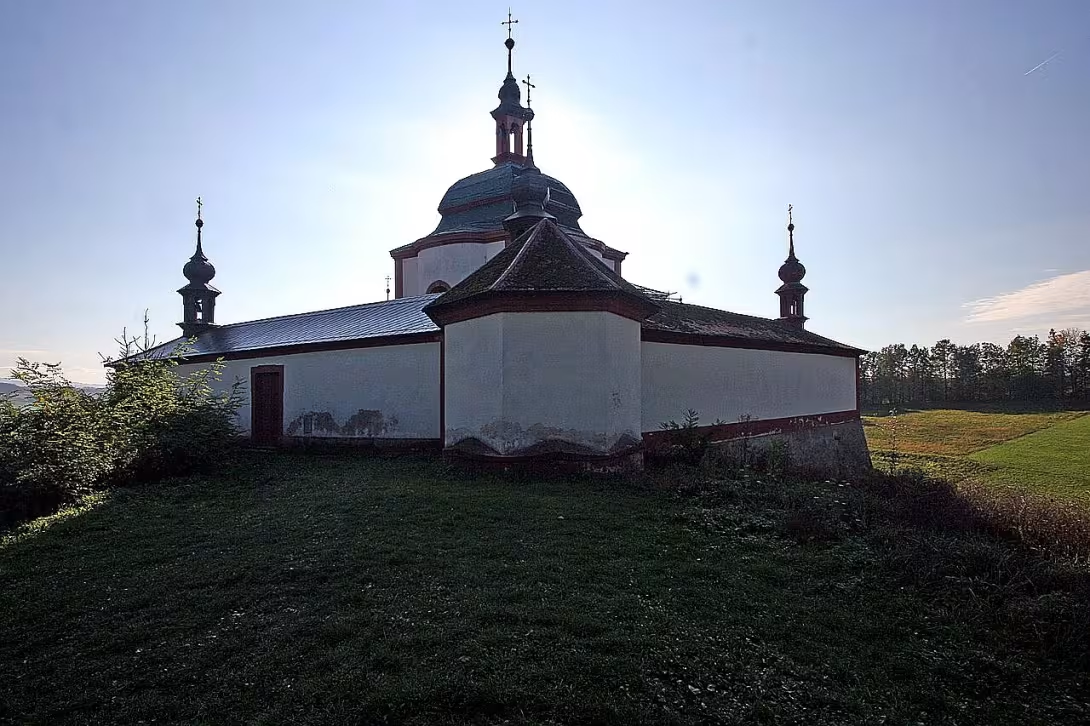
The chapel of St. John Nepomuk stands on a height called Kopecek at an altitude of 432 meters above the city of Letohrad. This building has deep roots in religious history associated with the efforts of the Catholic Church to strengthen faith after the end of the Thirty Years' War.
The beginnings of this pilgrimage date back to 1629, when missionary crosses were built on the local designs - nine of them were created in the vicinity of Kyvěrek, three of them on Kopěk. The Династie Kolovrat later became a promoter of the Cult of St. John Nepomuk and in 1714 she built a small chapel in the place of the original three missionary crosses. Just this year, the first Midsummer pilgrimage took place, which soon became a traditional event.
In 1734 Jan Václav Breda broke down the old chapel and in its place built a new building more appropriately adapted to the growing number of pilgrims. The builder was Donát Theodor Morazzi from Chrudim. Two years later, in 1736, protective ambitions were built around the chapel to protect visitors from adverse weather. In the same year, the city planted a lime alley along the road from Letohrad to the ridge of Kopečka towards the chapel.
The architecture of the chapel is based on a unique idea: a plan of the shape of a pentagon by five stars around the head of St. John Nepomuk. Each star symbolizes one of its virtues - faith, hope, love, charity and strength. The same pentagon plan retains ambition and the inner altar. All five corners of ambition are decorated with onion towers in which the bells are hung. One of the original five confessions was preserved in the '80s.
The inside of the chapel is decorated by a five-sided altar with five doors of the shrine, on which are carved key moments from the life of St. John Nepomuk: the journey to Old Bloslav, the confession of Queen Jofie, the torture of the lark, the burning of pitch trees and the overthrow of the Prague bridge to the Vltava. On the five corners of the altar stands statues of virtue - faith, love, hope, generosity and bravery. The height of the statue of the saint himself. The walls and ceiling were originally richly painted, but later suffered from moisture. In 1864 the plaster was restored, but the original frescoes unfortunately failed to be rescued. In 1847, the crossroads in the амbits came from the hands of the jewellery painters Dominik Umlauf and his son John. The Temple of the Holy Trinity and the altar of St. Anthony of Padua are also part of the амbits.
Recently, the chapel underwent a complex renewal. In the framework of the Architectural Heritage Rescue Programme, CZK 3 602 000 was dedicated to the repair between 1995 and 2014. At the end of 2024, the Roman Catholic Church donated the chapel to the city of Letohrad, which it plans to build here the Memorial of Baroque pilgrims.
Then and now
Drag the slider to compare how the landmark may have looked when it was built with the view today.
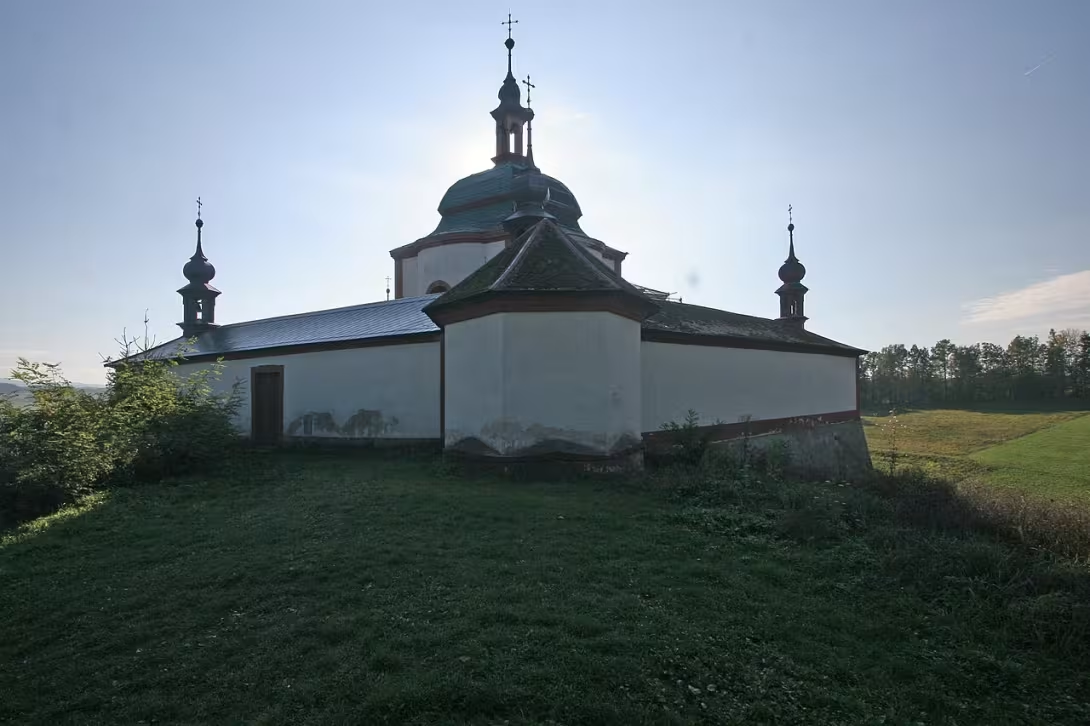

The historical appearance on the left is an AI-generated visualisation and serves as inspiration only.
Historical milestones
- 1734
- The position of St. John Nepomuk's chapel.
- 1736
- Building ambitions around the chapel.
Architectural development
The chapel was built in 1734 on the site of an older chapel from 1714. In 1736, ambition was added to it for the protection of pilgrims, and the way to the chapel was planted with a lime alley. Originally richly painted walls and ceiling were damaged by moisture.
Historical events
- 1734
- The position of St. John Nepomuk's new chapel.
- 1736
- Construction of ambitions around the chapel for the protection of pilgrims.
- 2024
- Donating the chapel to the city of the Roman Catholic Church.
Owners
Count family of Kolovrat (1714), Jan Václav Breda (after 1714), Roman Catholic Church (since 2024)
Points of interest
- The floor plan of the chapel, ambition and altar is the shape of a pentagon according to five stars around St. John Nepomuk's head. Each star symbolizes one of its virtues. - Ambit has bells in five corners of onion turrets, and one of the original five confessions is preserved. - The five-sided altar contains five doors to the shrine with carved moments from the life of the saint. On his corners are statues of virtue. - The chapel was built in 1714 on the site of three original missionary crosses. - At the end of 2024, the church donated the chapel to the city of Letohrad, which it plans to build here the Memorial of Baroque pilgrims.
Guide
This guide is narrated by a synthetic voice generated by artificial intelligence.
Show guide text
This text was created by artificial intelligence and has not been editorially reviewed. It may contain inaccuracies.
Above Letohrady rises an elevation called Kopeček, which is 432 meters above sea level. On its summit stands the chapel of Saint John of Nepomuk.
After the missions in 1629, nine missionary crosses grew up on the hills around Kyšperk, and three of them stood right on Kopeček. The chapel was created from the efforts of the Catholic Church to awaken devotion to the then newly canonized saint John of Nepomuk and to uplift the Czech nation after the Thirty Years' War. His cult was also promoted by the noble Kolovrat family. In 1714, they built a small chapel on the site of the three crosses, to which numerous processions came. That same year, the first Saint John pilgrimage took place there.
Jan Václav Breda had the Kolovrat chapel demolished and in 1734 built a new one in its place that better served the pilgrims. The builder was Donát Theodor Morazzi from Chrudim. Two years later, the chapel was surrounded by arcades to protect pilgrims from bad weather. In the same year, the town had a linden avenue planted along the path that leads from the city along the ridge of Kopeček to the chapel.
The entire structure is based on the number five. The chapel has a pentagonal ground plan according to the five stars around the saint's head. The stars represent his virtues: faith, hope, love, charity, and strength. The arcades and altar are also pentagonal. In each of the five corners of the arcades stands a bulbous tower with a bell. One of the original five confessionals has also been preserved.
On the five doors of the tabernacle are carved five scenes from the saint's life. These are the journey to Stará Boleslav, the confession of Queen Sophie, stretching on the rack, burning with torches, and being thrown from the Prague bridge into the Vltava. In the corners of the central part of the altar stand statues of virtues, and at the top is a statue of the saint on a globe, which rests on a cloud.
The walls and ceiling of the chapel were originally richly decorated with paintings, but the frescoes were severely damaged by moisture. During plaster repairs in 1864, the frescoes were destroyed. The Stations of the Cross in the arcades were painted in 1847 by Kyšperk painters Dominik Umlauf and his son Jan. In the arcades there is also a chapel of the Holy Trinity and an altar of Saint Anthony of Padua.
Repairs to the chapel were supported between 1995 and 2014 by the Program for the Protection of Architectural Heritage with an amount of 3,602,000 crowns. At the end of 2024, the Roman Catholic Church donated the chapel to the city. The city will build a Memorial to Baroque Pilgrimages there.
Tips for visitors
The best time to visit the Chapel of St. John Nepomuk in Letohrad is the early spring or late autumn when the weather is quiet and pleasant. The Baroque architecture of the chapel is particularly marked in these months, providing ideal conditions for photography and relaxation.
For those travelling by public transport, Letohrad is well connected to the surrounding areas; you can find a specific connection using an online search engine. We recommend arriving at a time when traffic is less disturbed.
When visiting the chapel take with you sun protection clothes and a suitable shoe race. Water is also important, especially in warmer months, and some light food products for a short break.
For photo is the best place in front of the chapel with a view of its unique pentagon plan. The most beautiful light for photography offers morning and evening hours when the light is softer.
Around the chapel there is a national park Podyjí, which can be visited within one day. For families with children it is an ideal place for short walks and exploring nature.
Frequently asked questions
Can the monument be visited?
Religious buildings are usually open mainly during services; at other times a visit is normally arranged with the parish or the operator. We have not verified specific times.
Where is the monument?
Location: Letohrad, Pardubický kraj. The map on this page shows the exact spot.
Why is the monument protected?
It is listed in the Central List of Cultural Monuments of the Czech Republic as a cultural monument (register no. 40695/6-4019).
For kids
About 292 years ago, a beautiful little stone appeared near the city of Letohrad, which stands as a shrine of nobility and mystery. It happened in 1734 when the chapel of St. John Nepomuk was built on the top of Kopěk. To imagine how it was there, we have to remember that back then people had a great appetite for beautiful things and were interested in the secrets of life.
Businesses nearby
Do you run a restaurant, accommodation, shop, museum, rental, wellness or other visitor service near this monument? Show yourself directly to the people heading to it — this is how they will see you in the app and on the web:
Nearby
The chapel stands at the top of the Hill above the city of Letohrad. There are other historical monuments such as missionary crosses from 1629.
Accommodation nearby
Themed route
Thematic cruise route: Kaple svatého Jana Nepomuckého (Letohrad)
1. Kaple svatého Jana Nepomuckého (Letohrad) - chapel The main objective of our route is the chapel of St. John Nepomuk, located in the village Letohrad. This historical monument is associated with the legend of St. John of Nepomuk and his courage to protect the secret of holiness. It is a place full of peace and spiritual search that attracts visitors with its unique architectural style.
2. Church of St. Lawrence (Letohrad) - Church In approximately 5 minutes' walk from the chapel is the church of St. Vavřinec, which is another spiritual centre of the village. This church offers visitors an opportunity to explore the rich history and artistic elements of the inner facilities that reflect local traditions and culture.
3. Microregion Pardubicko - natural region The surrounding area of Letohrad is located part of the microregion of Pardubicko, which is known for its diverse nature and landscape beauty. This place offers the opportunity to explore the local ecosystem, whose quiet atmosphere complements the spiritual experience of visiting the chapel and church.
4. Municipal Office Letohrad - historical object Approximately 10 minutes' walk from the church of St. Vavrnice is located the municipal office, which is built in style from the beginning of the 20th century. This object represents an important part of the local history and administrative life of the village Letohrad.
5. Stop in the local park - green zone To conclude the route we recommend a visit to a small local park, which offers quiet areas to relax and relax. The park is ideal for walking all the time or for short stops to enjoy the natural environment of Letohrad.
This route offers a combination of spiritual and cultural unveiling along with opportunities to explore local nature, making it an ideal choice for a day trip.
Seasonal recommendations
Spring: St. John Nepomuk's chapel in Letohrad offers a unique experience in the spring when nature wakes up from a snow blanket. Flowers and trees are beginning to bloom, which gives the surrounding countryside a vivid color. The sunny day can be especially comfortable for visiting due to mild temperature and beautiful lighting, which emphasizes architectural details of the chapel. Visitors should come during the afternoon when there is less likelihood of meeting with the large crowd and can enjoy a quiet walk around the sights. It is recommended to wear light clothes that are suitable even in mild cold wounds.
Summer: In the summer months, Letohrad is a popular destination for visitors in the main season of tourism and the chapel of St. John Nepomuk. The sunny lighting of the day brings architecture to a full cube track, while the warm atmosphere creates ideal conditions for tours. Visitors should take into account potential crowds and, if possible, come in the morning or evening to enjoy a chapel in lighter temperatures. It is advisable to wear light clothes and bring a protective umbrella or hat.
Autumn: In the autumn period, Letohrad offers a quieter atmosphere when nature turns into golden and red shades. The chapel of St. John Nepomuk stands in the area covered with leaves, which gives the landscape melancholy beauty. The sunny days are ideal for visiting, because the lighting highlights architectural details and the coloured November landscape is really attractive. Visitors should come in the afternoon to enjoy a mild temperature and a quieter visit. It is recommended to wear top clothes, which will also be suitable for cooler evenings.
Winter: Winter brings the chapel of St. John Nepomuk in Letohrad to a quiet and quiet atmosphere. The snow cover can give the region romantic beauty, while the cold temperature contributes to a moderate number of visitors. The sunny days are ideal for visiting because the lighting highlights architecture and snow gives the landscape a unique look. Visitors should take into account the opening times of the monument, which is usually shorter, and come in the afternoon for a mild temperature. It is necessary to wear warm clothes, protective gloves and hat in order to enjoy a visit without discomfort.
Visualizations and artistic views


The visualisations are generated by artificial intelligence and serve as inspiration.
Photos from the area
Real photos taken near the monument


Zdroj a licence jsou uvedeny u každého snímku.
Atmosphere of the place
This atmospheric visualisation of the place and period was generated by artificial intelligence. It is not real footage of the location.
Tips from visitors
No tips yet. Be the first!
Log in and add your tip.
Sources and literature
Photos: Petr1888 / CC BY-SA 3.0 — Wikimedia Commons. The author and licence also appear when you hover over the image.
Faktickým podkladem tohoto textu byl článek na Wikipedii, jehož autory jsou přispěvatelé Wikipedie. Článek je dostupný pod licencí CC BY-SA 4.0.
Location on the map
Příběhy a pověsti
Legendy, pověsti a příběhy spjaté s touto památkou
Fotografie návštěvníků
Zatím žádné fotografie. Buďte první, kdo přidá fotografii z návštěvy!
Log in a přidejte svou fotografii nebo hodnoťte.
Za ověřenou návštěvu v aplikaci získáte víc bodů — poznáme podle GPS, že jste na místě.
Reviews and comments