






Zámek Letohrad Chateau
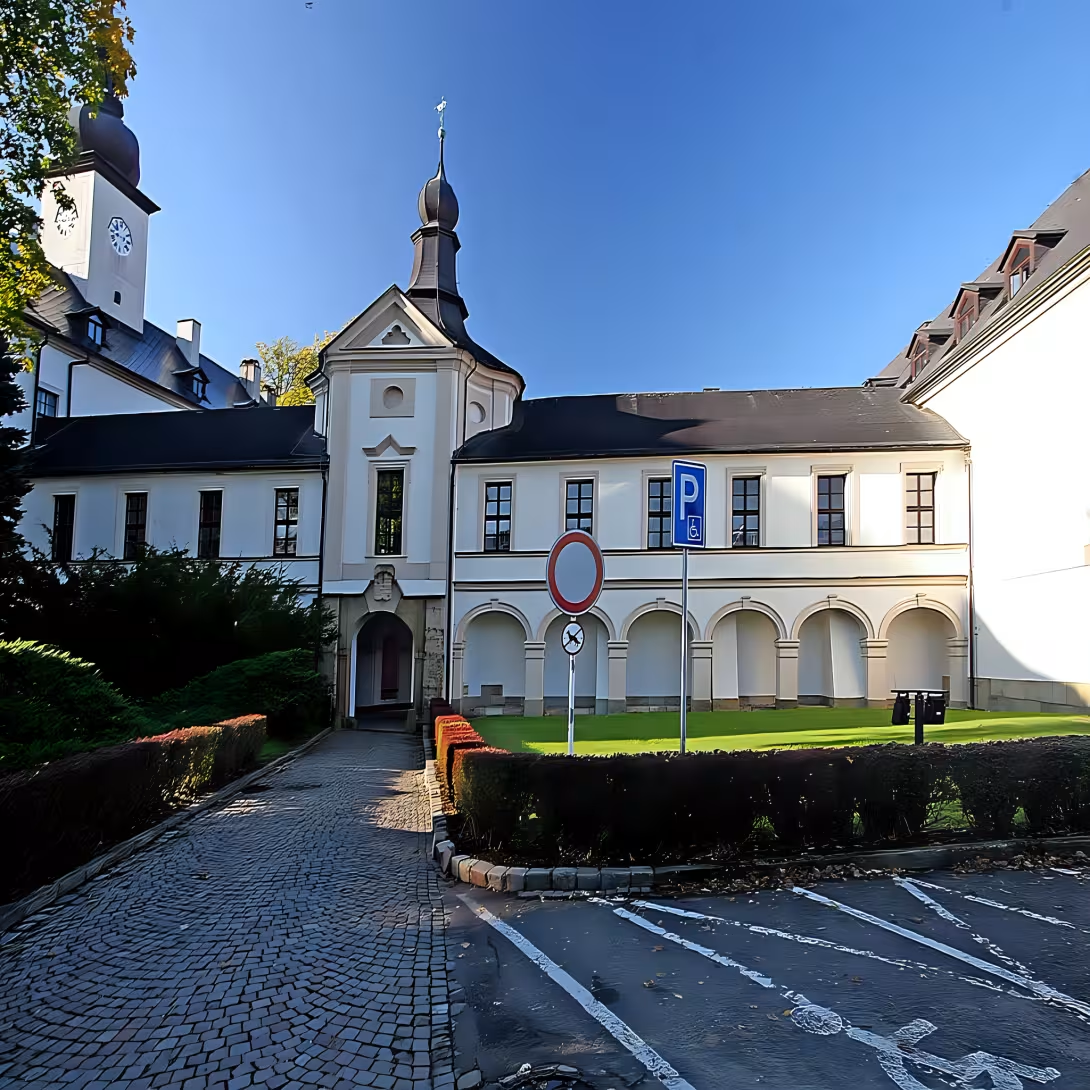
Zámek Letohrad, originally known as Kyšperk Chateau, stands as a remarkable Baroque estate in the town of Letohrad, Pardubický kraj. This historical monument evolved from an initial fortress into a grand Baroque chateau and later reflected various architectural styles. Its rich history and multifaceted use today make it a significant cultural site.
The origins of Zámek Letohrad trace back to the late 16th century when Jan Burian Žampach constructed a fortress on an island above Tichá Orlice in 1570. This early structure laid the foundation for what would become a prominent estate. After Jan Burian's death, his brother Čeněk Žampach sold the Kyšperk panství, which eventually came into the possession of Hrabě Hynek Jetřich Vitanovský in 1653. Under his direction and with contributions from his wife Jana Magdalena z Harasova, a new two-story Baroque chateau was erected between 1681 and 1726, replacing the unsatisfactory fortress. This period marked significant architectural development influenced by Bohemia's cultural and religious dynamics under the Habsburg Monarchy.
Architecturally, Zámek Letohrad underwent several transformations reflecting its historical significance. The initial Baroque chateau featured an independent tower and a chapel dedicated to St. Václav, later converted into a church in 1726 by Giovanni Maderna. Subsequent renovations under the Bred family in the early 18th century introduced changes such as removing the original tower and adding new structures like a patrimonial office building. The estate continued to evolve with further modifications during the ownerships of the Nimptsch and Stubenberg families, incorporating elements of Historicism and Empiricism.
Ownership of Zámek Letohrad shifted through various notable families over the centuries. After the Libštejnský z Kolovrat family, it came under the Bred family in the early 18th century, with Tereza Bredová Cavriani ze Špandavy spearheading extensive renovations. The estate later passed to the Nimptsch family through marriage in 1836 and subsequently to the Stubenberg family in 1877. Each transition brought new architectural influences and expansions, such as adding a polyphonic music box in the early 20th century. However, in 1945, following World War II, the estate was confiscated from the Stubenberg family.
Throughout its history, Zámek Letohrad has witnessed several key events and curiosities that add to its allure. In the mid-19th century, it served as a school for girls teaching handicrafts, reflecting its role in local education. The estate's transformation into a cultural hub is evident today with its diverse functions: housing a private gymnasium, hotel, restaurant, and museum. Notably, an exhibition space within the chateau showcases Baroque art, 19th-century Historicism, and early 20th-century Secessionism, highlighting contributions from artists like Dominik Umlaufový and Alphonse Mucha.
Today, Zámek Letohrad is a vibrant cultural site accessible to visitors. It serves multiple purposes, including educational facilities, hospitality services, and as a venue for art exhibitions. The surrounding English landscape park, featuring an Empiric pavilion, grotto with a view, and orangery, enhances its appeal. Additionally, the nearby small zoo offers year-round access to exotic wildlife.
Zámek Letohrad stands as a testament to the rich cultural tapestry of Bohemia, embodying centuries of architectural evolution and historical significance. Its multifaceted use today ensures that it remains an integral part of the community while offering visitors a glimpse into its storied past. Whether drawn by its architectural beauty or intrigued by its historical narratives, Zámek Letohrad is undoubtedly worth exploring.
Then and now
Drag the slider to compare how the landmark may have looked when it was built with the view today.
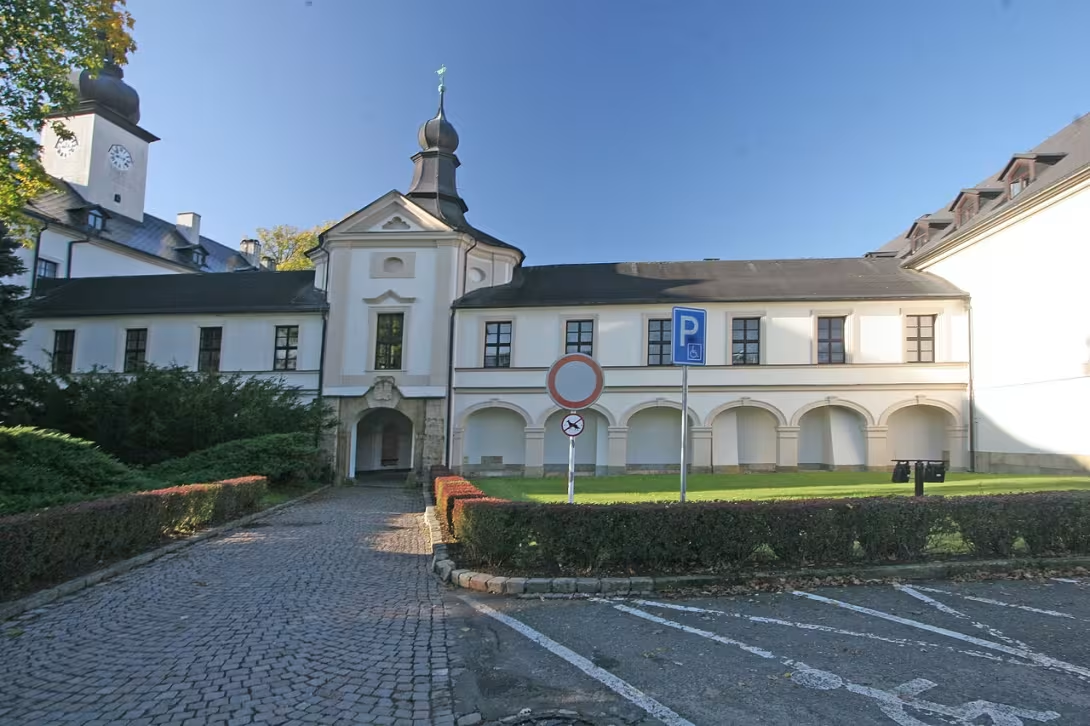

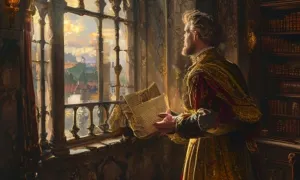
The historical appearance on the left is an AI-generated visualisation and serves as inspiration only.
Historical milestones
- 1570
- Construction of an initial fortress by Jan Burian Žampach.
- 1681
- Building of the two-story Baroque chateau began.
- 1726
- The chapel was transformed into a church dedicated to St. Wenceslas.
- 1877
- Ownership transferred to the Stubenberg family through marriage.
Architectural development
Zámek Letohrad evolved significantly over time. Initially a fortress, it was replaced by a Baroque chateau with an independent tower and chapel built between 1681 and 1726. The Bred family initiated major renovations in the early 18th century, altering spatial arrangements and adding new structures. Further modifications occurred under the Nimptsch and Stubenberg families, incorporating elements of Historicism and Empiricism.
Historical events
Construction of a new two-story Baroque chateau began in 1681 by Hrabě Hynek Jetřich Vitanovský.
In 1730, extensive renovations were initiated by Tereza Bredová (Cavriani) ze Špandavy.
The estate was confiscated from the Stubenberg family in 1945.
Owners
Žampach family until 1653
Hrabě Hynek Jetřich Vitanovský (from 1653)
Libštejnský z Kolovrat family
Bred family from the early 18th century
Nimptsch family in the mid-19th century
Stubenberg family from 1877
Points of interest
- The original fortress of Zámek Letohrad was built on an island above the Tichá Orlice River in 1570 by Jan Burian Žampach, showcasing early strategic defensive architecture. - Giovanni Maderna, a notable architect from Bologna, played a key role in transforming the Baroque chateau's chapel into a church in 1726, reflecting cross-cultural architectural influences. - In the mid-19th century, Zámek Letohrad served as an educational institution for girls focused on handicrafts, highlighting its historical contribution to local education and women's empowerment. - The estate once housed a unique polyphonic music box in the early 20th century, illustrating its role as a center of cultural innovation and entertainment during that era. - After World War II, Zámek Letohrad was confiscated from the Stubenberg family in 1945, marking a significant shift in ownership due to political changes post-war.
Guide
This guide is narrated by a synthetic voice generated by artificial intelligence.
Show guide text
This text was created by artificial intelligence and has not been editorially reviewed. It may contain inaccuracies.
Welcome to the enchanting Zámek Letohrad, a testament to architectural evolution and historical grandeur nestled in the heart of Letohrad. As you stand before this majestic structure, imagine yourself stepping back into time to explore its rich tapestry woven with stories of nobility, artistry, and transformation.
The origins of Zámek Letohrad trace back to 1570 when Jan Burian Žampach built an initial fortress on a strategic island above the Tichá Orlice River. This early structure was not only a display of defensive architecture but also set the stage for centuries of development. By the late 17th century, Hrabě Hynek Jetřich Vitanovský and his wife Jana Magdalena z Harasova envisioned a transformation that would redefine the estate into the stunning Baroque masterpiece you see before you today.
As your eyes wander across the landscape, take in the elegant two-story Baroque chateau, its construction initiated in 1681. The architecture invites you to ponder the intricate details and grandeur of an era when form met function with artistic flair. Notice how the structure harmonizes with its surroundings, a testament to thoughtful design that has stood the test of time.
Within these walls, history whispers tales of notable figures who shaped its destiny. Jan Burian Žampach laid the foundation, while Čeněk Žampach continued his legacy. The transformation into a Baroque chateau under Hrabè Hynek Jetřich Vitanovský and Jana Magdalena z Harasova marked a pivotal chapter in its history. Their vision brought forth an era of elegance that would captivate for generations.
One cannot overlook the chapel, now a church dedicated to St. Wenceslas since 1726. Giovanni Maderna, a distinguished architect from Bologna, played a crucial role in this transformation, leaving behind a legacy etched into the very fabric of the chateau's spiritual heart.
The narrative of Zámek Letohrad is further enriched by its succession of notable owners and caretakers, including Norbert Leopold Libštejnský z Kolovrat, Tereza Bredová (Cavriani) ze Špandavy, Petr Marcolini z Ferraty, Karel Nimptsch, Anna Stubenberg-Nimptsch, and the Stubenberg family. Each left their indelible mark on this historic estate.
Now, let your curiosity be piqued by a fascinating detail: the chateau's original fortress was strategically built on an island above the Tichá Orlice River. This unique location highlights early defensive strategies that were crucial in its time. As you reflect on this, imagine the stories and secrets held within these walls over the centuries.
As we conclude our journey through Zámek Letohrad, I invite you to continue exploring its grounds, uncovering more layers of history with each step. May your visit be filled with discovery and wonder, as this remarkable estate continues to enchant all who wander through its storied halls. Thank you for joining me on this historical adventure; may the memories linger long after you leave.
Frequently asked questions
Can the monument be visited?
Some buildings of this kind are open for guided tours, others serve another purpose or are privately owned. We have not verified whether and when this monument is open – please ask the operator.
What are the opening hours and admission?
We have not verified the opening hours or admission. Current information is published by the operator. Official website: http://info.letohrad.eu/zamecka-expozice-2
Where is the monument?
Location: Václavské náměstí 1, Letohrad, Pardubický kraj. The map on this page shows the exact spot.
Why is the monument protected?
It is listed in the Central List of Cultural Monuments of the Czech Republic as a cultural monument (register no. 44931/6-3987).
Businesses nearby
Do you run a restaurant, accommodation, shop, museum, rental, wellness or other visitor service near this monument? Show yourself directly to the people heading to it — this is how they will see you in the app and on the web:
Nearby
Zámek Letohrad is surrounded by an English landscape park featuring an Empiric pavilion, grotto with a view, and orangery. Nearby features include a small zoo accessible year-round.
Accommodation nearby
Themed route
Thematic Walking Tour: Zámek Letohrad and Surroundings
1. Zámek Letohrad (Chateau) - Type: Historic Chateau - Why Visit: Begin your journey at the majestic Zámek Letohrad, a stunning example of 19th-century architecture with its unique blend of Gothic Revival and Neo-Renaissance styles. Explore the beautifully preserved interiors, including grand halls and intricate stucco work that reflect the chateau's rich history.
2. English Landscape Park - Type: Historic Garden - Why Visit: Just outside the chateau walls lies an enchanting English landscape park designed to complement the chateau’s elegance. Stroll through its lush greenery, which offers a serene escape and picturesque views that enhance your appreciation of the estate's historical significance.
3. Empiric Pavilion - Type: Architectural Feature - Why Visit: Located within the park, this pavilion is an architectural gem that exemplifies the Empiricism style. Its elegant design provides a perfect spot for relaxation and reflection amidst nature’s beauty, offering panoramic views of the surrounding landscape.
4. Grotto with a View - Type: Natural Feature - Why Visit: Discover this charming grotto nestled in the park's natural setting. It offers a unique vantage point to enjoy the scenic vistas and serves as an ideal place for contemplation or capturing memorable photographs of the estate’s picturesque surroundings.
5. Orangery - Type: Historical Building - Why Visit: Explore this historic orangery, originally used to house citrus trees during winter months. Today, it stands as a testament to 19th-century horticultural practices and offers insight into the lifestyle of those who lived at Zámek Letohrad.
6. Small Zoo - Type: Animal Exhibit - Why Visit: Conclude your tour with a visit to the nearby small zoo, accessible year-round. It provides an opportunity to observe various animal species in beautifully landscaped enclosures, adding a delightful and educational element to your exploration of Letohrad.
This thematic walking tour offers a comprehensive experience of Zámek Letohrad’s historical and natural beauty, ensuring visitors leave with lasting memories.
Seasonal recommendations
Spring: Visiting Letohrad Chateau during spring offers a picturesque experience as the landscape bursts into life with vibrant colors and blooming flowers, creating an enchanting atmosphere. The mild weather allows for comfortable exploration of the chateau grounds, where nature's renewal is most evident. During this time, it’s advisable to wear layers that can be adjusted to changing temperatures throughout the day. Early mornings or late afternoons are ideal times to visit, avoiding the midday crowds and making the most of softer natural lighting.
Summer: Summer at Letohrad Chateau brings long days filled with sunshine, perfect for leisurely strolls through its expansive gardens. The lush greenery and blooming flora enhance the chateau's beauty, while warm weather encourages outdoor activities. Visitors should plan to arrive early in the morning or later in the afternoon to avoid peak tourist hours. Comfortable walking shoes and light clothing are recommended, along with sun protection such as hats and sunscreen.
Autumn: Autumn at Letohrad Chateau is characterized by a stunning display of fall foliage, offering warm hues that beautifully contrast against the chateau's architecture. The cooler temperatures make for pleasant exploration without the summer heat. This season often sees fewer visitors, providing a more tranquil experience. Layered clothing is advisable to accommodate brisk mornings and milder afternoons, ensuring comfort as you enjoy the scenic views.
Winter: Winter transforms Letohrad Chateau into a serene wonderland, with snow-covered grounds that create a magical atmosphere. The chateau's structures are strikingly beautiful against the white backdrop, and while some outdoor areas may be less accessible due to weather conditions, there is still much to appreciate indoors. Visitors should dress warmly in layers, including thermal wear and waterproof outer garments, as temperatures can be quite cold.
Visualizations and artistic views


The visualisations are generated by artificial intelligence and serve as inspiration.
Photos from the area
Real photos taken near the monument


Zdroj a licence jsou uvedeny u každého snímku.
Tips from visitors
No tips yet. Be the first!
Log in and add your tip.
Sources and literature
Photos: Petr1888 / CC BY-SA 3.0, rozlišení zvýšeno umělou inteligencí — Wikimedia Commons. The author and licence also appear when you hover over the image.
Faktickým podkladem tohoto textu byl článek na Wikipedii, jehož autory jsou přispěvatelé Wikipedie. Článek je dostupný pod licencí CC BY-SA 4.0.
Location on the map
Příběhy a pověsti
Legendy, pověsti a příběhy spjaté s touto památkou
Fotografie návštěvníků
Zatím žádné fotografie. Buďte první, kdo přidá fotografii z návštěvy!
Log in a přidejte svou fotografii nebo hodnoťte.
Za ověřenou návštěvu v aplikaci získáte víc bodů — poznáme podle GPS, že jste na místě.
Reviews and comments