






kaple svatého Václava (Vlčí) Chapel
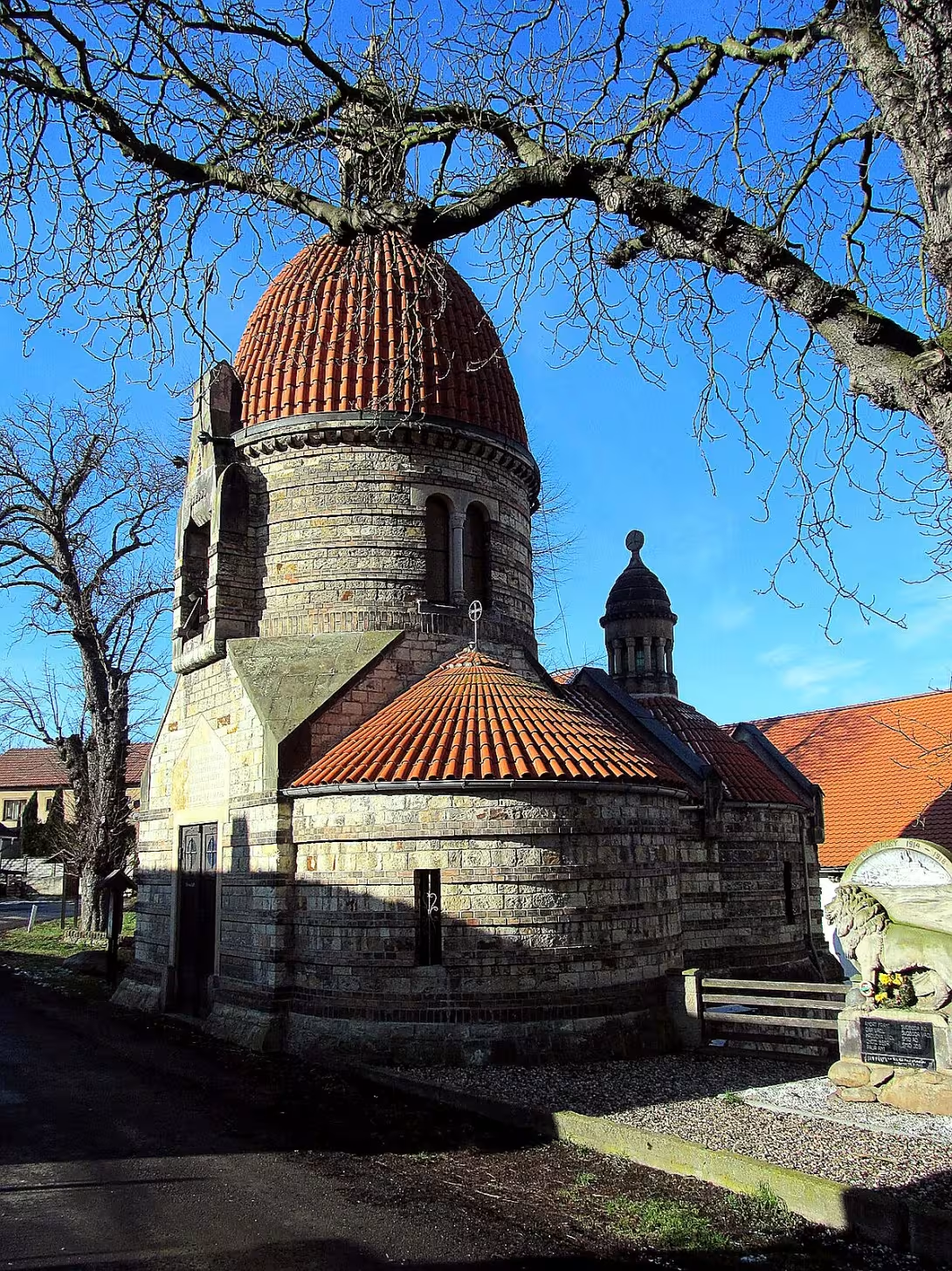
The chapel of St. Wenceslas in Vlčí is a remarkable historical monument on the edge of the square in the district of Louny, Ústecký kraj. This chapel, built between 1890 and 1903, excels with its unique architectural style Byzantine-Romanesque, inspired by the Basilica Sacre-Cœur in Paris. It is remarkable not only for its distinctive design, but also as a cultural monument from 17 October 2025, which reflects its importance in Czech sacred architecture.
The origin of St. Wenceslas Chapel can be traced back to Čeňek Sochorek, which started construction and entrusted its nephew Eduard Sochor with architectural design. The chapel was built in stages: the main body completed in 1893, followed by the northern part in 1897, and finally the presbytery and crypt in 1903. This period coincided with the end of the 19th century, when the Czechs were part of the Austrian-Hungarian Empire and experienced diverse cultural influences that contributed to revivalist architectural styles known as historicism.
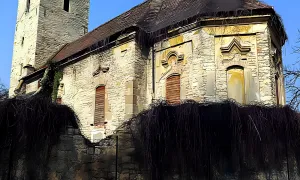
Architecturally, the chapel is proof of the ingenuity and vision of Eduard Sochor. It is built on a slope, has an elongated boat with attached apsesses and presbyters ending in a different form of apse. The structure shows opus quadratum masonry with horizontal cinder block belts, while sandstone details decorate window frames and lanterns. A characteristic element is the dome supported by pendants above the ship, with lantern - a rare combination of architectural elements in Czech sacred architecture.
The ownership of the chapel is mainly with the local community since its initiation on 29 June 1903. In the 1920s, however, it experienced a short period of use by the Czechoslovak Hussite Church. The meaning of the chapel is further underlined by its crypt, in which the remains of Václav and Anezka Statues, parents of Eduard Sochor are located.
During its history, the Chapel of St. Wenceslas was the focal point for cultural activities within Vlčí. Its designation as a cultural monument in 2025 underlines its importance and ensures that it benefits from efforts to preserve its unique architectural features.
Today the chapel remains accessible to visitors who are interested in discovering its historical and architectural significance. It is proof of the artistic vision of Eduard Sochor and cultural heritage of Vlčí. The chapel of St. Wenceslas is not only an architectural jewel, but also a symbol of local history and community pride, making it a valuable destination for interested people interested in Czech sacred architecture and historical monuments.
Then and now
Drag the slider to compare how the landmark may have looked when it was built with the view today.
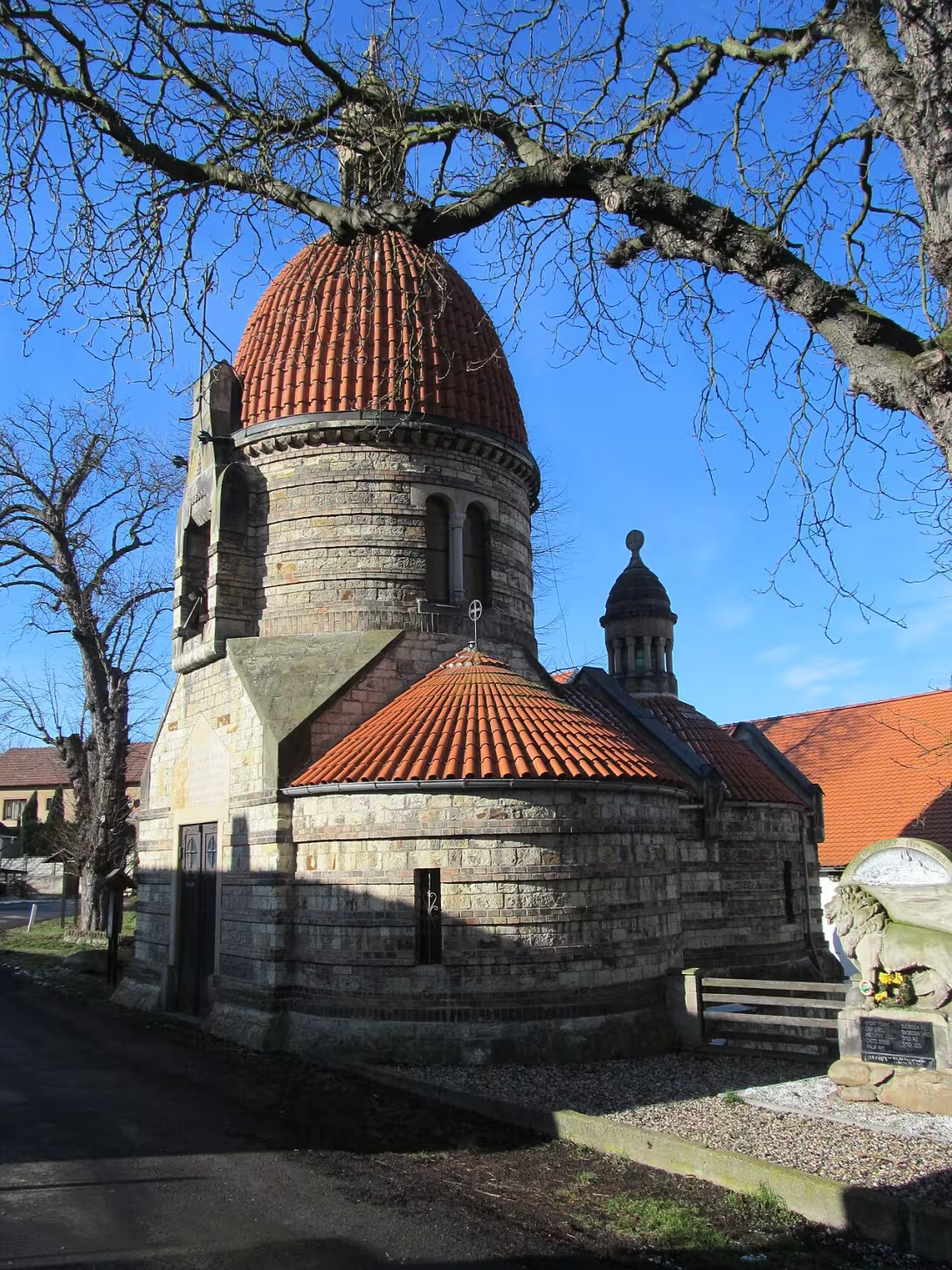
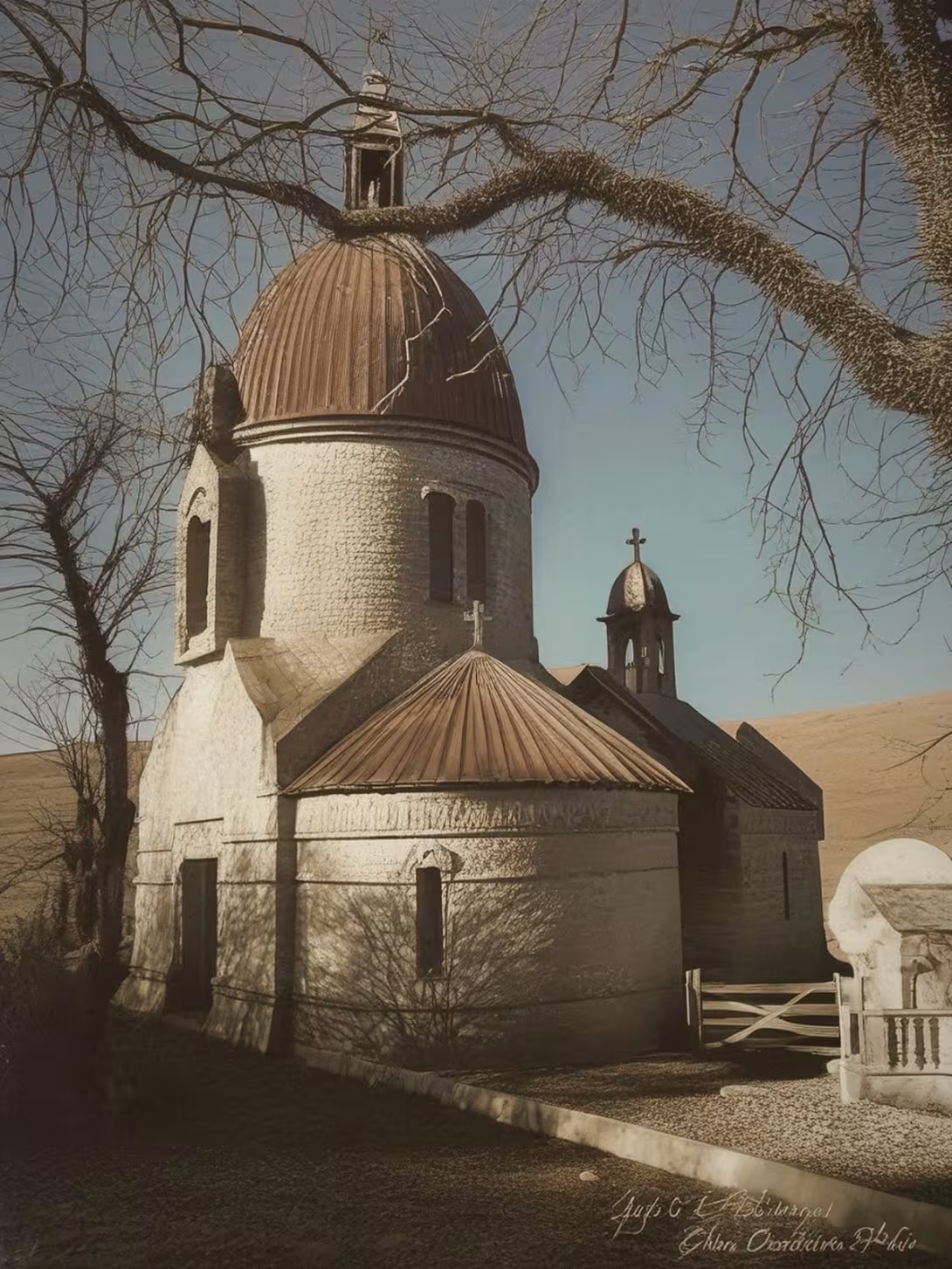
The historical appearance on the left is an AI-generated visualisation and serves as inspiration only.
Historical milestones
- 1890
- The chapel construction has begun.
- 1893
- Chapel main body complete.
- 1897
- North section added.
- 1903
- Presbytery and crypt completed; chapel reserved.
Architectural development
The construction began in 1890 with the main body completed 1893. The northern part was added in 1897, followed by presbytery and crypt in 1903. It is built on a slope, is equipped with opus quadratum mascara with horizontal cinder block belts, sandstone details, and prefast shingle roof.
Historical events
The chapel was initiated by Čeňek Sochorek and designed by his nephew Eduard Sochor between 1890 and 1903.
on 17 october 2025 it became a cultural monument.
Owners
Originally owned by the local community since its initiation on 29 June 1903. Temporarily used by the Czechoslovak Hussite Church in the 1920s.
Points of interest
- The chapel of St. Wenceslas in Vlčí is remarkable for its unique Byzantine-Romanesque architectural style, inspired by the Basilica Sacre-Cœur in Paris. - It was built between 1890 and 1903, with stages completed in 1893 (main body), 1897 (northern part), and 1903 (presbytery and crypt). - In the chapel is opus quadratum zdivo with horizontal cinder block belts and sandstone details on window frames and lanterns. - It contains a distinctive dome supported by pendants above the ship, with a lamp - a rare combination in Czech sacred architecture. - Marked as a cultural monument since 17 October 2025, it reflects its importance in Czech sacred architecture.
Guide
This guide is narrated by a synthetic voice generated by artificial intelligence.
Show guide text
This text was created by artificial intelligence and has not been editorially reviewed. It may contain inaccuracies.
Welcome to St. Wenceslas Chapel, one of the most remarkable architectural monuments in our country. You stand before him and you have a unique example of the Byzantine-Romanesque inspired by the famous Basilica Sacre-Cœur in Paris. The chapel is located on the edge of the village square and stands out with its uniqueness in the Czech sacred architectural heritage.
Let's go to history and find out who was behind this beautiful chapel and why. The chapel building started in 1890 and was completed in several stages. The first stage was completed in 1893 when the main part of the chapel was built. Four years later, in 1897, the northern part was added. Finally, in 1903, the presbytery and crypt were completed, and the chapel was ceremoniously sanctified.
Notice how the chapel comes out of the ground, its ground plan is formed by a circular layout. Take a look at the facade where you will find a unique combination of Byzantine and Romanesque elements. It is interesting that the architect Eduard Sochor was inspired by the French basilica, but still created something quite unique.
St. Wenceslas Chapel is also associated with important personalities. Chenek Sochrek, Václav and Anezek Sochor, who were the founders of the chapel, lie in the crypt. Their story is fascinating, and it's worth learning more about it.
Now pay attention to the details. The inner space of the chapel is full of light and air, creating a unique atmosphere. Look at the crypt where the founders are put to rest. It's a place where you can think about the history and meaning of this beautiful chapel.
Whether you visit St. Wenceslas Chapel for the first time in Vlčí or have the opportunity to return, it is a place that will fascinate you and inspire you. Let yourself be examined by the chapel, discover its secrets and let its beauty captivate you.
Tips for visitors
The best time to visit the chapel of St. Wenceslas in the village Vlčí is an early afternoon or evening when the sun illuminates its unique Byzantine-Romanesque architecture. This time ensures a quieter environment and ideal conditions for photography.
The best way to get to the place is to use the combination of the car and walking as the chapel lies on the edge of the village.
When visiting, take your purse or umbrella with you, especially in case of unforeseen weather conditions. Photographers should also introduce a suitable lens for interior and architecture details.
The best place for a photo is inside the chapel, where the lighting changes during the day. Also remember to include a panoramic view of the surrounding landscape from the chapel wall.
In the immediate surroundings, within 30 minutes drive from the chapel, there are several picturesque paths and natural attractions suitable for short walks. These trips are ideal for relaxing after visiting the sights.
For families with children the chapel is an interesting place where they can enjoy quiet moments and learn more about history and architecture. It is suitable for all ages, but children should be accompanied by adults.
Frequently asked questions
Can the monument be visited?
Religious buildings are usually open mainly during services; at other times a visit is normally arranged with the parish or the operator. We have not verified specific times.
Where is the monument?
Location: Vlčí č.p. 77, Chlumčany, Ústecký kraj. The map on this page shows the exact spot.
Why is the monument protected?
It is listed in the Central List of Cultural Monuments of the Czech Republic as a cultural monument (register no. 107436).
For kids
About 136 years ago something amazing happened in a small village called Vlčí. At the moment, the chapel of St. Wenceslas was a new thing that could attract any child and adult. It was a time when people liked to build something beautiful and interesting, often inspired by strange ideas.
Businesses nearby
Do you run a restaurant, accommodation, shop, museum, rental, wellness or other visitor service near this monument? Show yourself directly to the people heading to it — this is how they will see you in the app and on the web:
Nearby
The chapel is located on the edge of the village, surrounded by a typical rural landscape. There are no other significant monuments or natural features within a 5 km radius.
Accommodation nearby
Themed route
Vlčí - St. Wenceslas Chapel in Vlčí
1. St. Wenceslas Chapel (chapel) - is worth a visit due to its unique location on the edge of the village and its distinctive architectural style. 2. Vlčí Square (square) - a spacious square that surrounds the village and offers a quiet environment for relaxation. 3. Vlčí gardens (garden) - quiet gardens around the village that offer pleasant walks.
Seasonal recommendations
Spring: Spring is an ideal way to build the chapel of St. Wenceslas, because the incident around it is full of life and color. The lighting is soft and warm, which makes the atmosphere pleasant. We help build a chapel during spring when the weather is sunny and warm, but it is handed over at the beginning of tourist service to avoid the crowd. Don't forget to take your camera to capture the beautiful flowers and vegetables that decompose around the chapel.
Summer: In the year, the chapel of St. Wenceslas is surrounded by beautiful cabbage and flowers. The main summer season calculates the number of tourists that can be allocated to avoid the crowd. Lighting is own warm and pleasant, but they can also suck out the sunny weather and beautiful winnings. Forget to wear a suncap and tar to protect themselves from the sun.
Autumn: The support procedure around the maple St. Wenceslas is full of kings of colors and their own. Be familiar with that, for bars of gold, which and green, makes the atmosphere attractive. The notified is valid, but it can be cold, so it is a product with the same products. Visit the chapel during autumn when the weather is sunny and warm, but before the beginning of cold days.
Winter: The winter store of the Maple St. Wenceslas is quiet and quiet. Visit the chapel during winter, when the weather is cold but still sunny, and remember to wear a warm round and a forehead to protect themselves from cold.
Visualizations and artistic views


The visualisations are generated by artificial intelligence and serve as inspiration.
Photos from the area
Real photos taken near the monument


Zdroj a licence jsou uvedeny u každého snímku.
Tips from visitors
No tips yet. Be the first!
Log in and add your tip.
Sources and literature
Photos: Gortyna / Public domain — Wikimedia Commons. The author and licence also appear when you hover over the image.
Faktickým podkladem tohoto textu byl článek na Wikipedii, jehož autory jsou přispěvatelé Wikipedie. Článek je dostupný pod licencí CC BY-SA 4.0.
Location on the map

Příběhy a pověsti
Legendy, pověsti a příběhy spjaté s touto památkou
Fotografie návštěvníků
Zatím žádné fotografie. Buďte první, kdo přidá fotografii z návštěvy!
Log in a přidejte svou fotografii nebo hodnoťte.
Za ověřenou návštěvu v aplikaci získáte víc bodů — poznáme podle GPS, že jste na místě.
Reviews and comments