



Karpatský chrám svatého archanděla Michaela Church
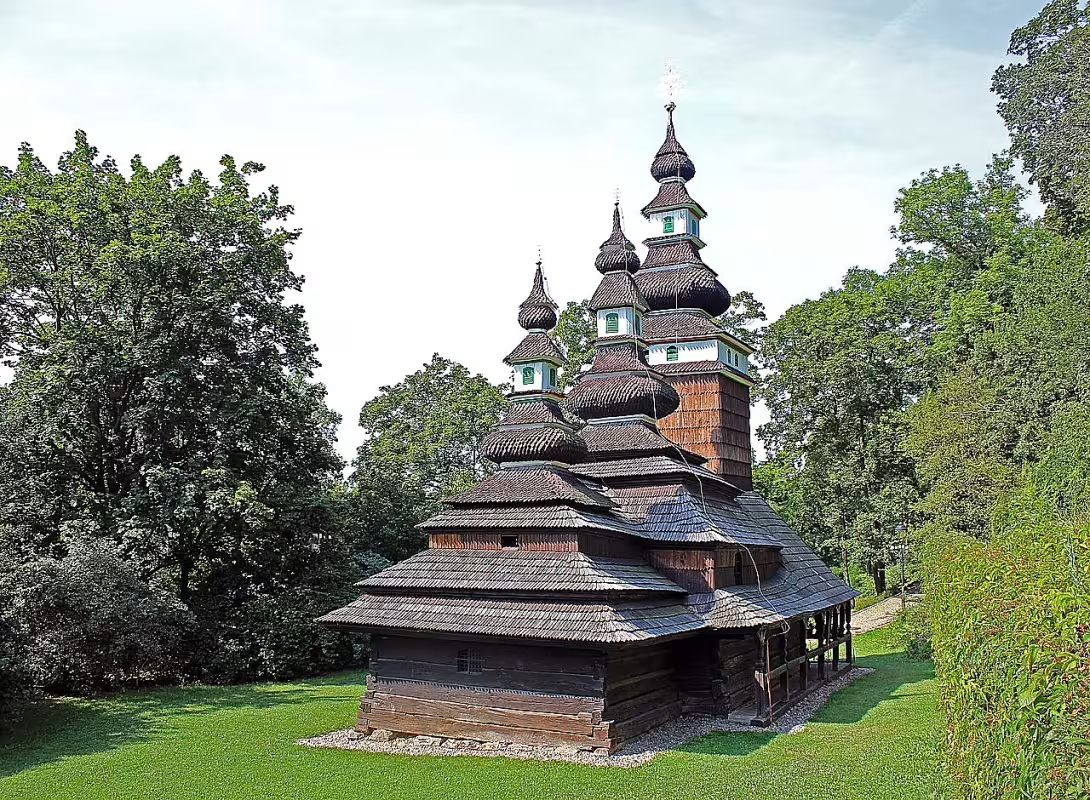
The Church of Saint Archangel Michael, also known as the Carpathian Chapel of St. Michael, is an impressive wooden Orthodox church located in Kinsky Garden on Smíchov, Prague. Built in the late 17th century and moved to its current site in 1929, this monument features a unique Lemkovian style with folk Baroque elements. Its tripartite layout, distinctive use of larch wood, and traditional Orthodox colors symbolizing Christian virtues make it a notable historical structure.
Originally constructed in Velyki Lučky near Mukachevo during the late 17th century when Bohemia was part of the Habsburg Monarchy, this period followed significant religious and cultural shifts after the Thirty Years' War. In 1793, the church was sold to Medvedivci, where it underwent reconstruction with Baroque enhancements. By 1929, as Czechoslovakia had been established following World War I, Prague purchased the church for relocation as part of a national heritage project. It was disassembled, transported, and reconstructed in Kinsky Garden on Smíchov.
Architecturally, the Church of Saint Archangel Michael is characterized by its Lemkovian style with folk Baroque elements. The tripartite layout features three towers topped with shingled roofs, all constructed from larch wood. Traditional Orthodox colors—white for faith, green for hope, and red for love—adorn the towers and interior, symbolizing core Christian virtues.
Ownership of the church has changed significantly over time. Initially built in Velyki Lučky, it was sold to Medvedivci in 1793. In 1929, Prague acquired it as part of a Czechoslovak national heritage initiative. Since then, the city of Prague has owned it, with the church becoming part of the National Museum's ethnographic collection.
Key events in the church's history include its relocation and reconstruction efforts. The first move to Medvedivci involved significant architectural changes, while the 1929 transfer to Prague marked a major preservation effort by Czechoslovakia. A dramatic event occurred on October 28, 2020, when a fire destroyed most of the church structure. Despite this setback, state and city authorities undertook its reconstruction.
Today, the Church of Saint Archangel Michael is accessible to the public and serves as a place for Orthodox liturgies conducted by the Pravoslavná církev v českých zemích and the Rumunská pravoslavná církev. Its historical significance, architectural beauty, and resilience through multiple relocations make it a compelling site for visitors interested in cultural heritage.
The Church of Saint Archangel Michael stands as a testament to the enduring legacy of Orthodox architecture and the rich history of its journey from Carpathia to Prague. It invites visitors to explore its unique design and historical narrative, offering a glimpse into the past while continuing to serve as a vibrant place of worship today.
Then and now
Drag the slider to compare how the landmark may have looked when it was built with the view today.
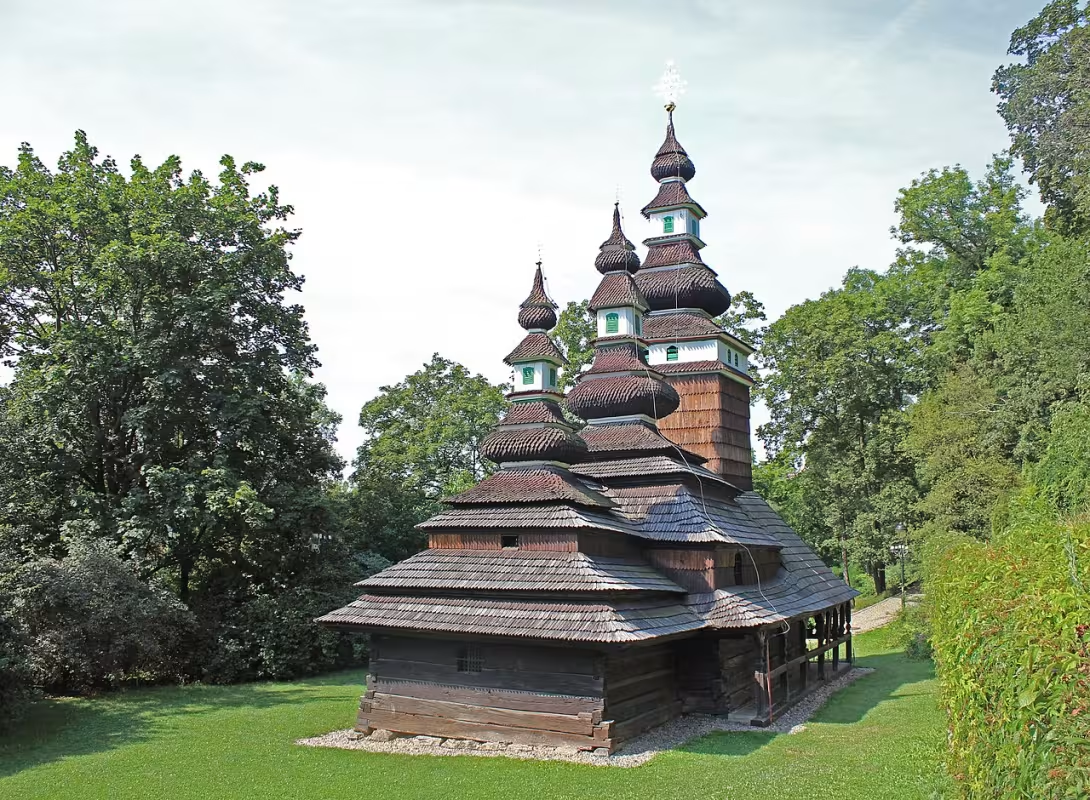

The historical appearance on the left is an AI-generated visualisation and serves as inspiration only.
Historical milestones
- 1793
- The church was sold and relocated from Velyki Lučky to Medvedivci.
- 1929
- The church was disassembled, transported, and reconstructed in Prague's Kinsky Garden.
- 2020
- A fire destroyed most of the church structure on October 28.
Architectural development
Originally built in Lemkovian style with folk Baroque elements, the church was relocated and reconstructed twice. The first relocation to Medvedivci included baroque enhancements. In Prague, it became part of the National Museum's ethnographic collection.
Historical events
In 1793, the church was relocated from Velyki Lučky to Medvedivci and underwent reconstruction.
In 1929, it was disassembled, transported, and reconstructed in Kinsky Garden on Smíchov in Prague.
On October 28, 2020, a fire destroyed most of the church structure.
Owners
Initially built in Velyki Lučky near Mukachevo, the church was sold to Medvedivci in 1793. In 1929, it was purchased by Prague for relocation as part of a Czechoslovak national heritage project. The city of Prague has been its owner since then.
Points of interest
- The Church of Saint Archangel Michael was originally built in Velyki Lučky near Mukachevo during a period when Bohemia was under the Habsburg Monarchy, reflecting the complex religious and cultural shifts following the Thirty Years' War.
- In 1793, the church underwent significant Baroque enhancements after being sold to Medvedivci, showcasing how architectural styles evolved over time in response to changing ownership and regional influences.
- The dramatic fire on October 28, 2020, which destroyed most of its structure, highlighted the resilience of this historical monument, as both state and city authorities committed to its reconstruction despite the setback.
- Its tripartite layout with three towers topped by shingled roofs is a distinctive feature of Lemkovian style architecture, demonstrating unique regional influences that are less commonly seen in other Orthodox churches.
- The church's relocation from Carpathia to Prague as part of Czechoslovakia’s national heritage initiative underscores its cultural significance and the efforts made to preserve such historical structures amidst changing political landscapes.
Guide
This guide is narrated by a synthetic voice generated by artificial intelligence.
Show guide text
This text was created by artificial intelligence and has not been editorially reviewed. It may contain inaccuracies.
Welcome to the Karpatský chrám svatého archanděla Michaela, or as it is affectionately known, the Carpathian Chapel of St. Michael. As you stand here in Prague's Smíchov district, surrounded by the serene ambiance of Kinsky Garden, take a moment to appreciate this remarkable wooden Orthodox church before you.
This unique structure was originally constructed in the second half of the 17th century in Lemkovian style, with elements of folk Baroque. Imagine its journey across time and space: built amidst the cultural shifts following the Thirty Years' War when Bohemia was under Habsburg rule, it began life near Mukachevo in Velyki Lučky.
As you gaze upon the church today, notice its tripartite layout and how it stands out with its distinctive use of larch wood. The craftsmanship is evident in every detail—from the intricately carved wooden elements to the harmonious integration of Baroque influences that were added over time.
In 1793, a significant chapter unfolded when the church was sold and relocated from Velyki Lučky to Medvedivci. Fast forward to 1929, when it faced another transformation: disassembled, transported, and meticulously reconstructed in its current home here in Prague's Kinsky Garden. This relocation is a testament to the enduring significance of this sacred site.
Now, let your curiosity be piqued by an intriguing aspect of its history: despite the absence of known architects or historical figures directly linked to its creation, the church stands as a silent witness to centuries of religious and cultural evolution. Its survival through time speaks volumes about the dedication of those who cherished it enough to preserve its legacy.
However, every story has its challenges. In 2020, on October 28th, a devastating fire swept through most of the structure. This event adds another layer to its rich history—a reminder of both vulnerability and resilience. As you stand here now, witnessing its current state, consider how this chapel continues to inspire despite such trials.
As we conclude our brief exploration, I invite you to linger in this tranquil garden space. Take a moment to reflect on the stories etched into every beam and carving of this extraordinary church. Whether you're drawn by history, architecture, or simply the peaceful atmosphere, there's always more to discover here at the Carpathian Chapel of St. Michael.
Thank you for joining me today, and I hope your visit has been as enlightening as it was inspiring.
Frequently asked questions
Can the monument be visited?
Religious buildings are usually open mainly during services; at other times a visit is normally arranged with the parish or the operator. We have not verified specific times. According to the heritage register restoration is under way, so access may be restricted.
Where is the monument?
Location: Holečkova 98/2, Smíchov, Praha, Hlavní město Praha. The map on this page shows the exact spot.
Why is the monument protected?
It is listed in the Central List of Cultural Monuments of the Czech Republic as a cultural monument (register no. 40347/1-1389). It is protected as part of a larger listed ensemble.
Businesses nearby
Do you run a restaurant, accommodation, shop, museum, rental, wellness or other visitor service near this monument? Show yourself directly to the people heading to it — this is how they will see you in the app and on the web:
Events nearby

Zdroj akcí: otevřená data měst a obcí ČR (Národní katalog otevřených dat) a kalendář akcí Národního památkového ústavu.
Nearby
The church is located in Kinsky Garden on Smíchov, Prague. The area features urban green spaces with other historical sites nearby.
Accommodation nearby
Trips and activities nearby
Guided tours, tickets and activities nearby from GetYourGuide
Affiliate link: if you buy from the partner, we may receive a commission. The price for you does not change.
Search tours and activities →Themed route
Thematic Walking Tour: Kinsky Garden and Surroundings
1. Karpatský chrám svatého archanděla Michaela (Church) - Type: Historical Church - Why Visit: This stunning Baroque church, located in the heart of Kinsky Garden on Smíchov, offers a serene escape with its intricate architecture and peaceful atmosphere. It's a perfect starting point for exploring the historical charm of this urban green space.
2. Kinsky Garden - Type: Urban Green Space - Why Visit: Surrounding the church is Kinsky Garden, an inviting park that provides lush landscapes and tranquil paths ideal for leisurely strolls or picnics. Its well-maintained gardens and historical ambiance make it a delightful spot to relax and reflect.
3. Smíchov Historical Sites - Type: Urban Exploration - Why Visit: As you wander through the area, take in the rich history of Smíchov by exploring nearby architectural gems that showcase Prague's urban development over the centuries. The proximity of these sites to Kinsky Garden offers a seamless blend of nature and history.
4. Kinsky Palace - Type: Historical Building - Why Visit: A short walk from the church, this elegant palace is an exemplary piece of architectural beauty with its neoclassical design. It provides insight into the aristocratic past of Smíchov and serves as a cultural landmark in the area.
5. Smíchov Bridge - Type: Architectural Landmark - Why Visit: Conclude your tour by crossing the iconic Smíchov Bridge, which offers stunning views of Prague's skyline. Its unique design and historical significance make it an essential stop for appreciating the city's engineering prowess and scenic beauty.
This thematic walking tour invites you to immerse yourself in the rich history and serene landscapes of Smíchov, all within a short distance from each other, providing a comprehensive experience of this vibrant part of Prague.
Seasonal recommendations
Spring: Visiting the Church of Saint Michael Archangel during spring offers a unique experience as nature awakens around this historic site in Smíchov. The surrounding greenery is lush and vibrant, with blooming flowers adding splashes of color to the landscape, creating an enchanting atmosphere perfect for photography enthusiasts. As the weather can be unpredictable, it's advisable to dress in layers that can accommodate both cool mornings and warmer afternoons. While the site may still see some construction due to ongoing renovations, spring tends to have lighter foot traffic compared to summer, allowing visitors a more peaceful exploration of the church.
Summer: Summer is an ideal time for those looking to experience the Church of Saint Michael Archangel amidst Prague's bustling energy and warm weather. The long daylight hours provide ample opportunity to explore both the site and its surroundings thoroughly. However, it's wise to arrive early in the morning or later in the afternoon to avoid the peak tourist crowds that flock to this iconic location during the main summer season. Light but comfortable clothing is recommended, along with sun protection such as hats and sunscreen. The vibrant atmosphere of Prague’s summer can enhance your visit, making it a memorable experience.
Autumn: Autumn brings a distinct charm to the Church of Saint Michael Archangel, with its rich tapestry of fall colors creating a picturesque setting. The cooler temperatures make for comfortable exploration without the need for heavy clothing, though a light jacket might be necessary as evenings can get chilly. This season often sees fewer tourists, offering a more serene visit compared to summer. The natural beauty of Prague during this time is particularly striking, with golden hues and crisp air enhancing the historical ambiance of the site.
Winter: Winter transforms the Church of Saint Michael Archangel into a magical winter wonderland, especially when snow blankets the surrounding area in Smíchov. The soft lighting from nearby street lamps reflecting off the snow creates an enchanting atmosphere that is both serene and captivating. Visitors should dress warmly with layers, including hats, gloves, and scarves, to enjoy their visit comfortably. Given shorter daylight hours, it's best to plan your visit during midday when there’s more natural light. While crowds are generally smaller in winter, the site may have limited opening times due to weather conditions or ongoing renovations, so checking ahead is advisable.
Visualizations and artistic views


The visualisations are generated by artificial intelligence and serve as inspiration.
Photos from the area
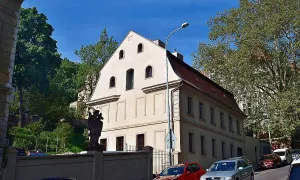
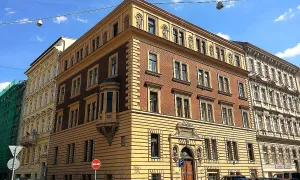
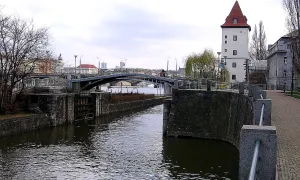
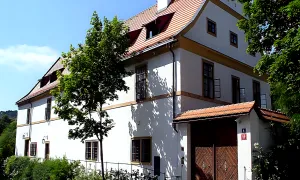
Real photos taken near the monument


Zdroj a licence jsou uvedeny u každého snímku.
Tips from visitors
No tips yet. Be the first!
Log in and add your tip.
Sources and literature
Photos: Stefan Wisselink / CC BY 2.0 — Wikimedia Commons. The author and licence also appear when you hover over the image.
Faktickým podkladem tohoto textu byl článek na Wikipedii, jehož autory jsou přispěvatelé Wikipedie. Článek je dostupný pod licencí CC BY-SA 4.0.
Location on the map
Příběhy a pověsti
Legendy, pověsti a příběhy spjaté s touto památkou

Fotografie návštěvníků
Zatím žádné fotografie. Buďte první, kdo přidá fotografii z návštěvy!
Log in a přidejte svou fotografii nebo hodnoťte.
Za ověřenou návštěvu v aplikaci získáte víc bodů — poznáme podle GPS, že jste na místě.
Reviews and comments