






Klášter paulánů (Nová Paka) Monastery
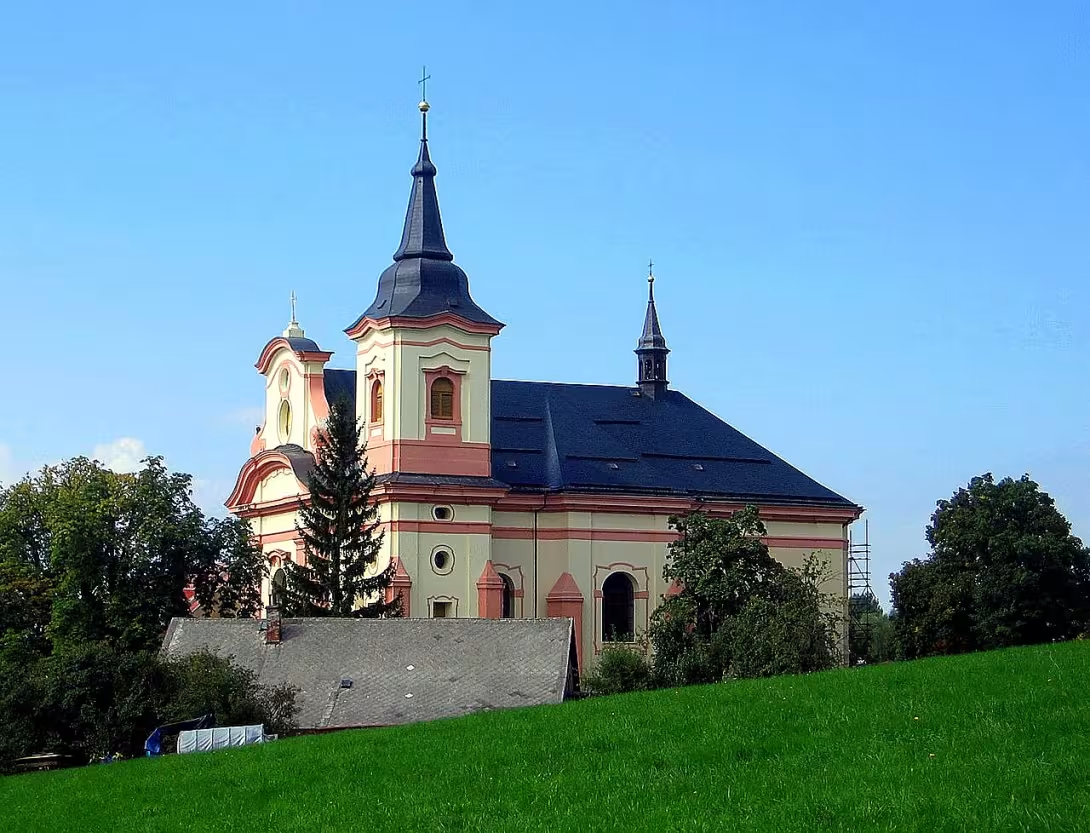
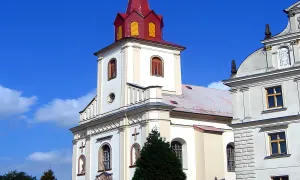
The monastery of paulans in Nová Pace is a Baroque complex with the Church of the Assumption of the Virgin Mary. They form a significant cultural and religious entity. The monument is known for its rich development - from the original chapel to the hospital to the current social services.
In the place of today's monastery was originally the estate and chapel of the Assumption of the Virgin Mary, whose existence dates back to 1034. The chapel was created after a painting or statue of the Virgin Mary was found in nearby mines. In 1410 it was extended to the church and four years later it was assigned plebán. The foundation of the monastery in Nová Pace was initiated by Rudolf z Tiefenbachu, owner of the Kumburk estate. In 1650, in his will, he left funds to pauses. After his death, his wife Marie Eva realized the intention to dig up the foundations at the old chapel. The base stone was laid on June 25, 1655.
Monasteries are located west of the church. The three two-track wings are closed by a square yard, while the fourth is only ambit. The buildings have several floors and undecorated facades. The Church of the Assumption of the Virgin Mary is a single-boat, unoriented object with a rectangular plan and bevelled corners. In it are written five intersecting ellipses. The ship is approximately 41 metres tall and divided into five fields. The architectural solution of the inner space is one of the advanced structures of the late Baroque. Experts often attribute church construction to Christopher Dientzenhoffer or Tomas Haffenecker.
The interior of the church is decorated with two-manual Baroque organ Jan Horák from 1730-1740 and several altars. The main one was created in the 19th century by Josef Kramolín; its dominant is the statue of the Virgin Mary, probably from the turn of the 15th and 16th centuries. There are seven other altars in the temple, including the works of Peter Brandle, Jan Suchard, Josef Führich and J. Green. There are two sandstone sculptures of St. Estemus and St. Nicholas in front of the entrance. A significant element is the Baroque rosary staircase from 1735 with 50 degrees. His west side is full, his east is arcade. Along it are the paintings from the life of the Virgin Mary by the painter Josef Mühl.
The fate of the monastery was accompanied by frequent changes in ownership and functions. After Trček from Lipa, grunt virgins since 1529, the church was taken over by the House of Trauttmansdorff in 1806. As part of the Josephine reforms, the monastery was abolished in 1785; The last rebels lived here until 1789. The area was used for various purposes - there was a weaving plant, dyeing plant, cardboard production, inn, theatre and military education institution. In 1872, the council bought part of the complex for the establishment of the district hospital. It was public since 1875 and worked here until 2004. The building was hit by a fire in 1858 when the bells melted, but the interior of the church remained intact. In 1865, the tower was struck by lightning, which damaged the roof.
Today the monastery is protected as a cultural monument. Since 2006, buildings have been owned by Life Without Barriers. The organisation provides social services, for example in the community centre for seniors and disabled people. A recent reconstruction of a dilapidated rosary staircase took place. The historical complex represents Baroque architecture and shows complex development of religious space over centuries. Visit this unique place and explore its fascinating history with your own eyes.
Historical milestones
- 1655
- Lay the foundation stone of the monastery
- 1701
- Ceremonial opening of the monastery
- 1724
- Completion of the new Church of the Assumption of the Virgin Mary
- 1785
- The abrogation of the monastery as part of the Yosefin reforms
Architectural development
Originally there was a farmhouse and chapel which was gradually extended to the church. The present Baroque monastery complex was established since the middle of the 17th century and was supplemented by a newly built larger church in the 18th century. The rosary staircase from 1737 is also an important element.
Historical events
1655 laying of the basic stone of the monastery, 1701 festive opening of the monastery, 1785 cancellation of the monastery by yosefin reforms, 1858 fire site
Owners
Trček from Lipa (from 1529), House of Trauttmansdorff (from 1806), City of Nová Paka, District Hospital, Society Life without Barriers (from 2006)
Points of interest
The existence of the chapel at the monastery dates back to 1034. It was created after a painting or statue of the Virgin Mary was found in nearby mines. - The floor plan of the Church of the Assumption of the Virgin Mary consists of five intersecting ellipses. The Baroque rosary staircase from 1735 is 50 degrees. - The area served for various purposes in the past, such as weaving, dyeing, inn, theatre or military education institution. - The bells melted in the fire in 1858, but the church interior remained intact.
Guide
Show guide text
This text was created by artificial intelligence and has not been editorially reviewed. It may contain inaccuracies.
Welcome to New Pace. Right now, you are facing one of the most important cultural and religious units in this region. Before your eyes is a former Baroque monastery of paulans, a place that has been the spiritual and social heart of this city for centuries. Even though morning prayers no longer take place here in the monastery cells, the air still radiates the nobility and tranquility that is so typical of this area. Feel this atmosphere, feel the history that is written in every stone and in every facial detail of these buildings.
Let's go back to the deep past together to understand how this place came to be. The whole story of this monastery began in 1655 when its foundation stone was laid. But it wasn't a random act. The creation of this important place was initiated by the nobleman Rudolf of Tiefenbach and his wife Maria Eva, who saw not only a religious act in this project, but also a way to increase the prestige of the whole area. Their efforts have made this place an important pilgrimage place over time that has fundamentally affected the life and importance of New Paka. The whole construction process was gradual and required patience. While the monastery was festively opened in 1701, the completion of the new Church of the Assumption of the Virgin Mary, which is now dominated, required two more decades and was completed only in 1724.
Now pay attention to the architecture surrounding you. Although the particular names of architects remain unknown in history, their genius vision is evident at every turn. If you look at the Church of the Assumption of the Virgin Mary, try to think about its unusual geometry. Its floor plan is not standard, but consists of five intersecting ellipses. This complex and harmonious geometry creates a unique dynamic within the space, which you will find few places in the Baroque period. Also look at the Baroque rosary staircase, which was built in 1735. It's the real jewel of this compound. It is exactly 50 degrees, and its curves are designed to act monumentally while at the same time pushing pilgrims towards humble progress towards divine. Feel how these shapes intertwine and how the Baroque style seeks to combine human efforts with the celestial order.
But when you look at these buildings, you should see not only the stones and the raspberry, but also the faces of the people who left their mark. In addition to the founders, Rudolf of Tiefenbach and Marie Eva, a number of other important figures are associated with this place. Names like Bohumír Kapoun ze Svojkova or Mořic Adolf appear in the history of the monastery. These people, whether as spiritual or as persons associated with the future destiny of the complex, helped to fight the story that lasts until today. Every character that went through these gates added another layer of meaning to his rich history.
And it is in history that there is the greatest mystery that can surprise you now. You may think the history of this place began in the seventeenth century, but the truth is much older and more mysterious. The existence of the chapel in this place dates back to 1034. This is almost six centuries before the first stone of the Baroque monastery was laid. But how did sanctity get to this place? The legend and historical records say that a painting or statue of the Virgin Mary was found in nearby mines. It was this discovery that made this place a sacred point in the early Middle Ages and laid the foundations for everything you see today. It's a fascinating idea that you're standing in a place that was considered sacred over a thousand years ago.
But time passes relentlessly, and even such important places must face change. In 1785, a crucial turning point came. As part of the Josephine reforms, the monastery was abolished. Religious life here in its original form ended, but the site didn't die. On the contrary, his functions have transformed and the site has become part of the civilian life of the city. In these areas, at different times, various objects, such as hospitals, and even theatre, worked. This transformation from the spiritual centre to a place serving human needs, care for both sick and culture, shows the incredible resilience of this place. The monastery may have lost its original mission, but it has gained new, social value.
Now, however, I will no longer hold you back from further examination. I suggest you continue your search and pay attention to details you may have missed at first glance. Look at the facade of the buildings, see the dimensions of the space and try to imagine how life was going here hundreds of years ago. Whether you choose to focus on the architecture of the church or take the road up the stairs, let yourself be carried by the atmosphere of this extraordinary place. Thank you for spending this moment with us. I wish you a beautiful and inspiring walk through the history of New Paka. I'll say goodbye and wish you a pleasant further acquaintance.
Tips for visitors
The best time to visit the Temple of Pauses in Nová Pace is autumn or spring when it is quieter and nature offers beautiful colors. This period also offers ideal lighting conditions for shooting architectural details of the Church of the Assumption of the Virgin Mary.
Parking can be found near the monument, but due to the reconstruction work it is recommended to verify the actual availability of the parking lots. The location can also be reached by public transport; It is advisable to use online search engines for the latest connection information.
When visiting, bring sun protection and warm clothing in winter, because many parts of the monastery are not covered. Photography is possible throughout the area, but the best places to capture architectural details are the western facade of the church and the interior with its rich decorations.
It is crucial for families with children to prepare some toys or books because waiting time during reconstruction can be longer. In addition, it is recommended to visit the surrounding forests for a short walk and entertainment outdoors in nature.
Businesses nearby
Do you run a restaurant, accommodation, shop, museum, rental, wellness or other visitor service near this monument? Show yourself directly to the people heading to it — this is how they will see you in the app and on the web:
Nearby
XXXHistorical monuments (108)
- Suchard house 0.2 km
- Jewelry 0.3 km
- Master Jan Hus 0.3 km
- Tomáš Garrigue Masaryk 0.4 km
- Jan Amos Komenský 0.5 km
- Auto-moto musuum 0.5 km web
- Memory plate Otakara Hrubeho 0.9 km
- Old school 2.1 km
- Memorial of Soviet pilots 2.2 km
- Hradiště Levín 3.0 km
- Preussler Trasta 4.6 km web
- memory of Karel Hynka Máchy 5.0 km
- hrad Kumburk 5.0 km web
- Roubenka 5.7 km
- _ 5.7 km
- Mokry 6.0 km
- Des. Fr. Red - crash site 6.0 km
- Memory plate Václav Knotka 6.2 km
- Saint Ludmila 6.3 km
- sv Jan Nepomucký 6.3 km
Restaurant and catering (163)
- Novapacké cellars 0.2 km
- U Lípy 0.4 km
- Restaurant on Horce 0.5 km
- KA Z Ko Restaurant 0.5 km Vrčinská 210
- Kopack 0.6 km
- FolkBurger 0.7 km Komenské 272 + 420 602 462 003 web
- Sport centrum 0.7 km
- Sport centrum 0.7 km
- Jezkova statek 0.8 km
- U Website 1.0 km
- Na Sidlišt 1.2 km
- Restaurant On the settlement 1.2 km
- Restaurant Maja 1.2 km
- Stop CaffexZ4ZX 1.7 km
- Restaurant Hotel Štikov 1.8 km
- Stop CaffexZ4ZX 1.8 km
- Pub Helvetia 2.5 km
- Staropaká sokolovna 2.5 km
- Lehna U Lánský 3.3 km web
- Restaurant Bistro 3.3 km Vidochov 16
Accommodation (70)
- Pension Novapacké cellars 0.2 km web
- Pension U Sklede 0.2 km + 420 493 722 872 web
- Jezkova state 0.8 km + 420731622580 web
- Jaroslav Slama - Hunting chata 1.3 km
- Pension Maja 1.3 km
- Hotel Htikov 1.8 km + 420 493 721 972; + 420 603 318 304 web
- Oldřich Vrabec - Old-fashioned sokolovna 2.6 km
- Guesthouse Kavka 3.3 km + 420 777 260 571 web
- Pension Kovarna 3.6 km Vidochov 4 web
- Tomáš Buchal - Cottage Jana 3.6 km
- Zdeněk Beneš 5.5 km + 420 608 279 468
- Javor Mill 5.7 km
- Physical unity Sokol Student 6.6 km + 420 736 605 159 web
- Guesthouse U Mouse 6.7 km + 420 499 691 595 web
- Pod Outlook 7.3 km Arnoštov 13 web
- Accommodation in podcrod 7.3 km
- Bukovina buiten 7.6 km Bukovina u Pure 78 web
- Pension Trautenberk 8.2 km + 420 602 161 613 web
- Guesthouse Bradley Mlýn 8.5 km + 420 608 222 304
- David Nosek - Roubenka U Říhý 8.6 km
› Rental and Sport (31)
- Sokol Nová Paka 0.4 km
- Tennis Nová Paka 0.6 km
- Squash 0.7 km
- R. K. BIKE 1.0 km Pražská 515
- Pool Nová Paka 1.3 km web
- Sokolovna 7.1 km
- Swimming pool Kruh 7.9 km
- Swimming pool Nová Ves nad Popelkou 8.1 km
- Pension Trautenberg - swimming pool 8.2 km
- Kola Sír 9.0 km T. G. Masaryk 297
- Summer Stadium of General Louis Liberty 11.0 km
- Swimming pool 11.0 km
- _ 12.0 km
- Sports Center Jilemnie 12.3 km Jungmann 146
- Hannah 12.4 km Masaryk Square 173
- Kolo- park. cz 12.4 km Masaryk Square 172
- Cyklo- Ski R. Špicar 12.4 km Bone 79
- Sports complex and Mříčná swimming pool 12.5 km web
- Aqua centrum 12.5 km
- K70 12.5 km
© Tourism and Nature (219)
- Jiro Sets 0.5 km
- Small park 0.5 km
- Park over school 0.6 km
- Park kindergarten 0.6 km
- Hus kopec 1.0 km
- U Cross 1.1 km
- Former firehouse 1.2 km Pražská 501
- Postmistr kopec 1.4 km
- XZ0ZHrnčír's kopec 1.7 km
- Vbroken 1.8 km
- Elixir VivixZ4ZX 2.0 km
- Staropacká hora 2.1 km
- View of Cyril Bouda 2.2 km
- Levín 2.6 km
- nad Railway station 3.0 km
- Kozinec 3.2 km
- Above the transversal 3.4 km
- Natural park Sýkornice, Novapac Falls 3.4 km
- Kozinec 3.9 km
- Grobka 3.9 km
Accommodation nearby
Themed route
1. Monastic courtyard (type: outdoor area) - The first point is a walk around historical walls that will bring you into the atmosphere of monastic life. 2. Monastic church (type: sacral building) - In this spiritual centre you can admire the architecture and religious details of the monastery complex. 3. Monastic exposure (type: museum section) - Here you can get to know the history of pauses and the importance of this place in detail. 4. Monastic garden (type: park) - You can finish the trip in a quiet green environment right in the area of the monument.
Seasonal recommendations
Spring: The monastery of paulans in Nová Paka in spring offers visitors a beautiful view of flowering gardens and trees surrounding historic buildings. The sunlight illuminates the stone facades, creating ideal conditions for photography. During spring it is recommended to visit the monastery early in the morning or later in the afternoon to avoid the weather with rain and mild days. The good idea is to wear decent shoes to walk between flowering lawns and bring protective sunglasses.
Summer: In summer the monastery in Nová Paka becomes a popular place for visitors thanks to warm weather and long opening. Nature is in full bloom, while quiet parking areas offer a place to rest under the shadow of old trees. Summer brings the highest attendance, so it is a good idea to visit the monastery early morning or late afternoon to avoid crowds of tourists. Don't forget to bring the umbrella and protective tie against the intense sun.
Autumn: The Pause Monastery in autumn offers visitors a view of the colorful leaves of trees that provide a unique atmosphere. The sunny days especially decorate the peaceful space of the monastery, where you can relax and walk around historical buildings. In autumn season it is advisable to visit the monastery in warm clothes with adjacent jacket or dance floor for cold evenings. It is also recommended to wear decent shoes for ease during walks.
Winter: During the winter period, the monastery in Nová Paka offers visitors a mild atmosphere where it is possible to use it with sunny days and silence. The peaceful environment of the monastery is ideal for relaxation and relaxation. However, it is necessary to wear warm clothes such as fur shoes, jacket and protective scarf. The monastery works with shorter hours during winter, so it is advisable to check the exact opening time. Visiting the monastery early in the morning can be a good idea for using bright sunlight and avoiding the cold of later hours.
Visualizations and artistic views

The visualisations are generated by artificial intelligence and serve as inspiration.
Photos from the area
Real photos taken near the monument

Zdroj a licence jsou uvedeny u každého snímku.
Tips from visitors
No tips yet. Be the first!
Log in and add your tip.
Sources and literature
Fotografie: Jiří Novák / CC BY-SA 3.0 — Wikimedia Commons. The author and licence also appear when you hover over the image.
Faktickým podkladem tohoto textu byl článek na Wikipedii, jehož autory jsou přispěvatelé Wikipedie. Článek je dostupný pod licencí CC BY-SA 4.0.
Location on the map
Příběhy a pověsti
Legendy, pověsti a příběhy spjaté s touto památkou

Fotografie návštěvníků
Zatím žádné fotografie. Buďte první, kdo přidá fotografii z návštěvy!
Přihlaste se a přidejte svou fotografii nebo hodnoťte.
Za ověřenou návštěvu v aplikaci získáte víc bodů — poznáme podle GPS, že jste na místě.
Reviews and comments