






Komenium School building
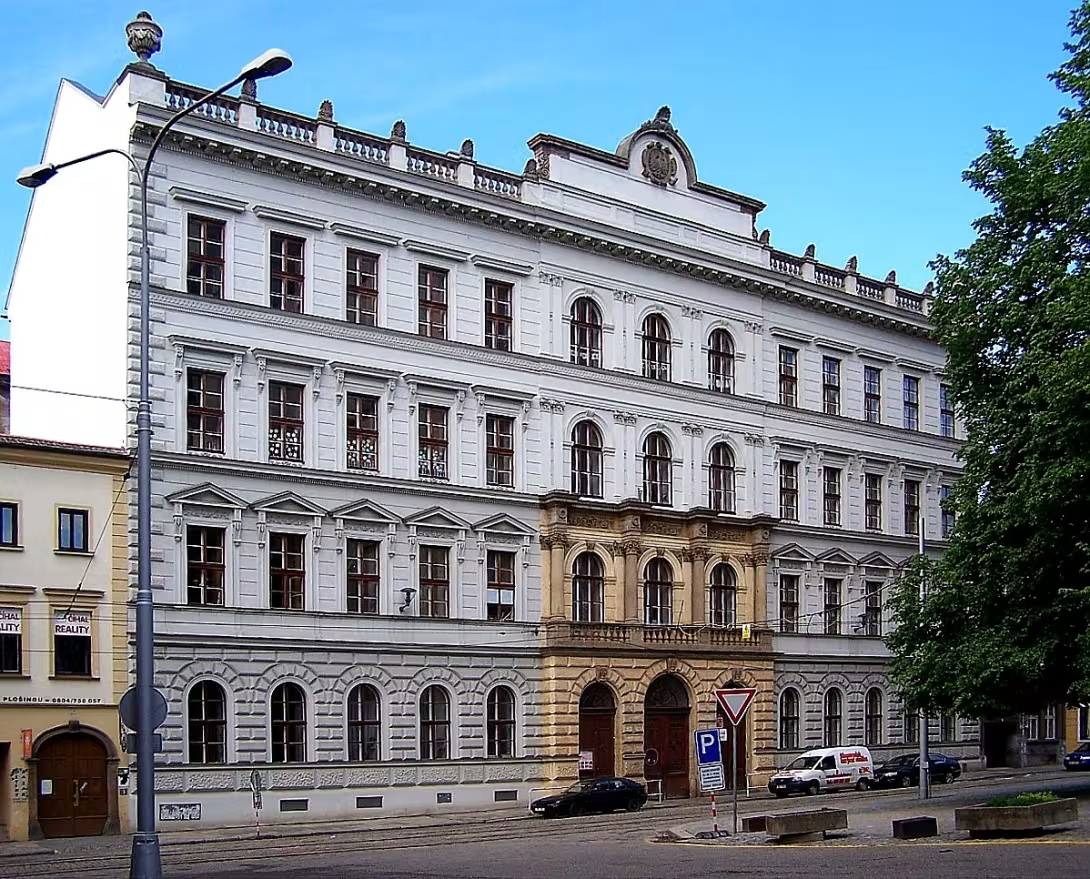
Komenium in Olomouc is a former German real school built between 1873 and 1875, now serving as an elementary and preschool school. This historic building exemplifies the neo-Renaissance style with its grand ceremonial hall adorned by illusionistic and figurative murals. Located near the Church of Saint Maurice on 8. května Street within a municipal heritage reserve, Komenium has been protected as a cultural monument since October 2, 1991.
Constructed at the end of the 19th century in Olomouc, then part of the Austro-Hungarian Empire, during a period marked by historicism, this architectural movement sought to revive past styles. It reflected national pride and identity within the empire. The site chosen for Komenium replaced earlier townhouses due to its accessibility and suitability for educational purposes. The initiative to build this school aimed to enhance the prestige of education in Olomouc and address space constraints faced by existing institutions.
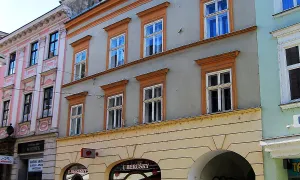
Architecturally, Komenium is a three-story symmetrical structure with four rows of windows divided by longitudinal cornices. Designed by Vincenz Kühn and August Krumholz, it features a central risalit with pilasters that originally held sculptures of notable figures such as Kepler, Comenius, Liebig, and Humboldt—though these were removed for safety reasons during the Protectorate era. The facade is complemented by a richly decorated ceremonial hall inside, showcasing murals in neo-Renaissance decorative style.
Initially serving as a German Realschule, Komenium later housed a girls' municipal school named after World War II. Since 2015, it has been part of the Faculty School of the Palacký University in Olomouc. The building also once accommodated the Industrial Museum of Emperor Franz Joseph I, established in 1873 to promote artistic craftsmanship.
The ceremonial hall is particularly noteworthy for its elaborate illusionistic and figurative murals created by Josef Hilber around 1892. These artworks depict a variety of allegorical scenes, mythological events, and figures within ornamental frames, covering approximately 740 m². The murals were intended to inspire students with the glory of their homeland and exemplify positive human qualities through historical and cultural references.
Today, Komenium remains an active educational facility, featuring classrooms, specialized workshops, a gymnasium, and a hall. Its rich history and architectural significance make it a valuable site for visitors interested in the cultural heritage of Olomouc. The building's preservation as a cultural monument ensures that its historical and artistic contributions continue to be appreciated by future generations. Visitors are invited to explore this remarkable structure and immerse themselves in its storied past.
Then and now
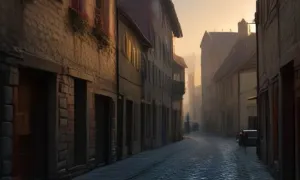
Drag the slider to compare how the landmark may have looked when it was built with the view today.
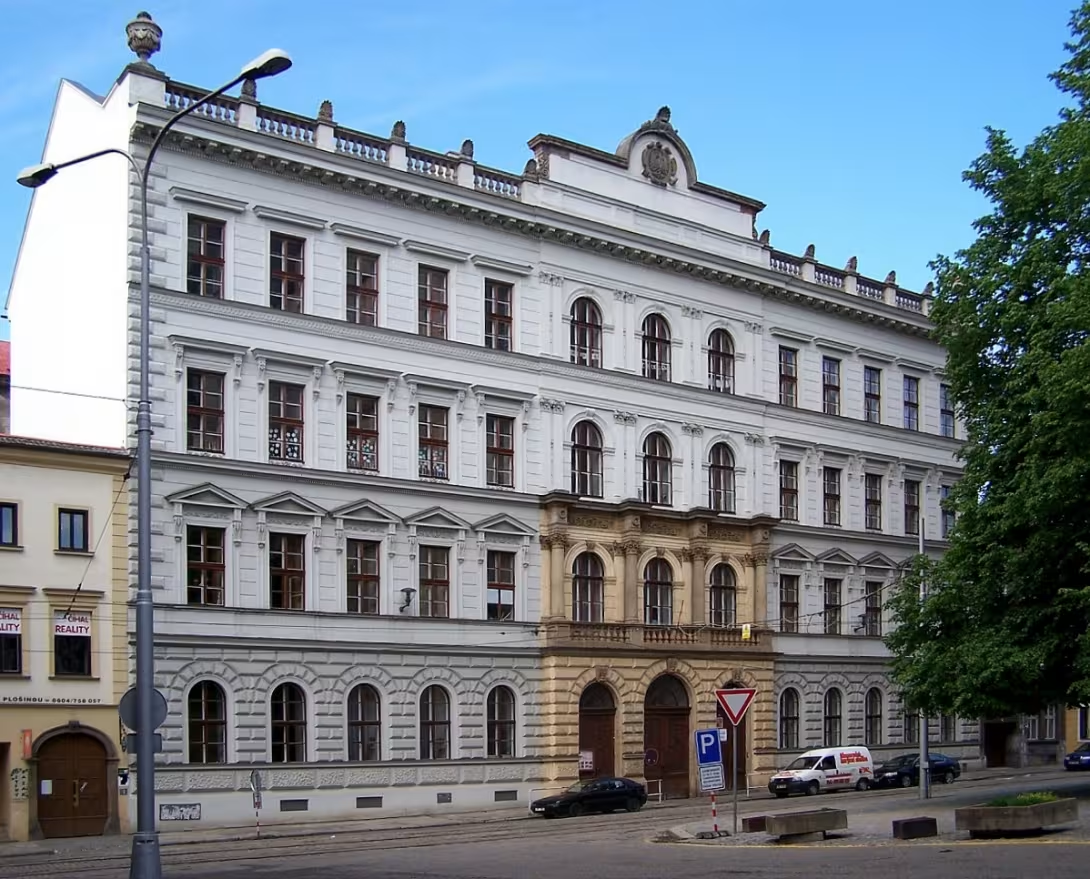
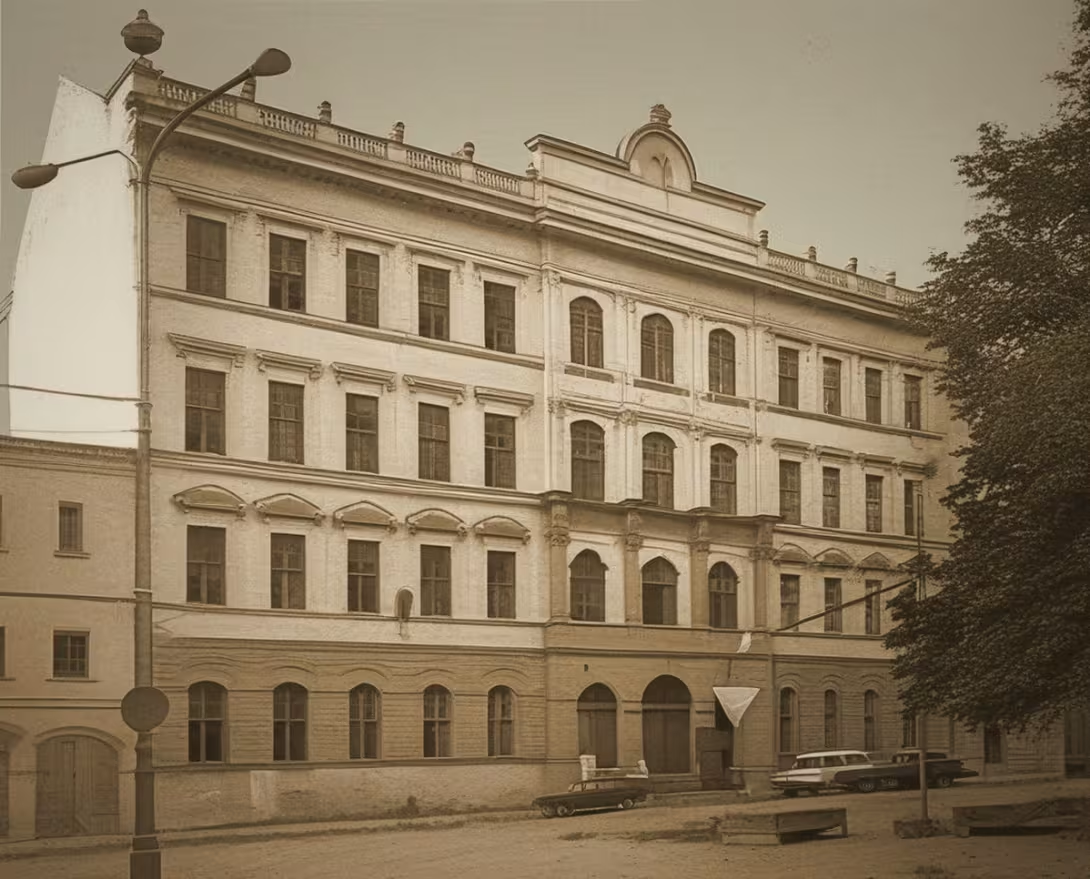
The historical appearance on the left is an AI-generated visualisation and serves as inspiration only.
Historical milestones
- 1873
- Beginning of construction of Komenius as a German real school.
- 1875
- Completion and opening of Komenius as a German real school.
- 1892
- Creation of illusionistic and figurative paintings in the ceremonial hall.
- 1945
- Conversion to a municipal girls' school after World War II.
- 1991
- Protection of Komenius as a cultural monument from October 2nd.
- 2015
- Incorporation into the Faculty School of Palacký University in Olomouc.
Architectural development
Designed by Vincenz Kühn and August Krumholz, the building was constructed with contributions from several architects and craftsmen. The facade features a central risalit with pilasters, originally adorned with sculptures of Kepler, Comenius, Liebig, and Humboldt, which were removed for safety reasons during the Protectorate era. The interior includes an ornate ceremonial hall and various educational facilities.
Historical events
Foundation stone laid in 1873
Official opening on June 20, 1875
Owners
The building was initially used for the German Realschule and later housed a girls' municipal school named Komenium after World War II. Since 2015, it has been part of the Faculty School of the Palacký University in Olomouc.
Points of interest
- The sculptures of notable figures such as Kepler, Comenius, Liebig, and Humboldt that once adorned the central risalit were removed during the Protectorate era for safety reasons, highlighting the building's evolving history.
- Komenium originally served as a German Realschule but later became a girls' municipal school named after World War II, reflecting its adaptive role in Olomouc's educational landscape over time.
- The ceremonial hall inside Komenium is adorned with murals by Josef Hilber that cover approximately 740 m² and were intended to inspire students with the glory of their homeland through allegorical scenes and mythological events.
- Before becoming part of the Palacký University in Olomouc, Komenium housed the Industrial Museum of Emperor Franz Joseph I from its establishment in 1873 until 1895, showcasing a commitment to promoting artistic craftsmanship.
- The building's neo-Renaissance style is characterized by features such as a grand ceremonial hall and symmetrical structure with longitudinal cornices, designed by architects Vincenz Kühn and August Krumholz.
Guide
This guide is narrated by a synthetic voice generated by artificial intelligence.
Show guide text
This text was created by artificial intelligence and has not been editorially reviewed. It may contain inaccuracies.
Welcome in front of Komenius, a beautiful historic building at the heart of Olomouc. You are standing before one of the most significant school buildings in our country and have the opportunity to learn about its rich history and architecture.
Let's go back to 1873 when this building was constructed as a German real school. Its architects, Vincenz Kühn, August Krumholz, Franz Kottas, Adolf Thanbauer, Johann Tebich, Ernst Melnitzky, and Franz Melnitzky aimed to create a structure representing the historicizing neorenaissance style. Indeed, before you stands a beautiful façade with a grand ceremonial hall adorned with illusionistic and figurative paintings in a neorenaissance decorative style.
Now pay attention to the details. Notice how the building opens towards the street, how its façade unfolds and closes like a book. Examine the front where you will find details chosen to support the historicizing style. Observe how the architects tried to emphasize the symbolism and significance of the building.
Let's return to the past and consider one of the most significant figures associated with this building - Emperor Franz Joseph I. He was a great patron of education, and his support was crucial for the construction of Komenius. Although the emperor himself never visited the building, his legacy is still present here.
One interesting fact that may surprise you is that sculptures of famous men such as Kepler, Comenius, Liebig, and Humboldt, which once adorned the main risalit, were removed during the protectorate era for safety reasons. This illustrates how the building has experienced changes in its history.
Now take a look at the interior space where you will find beautiful illusionistic and figurative paintings adorning the ceremonial hall. These paintings are true artistic treasures and should be an unforgettable experience for you.
Thank you for your attention, and I hope you enjoyed our tour of Komenius. If you noticed that the building is full of secrets and history, you're right. And if you noticed there's plenty of space for further exploration, you're right again. So don't hesitate and continue exploring, whether it’s a tour of the interior spaces or strolling around the surroundings.
Frequently asked questions
Can the monument be visited?
Some buildings of this kind are open for guided tours, others serve another purpose or are privately owned. We have not verified whether and when this monument is open – please ask the operator.
What are the opening hours and admission?
We have not verified the opening hours or admission. Current information is published by the operator.
Where is the monument?
Location: Olomouc, Olomoucký kraj. The map on this page shows the exact spot.
Why is the monument protected?
It is listed in the Central List of Cultural Monuments of the Czech Republic as a cultural monument (register no. 1000142316).
Businesses nearby
Do you run a restaurant, accommodation, shop, museum, rental, wellness or other visitor service near this monument? Show yourself directly to the people heading to it — this is how they will see you in the app and on the web:
Events nearby

Zdroj akcí: otevřená data měst a obcí ČR (Národní katalog otevřených dat) a kalendář akcí Národního památkového ústavu.
Nearby
Komenium is located near the Church of Saint Maurice on 8. května Street, within a municipal heritage reserve. The area includes historical buildings and green spaces suitable for educational activities.
Accommodation nearby
Trips and activities nearby
Guided tours, tickets and activities nearby from GetYourGuide
Affiliate link: if you buy from the partner, we may receive a commission. The price for you does not change.
Search tours and activities →Themed route
Historical Olomouc Walking Tour
1. Komenium (školní budova) Komenium is a historic school building that now serves as a cultural and educational center. Its unique architecture and beautiful courtyard make it a must-visit destination.
2. Church of Saint Maurice This beautiful Baroque church is located right next to Komenium and features an impressive tower and ornate interior. Its peaceful atmosphere and stunning architecture make it a perfect spot for reflection and contemplation.
3. Municipal Heritage Reserve The Municipal Heritage Reserve is a charming area surrounding Komenium and the Church of Saint Maurice. It features historic buildings, green spaces, and a tranquil atmosphere, making it an ideal place for a leisurely stroll.
4. 8. května Street This picturesque street is lined with historic buildings and offers a glimpse into Olomouc's rich history. Take a stroll along the street and admire the beautiful architecture and charming atmosphere.
5. Komenium Courtyard The courtyard of Komenium is a hidden gem, featuring a beautiful fountain, ornate decorations, and a peaceful atmosphere. It's the perfect spot to relax and unwind.
Seasonal recommendations
Jaro
In the spring season, Komenium is surrounded by greenery and flowers, creating a pleasant atmosphere. The lighting is mild and natural, allowing visitors to fully enjoy the historic building. We recommend visiting Komenium in the spring season when the weather is enjoyable and the sun shines on the building. The best time to visit Komenium during the spring period is from April to May, when the weather is mild and there are no large crowds of tourists.
Summer
Summer is an ideal time to visit Komenium as it is the main summer season and visitors are in good spirits. The lighting is stronger and nature is in full bloom. We recommend visiting Komenium in June or July when the weather is sunny and warm.
Autumn
In the autumn season, Komenium is surrounded by beautiful colorful leaves and the atmosphere is calm and peaceful. The lighting is mild and natural, allowing visitors to fully enjoy the historic building. We recommend visiting Komenium in the autumn season when the weather is pleasant and the sun shines on the building. The best time to visit Komenium during the autumn period is from September to October, when the weather is mild and there are no large crowds of tourists.
Winter
Winter is a quiet season when Komenium is less visited. The lighting is weaker and nature is calm. We recommend visiting Komenium in the winter season if you enjoy a peaceful environment. It's good to bring warm clothing, as it can be cold. The best time to visit Komenium during the winter period is from November to January, when the weather is cold and there are no large crowds of tourists.
Visualizations and artistic views


The visualisations are generated by artificial intelligence and serve as inspiration.
Photos from the area
Real photos taken near the monument

Zdroj a licence jsou uvedeny u každého snímku.
Tips from visitors
No tips yet. Be the first!
Log in and add your tip.
Sources and literature
Photos: Jan Jenista / CC BY 2.5 — Wikimedia Commons. The author and licence also appear when you hover over the image.
Faktickým podkladem tohoto textu byl článek na Wikipedii, jehož autory jsou přispěvatelé Wikipedie. Článek je dostupný pod licencí CC BY-SA 4.0.
Location on the map
Příběhy a pověsti
Legendy, pověsti a příběhy spjaté s touto památkou
Fotografie návštěvníků
Zatím žádné fotografie. Buďte první, kdo přidá fotografii z návštěvy!
Log in a přidejte svou fotografii nebo hodnoťte.
Za ověřenou návštěvu v aplikaci získáte víc bodů — poznáme podle GPS, že jste na místě.
Reviews and comments