



koncentrační tábor Rabštejn Koncentrační tábor
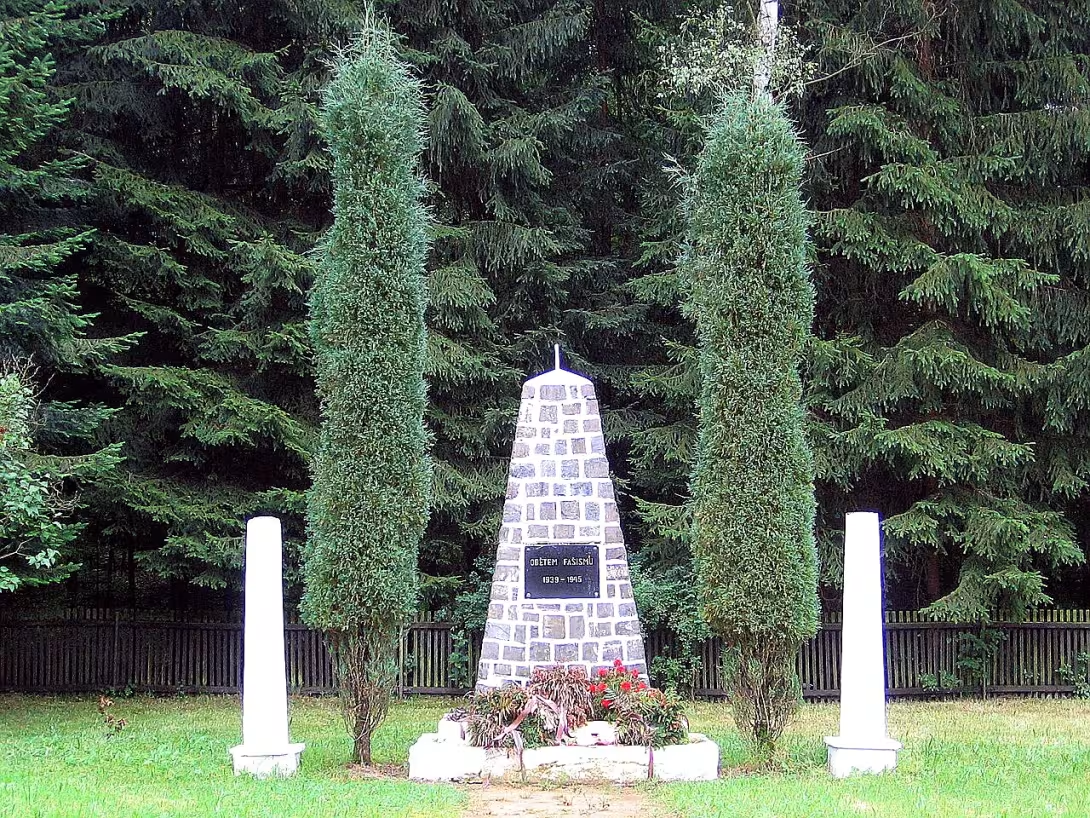
The concentration camp Rabstejn is located in the Kamenice valley west of České Kamenice. This monument resembles the tragedy of World War II. In August 1944, Außenkomando Rabstein was established, whose main purpose was to secure the labour force for the underground plant of Weser-Flugzeugbu GmbH. As a branch of Flossenburg tact, about 650 men from 12 nationalities were imprisoned here, although capacity allowed up to 1400 people to stay. Prisoners were working in inhumane conditions, which was the best result of the death of 56 people.
The tact was closely linked to the needs of the Nazi regime. It was located in the vicinity of the Neo-Bremen work tactic and both were used to produce parts of aircraft and helicopters. The prisoners were forced to dig up the sandstone, which was an exploitative effort. By April 1945, they dug up space of about 17500 m ³ from planned 80,000 m ³.
In terms of architecture, the camp consisted of two accommodation blocks, sick houses and morgues. Outside the guarded area stood a guard with a hostel of SS members and three guard towers. Both German and Romanian SS officers provided security, which was evidenced by the brutal nature of administration.
After the end of the war, the site went through a significant transformation. The premises were used to internalize the detainees of NSDAP, Gestapo, SS and SA, as well as the heads of the Reich authorities and guard units. On 21 October 1945, the internment camp was handed over to the military administration and subsequently cancelled by the District Administrative Commission in Děčín on 11 April 1946. He later served as an internment of the Germans before they were relegated before it was definitively abolished on September 25, 1946.
Today, only the foundations of some buildings have been preserved from the tact. In their vicinity, the memorial stands for the victims of fascism, which resembles the suffering of prisoners. The history of the tact is captured at museum exhibitions in the nearby underground complex of the air factory, which is operated by the citizens' association Rabstejn.
Visiting this place is an important way to realize the horror of the Nazi regime and honor the memory of the victims. The memory resembles the tragedy of individuals and the need to remember history so that similar events do not repeat. The journey to Rabstejn leads to an understanding of the past and recognition of the courage of those who suffered in concentration tactics.
Then and now
Drag the slider to compare how the landmark may have looked when it was built with the view today.
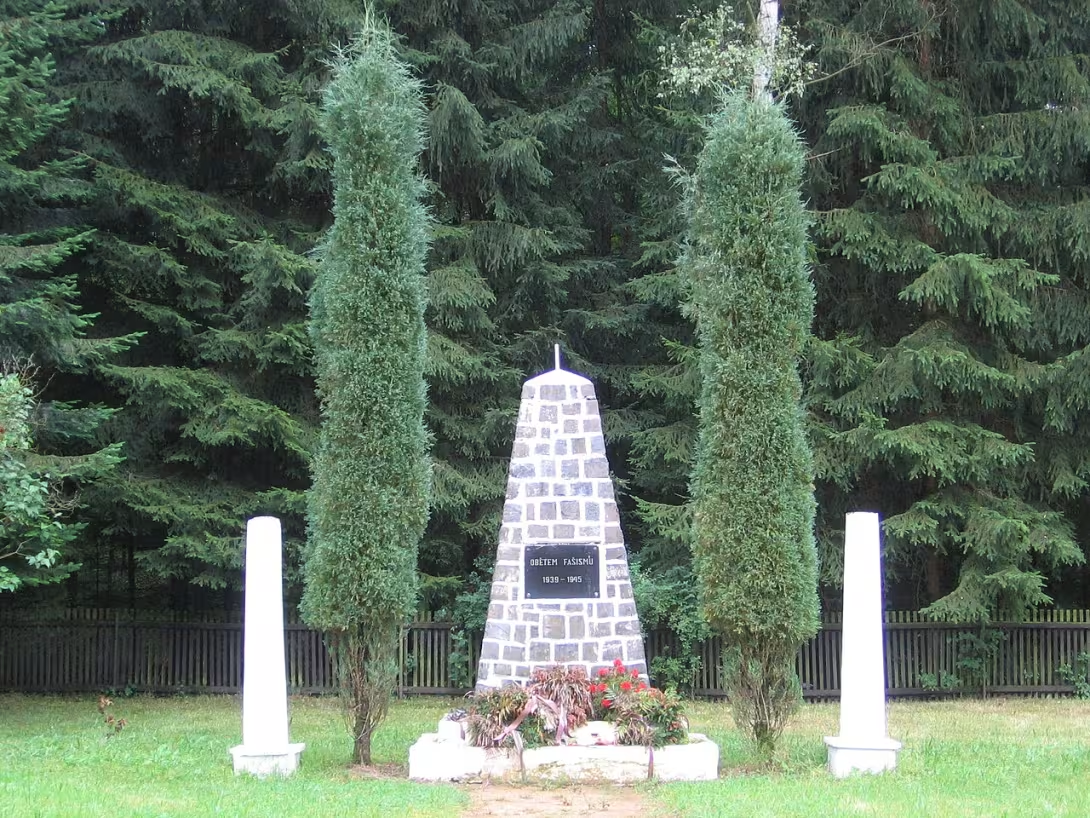

The historical appearance on the left is an AI-generated visualisation and serves as inspiration only.
Historical milestones
- august 1944
- Establishment of a working group in Rabštejn for air production
- april 1945
- End of the main period of hard work in sandstone stones
- october 21, 1945
- Transfer of the internment camp to military administration
- 11 april 1946
- Cancellation of the camp by the District Administrative Commission in Decin
- september 25, 1946
- Final cancellation of the premises
Historical events
- 1944
- The establishment of the Rabstejn concentration camp.
- 1945
- After the end of World War II, the camp was used to internalize NSDAP members and other Nazi regime personalities.
- 1946
- The interstate camp was abolished and served for the internment of the Germans prior to their removal.
Points of interest
- The camp Rabstejn is located in the Kamenice valley west of České Kamenice. - In August 1944, Außenkomando Rabstein was established here, whose main purpose was to provide the workforce for the underground plant of the airline Weser-Flugzeugbu GmbH. Prisoners were working in inhumane conditions, resulting in at least 56 deaths. From the point of view of architecture, the camp consisted of two accommodation blocks, a sick house and a morgue. Today, only the foundations of some buildings have been preserved from the tact. In their vicinity, the memorial stands for the victims of fascism.
Guide
Show guide text
This text was created by artificial intelligence and has not been editorially reviewed. It may contain inaccuracies.
Welcome to a place that requires not only attention, but above all silence and deep inner thought. You are standing in the valley of the Kamenice River, in an area that may be perceived today as calm, green and natural, but its country carries the enormous weight of human suffering. Look around you. You see trees, you feel the humidity, and you hear a distant, constant stream of water. But this beauty of nature is just a thin layer that covers the dark past of this place. What you are seeing in front of you is not just an ordinary landscape, but a vivid testimony of a time when humanity has almost disappeared in this valley. Feel the atmosphere that exists here, feel something invisible, but very strong.
Let's move forward in time together and understand why this place is so important. To understand the tragedy, we must return to August of the year one thousand nine hundred forty-four. At that time, the world was in the flames of World War II and the need to produce weapons and machines for fighting was absolutely absolute. It was at that time that a branch of the Flossenbürg prison camp was established. But it was not just an ordinary prison squad or a working group. This group was created with a very specific and cruel goal. It needed a huge amount of human power to run an underground factory. This factory belonged to a company that specialized in aircraft production. Prisoners were brought here to help build machines to continue destruction in the depths of the earth, in hiding from bombs and air attacks. The whole process was driven by the relentless need of a war machine.
Now pay attention to what you see around you. Although most of the buildings that once stood here have long since disappeared and left behind nothing but emptiness, the very structure of the landscape tells you a story. Feel this position in the valley. Feel the steep slopes approaching the river and the space narrowing. It was here, in these sandstone quarries and stalls, that the most important and terrible took place. Look at these rocks and their structure. That was sandstone, material that was a relentless enemy to the prisoners. Working in these stalls was not only difficult, it was intangible, constantly changing and deadly dangerous. Even if you can't see the walls of those underground spaces today, you have to imagine them. Imagine those narrow, dark corridors, dust that settled in the lungs, and the constant darkness that was the only companion to those who were deployed there. This architecture was not made up of folded stones, but of the very interior of the earth, which was plundered and plundered by prisoners in a constant struggle with hard rock.
Now think about the human dimension of this place. Although the names of many individual people are lost in history and in the dust of time, their suffering is still felt in every piece of stone. Imagine the people who were standing here in the same places as you, but with a completely different fate. They were prisoners who were deployed here to do a job that was superhuman in many ways. They worked in completely inhuman conditions that did not allow a moment of rest, peace or basic human dignity. Hunger, constant cold, and constant fear of death were their everyday reality. Many of them gave their lives here just to make the underground factory work. Every person who died here was a loss this world had no right to ignore. Their lives were sacrificed on the altar of war and the manufacture of machines that were meant to bring destruction. Feel the weight that falls on this valley when you realize how many human tears and pain have been left behind.
If you look at the chronology of events, you'll see how the fate of this place changed in the last months of the war. In April of the year a thousand nine hundred forty-five, the period of the greatest hard work in these sandstone stalls began to close slowly. By approaching the end, the war changed the map and the fate of the people. After the worst stage of work, a new, very vague era occurred. In October of the year one thousand nine hundred forty-five this prison area was handed over to military administration. It was a time of great uncertainty when the old world fell apart and the new world had not yet been formed. The soldiers, the administration, and the people looking for a way out, were here in a chaos ending conflict. The whole area was eventually shut down gradually. At the earliest in April of the year a thousand nine hundred forty-six decided to abolish his district administration in Decin and final, the final end came only in September of the year a thousand nine hundred forty-six, when the entire area was completely removed from this landscape.
There is one interesting thing that can make you think deeply again. Although this area is almost invisible today and most of the tracks have been removed, its shadow still hangs over this valley. It is the secret the country keeps - how nature can return to life so quickly and start to grow again in a place where there was so much pain and where human existence was so suppressed. This invisible presence of history is precisely what makes the visit of this place so strong and so sad. It is the contrast between the infinite life of nature and the fragility of human life.
Now, please, continue to search this valley. Walk through the roads that lead past these rocks and the Kamenice River. Let these images, these sensations and these sad stories go deep. Feel the silence that exists here, and remember those who were not alone here, but were alone in the greatest sense of the word. Every step along this path is a reminder of how important it is to remember even the darkest moments of our history to avoid them in the future. Thank you for joining me on this journey through the dark chapters of history. I wish you a peaceful and deep walk.
Tips for visitors
The best time to visit the Rabstejn concentration camp is from spring to autumn, when the weather is favourable and light suitable for photography. This time of year also offers the best possibilities for exploring surrounding landscapes.
It is advisable to bring drinking and water, as public facilities in the area may be restricted.
When visiting the sights it is important to take with you protective glasses and shoes because the terrain can be unbalanced. In addition, we recommend that you bring a map or use GPS on your phone for better orientation in the area.
For photography it is advisable to visit the memory at noon when the sun illuminates the structures from the outside and allows interesting effects. The best places for photography are on the edge of the Kamenice Valley, where it is possible to capture a panoramic view.
In the vicinity of the Rabstejn concentration camp there are several interesting places that can be visited within short walks. If you have time and taste, we recommend exploring natural parks and historical sites in the surrounding area, which will provide additional context to the monument.
Frequently asked questions
Can the monument be visited?
This is a ruin. Such sites are often freely accessible, but some can only be visited with a guide or are closed for safety reasons. We have not verified the current situation – take care and respect any restrictions.
Why is the monument protected?
It is listed in the Central List of Cultural Monuments of the Czech Republic as a cultural monument (register no. 1000129675).
Businesses nearby
Do you run a restaurant, accommodation, shop, museum, rental, wellness or other visitor service near this monument? Show yourself directly to the people heading to it — this is how they will see you in the app and on the web:
Events nearby

Zdroj akcí: otevřená data měst a obcí ČR (Národní katalog otevřených dat) a kalendář akcí Národního památkového ústavu.
Nearby
🏰 Historic sites (172)
- Obětem fašismu 0.1 km
- Podzemní letecká továrna 0.9 km
- Podzemní letecká továrna 1.2 km web
- Salhausenovský dům 1.9 km
- Obětem 2. světové války 2.0 km
- hrobka rodiny Preidl 2.0 km
- Obětem 1. světové války 2.1 km
- zámek Česká Kamenice 2.1 km
- venkovské zemědělské muzeum 2.8 km
- Kriegerdenkmal 3.2 km
- Památník letecké havárie DC-9 JAT 26. 1. 1972 3.4 km
- Kamenický hrad 3.5 km Komenského 288 web
- Pomník havárie DC-9 JAT 26.1.1972 3.6 km
- zámek Markvartice 4.0 km
- sv. Jan Nepomucký 4.9 km
- Skřivánčí 4.9 km
- bývalý hostinec Scheinebwarte 5.0 km
- Pustý zámek - Fredevald 5.1 km
- Háj Jana Masaryka 5.3 km
- Hasičské muzeum 5.3 km
🍽️ Restaurants and dining (245)
- Stop Cafe 1.3 km web
- U Slunce 1.7 km
- Na Ráně 2.0 km
- Hostinec Veselé 2.0 km
- Hvězda 2.0 km
- Na Pokec 2.0 km
- Pivovar a Palírna 2.0 km Pivovarská 3 +420 773 344 930 web
- U Nádraží 2.0 km
- Starý klub 2.1 km Žižkova 243
- Cukrárna Jana Koníková 2.2 km Náměstí Míru 124 +420 608 560 291 web
- Čokafe 2.2 km
- kebab 2.2 km
- Hosana 2.3 km +420608842998
- Bistro U Vondráckû 2.4 km
- Občerstvení Jája 2.4 km
- U Trpaslíků 2.4 km
- Obecní dům 2.6 km
- Pension Vyhlídka 2.9 km
- Hospůdka Aljaška 2.9 km
- Restaurace Les 3.1 km +420 604 793 183 web
🏨 Accommodation (146)
- U Kašny 2.2 km
- Slavia 2.2 km
- Camp Pod Lesem 2.6 km web
- Pension Yehla 2.6 km Dukelských hrdinů 396 +420777330879 web
- Camp Pod Lesem 2.6 km
- Kemp Vyhlídka 2.9 km
- Penzion Vyhlídka 2.9 km
- Autokemp Aljaška 2.9 km web
- Autokemp Aljaška 2.9 km
- Penzion Les 3.1 km +420 604 793 183 web
- Turistická ubytovna 3.1 km
- Penzion U Kostela 3.2 km
- Vesna 3.2 km
- Autokemp Česká brána 3.3 km +420 412 555 094 web
- Rosalka 3.8 km +420 739 674 766 web
- Penzion Pohoda 3.9 km Všemily 24
- U Ferdinanda 4.6 km Srbská Kamenice 148 +420 737 147 230 web
- Autokemp Jetřichovice 4.7 km web
- Chata Plechovka 5.4 km
- Hotel Bellevue 5.7 km +420 412 555 022 web
🚲 Rentals and sport (22)
- Cyclosport 2.1 km
- Městské koupaliště 2.2 km
- Kuželky 3.0 km
- Střelnice Ludvíkovice 7.6 km
- Pumptrack Růžová 8.0 km Růžová 319
- Biotop Nový Svět 8.5 km
- HUDYsport a.s. 8.8 km
- Půjčovna koloběžek 8.8 km +420 724 074 038
- KURSPORT 8.8 km
- Termální koupaliště 9.2 km
- Koupaliště Horní Police 11.1 km
- Zimní stadion 12.1 km Oblouková 638/21
- Sportisimo 12.3 km Oblouková 1395/4 +420 226 292 537 web
- střelnice 12.8 km
- Labská plavební - Děčín - Hřensko - Dráždany 12.8 km
- Hudy Sport 12.8 km +420 412 554 086 web
- Cyklopůjčovna, ferratové sety 12.9 km +420 739 561 932 web
- ČD bike 13.4 km
- Lanový park Jedlová 13.7 km web
- Střelnice 14.2 km
🥾 Hiking and nature (1606)
- Ptáčník 0.7 km
- výhled na Lužické hory a Markvartickou kotlinu 0.7 km
- malý lom 0.7 km
- umělý vodopád 0.8 km
- výhled na Růžovský vrch 0.8 km
- výhled na Růžovský vrch 0.8 km
- soutěska 0.9 km
- Filipovská věž 1.0 km web
- Maják 1.2 km
- studánka 1.3 km
- soutěska 1.3 km
- Strážný vrch 1.5 km
- Vlčí ranč 1.6 km
- Vyhlídka 1.6 km
- vyhlídka nad soutěskou 1.7 km
- Hájek 1.7 km
- Titanic 1.7 km
- Miláškův převis 1.8 km
- Strážiště 2.0 km
- Sedlo 2.0 km
Accommodation nearby
Trips and activities nearby
Guided tours, tickets and activities nearby from GetYourGuide
Affiliate link: if you buy from the partner, we may receive a commission. The price for you does not change.
Search tours and activities →Themed route
Thematic cruise route Rabstejn
1. Concentration Camp Rabstejn - Type: Historical landmark - Why is it worth a visit: This camp was one of the most famous border prisons of the Nazi regime. Visit him to understand tragic historical events and honor the victims.
2. Memorial on the attack on March 27, 1945 - Type: Memorial This memorial is dedicated to American soldiers who attacked the camp and helped free the prisoners. It's a place of worship for heroism and resilience.
3. Military Cemetery Rabstejn - Type: Cemetery - Why is it worth a visit: this cemetery is the place of buried soldiers who fell during the liberation of the camp. It's a place for peace and memory of those who have lost their lives fighting for freedom.
4. Exhibition in prison building - Type: Exposure - Why is it worth visiting: Exposure provides a detailed view of life and conditions in concentration camp. It's a valuable source of information on historical events.
5. Park around the camp - Type: Park - Why is it worth a visit: The park offers a quiet space to reflect and relax after intense information trips. It's a place where you can enjoy the natural beauty of the surroundings.
This route offers a comprehensive view of the historical memory and its immediate environment, allowing a deeper understanding of the tragic events of the past.
Seasonal recommendations
Spring: In the spring season, koncentrační tábor Rabštejn appears in a beautiful green dress when shrubs and trees begin to bloom. Sun rays illuminate old bricks with new light, which contributes to the atmosphere of reflective calm. When visiting, it is advisable to wear light clothes with the possibility to add a layer for a cooler afternoon because temperatures can change quickly. Visit the camp in the early afternoon when the sun is at its highest level and there is minimal flow of people.
Summer: Summer brings long days of light, allowing you to explore the memory in full. Intense sunlight can cause fire on stones and roads, so it is advisable to use protective legs or boots with hard soles. Hot requires light, light clothes and sufficient hydration. The best time to visit is in the early morning or in the evening when temperatures fall and the atmosphere becomes quiet.
Autumn: In autumn, koncentrační tábor Rabštejn is transformed into coloured flames of golden and red leaves, which contributes to a melancholy view. The end of the day brings short lighting conditions, so it is advisable to carry light or backpacks with them with lighting for safe return home. Clothes should be laminated, as temperatures can rapidly deteriorate and rain occurs. The best time to visit is in the early afternoon, when the atmosphere is calm and leaves lying on the road provide an interesting feeling.
Winter: Winter moons bring cold air and snow sheets that can cloud the ruins of the concentration camp. The light is paler and longer nights offer a melancholy view of the memory under the starry sky. It is important to carry warm clothes, including hat and gloves, and high insulation shoes to protect against cold surfaces. The best time to visit is on the middle of the day when the sun is in the highest place to provide enough light and heat to explore the sights.
Visualizations and artistic views


The visualisations are generated by artificial intelligence and serve as inspiration.
Photos from the area
Real photos taken near the monument

Zdroj a licence jsou uvedeny u každého snímku.
Tips from visitors
No tips yet. Be the first!
Log in and add your tip.
Sources and literature
Photos: Radek Bartoš / CC BY 3.0 — Wikimedia Commons. The author and licence also appear when you hover over the image.
Faktickým podkladem tohoto textu byl článek na Wikipedii, jehož autory jsou přispěvatelé Wikipedie. Článek je dostupný pod licencí CC BY-SA 4.0.
Location on the map
More monuments – Ústecký kraj
Show all in the region
Příběhy a pověsti
Legendy, pověsti a příběhy spjaté s touto památkou

Fotografie návštěvníků
Zatím žádné fotografie. Buďte první, kdo přidá fotografii z návštěvy!
Log in a přidejte svou fotografii nebo hodnoťte.
Za ověřenou návštěvu v aplikaci získáte víc bodů — poznáme podle GPS, že jste na místě.
Reviews and comments