






Košťálov (Jenčice) Ruin
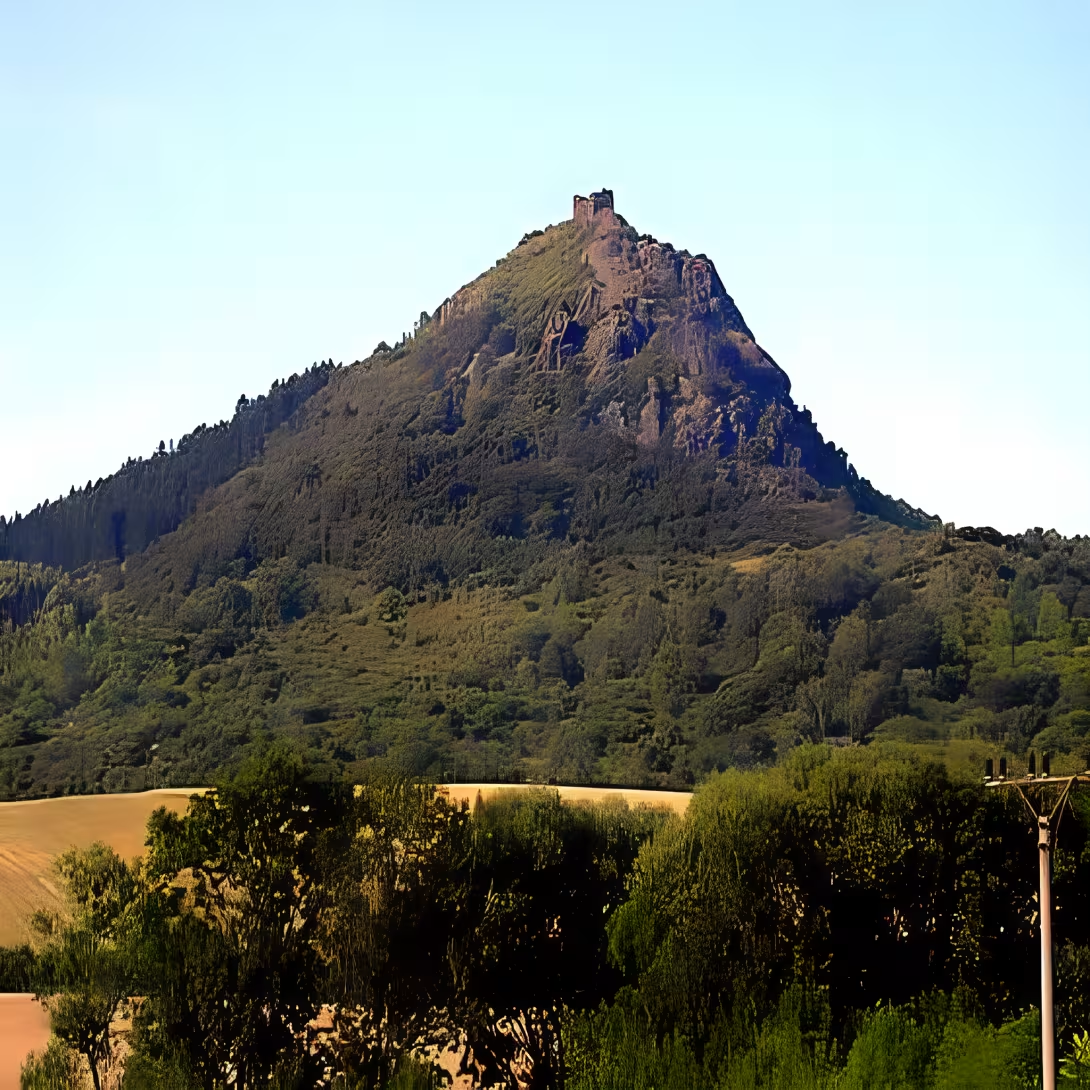
Koštálov is a destroyed chateau of the Donjon type in Western Czech Central Uplands near Třebenice. The first mention in 1372 documents, probably dates back to the beginning of the 14th century. The Kaplour family associated with it used it as a noble house until the beginning of the 17th century. It has been protected as a cultural monument since 1964.
The chateau was founded in the early 14th century when Bohemia was part of the Holy Roman Empire under King John of Luxembourg. Although the exact date of construction is undocumented, historical sources suggest that it could have been built in the first half of this period. The first known mention dates back to 1372, when Aleš mladší ze Slavětína was one of the first owners. While the specific details of its original builders are not known, Broomstick is often associated with prominent families such as Kaplířové ze Sulevic.
It has an architectural structure of the Donjon type with different top and bottom covers. The main residential and defence building was a three-story rectangular palace in the upper part of the department. This pallet structure included a knight's hall on the second floor with four windows on opposite sides. The lower section contained at least two residential buildings and other economic structures, all fortified for domestic and defence purposes.
Owning has passed through several important families for centuries. Initially associated with Aleš mladší ze Slavětína in the late 14th century, it later became associated with the Chaplin family at least at the end of the 15th century. By 1486, three brothers from this family divided their living quarters: Zdislav in the palace of the upper part and Dobš and Jan in separate buildings in the lower part. The chateau remained under their possession until 1609 when Adam from Vchynic won it.
In all his history Koštělov witnessed important events such as the Hussite army near him during the Hussite wars in 1422. This period was manifested by religious and military shocks across the Czech Republic. Despite these stormy times, the chateau continued to serve as a noble house until it gradually became useless until the 17th century.
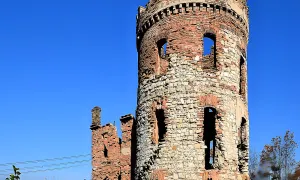
Today, Koštálov is a cultural monument, although its state reflects years of neglect. The walls of the upper palace are deteriorating and many architectural details have been lost over time. Vegetation has overtaken parts of the site, which makes some areas difficult to access. Despite these challenges, the chateau remains an interesting destination for visitors interested in history and architecture.
Koštálov offers a glimpse into medieval life and the strategic importance of such buildings during its best years. Its romantic location in the picturesque Czech Central Uplands adds to its charm, making it a useful visit for those who are fascinated by historical ruins and their stories. The connection of the chateau with remarkable figures such as Karel Hynek Mácha and Emil Filla, further increases its cultural importance and invites visitors to explore its historical past.
Then and now
Drag the slider to compare how the landmark may have looked when it was built with the view today.
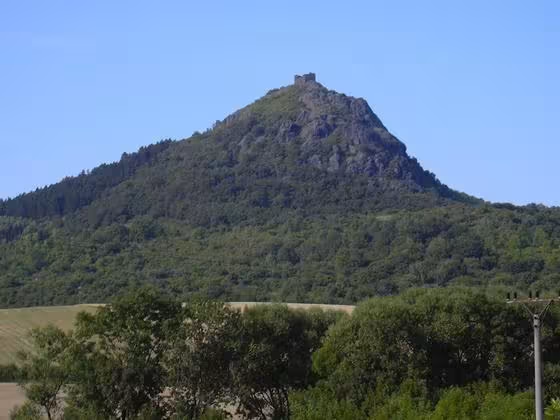
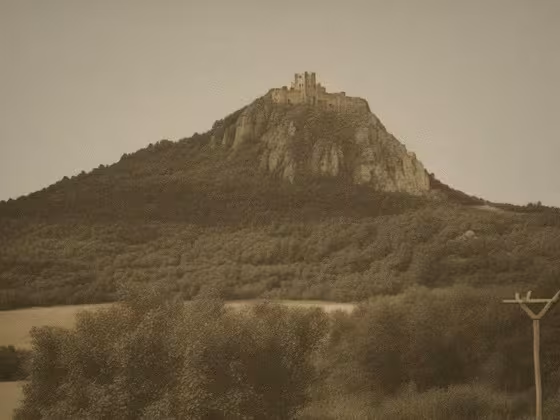
The historical appearance on the left is an AI-generated visualisation and serves as inspiration only.
Historical milestones
- 1372
- The first documented mention of Koština.
- 1422
- The Hussite army was camping near the chateau.
Architectural development
The broomstick has a structure of the donjon type with upper and lower edges. The main residential and defence building was a rectangular palace in the upper part, originally three floors high. The lower department included at least two residential buildings and other economic structures.
Historical events
In 1422, the Hussite army camped out near the chateau during Hussite wars.
Until 1486, the chateau still worked as a noble house with three Kaplir brothers who divided its premises.
Owners
The oldest known owner is Aleš mladší ze Slavětína, listed in 1372-1380. The Kaplur family owned it from at least the end of the 15th century to 1609, when Adam from Vchynic acquired it.
Points of interest
- Although Košták is primarily associated with the Kaplířové ze Sulevic family, it was originally connected with Aleš mladší ze Slavětína at the end of the 14th century, which underlines a significant transfer of ownership that reflects wider feudal dynamics.
- During the Hussite Wars in 1422, the Hussite Army passed near Koštělov. This proximity thus underlines the strategic location of the chateau at the time of religious and military upheaval in Bohemia.
- The division of the chateau between three brothers from the Kaplour family until 1486 illustrates the medieval practices of inheritance and property management, where heirs and noble residences are inherited for practical purposes.
- Despite its decline in non-use at the beginning of the 17th century, Košov's association with characters such as Karel Hynek Mácha and Emil Filla adds layers of cultural importance beyond its architectural history and combines them with broader artistic and literary traditions in Czech culture.
- The designation of the chateau as a protected cultural monument since 1964 reflects the modern efforts to preserve historical monuments, although Košuvalov faces challenges from natural deterioration and overgrowth of vegetation, which covers many of its original features.
Guide
This guide is narrated by a synthetic voice generated by artificial intelligence.
Show guide text
This text was created by artificial intelligence and has not been editorially reviewed. It may contain inaccuracies.
Welcome to the historical site Koštělov in Jenčice, located in the picturesque western half of the Czech Central Uplands near Třebenice. As you stand here, imagine the remains of one majestic chateau of Donjon-type that extends before your eyes - proof of its legendary past and architectural grandeur.
Koštálov appeared for the first time in historical documents from 1372, which suggests that its origin is probably until the 14th century. For a long time, this site stood as a silent witness to the mouth and flow of history, serving as a noble house for the influential family of the Kaplich until the dawn of the 17th century. Its importance was recognised when it was declared a cultural monument in 1964.
As you are in your surroundings, notice how the ruins of the chateau make you feel timeless, with nature restoring your territory for centuries. The architecture here speaks of medieval fortifications - imagine walls that once stood tall and proud, now softened by age and weather. Look around to appreciate the remains of what was once an impressive fortress.
The history of Koštělov is intertwined with remarkable characters such as the family Kaplířové ze Sulevic, which played a key role in its legacy. At the beginning, however, it was connected to Aleš mladší ze Slavětína at the end of the 14th century, which means a significant transfer of ownership which reflects wider feudal dynamics.
An interesting chapter from Koštinov's past involves the Hussite Wars. In 1422, the Hussite army camped near this place - a reminder of its strategic importance in stormy times.
At the end of our journey through time to Koštělov, I urge you to continue to explore and imagine the lives that once arose here. Let your curiosity guide you as you uncover more layers of history in this remarkable place. Thank you for joining me in this auditory survey, and let it inspire deeper recognition for the rich tapestry of our common past.
Businesses nearby
Do you run a restaurant, accommodation, shop, museum, rental, wellness or other visitor service near this monument? Show yourself directly to the people heading to it — this is how they will see you in the app and on the web:
Events nearby



Zdroj akcí: otevřená data měst a obcí ČR (Národní katalog otevřených dat) a kalendář akcí Národního památkového ústavu.
Nearby
Koštálov is located near Třebenice and in the picturesque landscape of the Czech Central Uplands and offers views of the surrounding natural elements.
Accommodation nearby
Trips and activities nearby
Guided tours, tickets and activities nearby from GetYourGuide
Affiliate link: if you buy from the partner, we may receive a commission. The price for you does not change.
Search tours and activities →Themed route
Thematic tour of the itinerary: Exploring the ruins of Koštílov and surrounding areas
1. Košťálov (Jenčice) - Castle Ruin - * Type: * Historic site - * Why Visit: * The beginning of your journey in the captivating ruins of Koštělov, medieval chateau ruins tucked away in history. This site is located on the hill with panoramic views of the Czech Central Uplands, offering a look into the past and an opportunity to explore its well preserved remains. The surrounding landscape provides a picturesque background that increases the historical importance of ruins.
2. Třebenice - Village - * Type: * Cultural experience - * Why Visit: * A short walk from Koštělov, Třebenice is a charming village known for its traditional architecture and calm atmosphere. As you go through this picturesque place, dive into the local culture and history that pervades this area. The proximity of Koštělov makes an ideal stop to enjoy rural life while also reflecting the historical context of chateau ruins.
3. Jenčice - Village - * Type: * Community survey - * Why Visit: * Continue your survey, visit Jenčice, the village that hosts the ruins of the Koštělov. This village provides a deeper understanding of the local community and its connection to the historical site. Discover the everyday life and traditions of this area, which adds another layer to the story of Koštěl's past. The village environment offers a quiet environment for reflection after exploring chateau ruins.
This itinerary invites you to travel through time, connecting with the history of Koštělov while experiencing the magic and culture of its neighboring areas.
Seasonal recommendations
Spring: In the spring proceedings, Kostěné Square offers only one experience where historical rugie decreases with live bow. Green meadows and growing bushes deliver a new product, which makes idyllic production for products. Sunshine Spring Days may be an ideal time for difficulty, but it is advisable to substitute for more rain or cold services. If we plan to pass through this season, we deliver a layer suit and declare zero estimated coats. Despite the possible instrument of the crowd, spring will usually be the calm of the non-summer city, which allows the permitted dose.
Summer: The Kostěl takes attractive doses of the day and the warmth of the sunny world, which has architectural guarantees of ruin in the most beautiful colors. Nature is at the top of its own beauty with thick greenery and a bush with a romantic character. However, things can be expected to relate, particularly at school of the day. We recommend arriving early in the morning or later in the evening to avoid heat and davom. Nose rounded suitable for sunny warm time in which he steals from the coat before UV radiation, and do not lay with the drinking fluid filling.
Autumn: Autumn essentials Kostěné offered a unique atmosphere, which leaves trees on marked and rumé bars. This season is ideal for photographers because sunny days provide beautiful enlightenment and the event offers a spectacular evaluation. The translated autumn can be cold and wet, included calmness is not in summer currencies, which from the introduction of some experience. It is reported that it is not necessary to implement the measures and may also rain on direct aid. Short, sunny days also characterized by planned activity with the designation of the early belt of the sun.
Winter: In the country, the Broomstick offers a unified atmosphere where historical ruins are projected in a quiet and quiet setting covered with a dream. The remaining number of translated dramatic awards to the architectural chateau, which has its own romantic and mystical feeling. However, cold temperatures and possible closure of some roads due to snow or ice should be taken into account. If it is not possible to use other methods, other methods may be used. It should be provided that this Regulation is binding in State aid.
Visualizations and artistic views


The visualisations are generated by artificial intelligence and serve as inspiration.
Photos from the area
Real photos taken near the monument

Zdroj a licence jsou uvedeny u každého snímku.
Tips from visitors
No tips yet. Be the first!
Log in and add your tip.
Sources and literature
Fotografie: Miraceti / CC BY-SA 3.0, rozlišení zvýšeno umělou inteligencí — Wikimedia Commons. The author and licence also appear when you hover over the image.
Faktickým podkladem tohoto textu byl článek na Wikipedii, jehož autory jsou přispěvatelé Wikipedie. Článek je dostupný pod licencí CC BY-SA 4.0.
Location on the map
More monuments – Jenčice
Show all in the municipality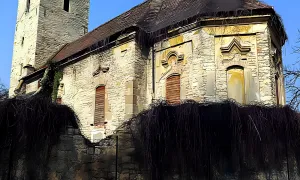
Příběhy a pověsti
Legendy, pověsti a příběhy spjaté s touto památkou

Fotografie návštěvníků
Zatím žádné fotografie. Buďte první, kdo přidá fotografii z návštěvy!
Přihlaste se a přidejte svou fotografii nebo hodnoťte.
Za ověřenou návštěvu v aplikaci získáte víc bodů — poznáme podle GPS, že jste na místě.
Reviews and comments