






Kostel Božího Těla (Bludov) Church
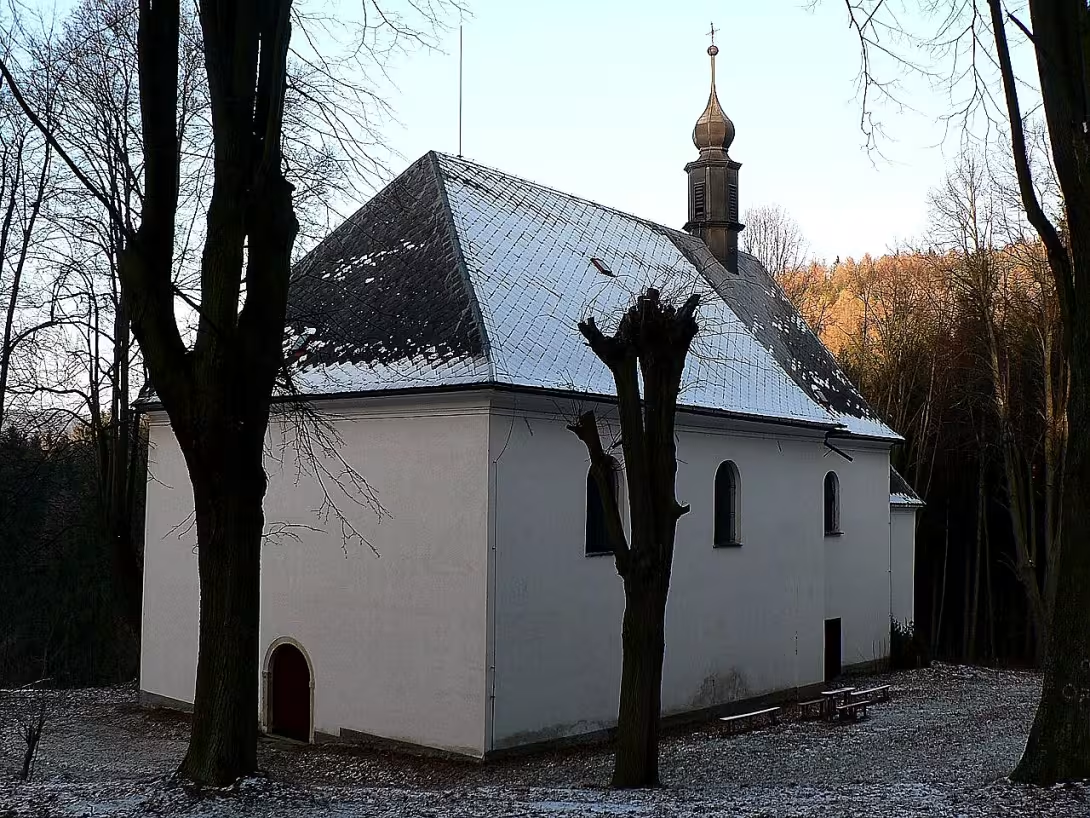
The Church of the Corpus Christi in Bludov is a Baroque pilgrimage church nestled within serene woods between Bludov and Hrabenov villages in the Olomouc Region of the Czech Republic. This historical monument exemplifies religious devotion, community resilience, and architectural evolution from its medieval origins through significant transformations in the 17th and 18th centuries. Its importance is highlighted by its role as a pilgrimage site since at least the mid-16th century, enduring closure attempts during Emperor Joseph II's Habsburg reforms.
The church dates back to the 14th century when it was first established as a medieval structure. Over time, it became an important religious site, mentioned in records from 1553 and 1567 under Bedřich ze Žerotína's ownership. The Thirty Years' War brought destruction by Swedish forces, leading to its reconstruction into the Baroque style between 1720 and 1724. This period marked a significant architectural transformation, reflecting broader religious and political changes in Bohemia during the Baroque era.
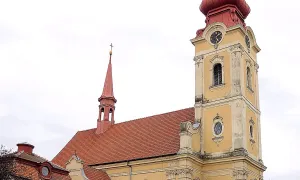
Architecturally, the Church of the Corpus Christi features seven windows, three entrances, and an elegant bell tower. Its current form was achieved after reconstruction in 1724 following wartime destruction. Further modifications occurred in 1835 when it transitioned to the Neoclassical style, adding a partially collapsed vault and an annexed sacristy with living quarters.
Ownership shifted from Bedřich ze Žerotína to the Lichtenstein-Castelcorn family in the late 17th century. Despite facing closure under Emperor Joseph II's reforms in 1782, local efforts ensured its preservation. The church also hosted hermits from the Third Order of St. Francis nearby until their order was dissolved that year.
Key events include its mention as a pilgrimage site and survival through imperial closure attempts. A captivating legend involves a peasant woman who inspired the church's construction after a miraculous event with a sacramental host transformed into a wax monstrance by bees.
Today, the Church of the Corpus Christi stands on Háj hill, surrounded by natural landscapes and complemented by nearby features such as the Chapel of Our Lady of Lourdes. Its historical significance, architectural beauty, and enduring legacy as a pilgrimage site make it a worthwhile visit for those exploring the rich cultural tapestry of the Czech Republic.
The Church of the Corpus Christi in Bludov is not only an architectural marvel but also a symbol of faith and community spirit. It invites visitors to delve into its storied past, appreciate its artistic form, and reflect on the enduring power of belief and tradition.
Then and now
Drag the slider to compare how the landmark may have looked when it was built with the view today.
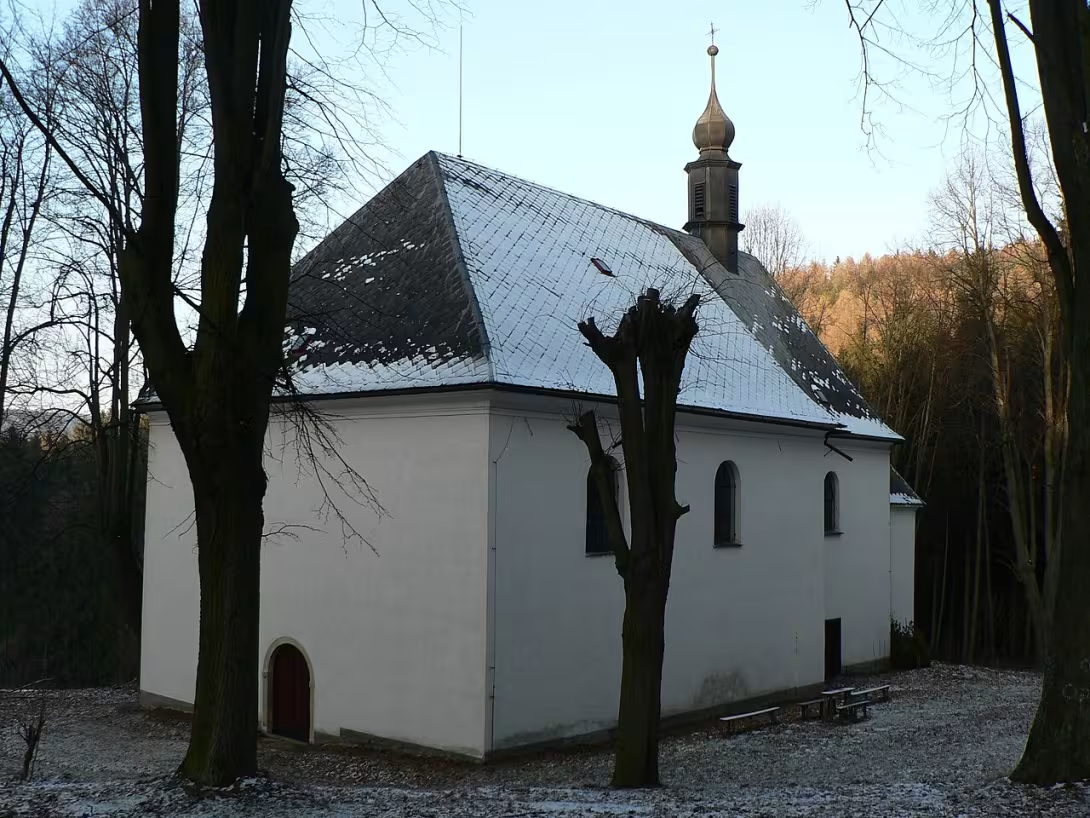
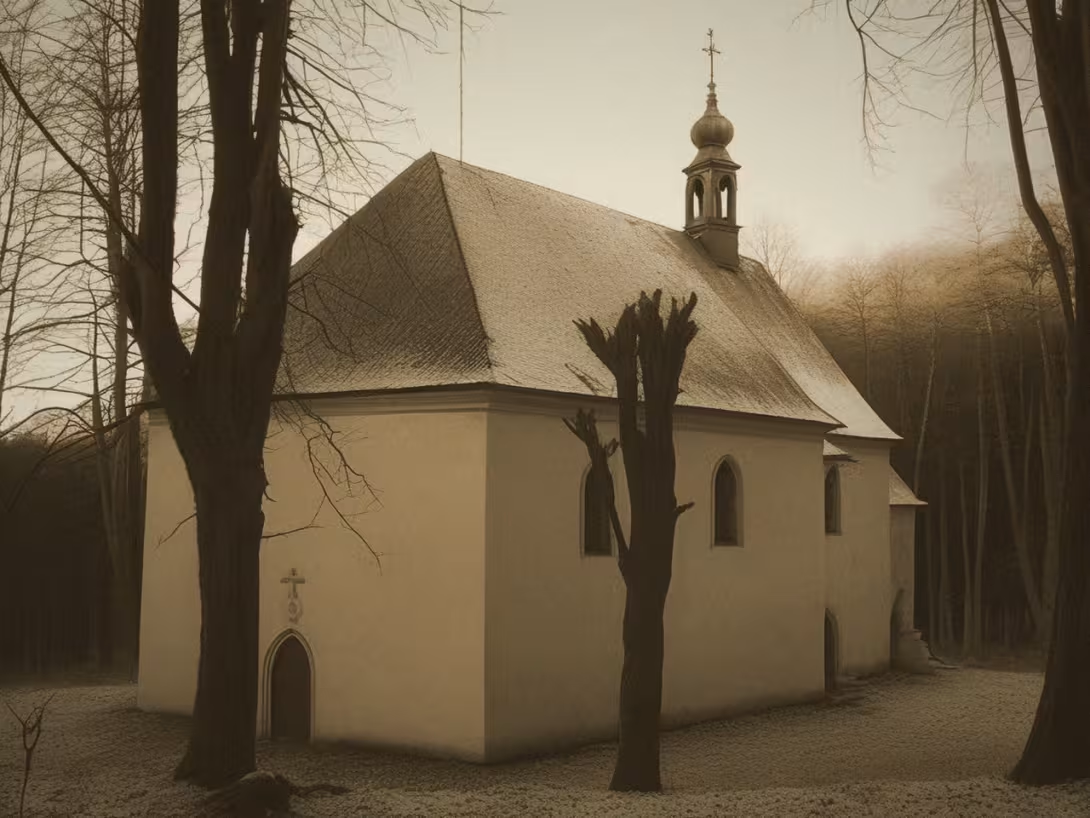
The historical appearance on the left is an AI-generated visualisation and serves as inspiration only.
Historical milestones
- 1553
- The church is first mentioned as a pilgrimage site.
- 1567
- Mentioned again in records of Bedřich ze Žerotína.
- 1724
- Rebuilt into its current Baroque form.
- 1782
- Closure ordered by Emperor Joseph II.
Architectural development
The church originated as a medieval structure, likely from the 14th century. It was rebuilt into its Baroque form in 1724 after destruction during the Thirty Years' War. Further modifications included the addition of a partially collapsed vault and an annexed sacristy with living quarters in 1835.
Historical events
The church is mentioned as a pilgrimage site in records from 1553 and 1567.
It was destroyed during the Thirty Years' War by Swedish forces.
Rebuilt in its current form in 1724, it faced closure in 1782 due to Joseph II's reforms.
Owners
The church was initially owned by Bedřich ze Žerotína in the mid-16th century. After being rebuilt by the Lichtenstein-Castelcorn family in the late 17th century, it faced closure under Emperor Joseph II's reforms in 1782 but was preserved thanks to local efforts.
Points of interest
- A captivating legend tells of a peasant woman who inspired the church's construction after witnessing a miraculous event where a sacramental host transformed into a wax monstrance by bees.
- Despite attempts to close it during Emperor Joseph II’s Habsburg reforms, local community efforts were pivotal in preserving the Church of the Corpus Christi as an active place of worship and pilgrimage.
- The church once hosted hermits from the Third Order of St. Francis until their order was dissolved in 1782, adding a layer of monastic history to its legacy.
Guide
This guide is narrated by a synthetic voice generated by artificial intelligence.
Show guide text
This text was created by artificial intelligence and has not been editorially reviewed. It may contain inaccuracies.
Welcome to the enchanting site of Kostel Božího Těla in Bludov. As you stand here on the western slopes of Háj hill, take a moment to absorb the serene beauty that surrounds this Baroque pilgrimage church. The gentle play of light through its seven windows and the inviting sight of three entrances beckon your curiosity.
This sacred site has stood as a testament to faith and resilience for centuries. Originally constructed in the 14th century, it was first mentioned in historical records as a pilgrimage destination in 1553. By 1567, it had caught the attention of Bedřich ze Žerotína, further cementing its significance in local lore. The church underwent transformative reconstruction in 1724, emerging with its current Baroque elegance that captivates visitors to this day.
As you gaze upon the charming Baroque bell tower, imagine the hands and hearts that shaped it over centuries. While the architects remain unknown, their vision is evident in every detail of the structure. Notice how the architecture harmonizes with nature, creating a peaceful sanctuary for reflection.
The church's history intertwines with notable figures such as Bedřich ze Žerotína and later Lichtenstein-Castelcornové, who played roles in its storied past. Yet it was Emperor Joseph II’s attempt to close the church in 1782 that truly tested the community’s resolve. Despite these challenges, local efforts ensured the church remained a beacon of devotion.
Now, let your imagination wander as you hear about a captivating legend associated with this site. It speaks of a peasant woman inspired by a miraculous event: a sacramental host transformed into a wax monstrance by bees. This tale adds an aura of mystique and wonder to your visit.
As we conclude our journey here at Kostel Božího Těla, I invite you to explore further, letting the history and legends envelop you in their rich tapestry. Thank you for joining me on this exploration, and may your time here inspire reflection and awe.
Tips for visitors
The best time to visit Kostel Božího Těla in Bludov is during the late spring or early fall, when the weather is mild and pleasant for exploring the surrounding natural landscapes of Háj hill. Visiting during these seasons allows you to enjoy outdoor activities without the discomfort of summer heat or winter cold. Additionally, these times often coincide with local festivals or events that can enhance your experience.
Parking near Kostel Božího Těla is generally accessible from the surrounding roads leading up to Háj hill. For those preferring public transportation, it's advisable to check current bus routes and schedules as they may offer convenient access to Bludov. Always verify the latest transport options online before your visit.
When visiting Kostel Božího Těla, consider bringing comfortable walking shoes for exploring the area around Háj hill, especially if you plan on hiking or taking longer walks in the natural surroundings. A camera is also recommended to capture the beautiful Baroque architecture and scenic views. Don't forget a light jacket or sweater as temperatures can vary, particularly during early mornings or evenings.
For photography enthusiasts, the best spots for capturing Kostel Božího Těla are from the hilltops surrounding Háj hill, where you can get panoramic views of the church and its Baroque features. Early morning light provides a soft glow that enhances the architectural details, while late afternoon offers dramatic shadows and warm tones.
Nearby attractions within 30 minutes include the chapel dedicated to Our Lady of Lourdes, built in 1905, which is worth visiting for its serene atmosphere and historical significance. The natural landscapes around Háj hill also offer opportunities for leisurely walks or picnics, making it a perfect spot for families with children.
Businesses nearby
Do you run a restaurant, accommodation, shop, museum, rental, wellness or other visitor service near this monument? Show yourself directly to the people heading to it — this is how they will see you in the app and on the web:
Events nearby
Zdroj akcí: otevřená data měst a obcí ČR (Národní katalog otevřených dat) a kalendář akcí Národního památkového ústavu.
Nearby
The church is situated on Háj hill between Bludov and Hrabenov, surrounded by natural landscapes. Nearby features include a chapel dedicated to Our Lady of Lourdes built in 1905.
Accommodation nearby
Themed route
Tematická výletní trasa: Kostel Božího Těla (Bludov) a okolní zajímavosti
1. Kostel Božího Těla (Bludov) *Typ:* Historický kostel *Proč stojí za návštěvu:* Kostel Božího Těla je architektonickou perli, postavenou v prvním desetiletí 14. století a představuje důležitý příklad gotiky ve střední Moravě. Jeho historie a bohaté interiéry nabízejí návštěvníkům pohled do minulosti, kdy byl kostel významnou duchovní stanicí pro místní obyvatelstvo.
2. Kaple Panny Marie Lurdské *Typ:* Kaple *Proč stojí za návštěvu:* Postavená v roce 1905, kaple Panny Marie Lurdské je místo klidu a útěchy. Její umístění na Hájovém vrchu nabízí krásné pohledy na okolní krajinu a poskytuje ideální příležitost pro odpočinek a reflexi po návštěvě kostela. Kaple je také důležitým místem pro místní katolickou komunitu.
3. Hájový vrch *Typ:* Přírodní lokalita *Proč stojí za návštěvu:* Hájový vrch, kde se nachází oba duchovní místa, je ideálním místem pro přírodou milující turisty. Jeho lesnaté svahy a pohledy na okolní krajinu nabízejí možnost pro krátký pochod nebo relaxaci v přírodním prostředí, což zvýrazňuje klidnou atmosféru oblasti mezi Bludovem a Hrabenovem.
Tato trasa nabízí kombinaci historického poznání a přírodních krás, ideálně pro ty, kteří chtějí zažít jak kulturní, tak přírodou bohatý aspekt Olomouckého kraje.
Seasonal recommendations
Spring: The arrival of spring at Kostel Božího Těla (Bludov) ushers in a season of renewal and vibrant colors as nature awakens around the historic church. The surrounding landscape is adorned with blooming flowers, creating an enchanting atmosphere that enhances the beauty of this architectural gem. With milder weather, visitors can enjoy leisurely walks through the nearby countryside to fully appreciate the lush greenery and fresh scents in the air. This season sees moderate visitor numbers, making it a pleasant time for those looking to explore without large crowds. It's advisable to wear comfortable layers that can be adjusted as temperatures fluctuate throughout the day.
Summer: Summer at Kostel Božího Těla (Bludov) is characterized by long days and warm evenings, perfect for experiencing the church under the golden light of a setting sun. The lush landscape around Bludov becomes particularly vibrant, with gardens in full bloom and nature trails inviting exploration. This is the peak tourist season, so visitors should plan to arrive early to avoid crowds and secure the best views. Wearing light clothing and comfortable shoes for walking is recommended, along with carrying water and sunscreen to stay hydrated and protected from the sun.
Autumn: Autumn transforms Kostel Božího Těla (Bludov) into a picturesque setting as the leaves change color, creating a warm tapestry of reds, oranges, and yellows that beautifully contrasts with the church's historic architecture. The cooler temperatures make this an ideal time for photography enthusiasts to capture stunning images without the glare of summer sun. Visitor numbers begin to decrease as the season progresses, offering a more tranquil experience. Layered clothing is recommended to accommodate the chillier mornings and evenings, along with comfortable walking shoes for exploring the scenic surroundings.
Winter: Winter at Kostel Božího Těla (Bludov) presents a serene and magical atmosphere as snow blankets the landscape, providing a unique backdrop to this historic site. The church takes on an ethereal quality under the soft winter light, with fewer visitors allowing for peaceful reflection and appreciation of its architectural details. However, shorter daylight hours mean it's best to plan visits during midday when there is ample natural light. Visitors should dress warmly in layers, wear sturdy boots for any snowy paths, and be prepared for potentially limited access if weather conditions are severe.
Visualizations and artistic views


The visualisations are generated by artificial intelligence and serve as inspiration.
Photos from the area
Real photos taken near the monument


Zdroj a licence jsou uvedeny u každého snímku.
Tips from visitors
No tips yet. Be the first!
Log in and add your tip.
Sources and literature
Fotografie: Martin Vavřík / Public domain — Wikimedia Commons. The author and licence also appear when you hover over the image.
Faktickým podkladem tohoto textu byl článek na Wikipedii, jehož autory jsou přispěvatelé Wikipedie. Článek je dostupný pod licencí CC BY-SA 4.0.
Location on the map

Příběhy a pověsti
Legendy, pověsti a příběhy spjaté s touto památkou
Příběh: Kostel Božího Těla (Bludov)
Bylo to v pondělí ráno, kdy Jan Šaršel zjistil, že jeho život, tak pevný jako střevo dřeva na hradním zámkovém mlýně, začíná rozpadat. Dýchavé vůně smolného …
Číst příběh
Pověst: Kostel Božího Těla (Bludov)
Podle místní pověsti, která se v Bludově a okolních vesnicích traduje již po staletí, stál na počátku zázraku jeden hřích a jedna bezmocná žena. Bylo to v d…
Číst příběhFotografie návštěvníků
Zatím žádné fotografie. Buďte první, kdo přidá fotografii z návštěvy!
Přihlaste se a přidejte svou fotografii nebo hodnoťte.
Za ověřenou návštěvu v aplikaci získáte víc bodů — poznáme podle GPS, že jste na místě.
Reviews and comments