






kostel Jména Panny Marie (Rejvíz) Church
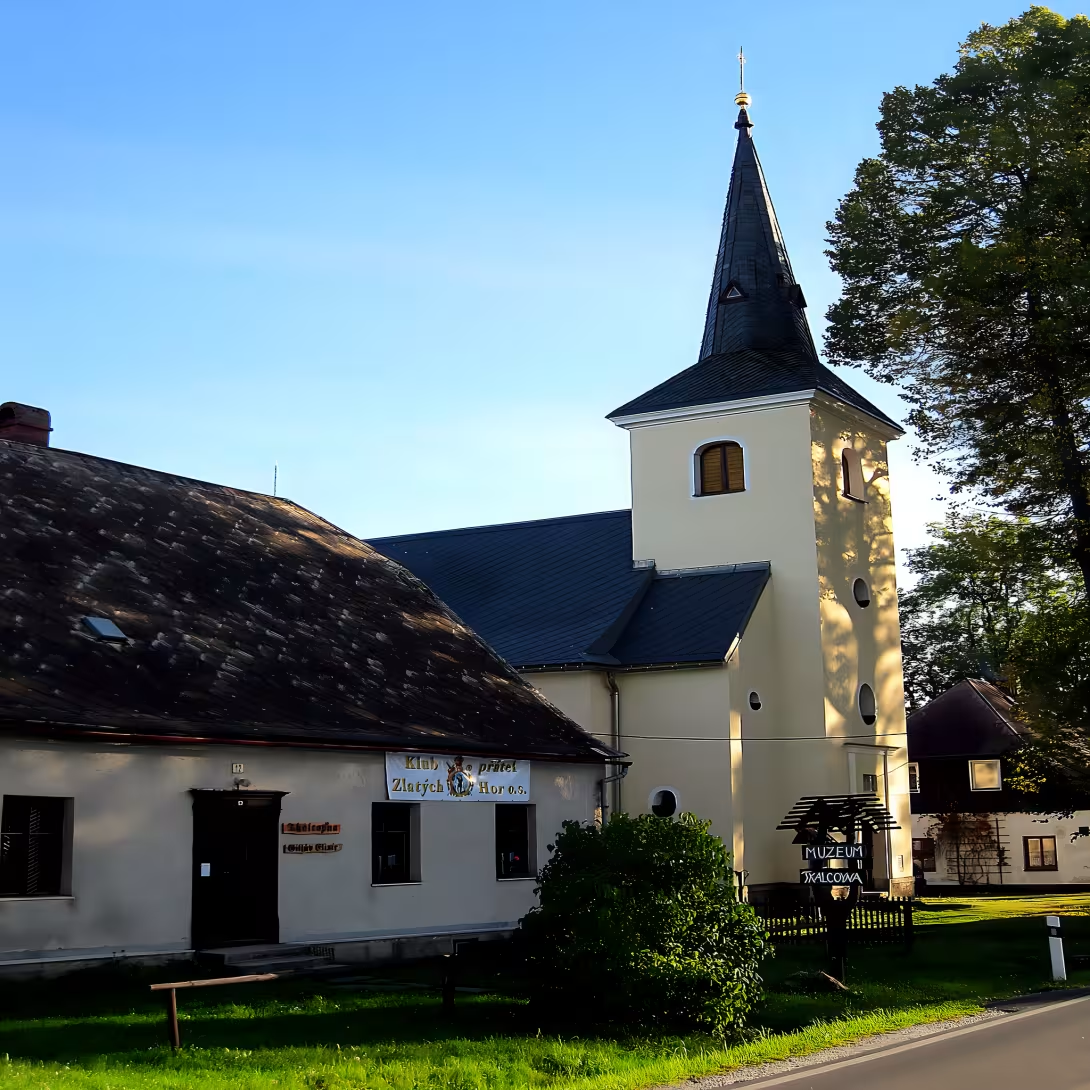
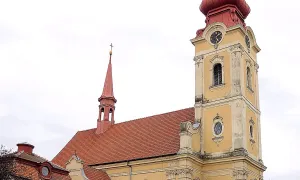
The Church of the Name of Our Lady in Rejvíz is a classicist rural church located in the village of Rejvíz, within the Zlaté Hory District of the Olomoucký Region. Constructed between 1808 and 1809, it was initially intended as a chapel but expanded into a smaller church due to generous donations. This architectural gem features a rectangular floor plan with a non-orientated layout, built from quarry stone. In 2001, the church was declared a cultural monument of the Czech Republic, highlighting its historical and architectural significance.
The origins of this church date back to the late 18th and early 19th centuries, during increased settlement activity in Bohemia. Johann Rother, the frývaldovský děkan and biskupský komisař, sought permission from the bishopric to build a chapel in Rejvíz. Bishop Josef Kristián Hohenlohe granted this request and provided building timber. The foundation stone was laid on October 20th, 1808, with local clergy and residents present. By September 24th, 1809, construction was completed and the church consecrated, marking its transition from a planned chapel to a fully realized church.
Architecturally, the Church of the Name of Our Lady in Rejvíz is characterized by its classicist style, evident in its use of quarry stone and gable tower with a pyramidal roof. The nave features three windows on each side, while the choir section is attached to the south with semi-circular triumphal arches leading into it. In 2011, damaged parts of the roofs were replaced with domestic wood shingles and covered with slate, preserving its structural integrity. Notably, the church houses an organ from Krnov (Rieger-Kloss) located on the gallery, and a bell in the tower was cast at the Dyttrych foundry in Brodek u Přerova.
Throughout its history, the church has seen various administrative changes. Initially serving as a local church from 1814, it became a parish church by 1876 until 1973. Managed by the Římskokatolická farnost Zlaté Hory děkanátu Jeseník diecéze ostravsko-opavské, its significance was further cemented when it was declared a cultural monument in 2001.
The church's interior reflects artistic contributions from the early 20th century. In 1924, the interior was painted by Emil Brendl, adding to its aesthetic appeal. The main altar was crafted by Bernard Kutzer, with sculptures of Saint John Nepomuk and Saint Florian created by Bernard and Raimund Kutzerovi from Horní Údolí. Additionally, images of the Stations of the Cross were provided by Fraze Templera, and a depiction of the Holy Family from 1883 was made by Rudolf Templer.
Today, the Church of the Name of Our Lady in Rejvíz stands as a testament to its historical and cultural heritage. Visitors can explore not only the church but also the nearby former parsonage, now housing a weaving museum. The surrounding landscape offers a glimpse into the rural charm of the Zlaté Hory region. Its architectural beauty, coupled with its rich history, makes it a worthwhile destination for those interested in exploring Czech cultural monuments.
The Church of the Name of Our Lady in Rejvíz invites visitors to delve into its storied past and appreciate its classicist architecture. As a recognized cultural monument, it offers a unique glimpse into the historical fabric of the region, making it an essential stop for anyone visiting the Zlaté Hory District.
Then and now
Drag the slider to compare how the landmark may have looked when it was built with the view today.
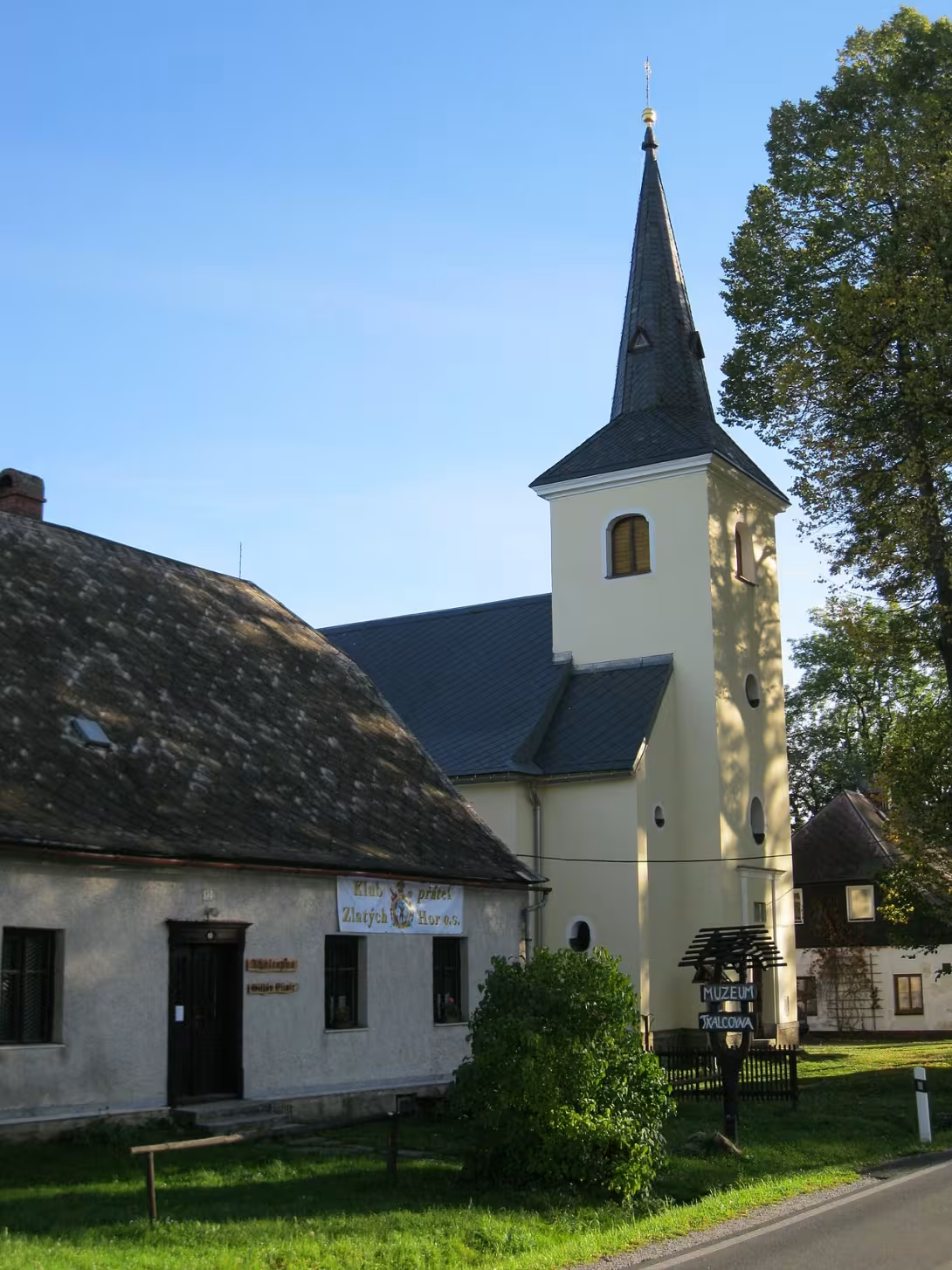
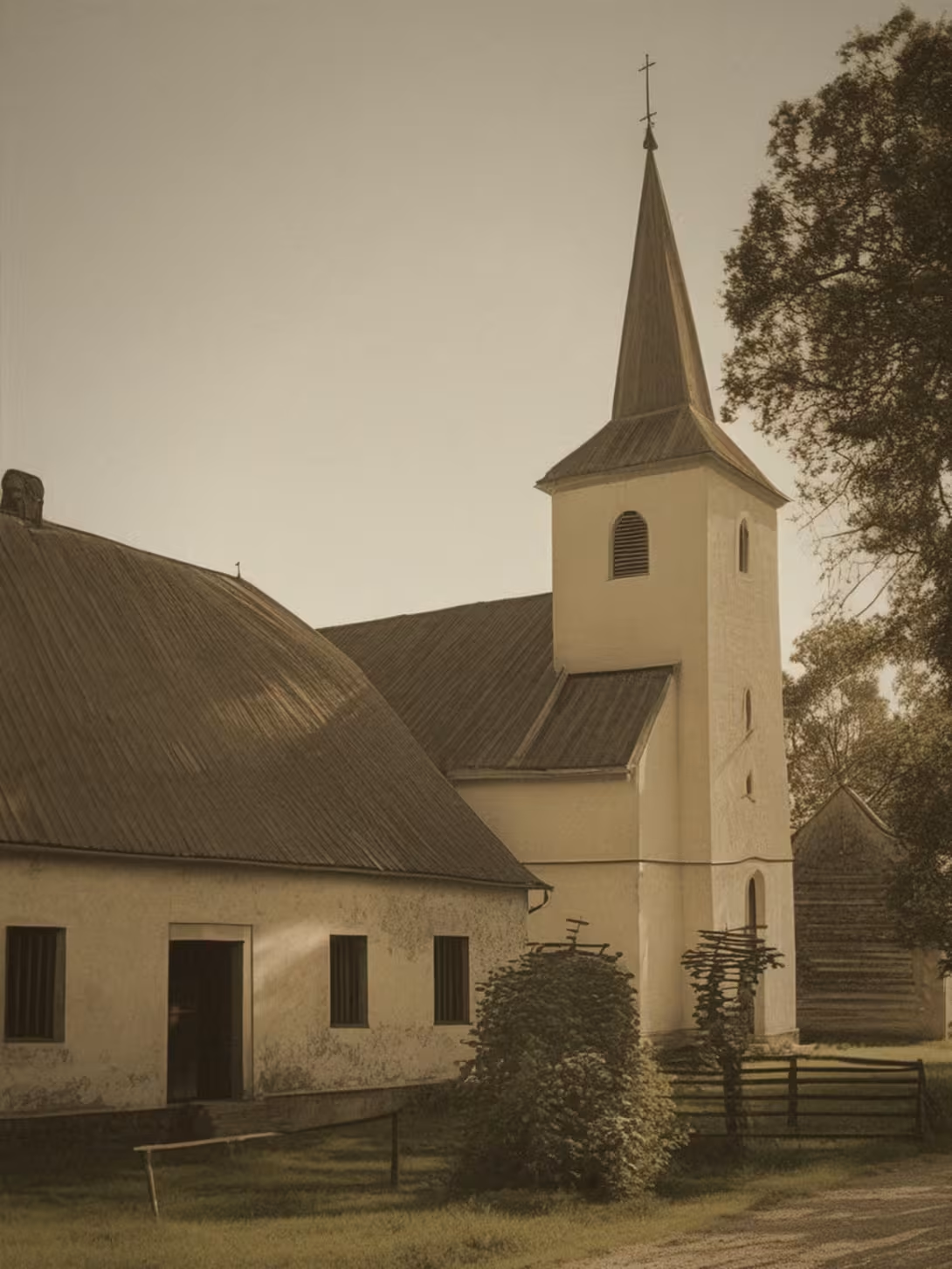
The historical appearance on the left is an AI-generated visualisation and serves as inspiration only.
Historical milestones
- 1808
- The foundation stone was laid on October 20th.
- 1809
- The church's construction was completed and consecrated on September 24th.
Architectural development
Constructed between 1808 and 1809, the Church of the Name of Our Lady in Rejvíz is built from quarry stone with a gable tower featuring a pyramidal roof. The nave has three windows on each side, while the choir section is attached to the south with semi-circular triumphal arches leading into it. In 2011, damaged parts of the roofs were replaced with domestic wood shingles and covered with slate.
Historical events
- 1808
- The foundation stone for the church was laid on October 20th.
- 1809
- The church's construction was completed and consecrated on September 24th.
- 2001
- The church was declared a cultural monument of the Czech Republic.
Points of interest
– The Church of the Name of Our Lady in Rejvíz was originally intended to be a chapel before generous donations allowed it to expand into a fully realized church. This transformation highlights the community's commitment and involvement in its construction.
– Despite being built with classicist architectural principles, the church features a non-orientated layout, which is atypical for religious buildings that usually align east-west. This unique orientation adds an intriguing aspect to its design.
– The church houses an organ from Krnov (Rieger-Kloss) and a bell cast at the Dyttrych foundry in Brodek u Přerova, reflecting the collaboration with local artisans and craftsmen of the time, which was vital for the church's completion.
– In 1924, the interior of the church was painted by Emil Brendl, whose artistic contributions added significant aesthetic value to the building. This period marked a renaissance in its cultural significance through art.
– The church's status as a cultural monument was declared in 2001, underscoring its historical and architectural importance within the Czech Republic. This recognition ensures its preservation for future generations to appreciate its legacy.
Guide
This guide is narrated by a synthetic voice generated by artificial intelligence.
Show guide text
This text was created by artificial intelligence and has not been editorially reviewed. It may contain inaccuracies.
Welcome to the Church of the Name of Our Lady in Rejvíz, a serene testament to classicist architecture nestled within this charming village. As you stand before it, take a moment to absorb its elegant simplicity and harmonious proportions that speak volumes about the community spirit that brought it into being.
The story of this church begins with humble intentions. Initially conceived as a chapel in 1808, it was through the generosity of local benefactors that it transformed into the graceful structure you see today. By 1809, the foundation stone had been laid on October 20th, and construction swiftly progressed to completion by September 24th. This rapid development reflects not only the dedication of those involved but also a period when community-driven projects were pivotal in shaping local landscapes.
As you approach, observe its rectangular floor plan—a departure from traditional church layouts—constructed with precision from quarry stone. The non-orientated layout is intriguing, inviting contemplation on how the building interacts with its surroundings rather than adhering to conventional ecclesiastical alignments. Notice the understated elegance of its classicist architecture, characterized by clean lines and balanced proportions that echo an era's architectural ideals.
The church's history is enriched by figures like Johann Rother and Josef Kristián Hohenlohe, whose contributions underscore a narrative of collaboration and vision. Though the architects remain unnamed, their work stands as a testament to collective effort and local pride.
One captivating aspect of this site is its evolution from chapel to church—a transformation fueled by community support that underscores the importance of shared purpose in historical architecture. This journey from modest beginnings to a fully realized place of worship speaks volumes about the spirit of Rejvíz's inhabitants during that time.
As you continue your exploration, let yourself be drawn into the quiet atmosphere surrounding this historic building. It invites not only reflection on its past but also an appreciation for the timeless beauty it continues to offer. We hope you enjoy discovering more about this remarkable place and the stories it holds.
Thank you for joining us on this journey through history. May your visit inspire further exploration of Rejvíz's rich heritage.
Tips for visitors
The best time to visit the Church of the Name of Our Lady in Rejvíz is during late spring or early autumn when the weather is pleasant, making it ideal for walking around and exploring the surrounding rural landscape. These seasons offer comfortable temperatures and often vibrant natural scenery, enhancing your experience at this classicist rural church. Additionally, visiting outside peak tourist seasons can provide a more tranquil atmosphere, allowing you to appreciate the serene beauty of the area without large crowds.
The church's location within a rural setting means that arriving by car might offer more flexibility for exploring the area at your own pace.
When planning your visit to the Church of the Name of Our Lady in Rejvíz, it is advisable to bring comfortable walking shoes as you may wish to explore the surrounding countryside and nearby attractions like the weaving museum housed in the former parsonage. Additionally, consider bringing a camera or smartphone for photography, especially if visiting during golden hour when the light can beautifully illuminate the church's architecture. A small water bottle and snacks might also be useful, particularly if you plan an extended visit to explore the area.
For photography enthusiasts, the Church of the Name of Our Lady in Rejvíz offers several picturesque spots. The best lighting is typically during early morning or late afternoon when the sun casts a soft glow on the church's classicist features. Capturing images from outside the church can provide a beautiful backdrop with the surrounding rural landscape. Inside, if photography is permitted, focus on architectural details and any notable artwork that highlights the church’s historical significance.
Nearby attractions within 30 minutes of Rejvíz include the weaving museum located in the former parsonage, which offers insights into traditional textile crafts and local history. This makes it a great spot for families with children who are interested in cultural heritage or hands-on activities. The rural landscape around Zlaté Hory also provides opportunities for leisurely walks or picnics, making it an ideal setting for family outings where both adults and children can enjoy the natural surroundings.
Frequently asked questions
Can the monument be visited?
Religious buildings are usually open mainly during services; at other times a visit is normally arranged with the parish or the operator. We have not verified specific times.
Where is the monument?
Location: Rejvíz, Rejvíz, Zlaté Hory, Olomoucký kraj. The map on this page shows the exact spot.
Why is the monument protected?
It is listed in the Central List of Cultural Monuments of the Czech Republic as a cultural monument (register no. 51021/9-89).
Businesses nearby
Do you run a restaurant, accommodation, shop, museum, rental, wellness or other visitor service near this monument? Show yourself directly to the people heading to it — this is how they will see you in the app and on the web:
Nearby
Nearby, there is a former parsonage that now houses a weaving museum. The surrounding landscape includes typical rural features of the Zlaté Hory region.
Accommodation nearby
Themed route
Thematic Walking Tour: Rejvíz and Its Heritage
1. Kostel Jména Panny Marie (Rejvíz) - Church Begin your journey at the heart of Rejvíz with the Church of Our Lady, a stunning example of religious architecture in the Olomoucký kraj region. This church is notable for its historical significance and serene beauty, offering visitors a glimpse into the spiritual heritage of the area.
2. Former Parsonage - Museum A short walk from the church will lead you to the former parsonage, now transformed into an intriguing weaving museum. This site provides insight into traditional crafts that have shaped local culture and history, making it a must-visit for those interested in regional textile arts.
3. Rural Landscape of Zlaté Hory - Scenic Walk Explore the typical rural landscape surrounding Rejvíz, characterized by rolling hills and lush greenery that define the Zlaté Hory region. This scenic walk offers a peaceful retreat into nature, allowing visitors to appreciate the tranquil beauty and agricultural heritage of the area.
4. Church Nádvoří (Courtyard) - Outdoor Exploration Return to the Church of Our Lady to explore its courtyard. The nádvoří provides an opportunity for reflection and appreciation of the church’s architectural details from a different perspective, offering a serene space to conclude your thematic tour.
This itinerary offers a comprehensive exploration of Rejvíz's cultural and natural heritage, ensuring a memorable experience in this charming part of the Olomoucký kraj.
Seasonal recommendations
Spring: Visiting the Church of Our Lady (Rejvíz) during spring offers a unique experience as nature awakens around this historic site. The surrounding landscape is adorned with blooming flowers and lush greenery, creating a vibrant atmosphere that enhances the church's serene beauty. This season often sees fewer visitors compared to summer, allowing for a more tranquil exploration. It's advisable to wear comfortable layers, as temperatures can vary throughout the day. Early morning visits are ideal to enjoy the soft light filtering through the trees, adding to the picturesque setting.
Summer: The Church of Our Lady (Rejvíz) is particularly lively during summer when the days are long and warm, making it an excellent time for outdoor exploration before or after visiting the church. This period often attracts larger crowds, especially on weekends, so consider arriving early in the morning to avoid the peak tourist influx. Light, breathable clothing is recommended due to the warmer weather, along with sun protection like hats and sunscreen. The surrounding nature is at its most vibrant, offering picturesque views that complement the historical architecture of the church.
Autumn: Autumn brings a magical transformation to the Church of Our Lady (Rejvíz) as the foliage turns into rich shades of red, orange, and gold. This season offers a stunning backdrop for photography enthusiasts seeking to capture the contrast between nature's colors and the architectural details of the church. The cooler temperatures make it comfortable to spend time exploring without the summer heat, but carrying a light jacket is advisable due to potential chilly winds. Visitor numbers tend to decrease as the season progresses, providing a more peaceful experience.
Winter: Winter envelops the Church of Our Lady (Rejvíz) in a serene and quiet atmosphere, with snow often blanketing the surrounding landscape and creating a picturesque scene. The shorter days mean that visiting hours may be limited, so it's best to check ahead for any seasonal closures or changes in opening times. Wearing warm layers is essential, as temperatures can drop significantly, especially later in the day. Despite the cold, winter offers a unique charm with its stillness and the way the church stands out against the white backdrop, making it a special time for those seeking solace in history and nature's beauty.
Visualizations and artistic views


The visualisations are generated by artificial intelligence and serve as inspiration.
Photos from the area
Real photos taken near the monument


Zdroj a licence jsou uvedeny u každého snímku.
Tips from visitors
No tips yet. Be the first!
Log in and add your tip.
Sources and literature
Photos: Lehotsky / CC BY-SA 3.0, rozlišení zvýšeno umělou inteligencí — Wikimedia Commons. The author and licence also appear when you hover over the image.
Faktickým podkladem tohoto textu byl článek na Wikipedii, jehož autory jsou přispěvatelé Wikipedie. Článek je dostupný pod licencí CC BY-SA 4.0.
Location on the map
Příběhy a pověsti
Legendy, pověsti a příběhy spjaté s touto památkou
Fotografie návštěvníků
Zatím žádné fotografie. Buďte první, kdo přidá fotografii z návštěvy!
Log in a přidejte svou fotografii nebo hodnoťte.
Za ověřenou návštěvu v aplikaci získáte víc bodů — poznáme podle GPS, že jste na místě.
Reviews and comments