






kostel Nalezení svatého Kříže (Brno-město) Church
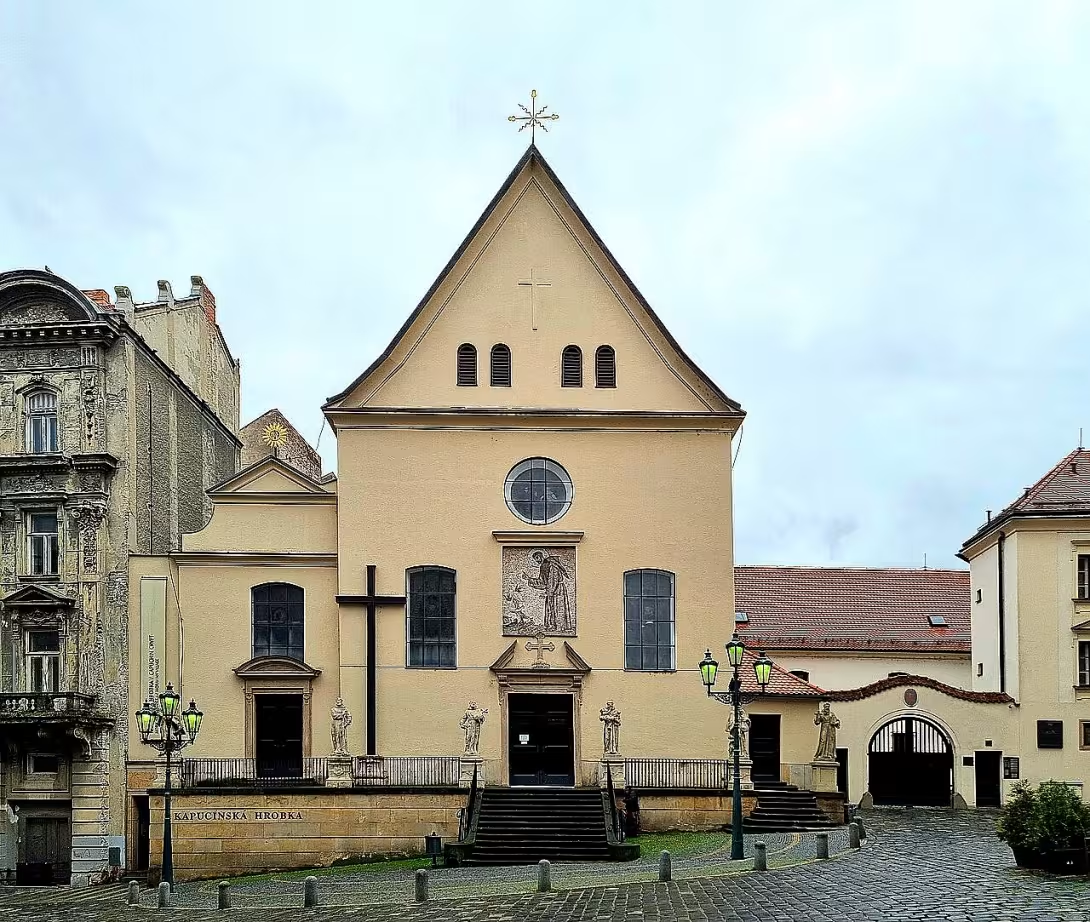
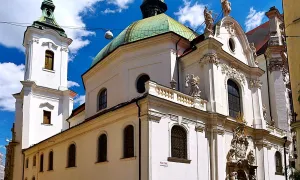
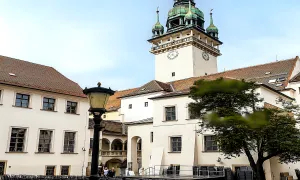
The Church of the Finding of the Holy Cross is a Roman Catholic rectoral church located at Kapucínské Square in Brno-město. Constructed between 1648 and 1656, this Baroque-style edifice forms part of the Capuchin monastery complex. It stands as a cultural monument protected by the Czech Republic, notable for its architectural simplicity reflecting the Capuchins' vows of poverty.
The church's origins are deeply intertwined with 17th-century Bohemia's turbulent history. The Capuchins first arrived in Brno in 1604 at Bishop František z Ditrichštejna's invitation, establishing their initial monastery on the city's eastern outskirts. However, during the Thirty Years' War, Swedish forces destroyed this original church in 1645 to prevent enemy fortification. The Capuchins then relocated and established a new monastery at what is now Kapucínské Square, chosen for its strategic location and supported by donations from figures like Kryštof Pavel z Lichtensteinu-Castelcorna.
Architecturally, the church embodies Baroque style typical of Capuchin constructions, characterized by simplicity and austerity in line with their religious ideals. The building followed a uniform Belgian-Dutch pattern to emphasize these values. Over time, it underwent significant modifications: initially, its vaulted ceiling was replaced with a wooden roof due to structural issues. Later, during the 18th century, architects Mořice Grimm and František Antonín Grimm introduced new chapels and restored the vaulted ceiling. In the 20th century, updates included electrically powered organs and stained glass windows, some created by Brno artist Jiří Říha.
Throughout its history, the church has been under the administration of the Capuchin Order, specifically the Order of Minor Friars Capuchins. Its fortunes have seen dramatic changes, from wartime destruction to reconstruction and architectural enhancements, reflecting broader religious and political dynamics of their respective eras.
Key events include its consecration on May 7, 1656, by Olomouc bishop Jan Gobara, marking a significant milestone following its rebuilding after the Thirty Years' War. The church has also seen various artistic contributions over the centuries, including 20th-century stained glass windows.
Today, the Church of the Finding of the Holy Cross remains an accessible and cherished cultural monument in Brno. Its historical significance, architectural beauty, and religious importance make it a worthwhile visit for those interested in Czech history and Baroque architecture. Visitors can appreciate its serene atmosphere and witness the legacy of the Capuchin Order's enduring presence in the region.
Then and now
Drag the slider to compare how the landmark may have looked when it was built with the view today.
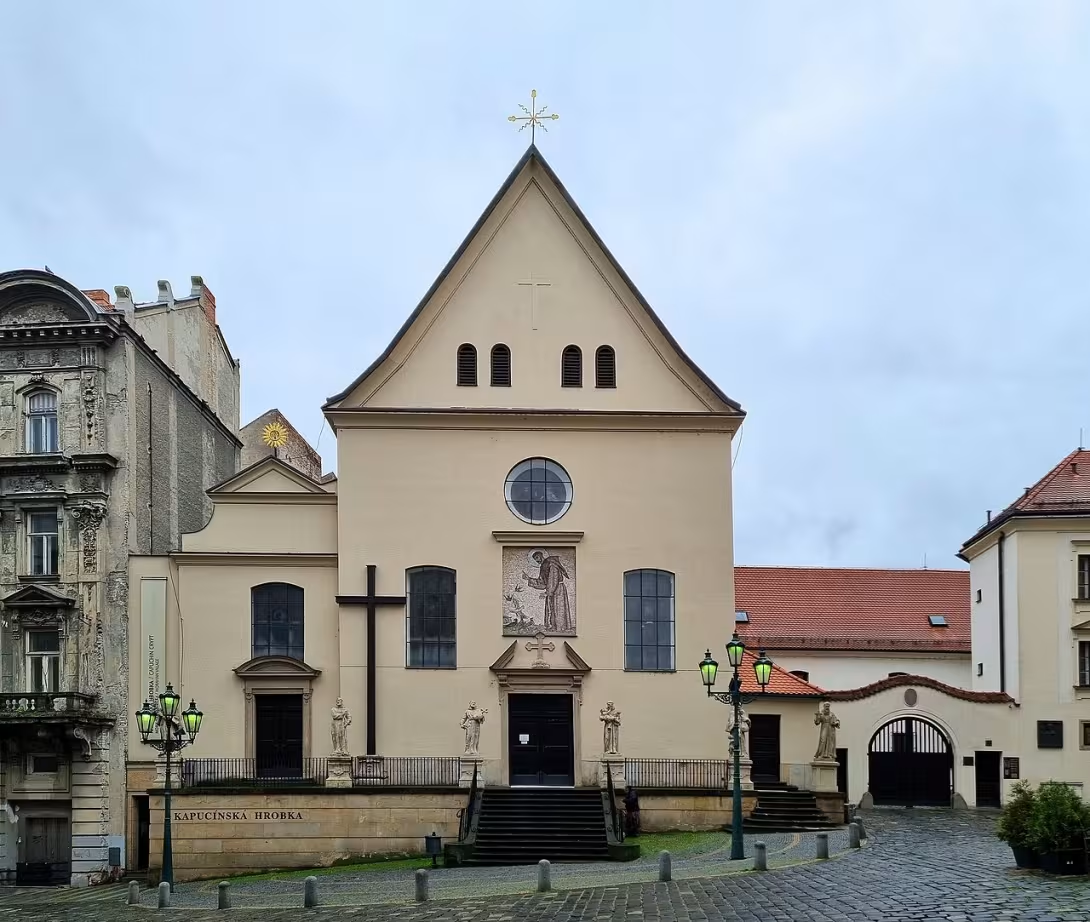
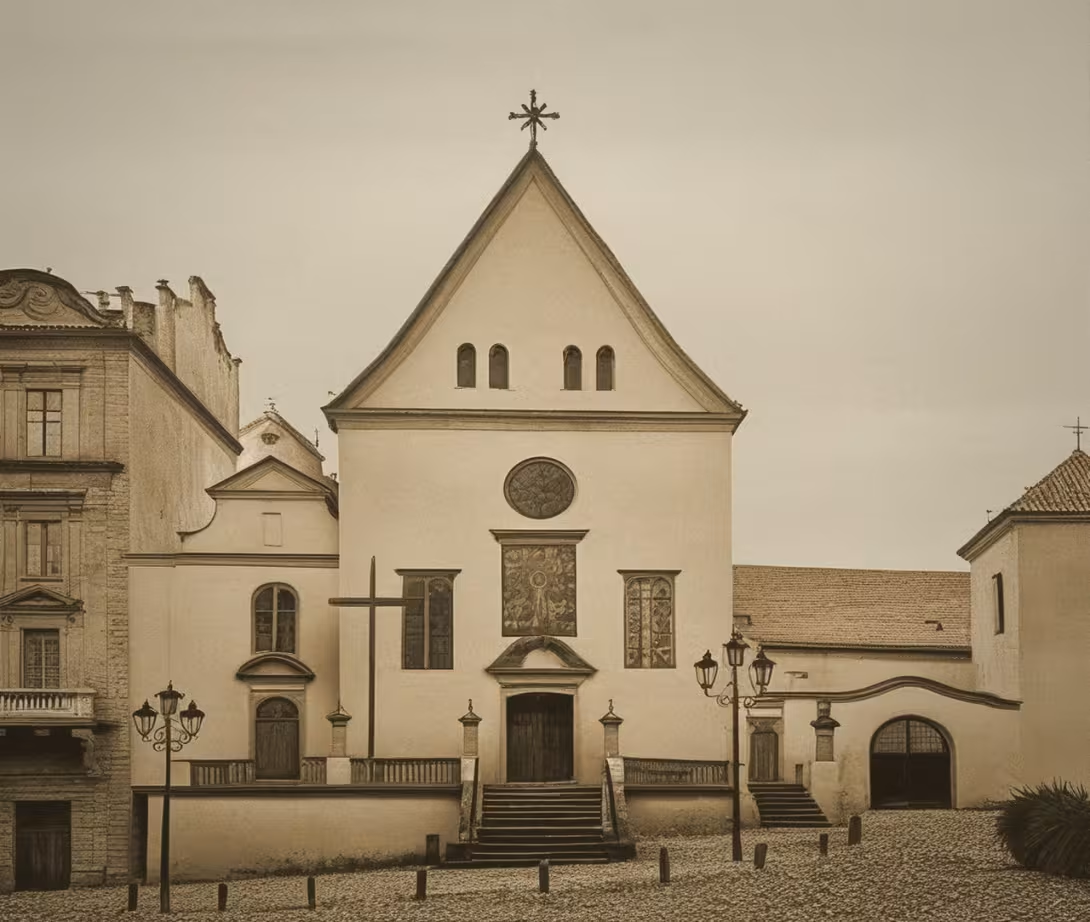
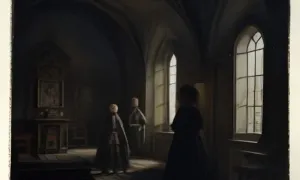
The historical appearance on the left is an AI-generated visualisation and serves as inspiration only.
Historical milestones
- 1604
- Capuchins arrived in Brno.
- 1645
- Original church destroyed during Swedish siege.
- 1656
- New church consecrated by Olomouc bishop Jan Gobara.
Architectural development
The church underwent significant architectural changes over the centuries. Initially built between 1648 and 1656 in Baroque style, it faced structural issues leading to a temporary wooden roof replacing its original vaulted ceiling. In the 18th century, under architects Mořice Grimm and František Antonín Grimm, the church was modified with new chapels and a vaulted ceiling. The 20th century saw further updates including electrically powered organs and stained glass windows.
Historical events
In 1604, Capuchins arrived in Brno at the invitation of Bishop František z Ditrichštejna and established their first monastery.
The original church was destroyed during a Swedish siege in 1645.
A new church was consecrated on May 7, 1656, by Olomouc bishop Jan Gobara.
Points of interest
- Despite its Baroque architectural style, the Church of the Finding of the Holy Cross is noted for its simplicity and austerity, reflecting the Capuchin Order's vows of poverty. This contrast highlights how religious values can shape artistic expression.
- The church was initially destroyed by Swedish forces during the Thirty Years' War in 1645 to prevent it from being used as a fortification. Its reconstruction on Kapucínské Square symbolizes resilience and adaptation amidst historical turmoil.
- In the 18th century, architects Mořice Grimm and František Antonín Grimm made significant alterations, including adding new chapels and restoring the vaulted ceiling. These changes illustrate how architectural modifications can reflect evolving religious practices and aesthetic preferences over time.
- The church's stained glass windows from the 20th century were crafted by Brno artist Jiří Říha, showcasing a blend of modern artistic techniques with traditional ecclesiastical themes. This fusion represents the ongoing dialogue between historical legacy and contemporary artistry in sacred spaces.
- Although originally established on the city’s eastern outskirts in 1604, the Capuchins had to relocate due to wartime destruction, eventually settling at Kapucínské Square—a decision influenced by strategic considerations and support from local nobility like Kryštof Pavel z Lichtensteinu-Castelcorna. This move underscores how socio-political factors can dictate religious communities' geographic presence within urban landscapes.
Guide
This guide is narrated by a synthetic voice generated by artificial intelligence.
Show guide text
This text was created by artificial intelligence and has not been editorially reviewed. It may contain inaccuracies.
Welcome to the Church of the Finding of the Holy Cross in Brno-město, a remarkable testament to history and faith nestled within the heart of Kapucínské Square. As you stand here, take a moment to absorb the serene yet profound presence this Roman Catholic rectoral church exudes. Its Baroque architecture speaks volumes about its past, inviting you into an era where artistry met austerity.
Let's delve into the origins and historical context that shaped this sacred site. The Capuchins first arrived in Brno in 1604, bringing with them a spirit of devotion and community. However, it wasn't until after the tumultuous Swedish siege in 1645, which saw the original church destroyed, that plans for its rebirth took root. Between 1648 and 1656, this new structure rose from the ashes, consecrated by Olomouc bishop Jan Gobara in 1656. It was part of a broader vision to establish a Capuchin monastery on what is now Kapucínské Square.
As you explore further, notice how the church reflects the Baroque style typical of Capuchin architecture. Despite its grandeur, there's an underlying simplicity and austerity that resonates with the Capuchin Order’s vows of poverty. This contrast between architectural richness and spiritual humility is a testament to how religious values can profoundly influence artistic expression.
The history of this place is intertwined with notable figures such as František z Ditrichštejna, Kryštof Pavel z Lichtensteinu-Castelcorna, and Ferdinand Mencl z Kolsdorfu. Their contributions have left an indelible mark on the church's legacy, weaving a rich tapestry of stories that continue to captivate visitors.
One intriguing aspect of this church is its resilience through adversity. Despite being destroyed during the Swedish siege, it was reborn with renewed vigor and purpose, reflecting the enduring spirit of those who sought solace within its walls.
As your visit draws to a close, I invite you to linger in the atmosphere that surrounds the Church of the Finding of the Holy Cross. Let yourself be enveloped by its history, architecture, and the stories it harbors. This place is not just a monument; it's a living narrative waiting to be explored further.
Thank you for joining me on this journey through time and faith. May your visit inspire reflection and curiosity as you continue to discover the wonders of Brno-město. Farewell, until we meet again at another historical marvel.
Frequently asked questions
Can the monument be visited?
Religious buildings are usually open mainly during services; at other times a visit is normally arranged with the parish or the operator. We have not verified specific times.
Where is the monument?
Location: Kapucínské náměstí 303/5, Brno-město, Brno, Jihomoravský kraj. The map on this page shows the exact spot.
Why is the monument protected?
It is listed in the Central List of Cultural Monuments of the Czech Republic as a cultural monument (register no. 28109/7-49). It is protected as part of a larger listed ensemble.
Businesses nearby
Do you run a restaurant, accommodation, shop, museum, rental, wellness or other visitor service near this monument? Show yourself directly to the people heading to it — this is how they will see you in the app and on the web:
Events nearby


Zdroj akcí: otevřená data měst a obcí ČR (Národní katalog otevřených dat) a kalendář akcí Národního památkového ústavu.
Accommodation nearby
Trips and activities nearby
Guided tours, tickets and activities nearby from GetYourGuide
Affiliate link: if you buy from the partner, we may receive a commission. The price for you does not change.
Search tours and activities →Themed route
Tematická výletní trasa: Kostel Nalezení svatého Kříže a jeho okolí
1. Kostel Nalezení svatého Kříže (Brno-město)
Typ: Religiózní památka
Proč stojí za návštěvu: Tento barokní kostel je jednou z nejcharakterističtějších architektonických památek Brna. Jeho význam je zdůrazněn bohatou historií a jedinečným interiérem, který odráží barokní umělecký styl.
2. Náměstí Svobody
Typ: Veřejné náměstí
Proč stojí za návštěvu: Nachází se v bezprostřední blízkosti kostela a je centrem mnoha kulturních akcí. Náměstí je známé svým krásným parkem a sloužilo jako důležité místo pro veřejné shromáždění v historii Brna.
3. Kostel svaté Kateřiny
Typ: Religiózní památka
Proč stojí za návštěvu: Tento gotický kostel, nacházející se na Náměstí Svobody, je dalším významným historickým a architektonickým dílem. Jeho bohaté historie a umělecká hodnota přitahují mnoho návštěvníků.
4. Památník T.G. Masaryka
Typ: Veřejná socha
Proč stojí za návštěvu: Nachází se na Náměstí Svobody a je významnou památkou, která oslavuje život a dílo prvního prezidenta České republiky. Je to místo pro reflektování historie a národní identity.
5. Kostel svaté Anny
Typ: Religiózní památka
Proč stojí za návštěvu: Tento barokní kostel, nacházející se v blízkosti Náměstí Svobody, je známý svou elegantní architekturou a historickým významem. Poskytuje další pohled na bohatou náboženskou tradici Brna.
Tato trasa nabízí komplexní pohled na kulturní a historické památky centra Brna, s důrazem na barokní architekturu a významné veřejné prostory.
Seasonal recommendations
Spring: Visiting the Church of the Finding of the Holy Cross during spring offers a unique experience as nature begins to awaken around this historic site. The soft, gentle light filtering through budding trees creates a serene and almost ethereal atmosphere within Brno's cityscape. This period often sees fewer visitors compared to summer, allowing for a more intimate exploration of the church’s architectural details. It is advisable to dress in layers, as spring weather can be unpredictable with occasional rain showers. Arriving early in the day can help you avoid any unexpected crowds that might gather due to pleasant weather conditions.
Summer: The summer months bring vibrant life and energy to the Church of the Finding of the Holy Cross. With longer daylight hours, the church is beautifully illuminated, enhancing its architectural features. This period coincides with Brno's peak tourist season, resulting in larger visitor numbers, especially during weekends. To fully enjoy your visit without the hustle, consider arriving early in the morning or later in the afternoon when it’s cooler and less crowded. Lightweight clothing and comfortable shoes are recommended for navigating both the church grounds and the surrounding city.
Autumn: Autumn is a magical time to explore the Church of the Finding of the Holy Cross as the foliage transforms into warm hues of red, orange, and gold. The soft, diffused light during this season casts a golden glow over the historic structures, creating a picturesque setting perfect for photography enthusiasts. While visitor numbers begin to decrease from summer highs, it's still wise to plan your visit on weekdays or in the early morning to avoid any lingering crowds. Wearing layers is recommended due to cooler temperatures and the potential for rain.
Winter: Winter adds a unique charm to the Church of the Finding of the Holy Cross with its snow-covered surroundings and festive atmosphere during the holiday season. The church often becomes a focal point for local celebrations, offering a warm respite from the cold outside. Visitors should dress warmly in layers and wear comfortable footwear suitable for potentially icy conditions. Arriving early is advisable as indoor spaces can become cozy quickly with visitors seeking refuge from the chill.
Visualizations and artistic views


The visualisations are generated by artificial intelligence and serve as inspiration.
Photos from the area
Real photos taken near the monument

Zdroj a licence jsou uvedeny u každého snímku.
Tips from visitors
No tips yet. Be the first!
Log in and add your tip.
Sources and literature
Photos: Ondřej Žváček / CC BY 4.0 — Wikimedia Commons. The author and licence also appear when you hover over the image.
Faktickým podkladem tohoto textu byl článek na Wikipedii, jehož autory jsou přispěvatelé Wikipedie. Článek je dostupný pod licencí CC BY-SA 4.0.
Location on the map
Příběhy a pověsti
Legendy, pověsti a příběhy spjaté s touto památkou
Fotografie návštěvníků
Zatím žádné fotografie. Buďte první, kdo přidá fotografii z návštěvy!
Log in a přidejte svou fotografii nebo hodnoťte.
Za ověřenou návštěvu v aplikaci získáte víc bodů — poznáme podle GPS, že jste na místě.
Reviews and comments