



Kostel Nanebevzetí Panny Marie (Malá Morava) Church
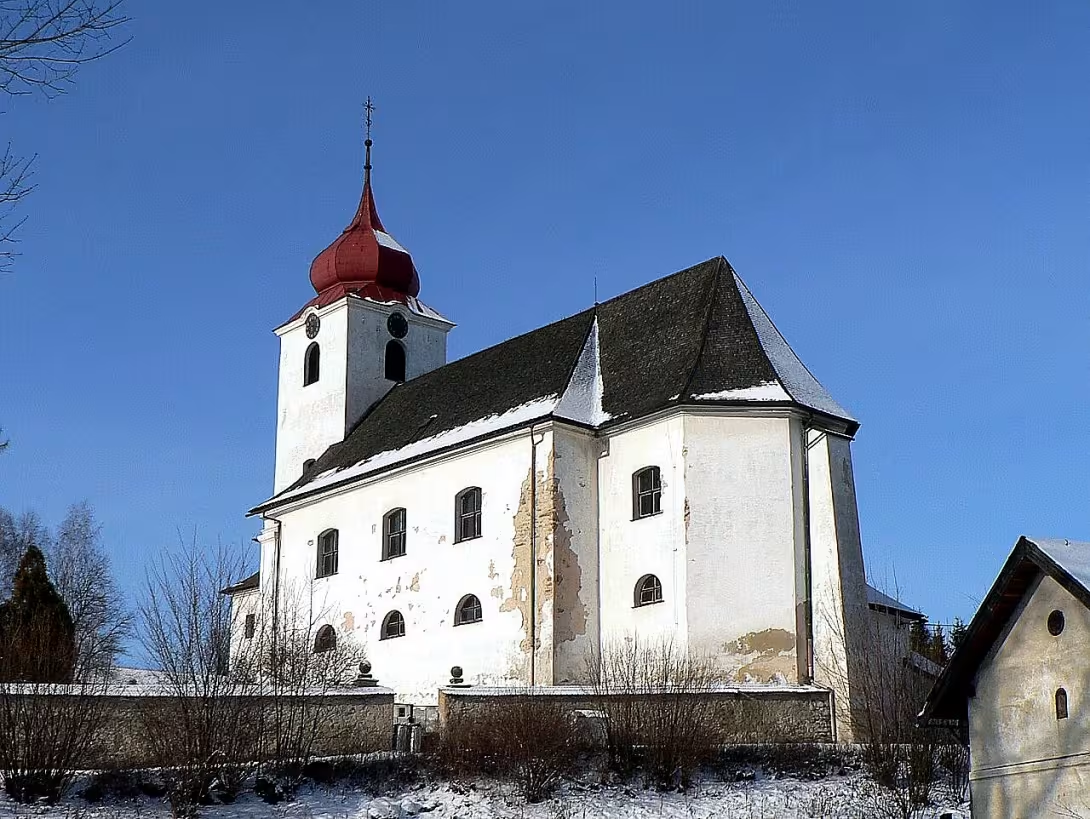
The Church of the Assumption of the Virgin Mary in Malá Morava is a significant cultural monument located within the Czech Republic's Olomoucký kraj region. Constructed between 1688 and 1689, this early Baroque church stands as one of the first Catholic churches built following the Thirty Years' War, reflecting the religious revival during that period. Its historical importance lies in its role in re-establishing Catholic presence in Bohemia after a time of great turmoil.
The origins of the Church are deeply rooted in the post-war era when Bohemia was undergoing significant religious consolidation. Built between 1688 and 1689, this church was funded jointly by the communities of Malá Morava, Velká Morava, and Vojtíškov. Its construction marked a pivotal moment in the region's history as it symbolized the Catholic Church’s efforts to reassert its influence after the devastation caused by the Thirty Years' War.
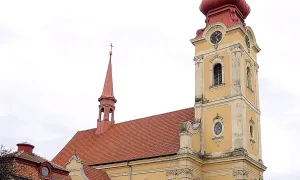
Architecturally, the church is an exemplary representation of early Baroque style with subsequent modifications made in the 18th century. The structure features a single-nave layout and concludes with a three-bay chancel, complemented by an attached sacristy. A notable architectural element is its four-story bell tower, which culminates in a spire topped by a belfry cross. Over time, porches were added to both the side and main entrances during the 18th century, enhancing the church's accessibility and aesthetic appeal.
Throughout its history, the Church has been under various administrative oversight, with P. Mgr. Artur Andrzej Górka serving as the current administrator excurrendo. The church remains a protected cultural monument in the Czech Republic, ensuring its preservation for future generations to appreciate and study.
The church is home to several intriguing elements that add to its historical richness. Embedded in the western wall of the entrance porch is a tombstone from 1629 belonging to Jan, son of local glassmaker Martin Petra Hansel. Additionally, the church houses an organ crafted by Karl Welzel from Králík, featuring polychromed angel figures with gilded wings, which adds both artistic and musical value to the site.
Today, the Church stands as a well-preserved testament to early Baroque architecture and religious history in Malá Morava. Visitors can explore its architectural details, admire the craftsmanship of its interior elements, and reflect on its historical significance. The church's inclusion in the list of protected cultural monuments underscores its importance, making it a worthwhile destination for those interested in history or architecture.
The Church is not only a place of worship but also a cultural landmark that offers insights into the religious and architectural heritage of the region. Its preservation allows visitors to connect with the past while appreciating its enduring beauty and significance. An invitation to explore this remarkable site promises an enriching experience for anyone interested in history or architecture.
Then and now
Drag the slider to compare how the landmark may have looked when it was built with the view today.
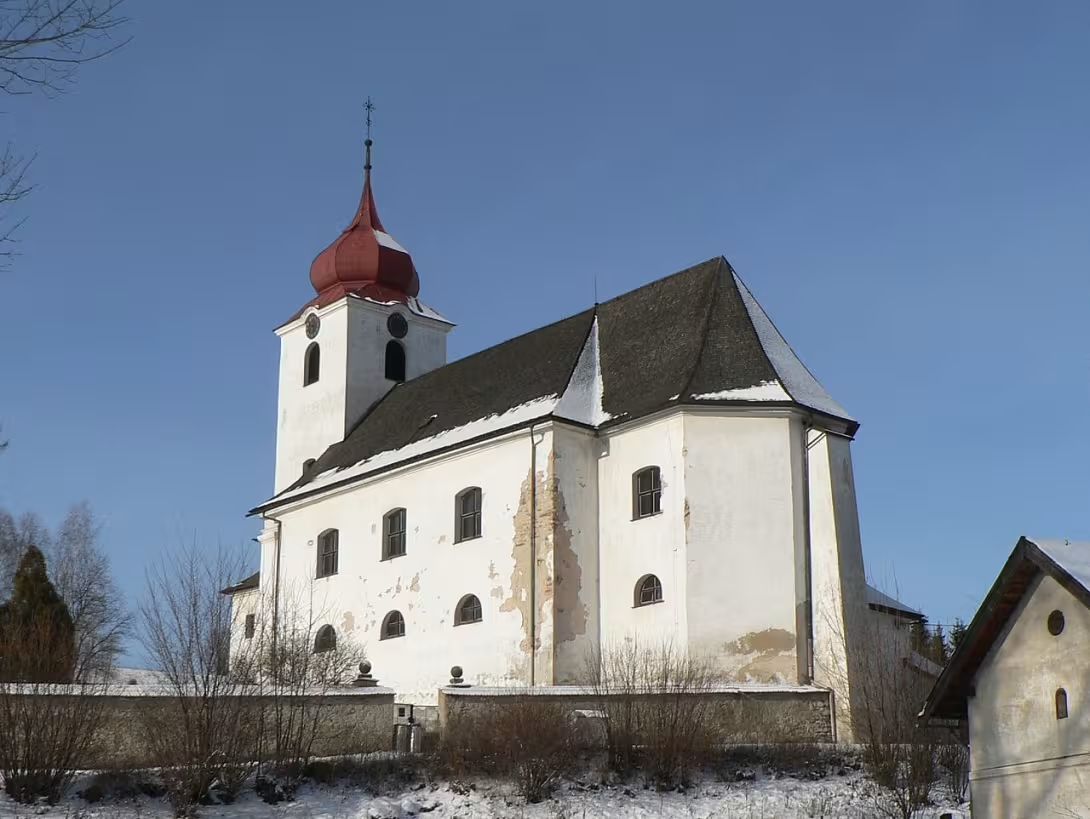
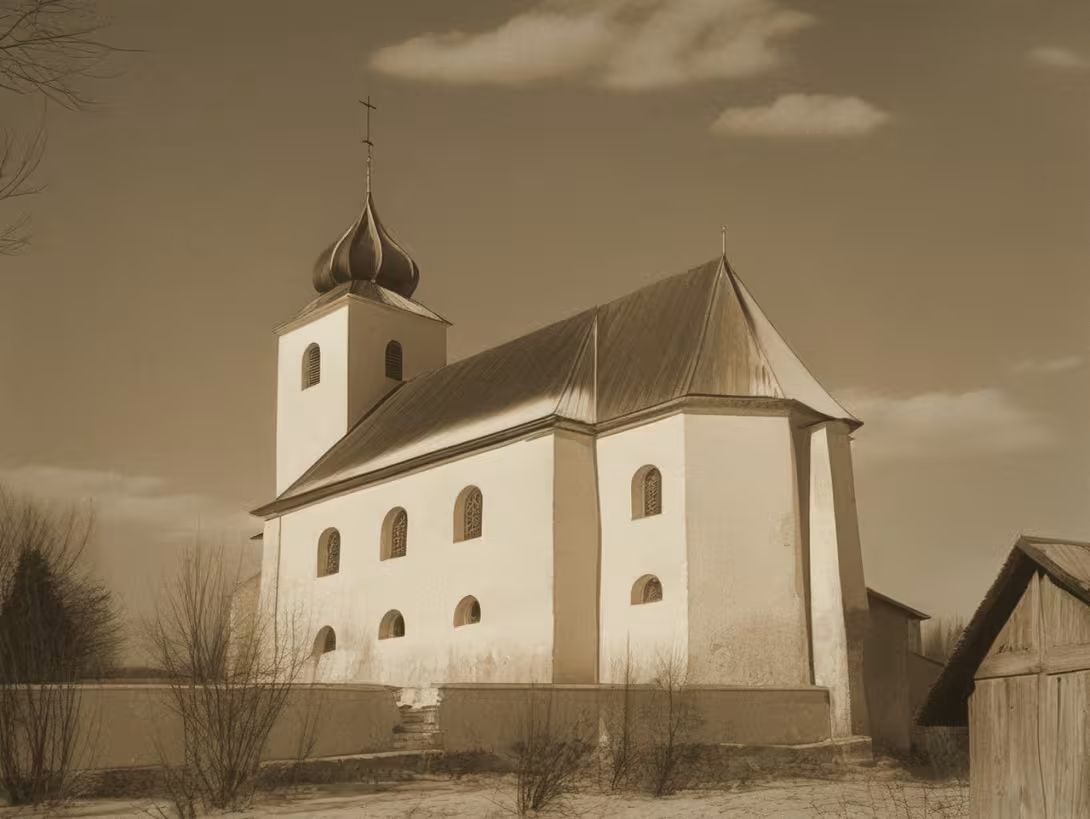
The historical appearance on the left is an AI-generated visualisation and serves as inspiration only.
Historical milestones
- 1688
- The church was constructed between 1688 and 1689 as one of the first Catholic churches built after the Thirty Years' War.
Architectural development
Originally built in the early Baroque style, the church underwent modifications in the 18th century with the addition of porches at both the side and main entrances. The interior features predominantly from the mid-18th century include a main altar with a porticoed retable and figures of angels and torchbearers.
Historical events
1688-1689: Construction of the Church of the Assumption of the Virgin Mary, funded jointly by Malá Morava, Velká Morava, and Vojtíškov.
18th century: Addition of a side entrance porch and later a main entrance porch.
Owners
The church was built by the joint contribution of the communities of Malá Morava, Velká Morava, and Vojtíškov.
Points of interest
- The Church of the Assumption of the Virgin Mary in Malá Morava features a tombstone embedded in its western wall belonging to Jan, son of local glassmaker Martin Petra Hansel, dating back to 1629. This adds a personal historical touch linking the church to the region's artisan community.
- An intriguing element within the church is an organ crafted by Karl Welzel from Králík, adorned with polychromed angel figures that have gilded wings. This unique feature enhances both the artistic and musical heritage of the site.
- The construction of this early Baroque church was a collaborative effort funded jointly by three communities: Malá Morava, Velká Morava, and Vojtíškov. This joint venture underscores the collective religious commitment in re-establishing Catholic presence post-Thirty Years' War.
- Originally built between 1688 and 1689, the church's architecture underwent modifications in the 18th century, including the addition of porches to both the side and main entrances, which reflect evolving aesthetic preferences while maintaining its historical essence.
- The Church has been under various administrative oversight throughout its history, with P. Mgr. Artur Andrzej Górka currently serving as the administrator excurrendo, highlighting its ongoing importance in religious and cultural contexts within the region.
Guide
This guide is narrated by a synthetic voice generated by artificial intelligence.
Show guide text
This text was created by artificial intelligence and has not been editorially reviewed. It may contain inaccuracies.
The Church of the Assumption of the Virgin Mary is a parish church in the village of Malá Morava in the Olomouc region. It is a single-nave early Baroque building and is among the first Catholic churches built after the Thirty Years' War. Today it is a protected cultural monument.
However, the ecclesiastical history of the village is much older. A church with a rectory stood here already in the mid-fourteenth century, and until 1421 the rectory belonged to the bishopric in Litomyšl. From 1563 a wooden chapel served the faithful, which was built by Václav ze Zvole to replace a dilapidated prayer house. Until 1621 Protestant pastors served here.
The present church was built in the years 1688 to 1689. The villages of Malá Morava, Velká Morava and Vojtíškov jointly contributed to its construction. In the eighteenth century the church was renovated and an entrance vestibule was added to the side entrance. The vestibule of the main entrance was added only in the nineteenth century.
The church stands in the grounds of a cemetery. The main nave is followed by the chancel with a triangular apse, and on its northern side is a four-sided sacristy. Before the western façade rises a four-storey prismatic tower, topped with a cupola and a cross. The smooth façades of the nave are pierced by windows in two rows. Below are semicircular windows, above them rectangular ones with segmented arches.
The main entrance leads under the tower and is protected by a vaulted vestibule. On the vault of the portal is carved the date 1688. Set into the western wall of the vestibule is a figured tombstone from 1629. It belongs to John, son of the local glassmaker master Martin Petr Hansel. To the second vestibule on the northern side of the nave leads a stone staircase with a balustrade railing.
The interior furnishings come mainly from the fifties and sixties of the eighteenth century. The centre of the main altar is formed by a monumental oval frame with a modern painting of the Virgin Mary. Above the side passages of the altar stand large statues of angels and light bearers. The same master created the pulpit. The unified furnishings also include a font in the shape of a chalice and two-part organ by Karel Welzel from Králíky. The smaller part of the organ in the gallery railing is decorated with painted figures of two angels with gilded wings. The organ stands on a wooden gallery with a roller railing and adjoining it are galleries along the side walls.
Frequently asked questions
Can the monument be visited?
Religious buildings are usually open mainly during services; at other times a visit is normally arranged with the parish or the operator. We have not verified specific times.
Where is the monument?
Location: Malá Morava, Olomoucký kraj. The map on this page shows the exact spot.
Why is the monument protected?
It is listed in the Central List of Cultural Monuments of the Czech Republic as a cultural monument (register no. 16456/8-1017).
Businesses nearby
Do you run a restaurant, accommodation, shop, museum, rental, wellness or other visitor service near this monument? Show yourself directly to the people heading to it — this is how they will see you in the app and on the web:
Nearby
The church is located in the village of Malá Morava, surrounded by a cemetery.
Accommodation nearby
Themed route
Tematická výletní trasa: Kostel Nanebevzetí Panny Marie (Malá Morava)
1. Kostel Nanebevzetí Panny Marie
- Typ: Religiózní památka
- Proč stojí za návštěvu: Tento barokní kostel je nejvýznamnější architektonickou památkou v obci Malá Morava. Jeho bohaté historie a umělecké prvky, jako jsou fresky a sochy, přitahují návštěvníky z celého regionu.
2. Kaple svaté Anny
- Typ: Kaple
- Proč stojí za návštěvu: Nachází se v blízkosti hlavního kostela a slouží jako místo klidné meditace a modlitby. Je známá svým historickým významem pro místní obyvatelstvo.
3. Nádvoří kostelní
- Typ: Nádvoří
- Proč stojí za návštěvu: Toto místo nabízí výhled na kostel a okolní krajinu, což je ideální pro relaxaci a pochopení celkového kontextu památky. Je také vhodné pro fotografování.
4. Věž kostela
- Typ: Věž
- Proč stojí za návštěvu: Návštěvníci mají možnost vystoupit na věž a užít si panoramatický pohled na obec Malá Morava a okolní krajinné krásy. To je zvláštní zážitek, který nabízí jedinečnou perspektivu.
Tato trasa vám umožňuje prozkoumat hlavní památku a její bezprostřední okolí, což je ideální pro ty, kteří chtějí získat hlubší pochopení historie a kultury obce Malá Morava.
Seasonal recommendations
Spring: Visiting the Church of the Assumption of the Blessed Virgin Mary during spring offers a unique experience as nature awakens around Malá Morava. The blooming flowers and budding trees create a picturesque setting, enhancing the church's architectural beauty with vibrant colors. This season is ideal for photography enthusiasts looking to capture the interplay between natural light and historic structures. Visitors should be prepared for occasional showers; therefore, wearing layers and carrying an umbrella or raincoat is advisable. Early mornings are often quieter, providing a serene atmosphere before the day warms up.
Summer: Summer is the peak season for visiting the Church of the Assumption of the Blessed Virgin Mary in Malá Morava. The long daylight hours allow ample time to explore both the church and its surroundings. However, this popularity means larger crowds, especially during weekends and holidays. To avoid congestion, consider arriving early or visiting on weekdays. Light, breathable clothing is recommended due to warmer temperatures, along with sunscreen and a hat for sun protection. Staying hydrated is crucial, so bring water bottles.
Autumn: Autumn brings a stunning transformation to the Church of the Assumption of the Blessed Virgin Mary as the foliage in Malá Morava turns into fiery hues of reds, oranges, and yellows. This season offers a tranquil ambiance with fewer tourists compared to summer, making it perfect for those seeking a more peaceful visit. The cooler weather allows for comfortable exploration without the need for heavy clothing; however, carrying a light jacket is wise as temperatures can drop in the evenings. Golden hour lighting during late afternoons provides an enchanting backdrop for photography.
Winter: Winter at the Church of the Assumption of the Blessed Virgin Mary offers a serene and magical atmosphere with snow often blanketing Malá Morava, creating a picturesque scene reminiscent of postcard images. The church itself is beautifully illuminated against the crisp winter landscape, providing a unique visual experience. Visitors should dress warmly in layers and wear waterproof boots to navigate potentially icy paths. Early mornings are typically less crowded, allowing for a more intimate exploration of the church’s historic charm.
Visualizations and artistic views


The visualisations are generated by artificial intelligence and serve as inspiration.
Photos from the area
Real photos taken near the monument


Zdroj a licence jsou uvedeny u každého snímku.
Tips from visitors
No tips yet. Be the first!
Log in and add your tip.
Sources and literature
Photos: Martin Vavřík / Public domain — Wikimedia Commons. The author and licence also appear when you hover over the image.
Faktickým podkladem tohoto textu byl článek na Wikipedii, jehož autory jsou přispěvatelé Wikipedie. Článek je dostupný pod licencí CC BY-SA 4.0.
Location on the map
Příběhy a pověsti
Legendy, pověsti a příběhy spjaté s touto památkou

Fotografie návštěvníků
Zatím žádné fotografie. Buďte první, kdo přidá fotografii z návštěvy!
Log in a přidejte svou fotografii nebo hodnoťte.
Za ověřenou návštěvu v aplikaci získáte víc bodů — poznáme podle GPS, že jste na místě.
Reviews and comments