






kostel Nanebevzetí Panny Marie (Vejvanovice) Church
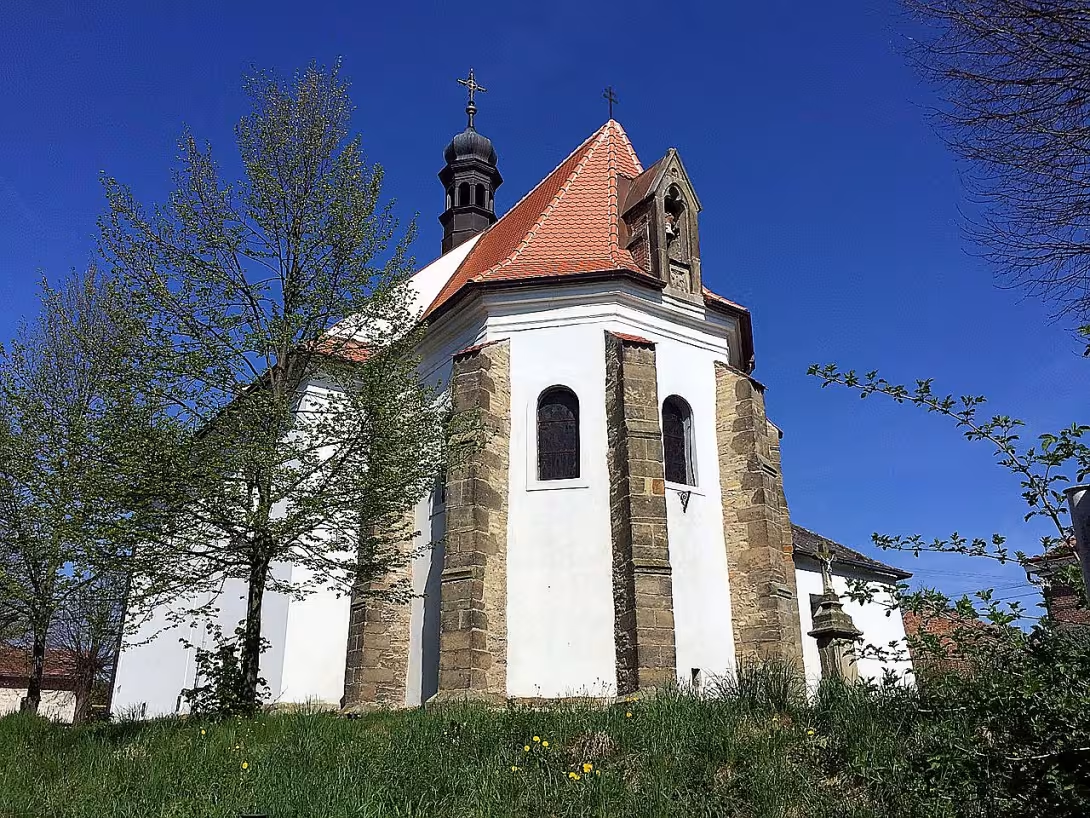
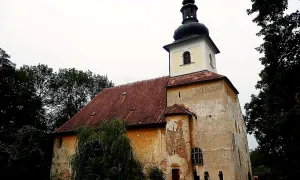
The Church of the Assumption of the Virgin Mary in Vejvanovice stands as a testament to both architectural and societal transitions. Centrally located within the village, this single-nave church transformed from Romanesque to Gothic style around 1349. Beyond its architecture, it serves as a farní kostel under the former Chrudim archdeaconry and welcomes visitors during Sunday masses.
Vejvanovice's origins trace back to 1167 when Count Bavor entrusted the village to the Litomyšl Monastery. By the 14th century, it became part of the Pardubice estate. Around 1349, the church shifted from Romanesque to Gothic style, reflecting Bohemia's religious and political changes, including the rise of the Hussite movement.
Architecturally, the Church is distinguished by its single-nave structure with a three-sided presbytery facing westward. The oldest part, this presbytery, features double-tiered buttresses and a cross-ribbed vault with herringbone ribs merging into the wall. Baroque elements dominate the interior from the early 18th century, including an elaborate main altar dedicated to the Assumption of the Virgin Mary and a richly decorated wooden pulpit. The nave is vaulted with a barrel vault featuring lunettes framed by stucco bands, while Tuscan pilasters segment its walls.
Ownership and administration have changed over time. Initially under Count Bavor in 1167, Vejvanovice later became part of the Pardubice estate in the 14th century. In 1396, parts were sold into private ownership until Ferdinand Kinský z Vchynic unified it by purchasing both sections in 1789. The church expanded in 1724 under Count Štěpán Vilém Kinský, who also initiated a parish house construction in 1720.
Throughout its history, the church has witnessed key events and curiosities. After the Hussite Wars, it served as a parish for both confessions before becoming Protestant. The wooden bell tower, dating back to the 18th century, replaced an earlier structure and stands as a notable feature of the site. These elements underscore the church's resilience through various historical periods.
Today, the Church remains accessible during Sunday services. Its serene setting in the village center, complemented by a wooden bell tower and nearby small chapel, offers visitors a chance to explore its rich history and architectural beauty. The blend of Romanesque and Gothic elements, along with its Baroque interior, makes it a worthwhile destination for those interested in historical architecture and religious heritage.
The Church of the Assumption of the Virgin Mary is not only a place of worship but also a cultural landmark encapsulating centuries of history and architectural evolution. Its enduring presence invites visitors to delve into the past while appreciating its timeless beauty. Whether drawn by historical significance or architectural charm, this church offers a unique glimpse into Vejvanovice's rich heritage.
Then and now
Drag the slider to compare how the landmark may have looked when it was built with the view today.
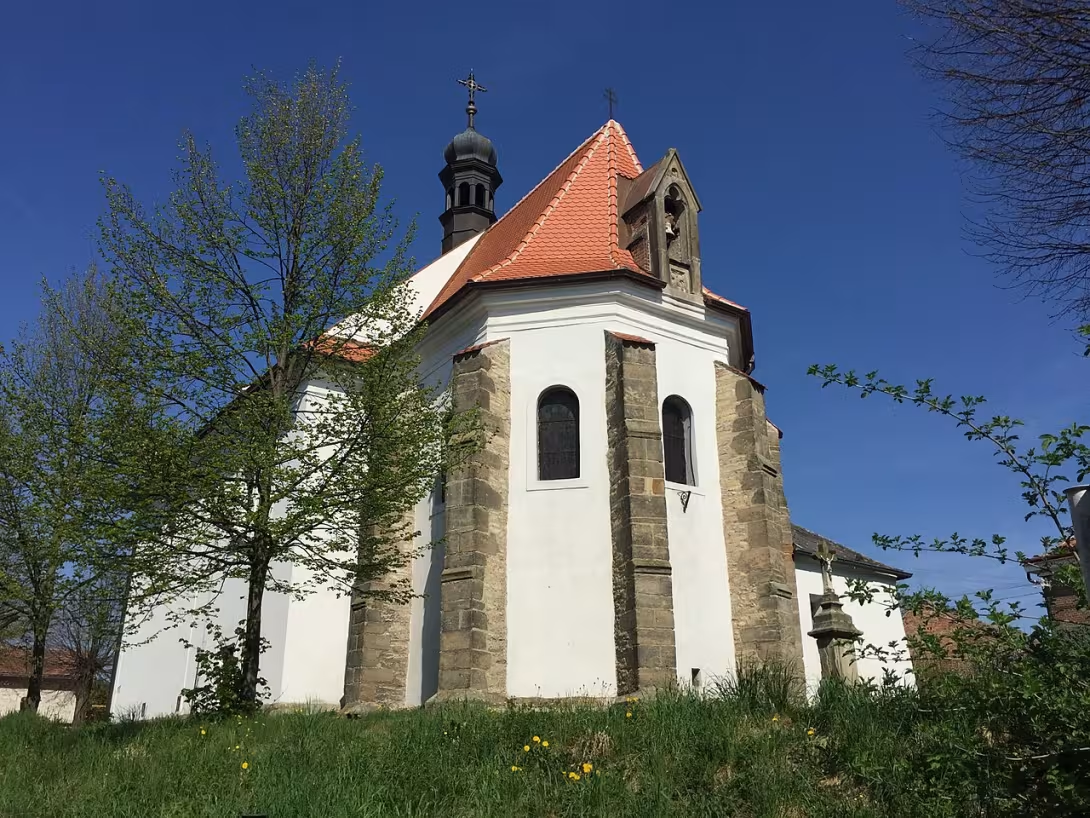

The historical appearance on the left is an AI-generated visualisation and serves as inspiration only.
Historical milestones
- 1167
- Count Bavor entrusted Vejvanovice to the Litomyšl Monastery.
- 14th century
- Vejvanovice became part of the Pardubice estate.
- 1349
- Church transformed from Romanesque to Gothic style.
- 1396
- Parts of Vejvanovice sold into private ownership.
- 1720
- Construction of a parish house initiated by Count Štěpán Vilém Kinský.
- 1724
- Church expanded under Count Štěpán Vilém Kinský.
Architectural development
The Church of the Assumption of the Virgin Mary underwent significant architectural changes over time. Initially Romanesque, it was converted to Gothic style around 1349. After the Hussite Wars, it served as a parish under both confessions and later became Protestant. In 1720, a parish house was constructed, and by 1724, the church was expanded with its current main nave.
Historical events
- 1167
- Vejvanovice came under the administration of Count Bavor, who entrusted it to the Litomyšl Monastery.
- 1349
- The originally Romanesque church was transformed into Gothic style.
- 1720
- A parish house was built under the initiative of Count Štěpán Vilém Kinský.
Owners
The village of Vejvanovice was initially under the administration of Count Bavor in 1167, who entrusted it to the Litomyšl Monastery. In the 14th century, it became part of the Pardubice estate and was later divided into private ownership in 1396. Ferdinand Kinský z Vchynic unified the village by purchasing both parts in 1789.
Points of interest
- The Church of the Assumption of the Virgin Mary in Vejvanovice is unique for its transition from Romanesque to Gothic style around 1349, reflecting broader Bohemian religious and political shifts during that era.
- Interestingly, after the Hussite Wars, the church served as a shared parish for both Catholic and Protestant congregations before becoming exclusively Protestant, highlighting its role in the region's religious history.
- The wooden bell tower, which dates back to the 18th century, replaced an earlier structure and stands out as a distinctive feature of this historical site, showcasing changes in architectural preferences over time.
- In 1724, Count Štěpán Vilém Kinský expanded the church, illustrating how local nobility influenced ecclesiastical architecture through personal patronage during that period.
- The church's main altar and pulpit are adorned with Baroque elements from the early 18th century, marking a significant stylistic shift in its interior decoration and reflecting broader European artistic trends.
Guide
This guide is narrated by a synthetic voice generated by artificial intelligence.
Show guide text
This text was created by artificial intelligence and has not been editorially reviewed. It may contain inaccuracies.
Welcome to the Church of the Assumption of the Virgin Mary in Vejvanovice, a remarkable testament to architectural evolution and historical depth nestled within this charming village. As you stand before its façade, take a moment to absorb the serene atmosphere that envelops this single-nave structure with its distinctive three-sided presbytery facing westward.
The origins of this sacred site trace back to 1167 when Count Bavor entrusted Vejvanovice to the Litomyšl Monastery. This pivotal act laid the foundation for a series of transformations that would shape not only the church but also the community it served. By the 14th century, Vejvanovice became part of the Pardubice estate, marking a new chapter in its storied past.
As you gaze upon the church's exterior, notice how it seamlessly blends Romanesque roots with Gothic elegance—a transformation completed around 1349. This architectural metamorphosis mirrors broader Bohemian religious and political shifts during that era. Inside, your eyes will be drawn to the Baroque decorations from the early 18th century, including an elaborate main altar and a wooden pulpit—testaments to the artistic endeavors of their time.
Let us now delve into some key stories and figures linked to this sacred ground. Count Bavor's initial endowment set in motion centuries of ecclesiastical stewardship, culminating in significant contributions from notable personalities such as Ferdinand Kinský z Vchynic and Count Štěpán Vilém Kinský. The latter was instrumental in initiating the construction of a parish house in 1720 and expanding the church two years later.
A fascinating aspect of this church is its role after the Hussite Wars, serving as a shared parish for both Catholics and Protestants—a rare example of religious coexistence during turbulent times. This unique history adds an intriguing layer to your visit, inviting you to ponder the stories and lives intertwined with this sacred space.
As we conclude our journey through time at the Church of the Assumption of the Virgin Mary, I invite you to explore further, perhaps wandering around Vejvanovice or visiting nearby historical sites. Thank you for joining me on this enlightening tour, and may your exploration continue to be filled with discovery and wonder. Safe travels!
Frequently asked questions
Can the monument be visited?
Religious buildings are usually open mainly during services; at other times a visit is normally arranged with the parish or the operator. We have not verified specific times.
Where is the monument?
Location: Vejvanovice, Pardubický kraj. The map on this page shows the exact spot.
Why is the monument protected?
It is listed in the Central List of Cultural Monuments of the Czech Republic as a cultural monument (register no. 32937/6-1012).
Businesses nearby
Do you run a restaurant, accommodation, shop, museum, rental, wellness or other visitor service near this monument? Show yourself directly to the people heading to it — this is how they will see you in the app and on the web:
Events nearby
Zdroj akcí: otevřená data měst a obcí ČR (Národní katalog otevřených dat) a kalendář akcí Národního památkového ústavu.
Nearby
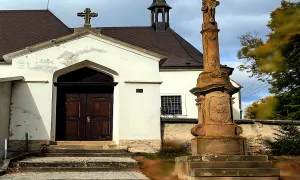
Located in the village center of Vejvanovice, the church is surrounded by a wooden bell tower and a small chapel. The area offers a serene landscape typical of the Pardubický region.
Accommodation nearby
Themed route
Thematic Walking Tour: Vejvanovice
1. Church of the Assumption of the Virgin Mary (Vejvanovice)
Type: Historical Church
Why Visit: This stunning Baroque church, located in the heart of Vejvanovice village, is a testament to the region's rich architectural heritage. Its serene ambiance and intricate design make it a must-visit for those interested in religious architecture and history.
2. Wooden Bell Tower
Type: Architectural Structure
Why Visit: Adjacent to the church, this charming wooden bell tower offers panoramic views of the surrounding Pardubický landscape. Its unique construction provides insight into traditional building techniques used in the region, making it a fascinating stop for architecture enthusiasts.
3. Small Chapel
Type: Religious Site
Why Visit: Situated near the church and bell tower, this quaint chapel adds to the spiritual atmosphere of Vejvanovice. Its peaceful setting is perfect for reflection or simply enjoying the tranquility typical of the area's serene landscape.
4. Village Center of Vejvanovice
Type: Cultural Area
Why Visit: After exploring the church and its immediate surroundings, take a leisurely walk through the village center. This charming area offers a glimpse into local life and culture, with traditional buildings and pathways that invite exploration and appreciation.
5. Church Nádvoří (Courtyard)
Type: Outdoor Space
Why Visit: Conclude your tour by spending some time in the church courtyard. This open space provides an opportunity to relax and absorb the peaceful ambiance of Vejvanovice, surrounded by historical architecture and natural beauty.
This thematic walking tour offers a comprehensive experience of Vejvanovice's cultural and architectural highlights, all within the village center.
Seasonal recommendations
Spring: The arrival of spring at the Nanebevzetí Panny Marie Church in Vejvanovice is marked by a vibrant transformation as nature awakens around this historic site. The surrounding landscape bursts into life with blooming flowers and lush greenery, creating a picturesque setting that enhances the church's architectural beauty. The gentle warmth of spring days invites visitors to explore at their leisure, often when crowds are minimal. It’s advisable to wear layers, as temperatures can vary, ensuring comfort during your visit. This season offers an ideal opportunity for photography enthusiasts to capture the church in harmony with nature's renewal.
Summer: Summer is a popular time to visit Nanebevzetí Panny Marie Church due to its warm and inviting atmosphere. The long daylight hours provide ample time to explore both the church’s interior and its serene surroundings, which are alive with greenery. However, this season also attracts larger crowds, especially during peak tourist periods, so it's wise to arrive early in the day to avoid congestion. Light, breathable clothing is recommended to stay comfortable under the summer sun, and carrying water is essential for a pleasant visit.
Autumn: Autumn brings a unique charm to Nanebevzetí Panny Marie Church with its rich tapestry of golden leaves and crisp air. The changing colors of the foliage create a stunning backdrop that beautifully complements the church’s historical architecture. This season tends to be less crowded, offering a more tranquil experience for visitors who appreciate the serene beauty of fall. Layered clothing is advisable due to cooler temperatures, and an early visit can ensure you enjoy the site before any potential rain showers typical of late autumn.
Winter: The winter months envelop Nanebevzetí Panny Marie Church in a quiet, almost ethereal atmosphere as snow blankets the landscape, transforming it into a serene winter wonderland. This season offers a unique perspective on the church’s architecture, with its features highlighted against the stark beauty of the snowy surroundings. Visitors should dress warmly and be prepared for shorter visiting hours due to the colder weather. Winter is an excellent time for those seeking solitude and reflection away from the summer crowds, providing a peaceful setting for contemplation amidst nature's quietude.
Visualizations and artistic views


The visualisations are generated by artificial intelligence and serve as inspiration.
Photos from the area
Real photos taken near the monument


Zdroj a licence jsou uvedeny u každého snímku.
Tips from visitors
No tips yet. Be the first!
Log in and add your tip.
Sources and literature
Photos: Folovkla / CC BY-SA 4.0 — Wikimedia Commons. The author and licence also appear when you hover over the image.
Faktickým podkladem tohoto textu byl článek na Wikipedii, jehož autory jsou přispěvatelé Wikipedie. Článek je dostupný pod licencí CC BY-SA 4.0.
Location on the map

Příběhy a pověsti
Legendy, pověsti a příběhy spjaté s touto památkou
Fotografie návštěvníků
Zatím žádné fotografie. Buďte první, kdo přidá fotografii z návštěvy!
Log in a přidejte svou fotografii nebo hodnoťte.
Za ověřenou návštěvu v aplikaci získáte víc bodů — poznáme podle GPS, že jste na místě.
Reviews and comments