



Kostel Narození svatého Jana Křtitele (Proboštov) Church
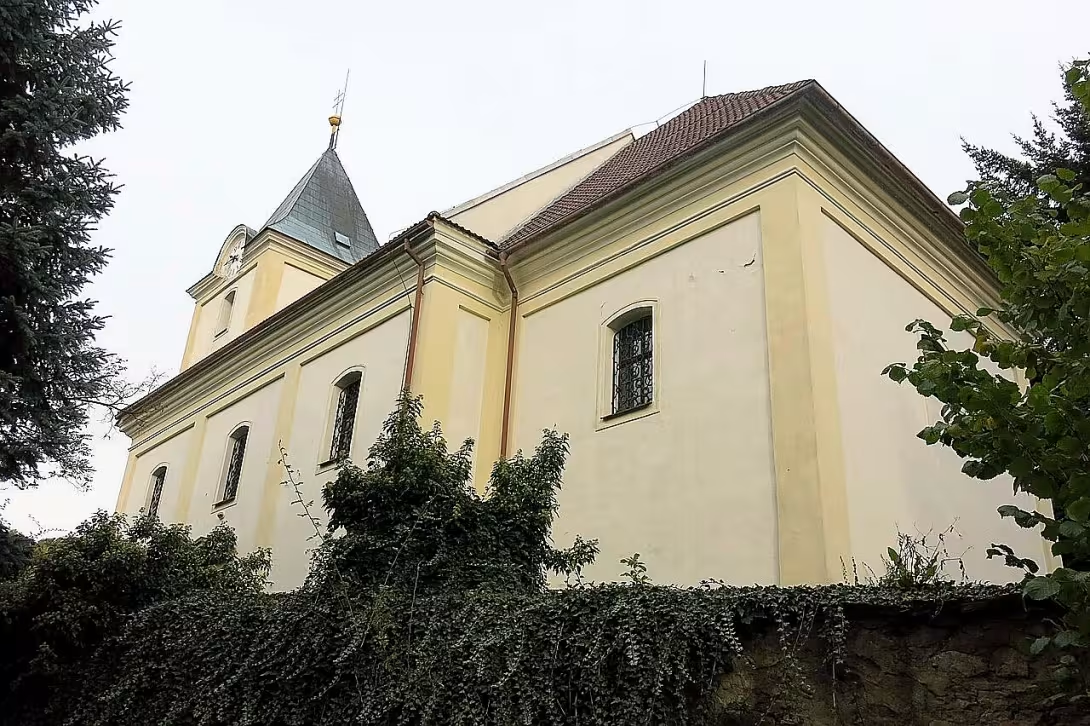
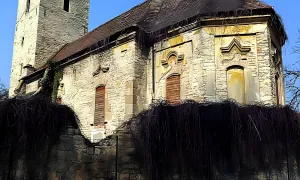
The church of the birth of St. John the Baptist in Proboštova is a sacral building which is built on a high above the village. It is a parish temple of the parish Proboštov, protected as a cultural monument of the Czech Republic. The architectural layers of its walls tell of several centuries of local religious and building traditions.
Originally, the Gothic temple underwent an ongoing Baroque reconstruction in 1670, which fundamentally affected its present appearance. In 1720 there were glasses of presbytery, important building events that changed the character of liturgical space. The last significant modification was the reconstruction from 1870 when the construction was adapted to the new needs of the time.
The architecture of the church is characterized by a clear plan: a rectangular boat with a right-hand closed presbytery. The dominant element, the prism tower with the needle roof, forms a characteristic silhouette. The facades decorate the lizene frames and semi-rounded windows. In the interior the presbyterium is equipped with a rolling vault with lunets, while the ship has a flat ceiling. A mysterious witness to the advent of the next centuries is the 16th century wall sanctuary.
The church's facilities reflect various historical periods. The main altar is Baroque work from 1780 with statues of saints. Two side altars in the rococo style from the second half of the 18th century are unloaded with richly cut rocai frames. The pulpit shows flat reliefs of Faith and Hope dating back to 1780. The baptismal, stone and late Gothic, is украsed with linear ornament. The wooden statue of the saint from 1862 was preserved in a nice way against the entrance.
The church bells tell their own story. Today in the tower sound does not sound - the last bell was stolen. Historically, however, the church had three bells: the bell of 1524 from Tomáš z Litoměřice, the bell of 1749 from Jakub Konrad Löhner and the bell of 1867 from František Herold.
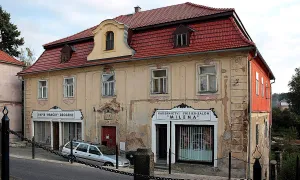
The church area is worth watching. The Baroque rectory from around 1700 is free, rectangular and storey construction with a mansard roof. On a bridge in the village is a statue of St. John Nepomuk from 1862 on a prism plinth whose head has been damaged in the past.
Then and now
Drag the slider to compare how the landmark may have looked when it was built with the view today.
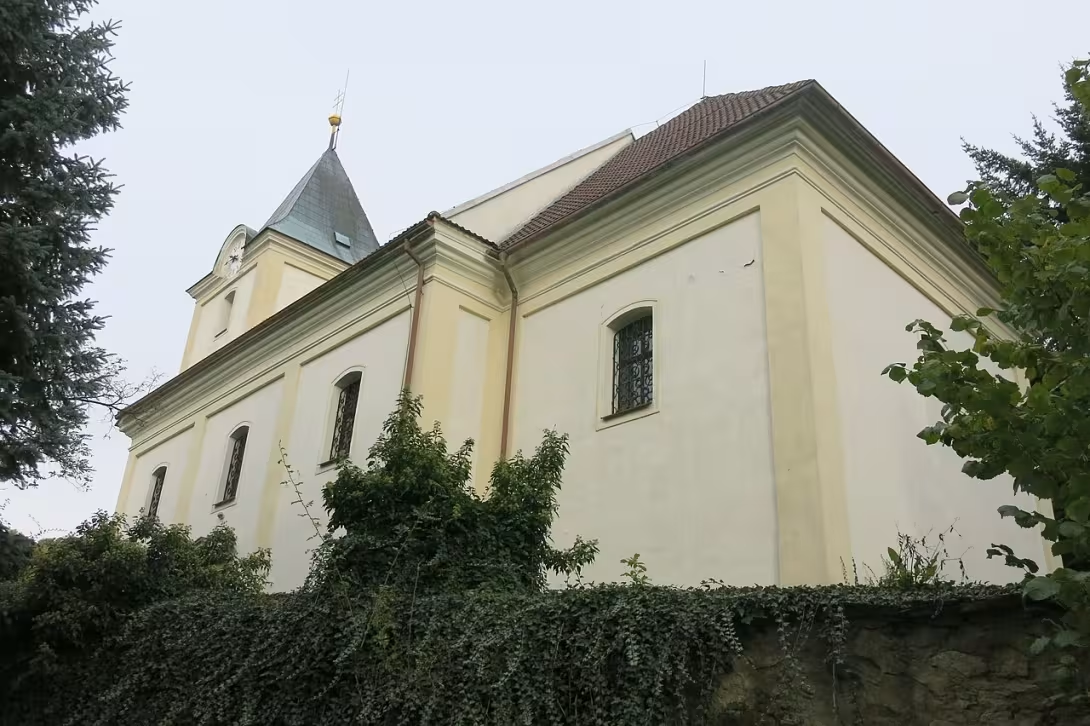
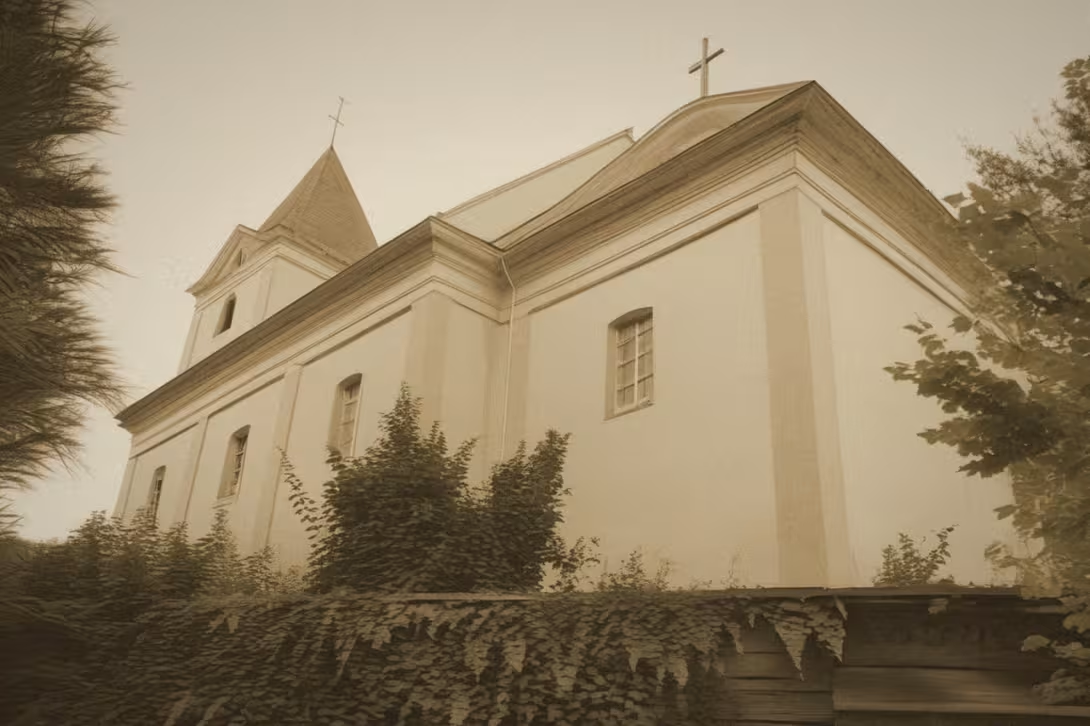
The historical appearance on the left is an AI-generated visualisation and serves as inspiration only.
Historical milestones
- 1524
- The cast of the oldest documented bell by Tomáš from Litoměřice.
- 1670
- Baroque reconstruction of originally Gothic church.
- 1720
- Glass presbytery with a glass vault with lunettes.
- 1870
- Finishing construction modifications to today's form.
Architectural development
Originally medieval Gothic building was rebuilt in 1670 in Baroque style. In 1720, the presbytery won a valence vault with lunettes, while the ship remained flat-ceiling. The final architectural modifications of the facades with lizene frames and the modification of the tower took place in 1870.
Historical events
Baroque reconstruction of originally Gothic building in 1670 and subsequent glassmaking of presbytery in 1720.
Points of interest
- In the interior there is a 16th-century wall sanctuary, which is described as a mysterious witness to the past. - The late Gothic stone baptism is decorated with linear ornament. - There's no sound in the church tower today because the last bell was stolen. - Historically, there were three bells in the building, the oldest from Tomáš z Litoměřice from 1524. - On the bridge in the village is a statue of St. John Nepomuk whose head has been damaged in the past.
Guide
This guide is narrated by a synthetic voice generated by artificial intelligence.
Show guide text
This text was created by artificial intelligence and has not been editorially reviewed. It may contain inaccuracies.
The Church of the Birth of Saint John the Baptist stands on a raised area above the village of Proboštov. It is the parish church of the local parish and is protected as a cultural monument of the Czech Republic.
Originally it was a Gothic building. In 1670 the church was rebuilt in the Baroque style and in 1720 the presbytery received a vault. Further structural modifications took place in 1870 and the present appearance of the church dates from that time.
The building is rectangular and the presbytery is closed at right angles. In front of the façade stands a prismatic tower with a pyramidal roof. The façades are divided by pilaster frames and the windows are topped with semicircles. The presbytery is covered with a barrel vault with lunettes, the nave has a flat ceiling. In the presbytery there has been preserved a wall sanctuary from the sixteenth century.
The main altar is Baroque, dating from 1780, and statues of saints stand on it. The two side altars are Rococo, from the second half of the eighteenth century, and have richly carved rocaille frames. The pulpit is decorated with flat reliefs of the divine virtues of Faith and Hope, also from 1780. The baptismal font is stone and late Gothic. Its base has a ring and the polygonal chalice is divided by rectangular sunken fields, alternately decorated with linear ornament. In a niche opposite the entrance stands a wooden statue of a saint from 1862.
There is no bell in the tower today. The last one was stolen years ago. Three bells are documented here. The oldest was cast in 1524 by Tomáš of Litoměřice, another in 1749 by Jakub Konrád Löhner and the third in 1867 by František Herold.
The village also includes a Baroque rectory from around 1700. It is a freestanding rectangular two-storey building with a mansard roof and rectangular windows and entrance. The ground floor is vaulted with a barrel vault with lunettes, the upper floor has a flat ceiling.
On a small bridge in the village stands a statue of Saint John of Nepomuk from 1862 on a prismatic pedestal. The head of the statue is damaged.
Tips for visitors
The best time to visit is during the morning hours, when the sun ideally illuminates the facade of the church and allows the baroque architectural details to stand out. In calmer times you will enjoy the atmosphere of the historical core of the village.
You can reach Proboštova by car and public transport. We recommend using online connection search engines for current public transport connections.
For photography we recommend using the morning light that highlights the structure of the tower. An interesting object for detailed pictures is a Baroque rectory with a Mansard roof or statue of St. John Nepomuk on the bridge, which is a unique historical testimony due to its unusual absence of head.
In the immediate vicinity of the church you can admire the Baroque parish from the beginning of the eighteenth century and the statue of St. John Nepomuk from the nineteenth century, located on the local bridge.
For families with children the visit is suitable as a simple walk in history. The surrounding area of the church is safe and allows children to see the exterior of the monument and adjacent historical objects at a quiet pace.
Frequently asked questions
Can the monument be visited?
Religious buildings are usually open mainly during services; at other times a visit is normally arranged with the parish or the operator. We have not verified specific times.
Where is the monument?
Location: Proboštov č.ev. 16, Malečov, Ústecký kraj. The map on this page shows the exact spot.
Why is the monument protected?
It is listed in the Central List of Cultural Monuments of the Czech Republic as a cultural monument (register no. 42979/5-252).
For kids
Imagine coming back 156 years. The Church of the Birth of St. John the Baptist in Proboštov was still a small chapel. But what happened to a beautiful church there today?
Who lived here? Especially people from the village Proboštov and the surrounding area. They were peasants, businessmen, cattle farmers... Everyone gathered in a small chapel to pray and celebrate their important anniversary.
Businesses nearby
Do you run a restaurant, accommodation, shop, museum, rental, wellness or other visitor service near this monument? Show yourself directly to the people heading to it — this is how they will see you in the app and on the web:
Events nearby

Zdroj akcí: otevřená data měst a obcí ČR (Národní katalog otevřených dat) a kalendář akcí Národního památkového ústavu.
Nearby
Near the church stands a Baroque rectory from around 1700 with a mansard roof. On the bridge in the village there is a statue of St. John Nepomuk from 1862, which is missing a head.
Accommodation nearby
Trips and activities nearby
Guided tours, tickets and activities nearby from GetYourGuide
Affiliate link: if you buy from the partner, we may receive a commission. The price for you does not change.
Search tours and activities →Themed route
Thematic cruise route: Kostel Narození svatého Jana Křtitele (Proboštov)
1. Church of the Birth of St. John the Baptist * Type: * Historical landmark * Why is it worth visiting: * This church is an important architectural monument of the village Proboštov. Its history and wealth of detail attract not only passengers but also local people interested in the region's heritage.
2. Baroque rectory * Type: * Architectural landmark * Why is it worth a visit: * Located near the church and presents a beautiful example of Baroque architecture with a distinctive Mansard roof. It is an ideal place for those interested in the history and development of local sacral structures.
3. Statue of St. John Nepomuk * Type: * Historical statue * Why is it worth visiting: * This statue from 1862, despite a missing head, is an important local monument. Its location on the bridge in the village Proboštov gives the place a unique character and offers a beautiful view of history.
This route offers visitors the opportunity to explore the rich cultural heritage of the village Proboštov, focused on its sacral and architectural monuments.
Seasonal recommendations
Spring In the spring months, the Church of the Born of St. John the Baptist is surrounded by green robes when nature wakes up around it - young leaves on nearby trees and flowering meadows create a calm, almost idyllic atmosphere. The morning sun penetrates through stained glass and creates a light game on the stone walls that highlights the details of Gothic art. The air is fresh but still cold, and the church, surrounded by blooming trees, offers an ideal escape from the urban rush. It is recommended to visit it early in the morning when the surroundings are almost desolate and the light is the most beautiful. Clothes should be layered - warm but not too heavy because spring weather is variable. It is also appropriate to wear comfortable shoes, as the surrounding roads can be muddy.
Summer In the summer months, especially in the high season, the church becomes a popular destination for tourists looking for a quiet place to relax or take pictures. The sun's rays fall directly on the facade, creating sharp shadows and revealing architectural details more clearly. The surrounding area is lively - green meadows and trees provide a pleasant shade, but inside the church can be rather stuffy thanks to closed windows. It is recommended to come in the morning when heat is still tolerable and the crowds are smaller, or in the late afternoon when visitors begin to return. Clothes should be easy, but with the possibility of covering the shoulders, because the church is a place of respect. Don't forget the hat or hat - the sun in summer days can be intense.
Autumn Autumn brings golden and red colors around the church, which are reflected in the church windows and create the impression of a warm but melancholy environment. Freezing air and leaves on the road provide a special atmosphere to visit the church, as if time had passed more slowly. The sun sets earlier, so it is the best time to visit the afternoon when light still illuminates the facade and interior. It is recommended to warm but not too thick clothes - autumn weather can be cold but not extreme. It is also appropriate to take an umbrella because rainy days are no exception. The surrounding area is quieter at this time, so you can enjoy not only the church but also the walking surrounding nature.
Winter The winter landscape around the church turns into a white desert, where snow sheets and silver frost provide a mysterious and peaceful atmosphere to the memory. The sun, which appears only briefly, illuminates the church from an angle that highlights its Gothic shapes and creates long shadows on snow. The interior of the church is warm and cozy, which is an ideal escape from freezing outdoor weather. It is recommended to visit it in the afternoon when the light is most beautiful and the crowds are minimal. Clothes should be warm, laminated and waterproof - temperatures can fall below freezing, and snowstorms are not uncommon. The accessibility of some parts of the area is also limited in winter, so it is good to know about the state of travel in advance.
Visualizations and artistic views


The visualisations are generated by artificial intelligence and serve as inspiration.
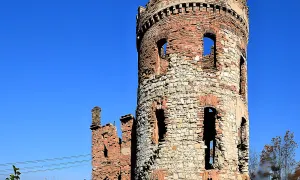
Photos from the area
Real photos taken near the monument

Zdroj a licence jsou uvedeny u každého snímku.
Atmosphere of the place
This atmospheric visualisation of the place and period was generated by artificial intelligence. It is not real footage of the location.
Tips from visitors
No tips yet. Be the first!
Log in and add your tip.
Sources and literature
Photos: Barocco7 / CC BY-SA 4.0 — Wikimedia Commons. The author and licence also appear when you hover over the image.
Faktickým podkladem tohoto textu byl článek na Wikipedii, jehož autory jsou přispěvatelé Wikipedie. Článek je dostupný pod licencí CC BY-SA 4.0.
Location on the map

Příběhy a pověsti
Legendy, pověsti a příběhy spjaté s touto památkou
Fotografie návštěvníků
Zatím žádné fotografie. Buďte první, kdo přidá fotografii z návštěvy!
Log in a přidejte svou fotografii nebo hodnoťte.
Za ověřenou návštěvu v aplikaci získáte víc bodů — poznáme podle GPS, že jste na místě.
Reviews and comments