






Kostel Navštívení Panny Marie (Blatno) Church
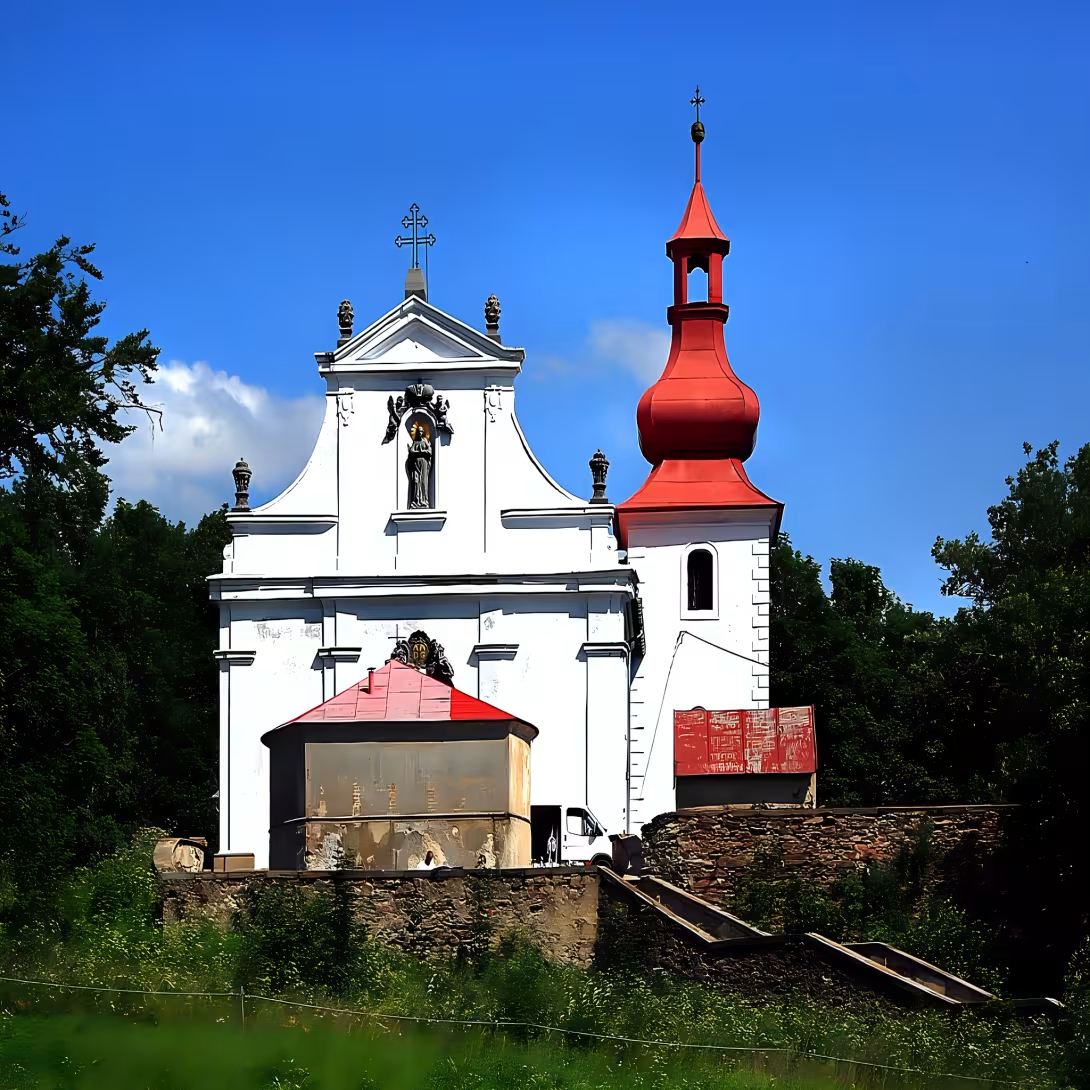
The Church of the Visitation of the Virgin Mary in Blatno is a Roman Catholic church located on a terrace above a low hill northeast of the village. Constructed at the beginning of the seventeenth century, it became an important pilgrimage site from the eighteenth to the early twentieth centuries, attracting up to 20,000 pilgrims annually. The church features a single-nave structure with a five-sided presbytery and is adorned with baroque elements. It was declared a cultural monument in 1963.
The first written mention of the chapel that preceded the current church dates back to 1592. Built during the early seventeenth century, it served as a spiritual center for the local community. By the late seventeenth century, Chomutov Jesuits acquired a bell for the chapel from Freiberg in 1669, indicating its growing importance. The church underwent significant expansions and renovations by 1674, including an added sacristy and tower. These changes were part of broader baroque modifications that continued until 1685.
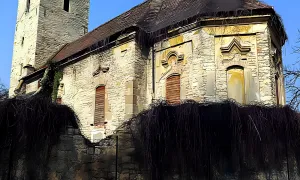
Architecturally, the Church of the Visitation is a single-nave structure constructed from stone and fired bricks. Its design includes a five-sided presbytery with external buttress pilasters at the corners. The church features two sacristies attached to its northern and southern sides, while a small chapel on the eastern side can be accessed via an exterior entrance from the south. A tower positioned approximately in the middle of the southern wall is topped by a bulbous dome with a lantern. This tower connects to a smaller annex housing a gallery roof, which has its own external entrance and links to one of the sacristies.
Throughout its history, the church underwent several architectural transformations. Between 1750 and 1800, it experienced late baroque modifications, including the addition of a southern sacristy and rococo-style decorations featuring preserved stucco with rococo cartouches and bands. Around 1800, a chapel was added to the eastern side of the presbytery. The most recent additions date back to the early twentieth century, including a small annex between the tower and the southern sacristy.
The church houses significant religious artifacts, such as a baroque main altar dating around 1700, which includes late Gothic wood carvings of the Virgin Mary. Additionally, there are two side altars dedicated to Saint Anne and Saint John Nepomucene. A niche above the western entrance features a sculpture of the Virgin Mary of May.
According to legend, the pilgrimage site was founded when a shepherd heard a warning from the Virgin Mary after cursing his disobedient flock. He discovered her statue in the bushes and brought it to the village, where locals decided to build a chapel for her at the location where the building materials repeatedly moved back to the original discovery spot.
Today, the Church of the Visitation stands as a testament to its historical and cultural significance. It remains accessible to visitors who wish to explore its architectural beauty and rich history. The church's blend of baroque elements and spiritual heritage makes it a worthwhile destination for those interested in religious architecture and local folklore. Its status as a protected cultural monument underscores its importance, inviting both pilgrims and tourists to appreciate its enduring legacy.
Then and now
Drag the slider to compare how the landmark may have looked when it was built with the view today.
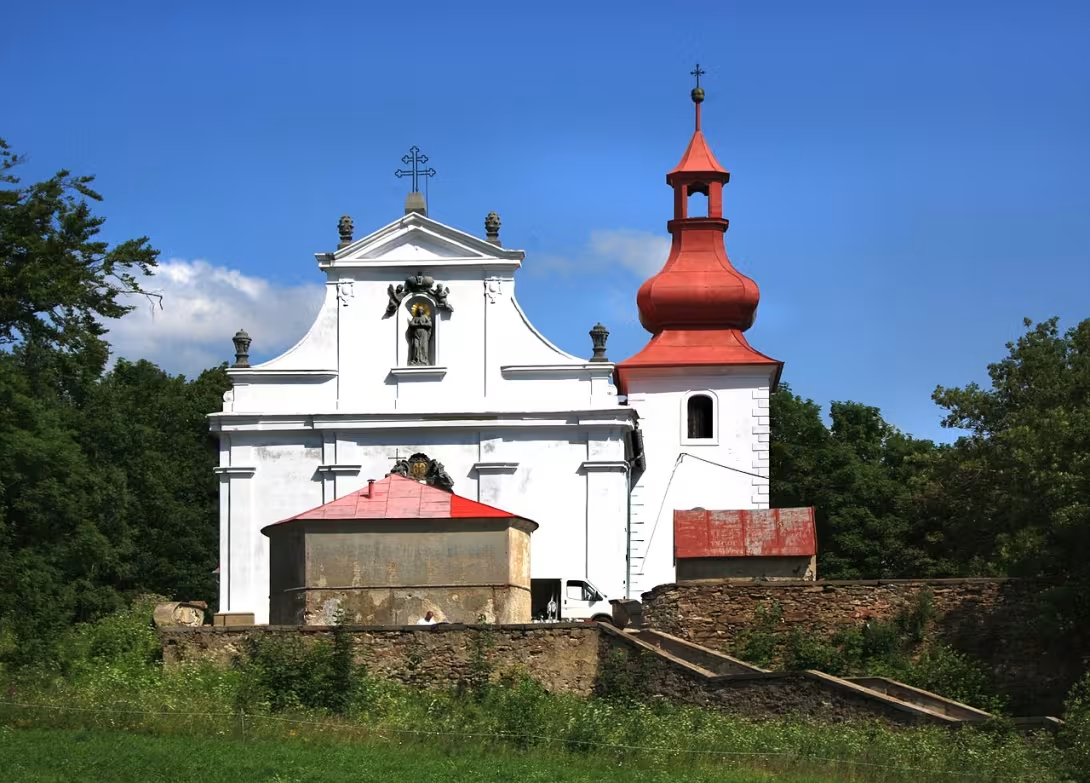
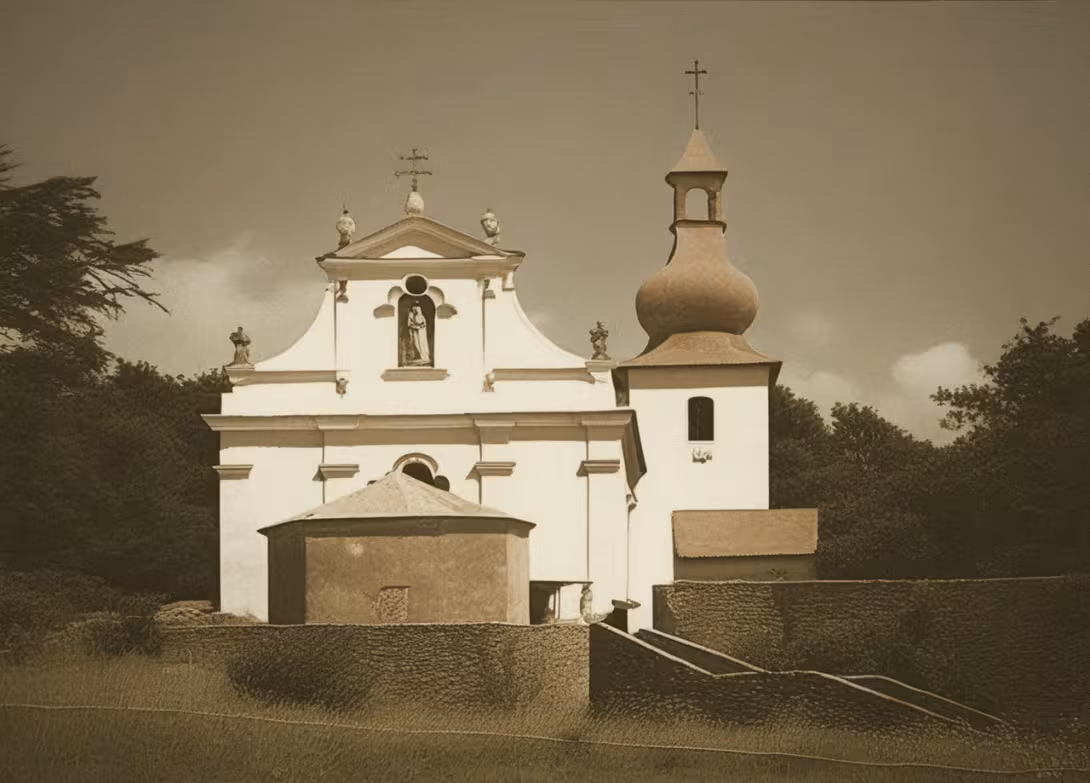
The historical appearance on the left is an AI-generated visualisation and serves as inspiration only.
Historical milestones
- 1592
- First written mention of the chapel that preceded the current church.
- 1669
- Chomutovští jezuité acquired a bell for the chapel from Freiberg.
Architectural development
Originally built in the early seventeenth century as a simple chapel, the church underwent significant expansions and renovations. By 1674, it was extended with an added sacristy and tower, followed by baroque modifications until 1685. Further enhancements occurred between 1750-1800, including the addition of a southern sacristy and rokoko-style decorations. The most recent additions date back to the early twentieth century.
Historical events
The first written mention of the chapel, which preceded the current church, dates back to 1592.
In 1669, chomutovští jezuité acquired a bell for the chapel from Freiberg.
Points of interest
- The church's bell was acquired from Freiberg in 1669 by the Chomutov Jesuits, highlighting its growing significance and connection to broader European religious networks during that period.
- An intriguing legend surrounds the church’s founding: a shepherd heard a warning from the Virgin Mary after cursing his flock. He found her statue among bushes, and when locals attempted to build a chapel elsewhere, the building materials mysteriously returned to the original discovery site.
- The church's main altar, dating around 1700, uniquely combines late Gothic wood carvings of the Virgin Mary with baroque elements, showcasing an interesting blend of artistic styles from different periods.
- In addition to its architectural transformations, the church features a niche above the western entrance that holds a sculpture of the Virgin Mary of May, adding a distinct spiritual and artistic dimension to its facade.
- The small annex added between the tower and southern sacristy in the early twentieth century represents one of the latest additions to the church, reflecting ongoing adaptations and enhancements over centuries.
Guide
This guide is narrated by a synthetic voice generated by artificial intelligence.
Show guide text
This text was created by artificial intelligence and has not been editorially reviewed. It may contain inaccuracies.
The Church of the Visitation of the Virgin Mary stands in Květnov, which belongs to the municipality of Blatno in the Chomutov region. It is built on a terrace on a low hill to the northeast of the village. From the eighteenth century until the beginning of the twentieth century, it was a well-known pilgrimage site. Every year, up to twenty thousand pilgrims came here from both sides of the Krušné Mountains. Since nineteen sixty-three, the church has been protected as a cultural monument.
A legend explains the origin of the pilgrimage site. A shepherd allegedly cursed his disobedient flock of sheep when he heard a warning from the Virgin Mary and caught sight of her statue in the bushes. He took it to the village and the inhabitants decided to build a chapel. However, the delivered building materials were always moved back to the place where the statue lay. The chapel therefore eventually grew right there.
Documented history begins with a chapel that was built in the first third of the sixteenth century. It is first mentioned in writing in fifteen ninety-two. It was maintained by Jesuits from Chomutov, who bought a bell for it in Freiberg in sixteen sixty-nine. From the original chapel, today's chancel and approximately twelve meters of the nave have survived. In sixteen seventy-four, the building was expanded. The nave was extended to the west and received a false vault with stucco decoration and a gallery. A sacristy was also added. A year later, the tower was built. An enclosure wall with stairs and a small chapel of the Birth of the Virgin Mary opposite the western façade also came into being.
Further alterations came in the second half of the eighteenth century. A southern sacristy was added and the gallery received a balustrade. Walls and ceiling were covered with stucco with rococo cartouches, which have been preserved to this day. Around eighteen hundred, a small chapel was attached to the east side of the chancel. The youngest part is a small extension between the tower and the southern sacristy from after nineteen hundred.
The single-nave church is built of stone and fired bricks. The nave is followed by a pentagonal chancel with supporting pilasters. The tower on the south side is crowned with an onion dome and lantern. In the western gable above the main entrance is a niche with a statue of the Virgin Mary of Květnov. The Baroque main altar dates from around seventeen hundred and includes a late Gothic wooden carving of the Virgin Mary. It is supplemented by two side altars dedicated to Saint Anne and Saint John of Nepomuk.
Tips for visitors
The best time to visit the Church of the Visitation of the Virgin Mary in Blatno is during late spring or early autumn. During these seasons, the weather is typically mild, and the surrounding landscape is particularly beautiful with blooming flowers in spring and vibrant foliage in autumn. Additionally, visiting outside of peak tourist season can provide a more serene experience, allowing you to appreciate the church's architecture without large crowds.
When planning your visit, consider bringing comfortable walking shoes as the terrain around the church involves some elevation due to its location on a terrace above a low hill. Additionally, carrying a light jacket is recommended since weather conditions can change quickly, especially during transitional seasons like spring and autumn. A small backpack with water, snacks, and perhaps a camera or smartphone for capturing photos would also be useful.
Photography enthusiasts will find several spots around the church offering excellent lighting, particularly during the golden hours of early morning or late afternoon when sunlight casts soft shadows and highlights the architectural details beautifully. The elevated position provides panoramic views that are ideal for landscape photography. Be mindful to respect any signage regarding restricted areas within the church grounds.
For those interested in exploring nearby attractions within a 30-minute drive, consider visiting other historical sites or natural landscapes in the Ústecký kraj region. While specific locations are not listed here, this area is known for its rich history and scenic beauty, offering opportunities to explore local culture and nature.
Frequently asked questions
Can the monument be visited?
Religious buildings are usually open mainly during services; at other times a visit is normally arranged with the parish or the operator. We have not verified specific times.
Where is the monument?
Location: Blatno, Ústecký kraj. The map on this page shows the exact spot.
Why is the monument protected?
It is listed in the Central List of Cultural Monuments of the Czech Republic as a cultural monument (register no. 45379/5-451).
Businesses nearby
Do you run a restaurant, accommodation, shop, museum, rental, wellness or other visitor service near this monument? Show yourself directly to the people heading to it — this is how they will see you in the app and on the web:
Accommodation nearby
Themed route
Tematická výletní trať: Blatno a Kostel Navštívení Panny Marie
1. Kostel Navštívení Panny Marie (Blatno)
Typ: Náboženská památka
Tento barokní kostel je srdcem místního náboženského života a architektonickým dědictvím obce Blatno. Jeho významná historie a bohatá interiérní dekorace činí z něj nezbytnou návštěvu pro každého, kdo se zajímá o historii a architekturu.
2. Místní muzeum v Blatnu
Typ: Kulturní instituce
Muzeum nabízí exponáty, které dokumentují historii obce a regionu. Je to skvělý způsob, jak se dozvědět více o místním dědictví a kultuře, což poskytuje kontext pro pochopení významu kostela.
3. Park u kostela
Typ: Městská zeleň
Tento park nabízí klidné chvíle na odpočinek a relaxaci při prohlídce oblasti kolem kostela. Je to ideální místo k procházce po návštěvě kostela, s krásnými zahradními prvky a pohodlnými sedacími místy.
4. Nádvoří kostela
Typ: Historické nádvoří
Nádvoří poskytuje příležitost prohlédnout si architektonické detaily zvenčí a pochopit kontext, v jakém se kostel nachází. Je to také místo, kde mohou probíhat různé kulturní akce nebo trhy během roku.
Tato trať nabízí komplexní pohled na historii a kulturu Blatna, zaměřený především kolem jeho hlavní náboženské památky.
Seasonal recommendations
Spring: Visiting the Church of Our Lady's Visitation during spring offers a unique experience with its enchanting natural surroundings. The blooming flowers and fresh greenery create a vibrant atmosphere, enhancing the historical beauty of the church. As the days lengthen, visitors can enjoy longer daylight hours for exploring the site. It’s advisable to wear comfortable layers as temperatures can vary, and while crowds are generally moderate, arriving early in the morning allows you to appreciate the serene environment before more people arrive.
Summer: Summer at the Church of Our Lady's Visitation is characterized by its lively atmosphere and lush landscapes. The warm weather invites visitors to spend extended periods outdoors, soaking up the sunlit ambiance that accentuates the church’s architecture. This season sees higher visitor numbers, so it's best to plan your visit early in the day to avoid crowds and ensure a more peaceful experience. Light clothing is recommended, along with sunscreen and water to stay hydrated during longer walks around the area.
Autumn: Autumn brings a distinct charm to the Church of Our Lady’s Visitation with its rich tapestry of fall colors enveloping the landscape. This season often experiences fewer visitors compared to summer, offering a more tranquil environment. Wearing layers that can be adjusted as temperatures fluctuate throughout the day is advisable.
Winter: Winter transforms the Church of Our Lady’s Visitation into a serene and picturesque scene, with snow-covered grounds adding a magical touch to its historic architecture. It’s crucial to dress warmly in layers, including hats and gloves, to stay comfortable during your visit. While winter can bring fewer visitors, it also offers a quieter atmosphere, perfect for appreciating the church in its peaceful winter setting.
Visualizations and artistic views


The visualisations are generated by artificial intelligence and serve as inspiration.
Photos from the area
Real photos taken near the monument


Zdroj a licence jsou uvedeny u každého snímku.
Tips from visitors
No tips yet. Be the first!
Log in and add your tip.
Sources and literature
Photos: Pavel Hrdlička (Czech Wikipedia user Packa) / CC BY-SA 3.0, rozlišení zvýšeno umělou inteligencí — Wikimedia Commons. The author and licence also appear when you hover over the image.
Faktickým podkladem tohoto textu byl článek na Wikipedii, jehož autory jsou přispěvatelé Wikipedie. Článek je dostupný pod licencí CC BY-SA 4.0.
Location on the map
Příběhy a pověsti
Legendy, pověsti a příběhy spjaté s touto památkou
Příběh: Kostel Navštívení Panny Marie (Blatno)
Bylo to v pondělí ráno, kdy Tomáš zjistil, že jeho ruka opustila hůl — tak se třesla. Čerstvý jarní vzduch přetékající počestnou uličkou vesnice Blatno by ne…
Číst příběh
Pověst: Kostel Navštívení Panny Marie (Blatno)
Podle místní pověsti, která se po staletí šeptává mezi vesnicemi rozesetými pod Krušnými horami, sahají počátky zdejšího posvátného místa do dob dávno před t…
Číst příběhFotografie návštěvníků
Zatím žádné fotografie. Buďte první, kdo přidá fotografii z návštěvy!
Log in a přidejte svou fotografii nebo hodnoťte.
Za ověřenou návštěvu v aplikaci získáte víc bodů — poznáme podle GPS, že jste na místě.
Reviews and comments