



Kostel Navštívení Panny Marie (Deštnice) Church
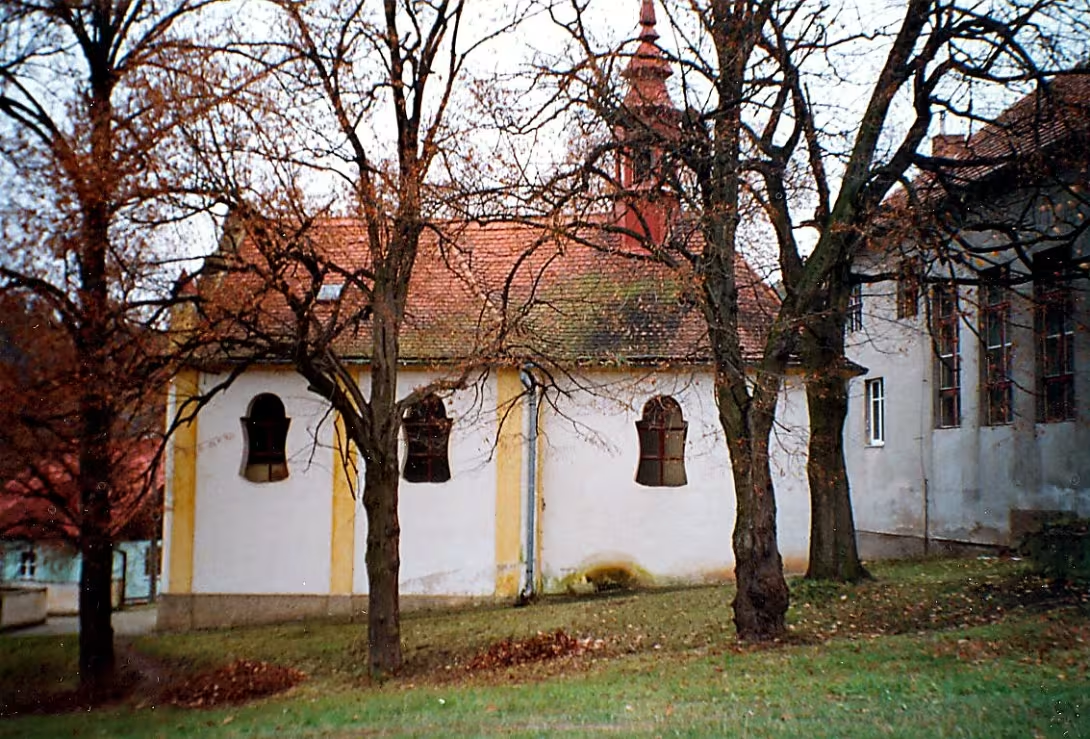
The Church of the Visitation of the Virgin Mary in Deštnice is a Roman Catholic filial church located in the village within the Ústecký Region of the Czech Republic. Built as a chapel in 1802 and later transformed, this late Baroque single-nave structure stands out for its historical significance and architectural simplicity. Despite deterioration over time, restoration efforts have been made to preserve its cultural heritage.
The origins of religious structures in Deštnice are somewhat ambiguous due to conflicting records. Some sources suggest a church with its own priest existed as early as 1405, but these claims lack substantiation from primary documents like the erector's book referenced by Jaroslav Schaller. It is assumed that a chapel existed during the 17th century, inferred from burial records dating back to the 1640s. The first reliable documentation of a church or chapel appears on Müller’s map of Bohemia published in 1720, though it was part of the parish of St. Lawrence in Měcholupy at that time. According to Poche's academic inventory of monuments, which lacks specific references, the current structure is dated to 1783; however, this conflicts with accounts from the Měcholupy parish records indicating a renovation in 1777 and subsequent demolition in 1802.
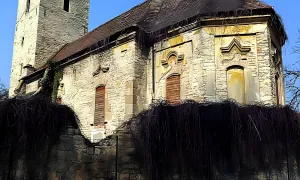
Architecturally, the Church features a late Baroque style characterized by an oblong floor plan. It is oriented southeast with a semi-circular presbytery that concludes its nave. The façade remains unadorned, emphasizing simplicity over ornamentation. Inside, the nave has a flat ceiling while the presbytery boasts a barrel vault with lunettes, creating a distinct spatial division marked by a triumphal arch.
Ownership and administration of the church have evolved since its construction in 1802. Initially under local patronage, it was later donated to a private individual in 2015. This transition marks a significant change in stewardship, with ongoing reconstruction efforts currently funded by the new owner.
Key events include its transformation from an original chapel into the present structure in 1802 and its state of disrepair reported in 2013, necessitating extensive repairs estimated at 150,000 Czech koruna for the roof alone. The restoration process has included installing new stained glass windows funded by sponsors.
Today, the church is undergoing comprehensive reconstruction to restore its historical integrity. Although most original furnishings have been lost over time, notable exceptions include a Rococo altar from the late 18th century and an organ. These elements highlight the church's enduring artistic value despite the passage of time.
The Church of the Visitation of the Virgin Mary in Deštnice offers visitors a glimpse into the region’s architectural history and cultural heritage. Its ongoing restoration underscores its significance as a historical monument, making it a worthwhile destination for those interested in exploring Central European religious architecture.
Then and now
Drag the slider to compare how the landmark may have looked when it was built with the view today.
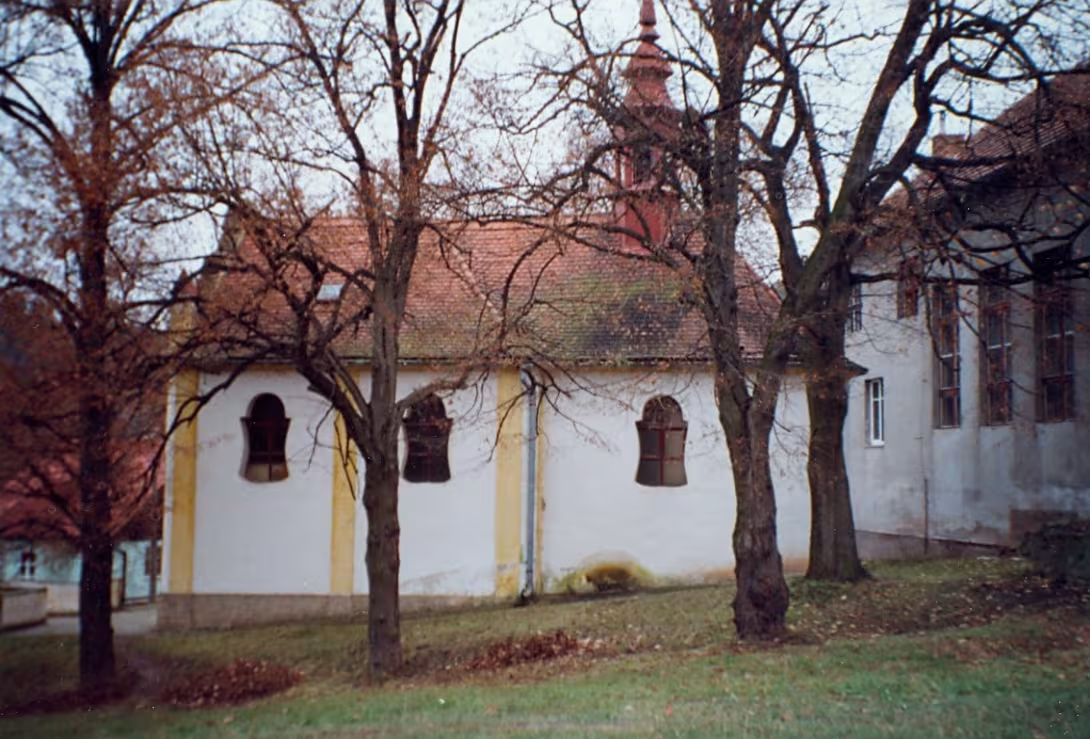
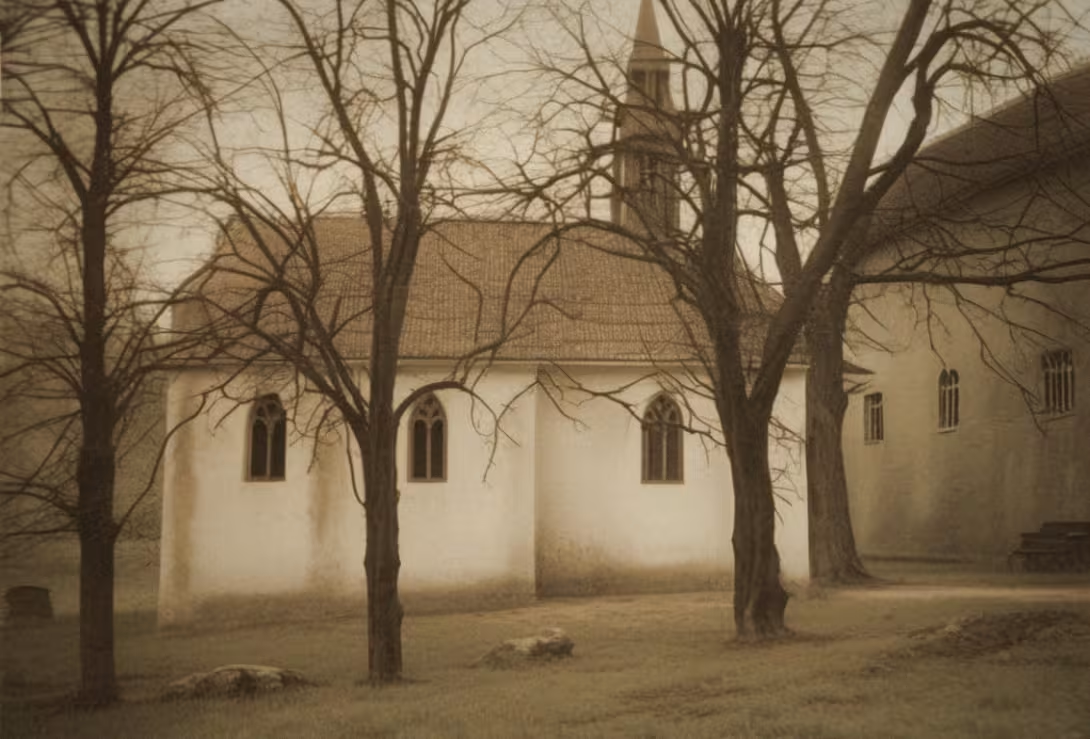
The historical appearance on the left is an AI-generated visualisation and serves as inspiration only.
Historical milestones
- 1802
- Construction of the current church structure began.
- 2013
- The church was reported to be in poor condition, requiring significant repairs.
Architectural development
The Church of the Visitation of the Virgin Mary underwent a major transformation in 1802 when it was rebuilt as a single-nave structure. The design is characterized by its late Baroque style with an oblong floor plan and semi-circular presbytery. Despite its simple façade, the interior features include a flat ceiling for the nave and a barrel vaulted presbytery with lunettes.
Historical events
In 1802, the original chapel was demolished and replaced with the current structure.
By 2013, the church required significant repairs due to deterioration.
Owners
The church has been under the patronage of local authorities and community members since its construction. In 2015, it was donated to a private individual who is currently overseeing its reconstruction.
Points of interest
- The Church of the Visitation of the Virgin Mary in Deštnice has a mysterious origin story due to conflicting historical records. While some sources claim a church existed as early as 1405, these claims lack primary documentation and are considered unsubstantiated.
- Despite its late Baroque architectural style, the church's façade is notably plain, emphasizing simplicity over elaborate decoration—a characteristic that sets it apart from other structures of the same period in the region.
- Ownership of the church transitioned significantly when it was donated to a private individual in 2015. This change marked a new chapter in its stewardship and has been pivotal in initiating extensive restoration efforts funded by the new owner.
- The church's interior features a Rococo altar from the late 18th century, which is one of the few original furnishings that have survived over time. This piece highlights the enduring artistic value of the structure amidst numerous changes and losses.
- In 2013, the church was reported to be in disrepair, with restoration costs estimated at 150,000 Czech koruna for just the roof repairs. The ongoing reconstruction efforts are crucial to preserving its historical integrity and cultural significance.
Guide
This guide is narrated by a synthetic voice generated by artificial intelligence.
Show guide text
This text was created by artificial intelligence and has not been editorially reviewed. It may contain inaccuracies.
Welcome to the Church of the Visitation of the Virgin Mary in Deštnice—a serene and historic gem nestled within this charming village. As you stand before its unadorned façade, take a moment to absorb the tranquility surrounding this late Baroque structure. The church's simple exterior may not immediately reveal its rich history, but as we delve deeper, you'll discover stories woven into its very fabric.
Let's begin our journey with a glimpse into the origins of this sacred site. Construction of the current church began in 1802, transforming it from what was once a humble chapel. Its purpose has always been clear: to serve as a place of worship and community gathering for the Roman Catholic faithful in Deštnice. Though its architects remain unknown, their vision endures through the centuries.
Now, turn your gaze to the architectural features that define this church. Notice the single-nave design with an oblong floor plan—a hallmark of late Baroque simplicity. The semi-circular presbytery at the southeast corner invites contemplation and prayer. Inside, though modest in ornamentation, the space exudes a sense of peace and reverence.
As we explore further, consider the enigmatic history that shrouds this church. There are tales suggesting an earlier presence dating back to 1405, but these stories lack concrete evidence, leaving us with more questions than answers. This mystery adds an intriguing layer to your visit—perhaps you'll ponder what secrets lie beneath its quiet exterior.
In recent years, the church has faced challenges, notably in 2013 when it was reported to be in poor condition, necessitating significant repairs. These efforts underscore the community's dedication to preserving this historical landmark for future generations.
As we conclude our tour, I invite you to linger a little longer, perhaps exploring the surrounding village of Deštnice or reflecting on the church's enduring presence through time. Thank you for joining me today, and may your visit be both enlightening and inspiring. Safe travels as you continue your journey into history.
Tips for visitors
The best time to visit the Church of the Visitation of the Virgin Mary in Deštnice is during late spring or early autumn. During these seasons, the weather is typically mild and pleasant, making it ideal for exploring both the church's interior and its surrounding rural landscape. Additionally, visiting outside peak tourist seasons can provide a more tranquil experience, allowing you to appreciate the serene beauty of this historical site without large crowds.
It's advisable to check current routes and schedules through a travel app or local transit website to plan your journey effectively.
When visiting the church, it is recommended to bring comfortable walking shoes as you may wish to explore the surrounding countryside. A camera is also suggested for capturing the picturesque views of the Central European rural scenery. Additionally, carrying a light jacket can be useful due to variable weather conditions typical in this region.
Photography enthusiasts will find several spots around the church offering excellent lighting and scenic backgrounds, especially during golden hours at sunrise or sunset. The natural landscape provides a stunning backdrop for photographs of the church's architecture. Be mindful of photography restrictions inside the church if any are posted.
For families with children, consider visiting nearby attractions within a 30-minute drive from Deštnice. These include other historical sites and natural features that offer educational and recreational opportunities. Exploring these areas can provide a well-rounded experience for both adults and children.
Frequently asked questions
Can the monument be visited?
Religious buildings are usually open mainly during services; at other times a visit is normally arranged with the parish or the operator. We have not verified specific times. According to the heritage register restoration is under way, so access may be restricted.
Where is the monument?
Location: Deštnice, Ústecký kraj. The map on this page shows the exact spot.
Businesses nearby
Do you run a restaurant, accommodation, shop, museum, rental, wellness or other visitor service near this monument? Show yourself directly to the people heading to it — this is how they will see you in the app and on the web:
Events nearby

Zdroj akcí: otevřená data měst a obcí ČR (Národní katalog otevřených dat) a kalendář akcí Národního památkového ústavu.
Nearby
Deštnice is situated within the Ústecký Region of the Czech Republic. The surrounding landscape includes typical Central European rural scenery with nearby natural features and other historical sites.
Accommodation nearby
Themed route
Thematic Walking Tour: Deštnice
1. Kostel Navštívení Panny Marie (Deštnice) - Church Begin your journey at the heart of Deštnice with the Church of Visitation of the Virgin Mary. This stunning Baroque church is a central piece of the town's cultural and religious heritage, offering visitors an opportunity to admire its intricate architecture and serene atmosphere. The church stands as a testament to the rich history and artistic expression prevalent in this region.
2. Local Historical Sites - Historical Landmarks After exploring the church, take a leisurely walk through Deštnice to discover various local historical sites scattered around the town. These landmarks provide insights into the everyday lives of past generations and showcase traditional Central European rural architecture. Each site tells its own story, offering a glimpse into the community's evolution over time.
3. Rural Scenery - Natural Features As you continue your tour, immerse yourself in the typical Central European rural scenery that envelops Deštnice. The surrounding landscape is dotted with charming natural features that reflect the region’s picturesque beauty. This part of the journey allows visitors to appreciate the harmony between nature and human habitation, highlighting the area's tranquil charm.
4. Community Gathering Spots - Local Gatherings Conclude your tour by visiting community gathering spots within Deštnice. These areas serve as focal points for local events and social interactions, offering a warm welcome to visitors interested in experiencing the town’s vibrant community life. Here, you can engage with locals, learn about their traditions, and perhaps even participate in local festivities or markets.
This thematic walking tour of Deštnice provides an enriching experience that combines historical exploration with natural beauty and cultural immersion, all within a charming Central European setting.
Seasonal recommendations
Jaro: Visiting the Church of the Visitation of the Virgin Mary in spring offers a unique experience as nature begins to awaken from its winter slumber. Budding trees and blooming shrubs provide a beautiful backdrop for the church during its reconstruction phase, allowing architectural details to be seen in a new light. The atmosphere is calm and full of hope, with mild temperatures making a stroll around the monument pleasant. Visitors should dress lightly and consider wearing walking shoes suitable for potentially wet grassy areas. The best time for a visit is usually midday when crowds diminish, allowing for a peaceful moment.
Léto: Summer brings full sunny days that illuminate the Church of the Visitation of the Virgin Mary in its most beautiful light. Full bloom and mature leaves provide varied colors and shading, making the reconstruction work even more intriguing to explore. The atmosphere is lively and energetic, with more visitors drawn by the warmth and beautiful outdoor environment. Visitors should consider arriving early to avoid peak summer crowds and bring sunglasses, UV protective cream, and lightweight clothing. Carrying water is also essential to ensure adequate hydration during your visit.
Podzim: Visiting the Church of the Visitation of the Virgin Mary in autumn allows you to expect gentle color palettes transitioning from green to yellow and orange leaves. This seasonal change adds a melancholic beauty to the church undergoing reconstruction, creating a comfortable and calm environment for visiting. The atmosphere is mildly cool with more humid air, ideal for a relaxed stroll around the monument. Visitors should dress warmly and wear appropriate footwear for potentially wet conditions. The best time for a visit is usually early afternoon when crowds diminish, allowing you to enjoy a peaceful atmosphere.
Zima: A winter visit to the Church of the Visitation of the Virgin Mary offers unique views of the monument surrounded by snow or enveloped in cold air. Lighting can be dramatically altered by evening light and possibly artificial sources that highlight architectural details. The atmosphere is calm with fewer visitors, providing a sense of complete restfulness in the winter environment. The best time for a visit is usually midday when the sun provides the most warmth and light, allowing you to enjoy winter beauty without too much cold.
Visualizations and artistic views


The visualisations are generated by artificial intelligence and serve as inspiration.
Photos from the area
Real photos taken near the monument


Zdroj a licence jsou uvedeny u každého snímku.
Tips from visitors
No tips yet. Be the first!
Log in and add your tip.
Sources and literature
Photos: Gortyna / CC BY-SA 4.0 — Wikimedia Commons. The author and licence also appear when you hover over the image.
Faktickým podkladem tohoto textu byl článek na Wikipedii, jehož autory jsou přispěvatelé Wikipedie. Článek je dostupný pod licencí CC BY-SA 4.0.
Location on the map

Příběhy a pověsti
Legendy, pověsti a příběhy spjaté s touto památkou

Fotografie návštěvníků
Zatím žádné fotografie. Buďte první, kdo přidá fotografii z návštěvy!
Log in a přidejte svou fotografii nebo hodnoťte.
Za ověřenou návštěvu v aplikaci získáte víc bodů — poznáme podle GPS, že jste na místě.
Reviews and comments