






kostel Nejsvětější Trojice (Rychnov nad Kněžnou) Church
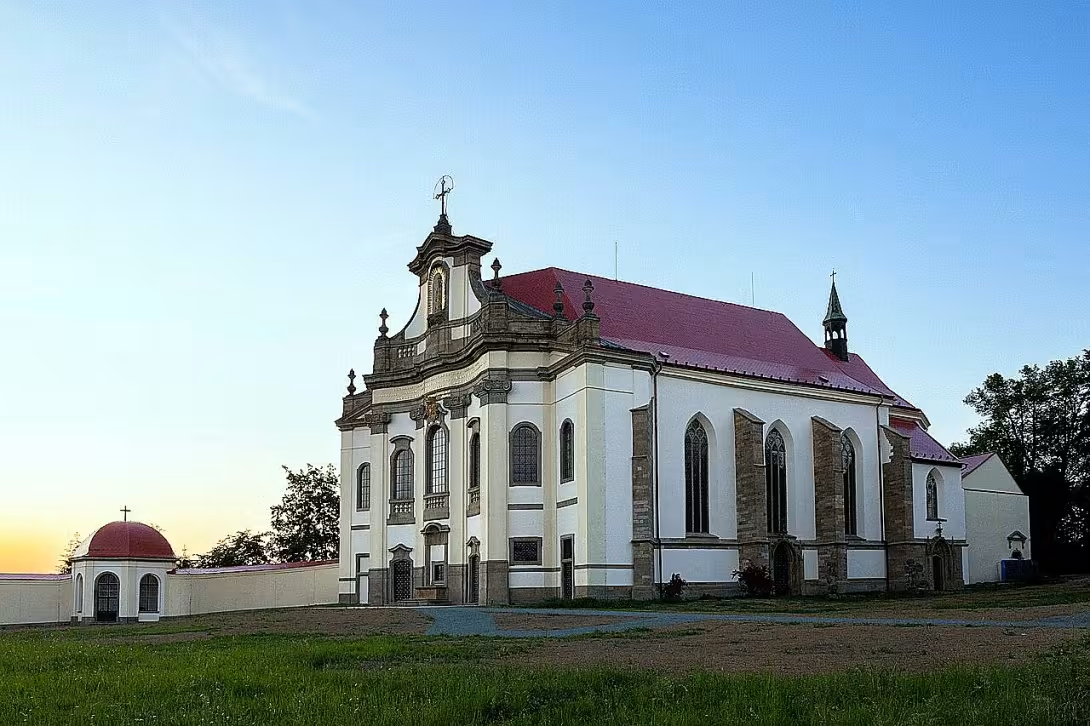
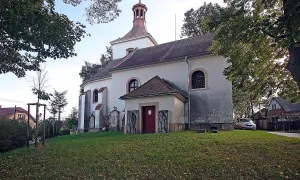
The Church of the Holy Trinity in Rychnov nad Kněžnou is a baroque church located within the castle grounds. Originally built at the end of the 16th century as a family mausoleum for the Betengel family, this historical monument stands out for its architectural significance and role in Czech cultural heritage. Its prominent western façade, designed by Jan Blažej Santini, reflects influences from his travels to Italy and Loreto, making it an essential landmark within Rychnov nad Kněžnou.
The church's origins trace back to around 1587 when Kryštof Betengel z Neuenperku a na Borohrádku acquired Rychnov. He commissioned the construction of a Gothic-style chapel on the site of an old fortress, which later became part of the castle complex. The church was consecrated in 1602 by Matyáš Ferdinand Sobek, who served as the first bishop of Hradec. Over time, ownership and architectural influences evolved; notably, František Karel z Kolovrat initiated a transformation into a baroque structure during his tenure starting post-1648.
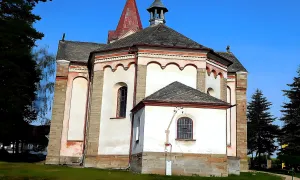
Architecturally, the Church of the Holy Trinity underwent significant changes. Initially built in Gothic style, it was later redesigned by Jan Blažej Santini, who added a high façade with Ionic pilasters in 1713. This redesign incorporated elements that visually connected the church to the castle, creating a dominant feature within Rychnov nad Kněžnou. The church's layout includes a single-nave structure with a five-sided presbytery and an annexed loretánská kaple (Loreto Chapel), consecrated in 1714.
Ownership of the church transitioned through several notable figures, including Norbert Leopold hrabě Kolovrat Libštejnský from 1704. During his administration, plans for a piarist college and school were considered, although these did not fully materialize. The church experienced significant events such as a fire in 1798 that damaged both the structure and its adjoining college, leading to further renovations.
Today, the Church of the Holy Trinity stands as a testament to its rich history and architectural evolution. It remains accessible to visitors who are drawn to its historical significance and aesthetic appeal. The church's integration with the castle grounds offers a glimpse into the past, making it a worthwhile destination for those interested in exploring the cultural heritage of the Czech Republic.
Visitors to Rychnov nad Kněžnou can appreciate the Church of the Holy Trinity not only as an architectural marvel but also as a symbol of historical continuity. Its preservation and restoration efforts highlight its enduring value, inviting exploration and admiration from history enthusiasts and tourists alike.
Then and now
Drag the slider to compare how the landmark may have looked when it was built with the view today.
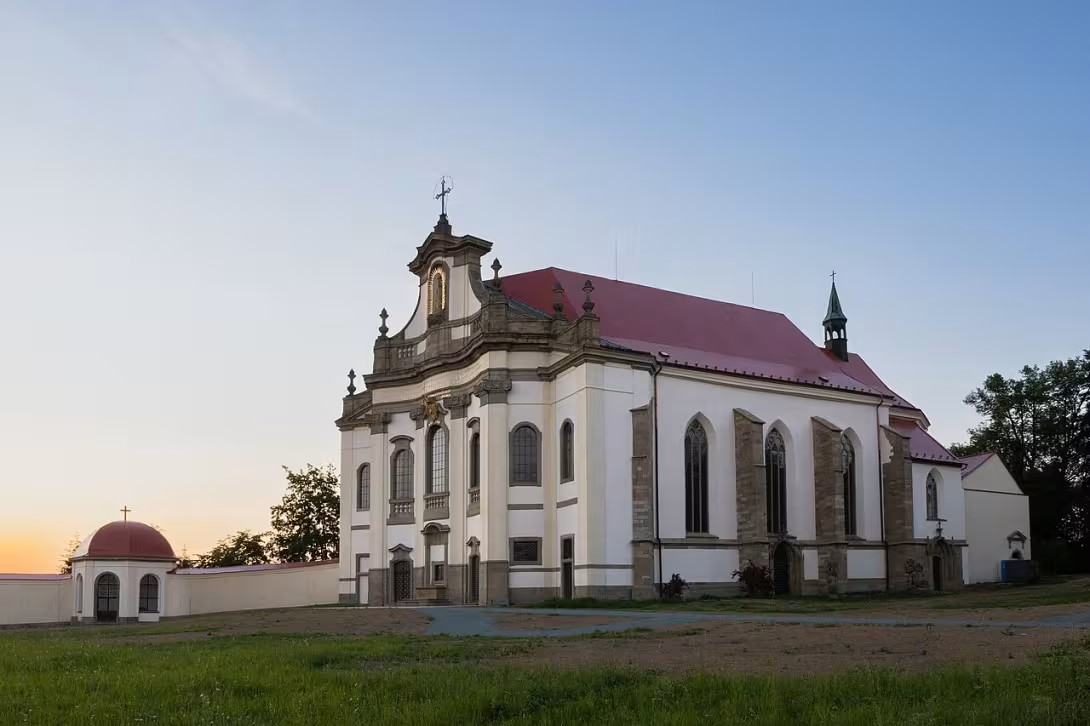
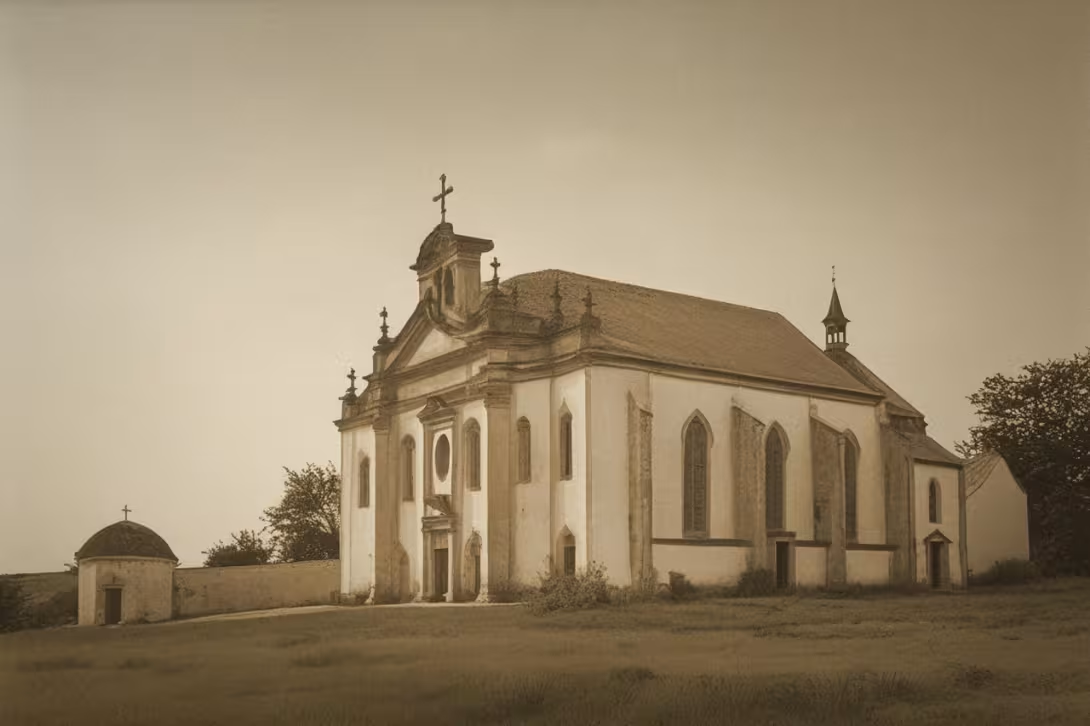
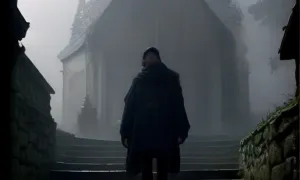
The historical appearance on the left is an AI-generated visualisation and serves as inspiration only.
Historical milestones
- 1602
- The church was consecrated to the glory of God.
- 1713
- A high façade with Ionic pilasters was added.
Architectural development
The Church of the Holy Trinity underwent several architectural phases. Initially built in a Gothic style, it was later transformed into a baroque structure with contributions from Jan Blažej Santini. The church's façade and interior were redesigned in the early 18th century, incorporating new stylistic elements. In the late 19th century, it was renovated in a neo-Gothic style by František Pavíček.
Historical events
The church was consecrated in 1602 by Matyáš Ferdinand Sobek, the first Hradec bishop.
In 1713, a high façade with Ionic pilasters was added under the direction of Jan Blažej Santini.
A significant fire damaged the church and its adjoining college in 1798.
Owners
Kryštof Betengl z Neuenperku a na Borohrádku (circa 1587)
Matyáš Ferdinand Sobek z Bilenberka (from 1627)
František Karel z Kolovrat (post-1648)
Norbert Leopold hrabě Kolovrat Libštejnský (from 1704)
Points of interest
- The Church of the Holy Trinity was originally built as a family mausoleum for the Betengel family, highlighting its unique origin compared to many other religious structures which were primarily intended for public worship.
- Jan Blažej Santini's design for the church's façade incorporated influences from his travels to Italy and Loreto, reflecting an intriguing blend of local and international architectural styles that was uncommon in Czech baroque architecture at the time.
- The church underwent a significant transformation from its original Gothic style to Baroque under František Karel z Kolovrat, showcasing how political and cultural shifts influenced architectural trends during his tenure post-1648.
- A fire in 1798 caused considerable damage to both the Church of the Holy Trinity and an adjoining college, leading to extensive renovations that altered its structure and appearance over time.
- Despite plans for a piarist college and school under Norbert Leopold hrabě Kolovrat Libštejnský's administration, these educational institutions did not fully materialize, leaving behind a curious historical 'what if' regarding the church’s role in education.
Guide
This guide is narrated by a synthetic voice generated by artificial intelligence.
Show guide text
This text was created by artificial intelligence and has not been editorially reviewed. It may contain inaccuracies.
Welcome to the Church of the Holy Trinity in Rychnov nad Kněžnou, a remarkable baroque gem nestled within the castle grounds. As you stand here, take a moment to absorb the grandeur of its prominent western façade—a testament to architectural brilliance and historical depth.
The church's story begins at the end of the 16th century when it was constructed as a family mausoleum for the Betengel family. This unique origin sets it apart from many religious structures primarily intended for public worship. In 1602, this sacred space was consecrated to the glory of God, marking its significance in both familial and spiritual contexts.
Architecturally, you are witnessing the genius of Jan Blažej Santini, whose design was inspired by his travels to Italy and Loreto. The church's façade is a masterpiece featuring Ionic pilasters—a detail added in 1713 that enhances its majestic appearance. Take a moment to appreciate these elements as they contribute to the building's distinctive character.
The Church of the Holy Trinity has been touched by notable historical figures, including Kryštof Betengl z Neuenperku a na Borohrádku and Matyáš Ferdinand Sobek z Bilenberka. Their influence is embedded in the church’s very stones, linking it to the region's rich history.
One intriguing aspect of this site is its transformation from a private mausoleum into an integral part of the cultural heritage of the Czech Republic. This evolution speaks volumes about its enduring significance and the layers of stories that have unfolded within these walls over centuries.
As you continue your exploration, I invite you to delve deeper into this architectural marvel. Discover more about its history, architecture, and the figures who shaped its legacy. Thank you for visiting the Church of the Holy Trinity—may it inspire you as much as it has inspired countless others before you.
Tips for visitors
The best time to visit the Church of the Holy Trinity is during late spring or early autumn when the weather is pleasant, allowing for a comfortable exploration of both the church and its surrounding landscapes. During these months, you can enjoy the natural beauty of the area without the crowds that might appear in peak tourist seasons. The lighting conditions are also ideal for photography, with soft morning light accentuating the baroque architecture.
Parking and transportation to Rychnov nad Kněžnou are convenient. There is parking available near the castle grounds where the church is located, making it easy to access on foot. Public transport options are available; however, it's advisable to check current routes and schedules in advance using a travel planner or local transit websites. The town center is accessible by bus, providing an alternative for those who prefer not to drive.
When visiting, consider bringing comfortable walking shoes as the church is situated at the top of a hill with some elevation changes. A camera is recommended to capture the stunning views and architectural details of both the church and Rychnov Castle below. Additionally, carrying a light jacket or sweater can be useful as temperatures may vary throughout the day.
For photography enthusiasts, the best spots include the front steps of the Church of the Holy Trinity for capturing its baroque facade against the backdrop of the surrounding landscape. Early morning or late afternoon provides the most flattering natural light. Inside the church, look for well-lit areas that highlight the intricate details and artwork typical of baroque design.
Nearby attractions within a 30-minute drive include Rychnov Castle, which offers insights into the region's history and architecture. The castle grounds provide additional photo opportunities and scenic views. For families with children, exploring the natural landscapes around Rychnov nad Kněžnou can be enjoyable, offering trails suitable for family walks.
Businesses nearby
Do you run a restaurant, accommodation, shop, museum, rental, wellness or other visitor service near this monument? Show yourself directly to the people heading to it — this is how they will see you in the app and on the web:
Nearby
The Church of the Holy Trinity is situated at the top of a hill with Rychnov Castle located below. The area features historical architecture and natural landscapes typical of the Královéhradecký region.
Accommodation nearby
Themed route
Tematická výletní trasa: Historický a architektonický průzkum Rychnova nad Kněžnou
1. Kostel Nejsvětější Trojice (Rychnov nad Kněžnou) - *Typ:* Kostel - *Proč stojí za návštěvu:* Tento barokní kostel, nacházející se na vrcholu kopce, je nejen dominantním architektonickým prvkem města, ale také poskytuje vynikající pohledy na okolní krajinu. Jeho historie a bohatá dekorace přitahují návštěvníky zájmem o barokní architekturu.
2. Rychnovský hrad - *Typ:* Hrad - *Proč stojí za návštěvu:* Pod kostelem se rozkládá historické sídlo Rychnovský hrad, který je klíčovou součástí místní historie. Jeho zříceniny a pozůstatky odkazují na bohatou minulost regionu a nabízejí pohledy na kostel a okolní krajinu.
3. Náměstí u kostela - *Typ:* Náměstí - *Proč stojí za návštěvu:* Toto historické náměstí pod kostelem je centrem místního života a nabízí pohled na architektonicky zajímavé domy. Je to ideální místo pro odpočinek po prozkoumání kostela a hradu, kde si můžete užít atmosféry starodávného města.
4. Kostelní věž - *Typ:* Věž - *Proč stojí za návštěvu:* Kostelní věž nabízí jedinečný pohled na Rychnov nad Kněžnou a okolní krajinu. Je to ideální místo pro ty, kteří chtějí získat nové perspektivy města a jeho historických památek.
5. Kostelní nádvoří - *Typ:* Nádvoří - *Proč stojí za návštěvu:* Kostelní nádvoří je klidným místem, kde si můžete užít poklidné chvilky a připravit se na další prozkoumání kostela. Je to také místo, kde lze ocenit umělecké detaily a architektonický design okolního prostředí.
Tato trasa nabízí komplexní pohled na historii a architekturu Rychnova nad Kněžnou, s důrazem na kostel Nejsvětější Trojice jako centrální bod.
Seasonal recommendations
Spring: Spring at the Church of the Most Holy Trinity in Rychnov nad Kněžnou brings a refreshing atmosphere as nature awakens around the historic site. The soft, dappled sunlight filters through budding trees, casting gentle shadows across the church's stonework and enhancing its architectural details. This season is marked by vibrant colors from blooming flowers along the pathways leading to the church, creating an idyllic setting for visitors. It’s a time when nature enthusiasts appreciate the early blossoms, making it ideal for leisurely walks before exploring the church. With fewer tourists compared to summer, spring offers a more tranquil experience. Visitors should wear comfortable walking shoes and light layers, as temperatures can vary, especially in the mornings and evenings.
Summer: Summer at the Church of the Most Holy Trinity is characterized by long days filled with warm sunlight that highlights the intricate designs of the church’s façade. The lush greenery surrounding the site provides a picturesque backdrop, perfect for photography enthusiasts. This season sees an increase in visitors due to its popularity as a tourist destination during peak travel times. To avoid crowds, it's advisable to visit early in the morning or later in the afternoon. Comfortable walking shoes and light clothing are recommended to stay cool under the sun, while carrying water is essential to stay hydrated.
Autumn: Autumn transforms the Church of the Most Holy Trinity into a stunning display of warm colors as leaves change from green to shades of orange, red, and gold. The soft autumn light creates a serene and contemplative atmosphere, ideal for appreciating the church’s historical architecture and surrounding landscape. This season is particularly popular among photographers seeking to capture the beauty of fall foliage. While visitor numbers remain steady, they are generally more manageable than in summer. Visitors should dress warmly with layers that can be adjusted as temperatures fluctuate throughout the day.
Winter: Winter at the Church of the Most Holy Trinity offers a unique and serene experience under a blanket of snow, which adds a magical quality to the historic site. The church’s architecture is beautifully accentuated by the contrast between its dark stones and the pristine white landscape. Although visitor numbers may decrease due to colder weather, those who do venture out are rewarded with a peaceful atmosphere. It's important for visitors to dress warmly in layers, wear waterproof boots, and be prepared for shorter opening hours as daylight diminishes. Bringing gloves and a hat is advisable to stay comfortable during the visit.
Visualizations and artistic views


The visualisations are generated by artificial intelligence and serve as inspiration.
Photos from the area
Real photos taken near the monument


Zdroj a licence jsou uvedeny u každého snímku.
Tips from visitors
No tips yet. Be the first!
Log in and add your tip.
Sources and literature
Fotografie: Jirka23 / CC BY-SA 3.0 — Wikimedia Commons. The author and licence also appear when you hover over the image.
Faktickým podkladem tohoto textu byl článek na Wikipedii, jehož autory jsou přispěvatelé Wikipedie. Článek je dostupný pod licencí CC BY-SA 4.0.
Location on the map

Příběhy a pověsti
Legendy, pověsti a příběhy spjaté s touto památkou
Fotografie návštěvníků
Zatím žádné fotografie. Buďte první, kdo přidá fotografii z návštěvy!
Přihlaste se a přidejte svou fotografii nebo hodnoťte.
Za ověřenou návštěvu v aplikaci získáte víc bodů — poznáme podle GPS, že jste na místě.
Reviews and comments