






Kostel Nejsvětější Trojice (Stružnice) Church
Objekt se nedochoval — na místě dnes nestojí. Následující text popisuje jeho historii, ne současnou návštěvu.
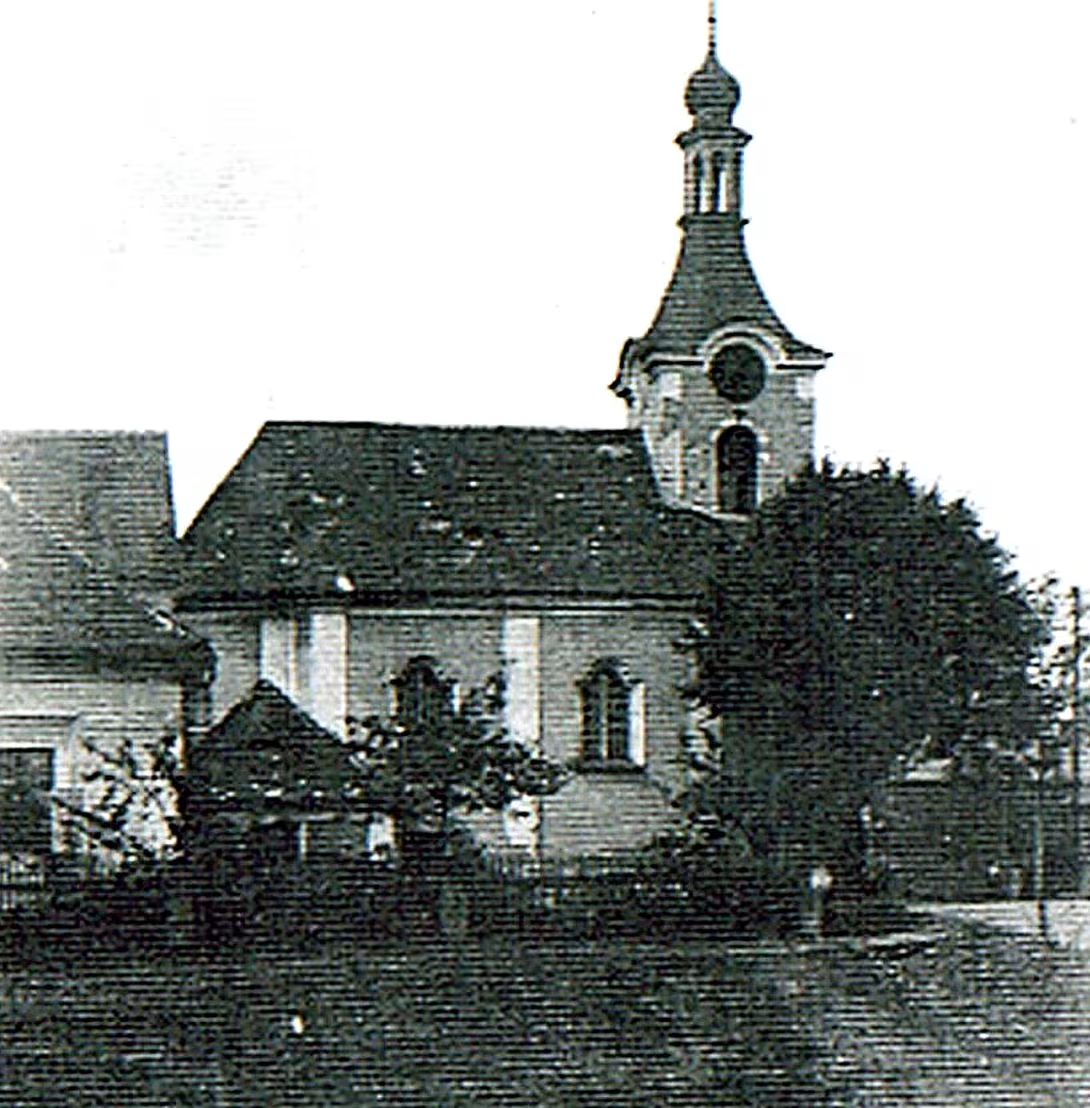
The Church of Nejsvětější Trojice in Stružnice is a historical monument that was an important religious structure built during the early 19th century. Located in the village of Stružnice within the Česká Lípa district, it served as a spiritual center for the local community until its demolition in 1972. The church featured notable architectural elements such as a main nave, a semi-circular presbytery, and a sacristy, with two lime trees planted before it. Despite its historical significance, structural issues and perceived obstructions led to its eventual demolition.
The origins of the Church of Nejsvětější Trojice date back to 1803 when Bishop Václav Leopold Chlumčanský laid its foundation stone. Construction was completed by 1808, with significant additions like a sacristy and clergy housing. The church's establishment was financially supported by Anton Hanke, a local gardener’s son who became a successful merchant in Prague and later a patron of his hometown. By 1847, the church had been elevated to an exposition status, marking its importance within the community. In 1866, Stružnice achieved parish status with Anton Plischke appointed as the first parish priest.
Architecturally, the Church of Nejsvětější Trojice featured a main nave measuring 11x15.5 meters and a semi-circular presbytery extending 6.2 meters deep. A sacristy was attached to its southeast side, with dimensions of 5x6.5 meters. The church's tower, integrated into the northern facade, stood at 23 meters tall. Notably, two lime trees were planted before the entrance, one of which remains as a silent witness to the church’s former presence.
Throughout its history, the church underwent several changes in administration and fortune. Anton Hanke's financial contribution was pivotal for its construction, while Anton Drechsel served as Stružnice's first independent spiritual administrator from 1847 until 1852. The church saw its last major renovation between 1933 and 1934 when ordinary windows were replaced with stained glass depicting various saints.
Key events in the church’s history include its elevation to an exposition in 1847, becoming a parish in 1866, and its eventual demolition in 1972 due to structural deterioration. Despite attempts at repair during the mid-1960s to early 1970s, the church's condition continued to decline. The decision for its demolition was influenced by its dilapidated state and perceived obstruction on a major road.
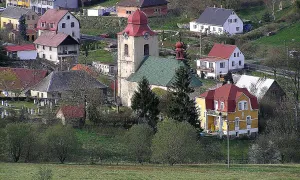
Today, the site of the Church of Nejsvětější Trojice is marked only by two lime trees that remain as reminders of its past. While the physical structure no longer exists, these trees offer a tangible connection to the church's historical presence in Stružnice. The surrounding landscape, characterized by typical Bohemian countryside with rolling hills and forests, adds to the site’s serene ambiance.
The Church of Nejsvětější Trojice holds significant value as part of Stružnice's cultural heritage. Its story reflects broader historical narratives of community development and architectural evolution in 19th-century Bohemia. Visitors interested in local history can explore this site, where the enduring lime trees stand as silent witnesses to a once-vibrant spiritual center.
Historical milestones
- 1803
- Foundation stone laid by Bishop Václav Leopold Chlumčanský.
- 1972
- The church was demolished due to its dilapidated state and perceived obstruction on a major road.
Architectural development
Construction of the Church of Nejsvětější Trojice began in 1803, with significant additions such as the sacristy and clergy housing completed by 1808. The church underwent its last major renovation between 1933 and 1934 when ordinary windows were replaced with stained glass depicting various saints. Despite attempts at repair in the mid-1960s to early 1970s, the church's deteriorating condition led to its eventual demolition.
Historical events
- 1803
- Foundation stone laid by Bishop Václav Leopold Chlumčanský.
- 1847
- The church was elevated to an exposition, and a separate spiritual administrator was appointed.
- 1866
- Stružnice was raised to a parish status with Anton Plischke as the first parish priest.
- 1972
- The church was demolished due to its dilapidated state and perceived obstruction on a major road.
Points of interest
- The Church of Nejsvětější Trojice's foundation stone was laid by Bishop Václav Leopold Chlumčanský in 1803, marking the beginning of its construction during a period when ecclesiastical architecture played a crucial role in community identity.
- Anton Hanke, whose financial support was vital for the church’s construction, had an intriguing personal journey from being a gardener's son to becoming a prosperous merchant and later a patron of Stružnice, reflecting the transformative social mobility of early 19th-century Bohemia.
- In 1933–34, the church underwent its last major renovation when ordinary windows were replaced with stained glass depicting various saints, showcasing an artistic endeavor that blended religious devotion with local craftsmanship during a period of significant cultural expression in Czech history.
- Despite being demolished in 1972 due to structural issues and perceived obstructions on a road, two lime trees planted before the church entrance remain as living witnesses to its historical presence, symbolizing resilience amidst change.
- The church's elevation to exposition status in 1847 highlights its growing importance within the community, reflecting broader trends of religious and social development during the mid-19th century in the region.
Guide
This guide is narrated by a synthetic voice generated by artificial intelligence.
Show guide text
This text was created by artificial intelligence and has not been editorially reviewed. It may contain inaccuracies.
Welcome to the site of the Church of Nejsvětější Trojice in Stružnice. As you stand here, imagine the serene landscape that once framed this significant religious structure. Though it's no longer standing, its historical footprint lingers in the air and in the stories surrounding this place.
Let’s delve into its origins. The foundation stone of this church was laid by Bishop Václav Leopold Chlumčanský in 1803. This period marked an era when ecclesiastical architecture wasn't just about worship but also a profound expression of community identity and cohesion. It served as a spiritual center for the local community until its unfortunate demolition in 1972, due to its dilapidated state and perceived obstruction on a major road.
As you explore this site, envision the church's architectural elements: a main nave that would have welcomed parishioners, a semi-circular presbytery where sacred rituals took place, and a sacristy for storing vestments. Two notable lime trees planted before it still stand as silent witnesses to its past grandeur.
The story of this church is intertwined with key figures like Anton Hanke, whose financial support was vital in bringing the vision of this spiritual haven to life. Bishop Václav Leopold Chlumčanský's role in laying the foundation stone signifies not just a physical beginning but also a commitment to faith and community.
Now, let’s ponder an intriguing aspect of its history: despite its historical significance, the church was demolished. This decision reflects broader themes of change and adaptation within communities as they evolve over time.
As we conclude our journey here today, I invite you to reflect on the layers of history embedded in this site. Though the Church of Nejsvětější Trojice no longer stands, its legacy continues through stories, memories, and the enduring presence of those lime trees. Thank you for joining me on this historical exploration, and may your curiosity lead you to discover more hidden gems like this one.
Businesses nearby
Do you run a restaurant, accommodation, shop, museum, rental, wellness or other visitor service near this monument? Show yourself directly to the people heading to it — this is how they will see you in the app and on the web:
Nearby
Stružnice is located near the Ploučnice River and features a local cemetery. The surrounding landscape includes typical Bohemian countryside with rolling hills and forests.
Visualizations and artistic views


The visualisations are generated by artificial intelligence and serve as inspiration.
Photos from the area
Real photos taken near the monument


Zdroj a licence jsou uvedeny u každého snímku.
Tips from visitors
No tips yet. Be the first!
Log in and add your tip.
Sources and literature
Photos: autor neuveden / Public domain — Wikimedia Commons. The author and licence also appear when you hover over the image.
Faktickým podkladem tohoto textu byl článek na Wikipedii, jehož autory jsou přispěvatelé Wikipedie. Článek je dostupný pod licencí CC BY-SA 4.0.
Location on the map
Příběhy a pověsti
Legendy, pověsti a příběhy spjaté s touto památkou

Fotografie návštěvníků
Zatím žádné fotografie. Buďte první, kdo přidá fotografii z návštěvy!
Log in a přidejte svou fotografii nebo hodnoťte.
Za ověřenou návštěvu v aplikaci získáte víc bodů — poznáme podle GPS, že jste na místě.
Reviews and comments