



Kostel Neposkvrněného početí Panny Marie (Zvole) Church
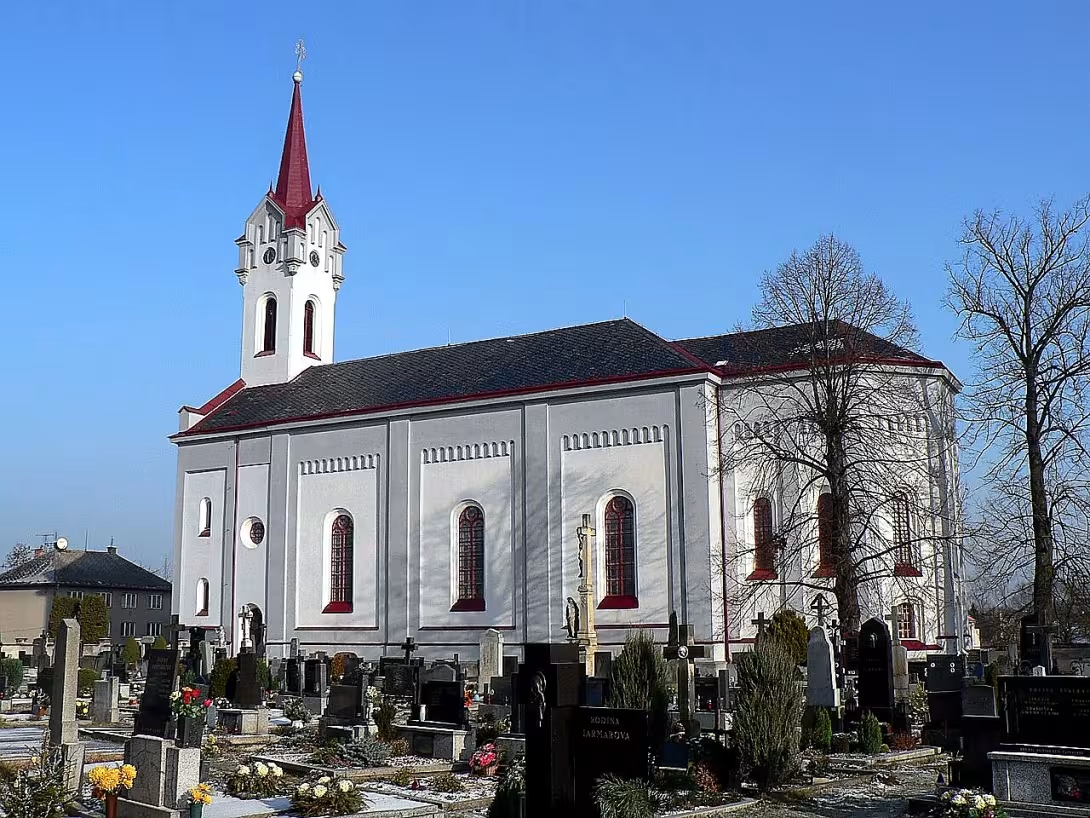
Zvoleňský Church represents one of the slowest-born projects of its time. The older parish church, which preceded the current construction, was completely destroyed by the fire in 1854. This disaster has become the starting point for a whole new construction. At the initiative of the Archbishop of Olomouc, Bedřich of Fürstenberg, plans for a new temple were approved in 1858. The foundation stone was laid in 1860, and after two years, in 1864, bells were hung in the tower, which had an unknown time serving the faithful. The building was ceremoniously consecrated by Cardinal Fürstenberk on 2 July 1876, when it was also dictated to the Immaculate Conception of the Virgin Mary.
But the roots of this sacral tradition go deep into the past. The first written mention of the village Zvoli dates back to 1273, and only two years later, there was recorded the Filial Church of St. Jilje. This older temple experienced a stormy history - during the Hussite wars it was destroyed and had to be rebuilt in 1444. The Renaissance period brought new modifications: under Petr from Žerotín the church was enlarged around 1500, and in 1611 it went through another, even larger reconstruction.
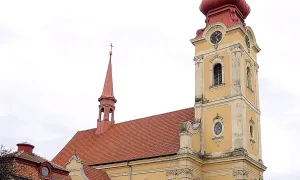
It is an architectural construction with a slightly graduated presbytery with a polygonal finish. The facade of the church is two-coloured, divided by lizenas with decorative arches. The dominant feature of the building is the slender prism tower, with a high cross and double cross. The side walls are broken by New Romanesque windows. The facade is determined by a portal with two pillars of sandstone decorated by renowned Viennese sculptor Josef Heinrich. Above it are two coats of arms - the Archbishop of Olomouc and the Fürstenberg family. The same artist created a statue of the Virgin Mary placed in our house above the window.
The interior of the church is as rich as its external appearance. The inner space consists of a wide ship with a cylindrical vault and presbytery with a cross vault. The ceiling is decorated with medallions with biblical themes and round portraits of saints. The three Baroque altars, which originated in the 1940s and were originally part of the Olomouc House of St. Wenceslas, deserve special attention. Their sculptures were furnished by the important regional artists Jan Kammereit and Ondřej Zahner. The painting of the Immaculate Conception of the Virgin Mary on the main altar comes from the Viennese painter Doboš. Varhanami was provided by Brother Karel Küttler of Opava. The ecclesiastical room and the baptisms are made of red coloured oyster marble from the Brno workshop Josef Arnold.
Around the church creates a harmonious whole. The church is situated on the road from Zábřeho na Mohelnice, a small paved area is situated in front of its front. On the west side there is a cemetery surrounded by a wall. On the right side of the church you can find a Baroque statue of St. John Nepomuk from 1717, protected by the status of cultural monument since 2003. The stone sculpture of Calvary from 1885 is located cheaper. In the garden between the church and the parish there is a sandstone column with a statue of the Virgin Mary Immaculata dated 1684.
Then and now
Drag the slider to compare how the landmark may have looked when it was built with the view today.
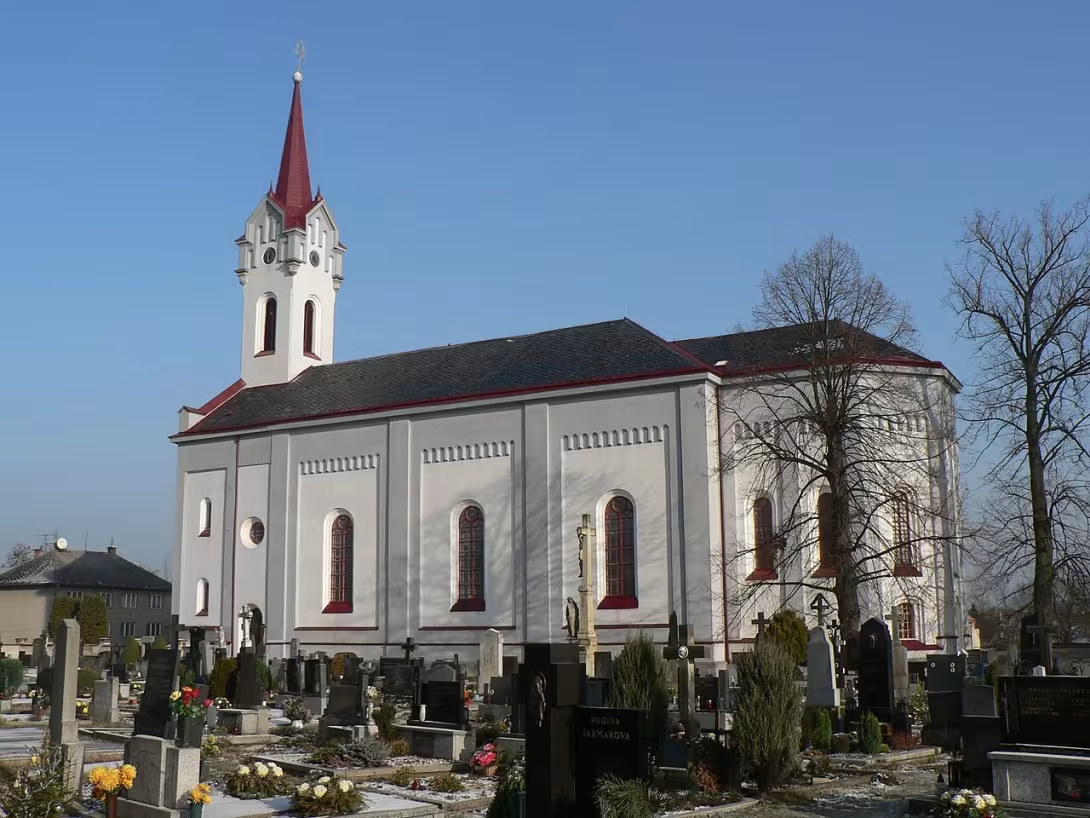

The historical appearance on the left is an AI-generated visualisation and serves as inspiration only.
Historical milestones
- 1273
- First written mention of the village Zvole
- 1444
- Restoration of the Church of St. Gilya after Hussite Wars
- 1854
- The destruction of the original church by fire
- 1860
- Laying the base stone of the new church
- 1864
- Hanging new bells into the tower
- 1876
- Ceremony of the Church of Immaculate Conception of the Virgin Mary
Architectural development
The church was built in 1858-1862 according to plans approved in 1858. The facade is decorated with lizenas and arches, the tower ends with a needle with a poppy. The interior combines a valence vault in the ship with a cross vault in the presbytery. Interior equipment comes mainly from Olomouc temples, including Baroque altars from the 18th century and statues from important regional artists.
Historical events
- 1273
- First written mention of the village Zvole
- 1444
- Restoration of the Church of St. Gilya after Hussite Wars
- 1854
- The destruction of the original church by fire
- 1876
- Ceremony of the new church by Cardinal Fürstenberk
Points of interest
- The church was built after the destruction of the previous parish church by fire in 1854, and its construction was initiated by the Archbishop of Olomouc, Bedřich of Fürstenberg.
- The first written mention of the village Zvole is from 1273, and two years later there was a filial church of St. Gilje.
- The church went through several reconstructions in the past, for example in 1444 after destruction during Hussite wars and 1611.
- The facade of the church is double-coloured with the lizenas and decorative arches, the dominant is a slender prism tower with a cross and a double cross.
- Above the portal are the coats of arms of the Archbishop of Olomouc and the Fürstenberk family created by Viennese sculptor Josef Heinrich.
Guide
This guide is narrated by a synthetic voice generated by artificial intelligence.
Show guide text
This text was created by artificial intelligence and has not been editorially reviewed. It may contain inaccuracies.
The Church of the Immaculate Conception of the Virgin Mary in Zvoli is a Neo-Gothic building from 1862. It stands in the central part of the village by the road from Zábřeha to Mohelnice.
The village first appears in written sources in 1273. Two years later, the local branch church of Saint Aegidius is mentioned. It was destroyed during the Hussite Wars and rebuilt in 1444. Around 1500, it was enlarged under Petr ze Žerotína and again rebuilt in 1611. In 1854, a fire completely destroyed the old church.
The new church was built at the initiative of the Olomouc Archbishop Friedrich von Fürstenberg. The plans were approved in 1858 and two years later, the foundation stone was laid. In 1864, new bells were hung in the tower. Cardinal Fürstenberg himself solemnly consecrated it on July 2nd, 1876.
It is a single-nave building with a two-colored facade divided by pilasters and arched cornices. Above the gable rises a slender angular tower topped by a tall spire with a double cross. The sandstone portal with two columns and decorated capitals was created by Viennese sculptor Josef Heinrich. Also from him is the statue of the Virgin Mary in the niche above the window. Above the portal are coats of arms of the Olomouc archbishopric and the Fürstenberg family.
In front of the church stands a Baroque statue of Saint John of Nepomuk from 1717 and a stone sculptural group of Calvary from 1885. In the garden between the church and the rectory is a sandstone column with a statue of the Virgin Mary Immaculata from 1684. On the western side lies the cemetery.
Inside is one wide nave with a barrel vault and a slightly narrowed chancel with a cross vault. The ceiling is decorated with medallions depicting biblical scenes and small round portraits of saints. On the gallery are the organ by Karel Küttler from Opava.
Three Baroque altars date from the 1740s. Originally they were part of the Olomouc Cathedral of Saint Wenceslaus. The sculptural decoration was executed by Jan Kammereit and Ondřej Zahner. The painting of the Immaculate Conception on the main altar was painted by Viennese painter Dobiášovský. In 1940, an altar of Our Lady of Sorrows with a sculpture by Olomouc sculptor Kubečka was added to the side chapel. The pulpit and baptismal font are made of red Esztergom marble from the workshop of Josef Arnold from Brno.
Embedded in the walls are gravestones and commemorative plaques from the old church of Saint Aegidius. Among them is a figurative tombstone of Heinrich ze Zvole. Opposite are sandstone coats of arms of the manor owners, transferred from a demolished fortress.
Frequently asked questions
Can the monument be visited?
Religious buildings are usually open mainly during services; at other times a visit is normally arranged with the parish or the operator. We have not verified specific times.
Where is the monument?
Location: Zvole, Olomoucký kraj. The map on this page shows the exact spot.
For kids
Imagine going back 164 years, until the Church of the Immaculate Conception of the Virgin Mary in Zvoli never existed. Instead of it stood an older parish church, which was amazingly beautiful but also very old and poor.
Who lived here? They were people who lived near forests and rivers that fed on agriculture and trade. They were people who liked nature and wanted to adapt. And that's how they lived until one day it went tragically wrong.
Businesses nearby
Do you run a restaurant, accommodation, shop, museum, rental, wellness or other visitor service near this monument? Show yourself directly to the people heading to it — this is how they will see you in the app and on the web:
Events nearby
Zdroj akcí: otevřená data měst a obcí ČR (Národní katalog otevřených dat) a kalendář akcí Národního památkového ústavu.
Accommodation nearby
Themed route
1. Column with statue of Virgin Mary Immaculata Type: Baroque column Why to visit: Historical monument from 1684 located in the garden area.
2. Baroque statue of St. John Nepomuk Type: Statue Why to visit: Protected cultural monument from 1717 located right in front of the church.
3. The sculpture of Calvary Type: Sandstone sculpture Why to visit: Art from 1885, which stands in the space between the church and the parish.
4. Church of Immaculate Conception of the Virgin Mary Type: Church Why to visit: The main destination of the trip and a significant sacral object in the village.
Seasonal recommendations
Spring Spring in Zvoli surrounds the Church of the Immaculate Conception of the Virgin Mary with fine greenery and flowering trees that are reflected in the fine light of the sun. In this period, the church is surrounded by fields of primordial and flowering grass that create a pleasant, fresh atmosphere. The light is soft, scattered clouds give the place a calm, romantic mood. It is convenient to visit the church early in the morning, when the surroundings are still quiet and nature is awakening to life. Wear light but comfortable clothes, or a light coat for any cool morning wind. If you plan to visit during Easter, count on slightly higher attendance, but it is still an ideal time to walk through the surrounding fields and small village paths.
Summer In the summer months the church in Zvoli shines with sunlight, which penetrates the windows and creates playful shadows on the stone walls. The surrounding area is green, full of warm air and sounds of nature - rustling of leaves, bird singing and distant sounds from the village. The atmosphere is lively, but calm, ideal for relaxation. The best time to visit is early in the morning or after lunch, when it is the hottest and the crowds are the biggest. Dress in light, airy clothes, don't forget your sunglasses and sunscreen. In the main summer season, the church is often open for a longer time, but on hot days it can be a bit stuffy inside, so take a bottle of water with you.
Autumn Autumn Zvole is surrounded by golden and red leaves that fall on stone pavement in front of the church and create a fine, shiny coating. The light is warmer, but already less intense than in summer, and the shadows are longer, which gives the place a mysterious, meditative atmosphere. The air is pure, saturated with the scent of fallen leaves and soil. It is convenient to visit the church on calmer days when it does not rain, and avoid the period before St. Catherine's feast, when the attendance may be higher. Wear warmer clothes or a light sweater, and don't forget the umbrella. During this period the church is often opened even in late afternoon hours, allowing a visit at sunset, when the surrounding landscape shines with golden light.
Winter Winter Zvole is covered with a white carpet of snow that surrounds the church and creates a calm, freezing atmosphere. Light is soft, scattered clouds and snowflakes give the place a magical, calm mood. The air is clean and cold, and although the surrounding area is quiet, the church offers a cozy environment. The best time to visit is early afternoon when the light is most pleasant and the crowds are minimal. Get dressed in warm clothes, don't forget gloves and hat, and possibly wear warm chocolate. Advent time adds another charm to the visit, when the church is often decorated with candlesticks and Christmas decorations.
Visualizations and artistic views


The visualisations are generated by artificial intelligence and serve as inspiration.
Photos from the area
Real photos taken near the monument

Zdroj a licence jsou uvedeny u každého snímku.
Atmosphere of the place
This atmospheric visualisation of the place and period was generated by artificial intelligence. It is not real footage of the location.
Tips from visitors
No tips yet. Be the first!
Log in and add your tip.
Sources and literature
Photos: Martin Vavřík / Public domain — Wikimedia Commons. The author and licence also appear when you hover over the image.
Faktickým podkladem tohoto textu byl článek na Wikipedii, jehož autory jsou přispěvatelé Wikipedie. Článek je dostupný pod licencí CC BY-SA 4.0.
Location on the map
Příběhy a pověsti
Legendy, pověsti a příběhy spjaté s touto památkou
Fotografie návštěvníků
Zatím žádné fotografie. Buďte první, kdo přidá fotografii z návštěvy!
Log in a přidejte svou fotografii nebo hodnoťte.
Za ověřenou návštěvu v aplikaci získáte víc bodů — poznáme podle GPS, že jste na místě.
Reviews and comments