






kostel Panny Marie Andělské Church
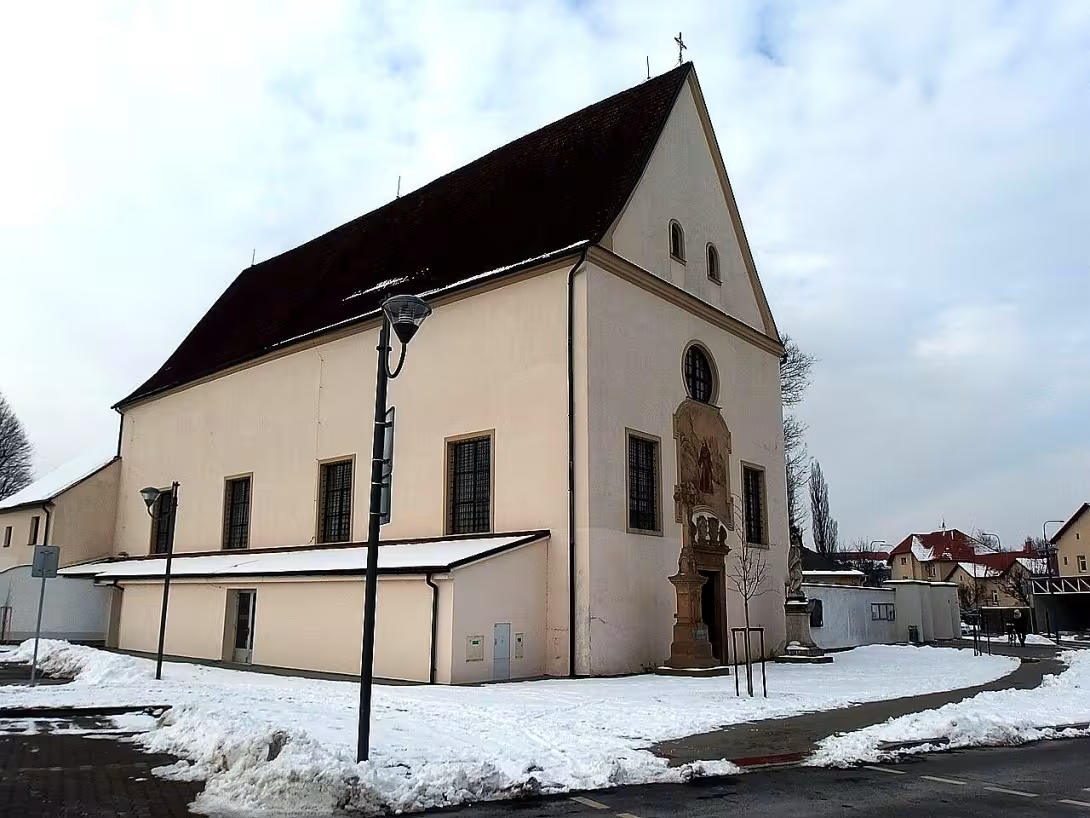
The Church of Our Lady of the Angels is a Gothic structure near Vyškov's city center in the Jihomoravský kraj region. Originally built for the Capuchin order, it adheres strictly to their architectural guidelines and holds historical significance. Consecrated on August 18, 1624, by Bishop Hynk Jindřich Novohradský z Kolovrat, it became an important religious center.
The church's origins date back to the early 17th century, constructed between 1617 and 1624. Olomouc Bishop Cardinal František Ditrichštejn funded its construction, establishing it as part of the Capuchin presence in Vyškov during a time when Bohemia experienced Gothic architectural growth and the rise of religious orders like the Capuchins.
Architecturally, the church reflects typical Capuchin design. A major renovation occurred in the mid-18th century under Bishop Wolfgang Hannibal von Schrattenbach's direction, transforming it into a public parish church after the monastery dissolved in 1787 due to Emperor Joseph II's reforms. This marked its shift from serving the Capuchins to the broader community.
Ownership and administration changed over time. Initially owned by the Capuchin order, it became a public parish church post-1787 dissolution. Its history involves figures like Cardinal František Ditrichštejn, Bishop Hynk Jindřich Novohradský z Kolovrat, and Bishop Wolfgang Hannibal ze Schrattenbachu, each contributing to its legacy.
Key events include the 1624 consecration by Bishop Hynk Jindřich Novohradský, solidifying its religious role. Architectural features like the double oratory at the main altar and organs on the rood screen highlight its artistic value. Heraldic symbols of Cardinal František Ditrichštejn and Bishop Wolfgang Hannibal von Schrattenbach adorn the entrance portal, alongside a fresco of St. Francis of Assisi.
Today, it stands as an important cultural and historical site near Vyškov's city center, adjacent to a municipal cemetery with remnants of the former Capuchin monastery, including cellars and a well. The church remains open to visitors interested in its history and architecture.
The Church of Our Lady of the Angels offers insight into Vyškov's religious and cultural heritage. Its transformation from a conventual church to a public parish reflects broader regional historical changes. Visitors can explore this remarkable site, appreciating its Gothic architecture and rich historical narratives as part of Bohemia's diverse history.
Then and now
Drag the slider to compare how the landmark may have looked when it was built with the view today.
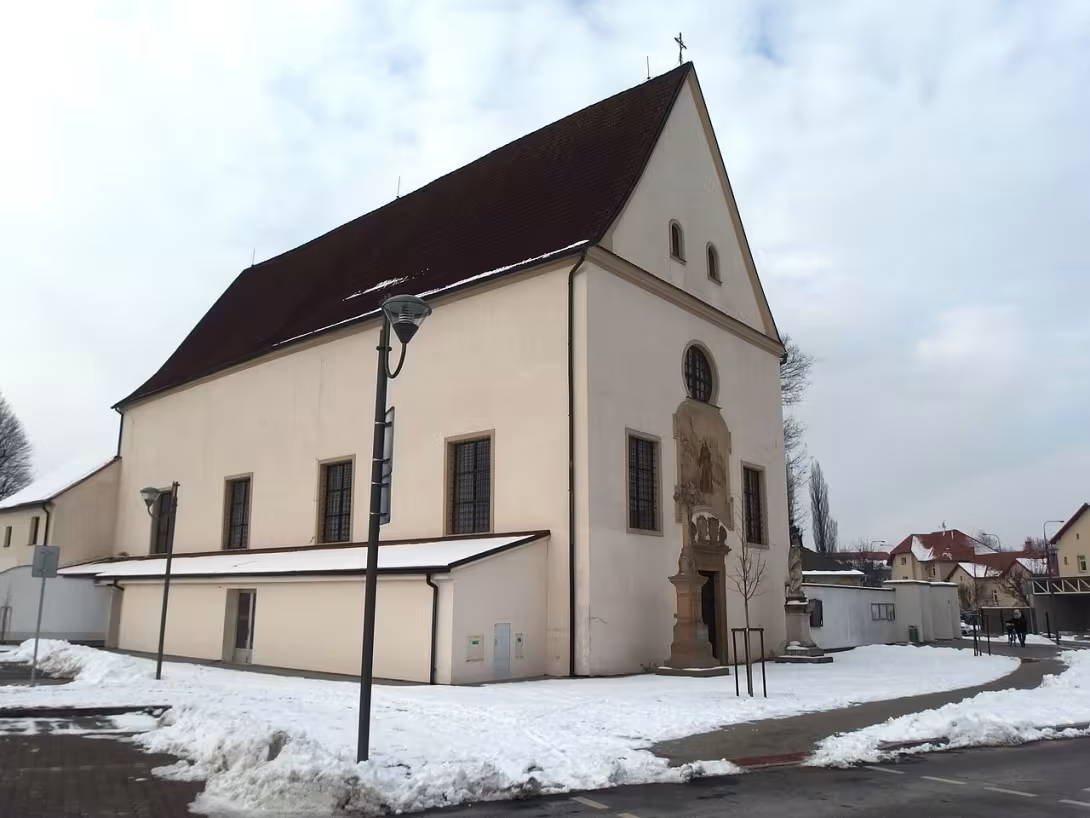

The historical appearance on the left is an AI-generated visualisation and serves as inspiration only.
Historical milestones
- 1350
- Construction of the Church of Our Lady of the Angels began.
- 1624
- The church was consecrated by Bishop Hynk Jindřich Novohradský z Kolovrat.
- 1787
- The Capuchin monastery was dissolved, and the church became a public parish church.
Architectural development
The church was constructed between 1617 and 1624 with funds from Olomouc Bishop Cardinal František Ditrichštejn. A major renovation occurred in the mid-18th century, transforming it into a public parish church after the monastery's dissolution.
Historical events
The church was consecrated on August 18, 1624, by Bishop Hynk Jindřich Novohradský z Kolovrat.
In 1787, the Capuchin monastery was dissolved as part of Emperor Joseph II's reforms.
Owners
Initially owned by the Capuchin order, it became a public parish church after the dissolution of the monastery in 1787 during Emperor Joseph II's reforms.
Guide
This guide is narrated by a synthetic voice generated by artificial intelligence.
Show guide text
This text was created by artificial intelligence and has not been editorially reviewed. It may contain inaccuracies.
Welcome to the Church of Our Lady of the Angels, a remarkable testament to Gothic architecture nestled near the heart of Vyškov. As you stand here, take in the serene atmosphere surrounding this historic church, its presence both commanding and inviting. Originally built as a conventual church for the Capuchin order, it reflects the strict architectural guidelines typical of Capuchin design.
Let's delve into its origins. The construction of this magnificent structure began in 1350, marking a significant period in Vyškov's history. It was consecrated by Bishop Hynk Jindřich Novohradský z Kolovrat in 1624, becoming an integral part of the community’s spiritual life. By 1787, following the dissolution of the Capuchin monastery, it transitioned into a public parish church.
As you explore further, notice the architectural details that define this space. The Church of Our Lady of the Angels is characterized by its adherence to Capuchin guidelines, yet it features an intriguing double oratory at the main altar—an unusual design choice reflecting both religious significance and artistic ambition. This unique element invites contemplation on the blend of functionality and creativity in sacred architecture.
This church has been intertwined with notable historical figures who have shaped its legacy. František Ditrichštejn, Hynk Jindřich Novohradský z Kolovrat, and Wolfgang Hannibal ze Schrattenbachu are among those whose influence is felt here. Their contributions echo through the church's history, each adding layers to its rich narrative.
Now, let’s uncover a captivating aspect of this site—the fresco of St. Francis of Assisi. This artwork not only enhances the spiritual ambiance but also showcases the artistic prowess that has been preserved over centuries. It stands as a testament to the cultural and religious significance of this church throughout history.
As you continue your journey through Vyškov, I invite you to explore further, discovering more about its storied past and architectural wonders. Thank you for joining me on this exploration of the Church of Our Lady of the Angels. May it inspire you as much as it has inspired countless others over the centuries.
Tips for visitors
The best time to visit the Church of Our Lady of the Angels is during late spring or early autumn, when the weather is pleasant for walking around Vyškov's city center and exploring nearby areas. These seasons offer mild temperatures and often feature beautiful natural lighting that enhances the Gothic architecture of the church. Additionally, visiting outside of peak tourist season can provide a more serene experience with fewer crowds.
The church’s proximity to the city center makes it easily accessible by foot from most downtown locations.
When visiting the Church of Our Lady of the Angels, it's advisable to bring comfortable walking shoes as you may want to explore the surrounding areas and remnants of the former Capuchin monastery nearby. A camera is recommended for capturing the church’s architectural details and the serene atmosphere of the adjacent municipal cemetery. Additionally, carrying a light jacket or umbrella can be helpful due to unpredictable weather changes.
For photography enthusiasts, the best spots around the Church of Our Lady of the Angels are those that capture its Gothic architecture in natural light, particularly during early morning or late afternoon when shadows create dramatic effects. The church’s exterior and interior offer numerous opportunities for capturing stunning images. Nearby, the remnants of the Capuchin monastery provide unique photo opportunities with their historical cellars and well.
In addition to the Church of Our Lady of the Angels, visitors can explore the nearby municipal cemetery, which offers a peaceful environment and interesting tombstones that reflect local history. The area also features remnants of the former Capuchin monastery, including cellars and a well, providing insight into the region's monastic past. These sites are within a short walking distance from the church.
For families with children, visiting the Church of Our Lady of the Angels can be an educational experience that introduces them to Gothic architecture and local history. The nearby Capuchin monastery remnants offer intriguing exploration opportunities for curious minds. Families should consider bringing snacks or a picnic lunch to enjoy in the tranquil surroundings of the municipal cemetery.
Frequently asked questions
Can the monument be visited?
Religious buildings are usually open mainly during services; at other times a visit is normally arranged with the parish or the operator. We have not verified specific times.
Where is the monument?
Location: Vyškov-Město, Jihomoravský kraj. The map on this page shows the exact spot.
Why is the monument protected?
It is listed in the Central List of Cultural Monuments of the Czech Republic as a cultural monument (register no. 29335/7-3907).
Businesses nearby
Do you run a restaurant, accommodation, shop, museum, rental, wellness or other visitor service near this monument? Show yourself directly to the people heading to it — this is how they will see you in the app and on the web:
Nearby
The church is situated near Vyškov's city center and adjacent to a municipal cemetery. The area features remnants of the former Capuchin monastery, including cellars and a well.
Accommodation nearby
Themed route
Thematic Walking Tour: Výškov's Historical and Cultural Journey
1. Kostel Panny Marie Andělské (Church of Our Lady of the Angels) - Type: Religious Site - Why Visit: Begin your journey at this stunning Baroque church, a centerpiece of spiritual life in Výškov since its construction in the 18th century. Its intricate architecture and serene atmosphere provide insight into the region's religious history.
2. Vyškov Municipal Cemetery - Type: Cemetery - Why Visit: A short walk from the church, this cemetery offers a reflective space to appreciate local heritage through its historical gravestones and monuments. It provides a poignant connection to past generations who have shaped Výškov's community.
3. Remnants of the Former Capuchin Monastery - Type: Historical Ruins - Why Visit: Explore the remnants of this once-thriving monastery, including preserved cellars and an ancient well. These ruins offer a glimpse into monastic life in the past and highlight the architectural ingenuity of the era.
4. Capuchin Monastery Cellars - Type: Archaeological Site - Why Visit: Delve deeper into history by visiting the monastery's cellars, where you can imagine the daily routines of monks centuries ago. The well-preserved structure provides a tangible link to Výškov’s monastic heritage.
5. Capuchin Monastery Well - Type: Historical Feature - Why Visit: Conclude your tour at this historical well, an essential part of the monastery's infrastructure. It stands as a testament to the self-sufficient lifestyle of the Capuchins and offers a serene spot for contemplation.
This thematic walking tour provides a comprehensive exploration of Výškov’s rich cultural and religious history through its most significant sites.
Seasonal recommendations
Spring: The arrival of spring at the Church of Our Lady of Angels is marked by a rejuvenating atmosphere as nature awakens around Výškov. The surrounding landscape comes alive with blooming flowers and fresh greenery, offering a picturesque backdrop to the historic church. Visitors can enjoy mild temperatures and longer daylight hours, making it an ideal time for leisurely exploration. While the church itself may not have specific spring events, the gentle weather encourages outdoor activities nearby. It's advisable to wear comfortable layers as mornings can still be cool, and to visit in the late morning or early afternoon when the sun is out.
Summer: Summer brings vibrant energy to the Church of Our Lady of Angels with longer days and warm sunshine enhancing the beauty of Výškov. This period often sees an increase in visitors due to its appeal as a summer destination for those seeking cultural and historical experiences. The church grounds and surrounding areas can be lively, so arriving early is recommended to avoid crowds. Lightweight clothing is ideal for exploring comfortably during this season. Additionally, taking advantage of the extended daylight allows for more time to appreciate the architecture and serene atmosphere of the church.
Autumn: Autumn at the Church of Our Lady of Angels offers a stunning display of fall colors as the leaves change in Výškov's surrounding forests and fields. The cooler temperatures provide a crisp and refreshing environment, perfect for those who enjoy walking through nature’s vibrant palette. This season is less crowded than summer, offering a more tranquil experience. Visitors should dress warmly in layers to accommodate fluctuating temperatures throughout the day. Early mornings or late afternoons are particularly enchanting times to visit, capturing the golden hues of autumn light.
Winter: Winter transforms the Church of Our Lady of Angels into a serene and peaceful retreat amidst Výškov's snowy landscape. The church may be adorned with festive decorations during the Advent season, creating a warm and inviting atmosphere. Snow-covered surroundings offer a picturesque setting for photography enthusiasts or those simply enjoying the quiet beauty of winter. It is essential to dress warmly in layers and wear appropriate footwear due to cold temperatures and potential snowfall. Visiting in the late morning can be advantageous as it provides ample daylight hours before evening, while also avoiding early morning crowds that may gather for special services or events.
Visualizations and artistic views


The visualisations are generated by artificial intelligence and serve as inspiration.
Photos from the area
Real photos taken near the monument


Zdroj a licence jsou uvedeny u každého snímku.
Tips from visitors
No tips yet. Be the first!
Log in and add your tip.
Sources and literature
Photos: Palickap / CC BY-SA 4.0 — Wikimedia Commons. The author and licence also appear when you hover over the image.
Faktickým podkladem tohoto textu byl článek na Wikipedii, jehož autory jsou přispěvatelé Wikipedie. Článek je dostupný pod licencí CC BY-SA 4.0.



Příběhy a pověsti
Legendy, pověsti a příběhy spjaté s touto památkou
Fotografie návštěvníků
Zatím žádné fotografie. Buďte první, kdo přidá fotografii z návštěvy!
Log in a přidejte svou fotografii nebo hodnoťte.
Za ověřenou návštěvu v aplikaci získáte víc bodů — poznáme podle GPS, že jste na místě.
Reviews and comments