






Ganymedova kašna Fountain
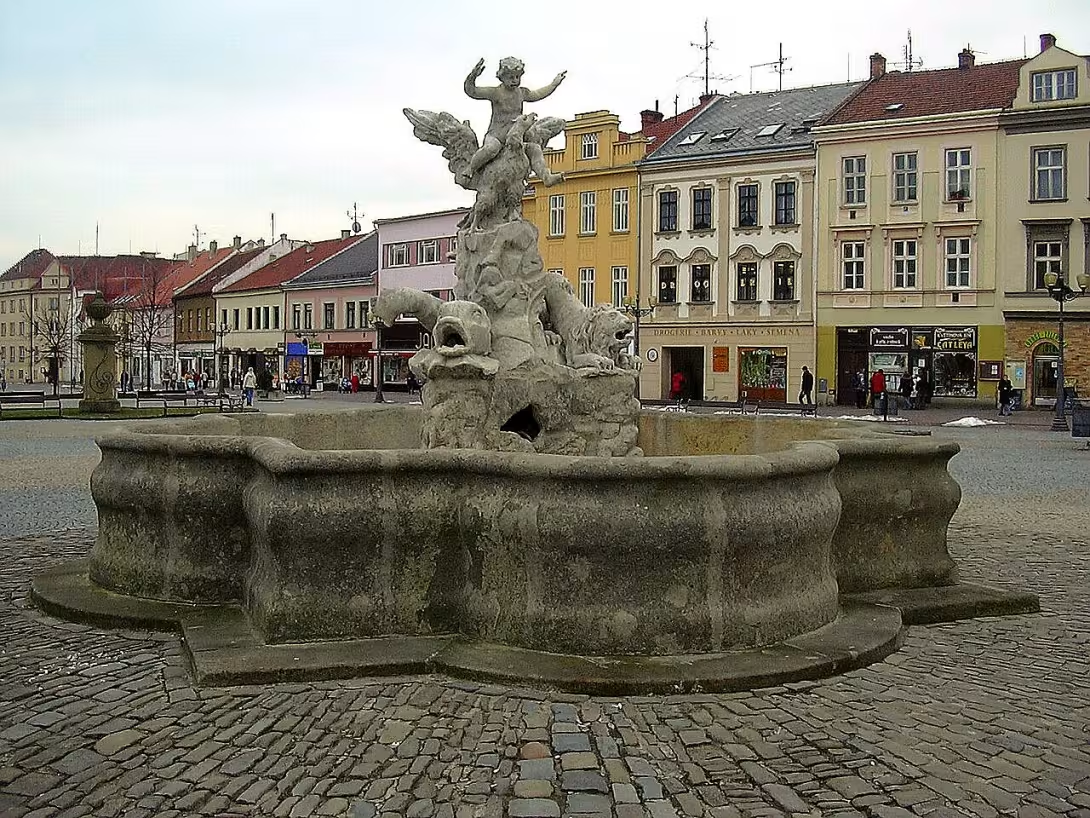
Ganymedova kašna is located in the middle of Masaryk Square in Vyškov and represents an important example of Baroque art from around 1730. Together with a nearby Marian pillar, it was created as a work connected with the disappearance of the plague from 1715 and has been protected historically since 1958.
This building was created around 1730 and can be considered as the beginning of the quality baroque art in Vyškov, together with the Marian column, which was created twelve years earlier. Both works are closely linked to the plague, which in the village and surrounding area was most significantly held for four months from August to December 1715 when the city gates were closed. The historical context of the first decades of the 18th century brings a picture of Europe going through the period of power conflicts and stabilisation after the wars of Spanish heritage. In the Czech countryside and in the cities, baroque art, often associated with thank-you buildings after plague epidemics, was a strong manifestation.
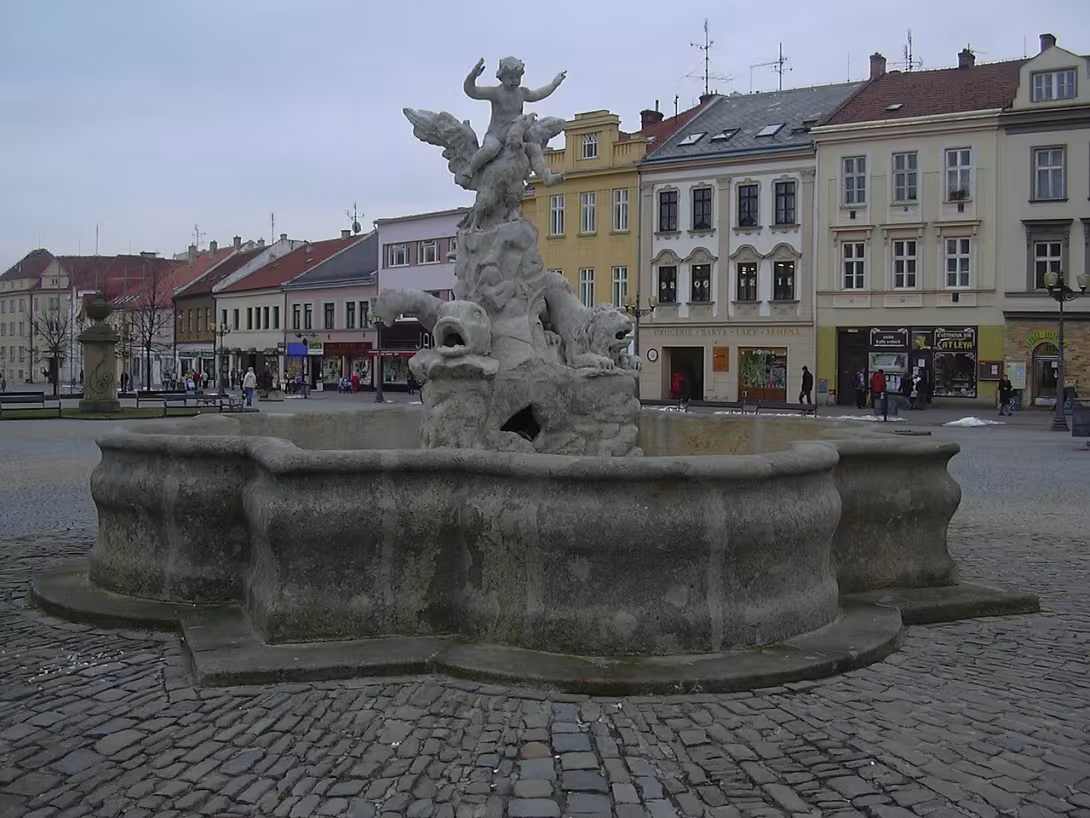
This stone fountain stands on a one-stage pedestal and its bathtub is shaped like a quadriloblobe or four-leaf. The front part of the scene is shot northeast towards the wider part of the triangle square. The centre of the fountain consists of a pillar pyramid rock on which is an eagle representing Zeus, which is preparing to take off. On his back, he balances a naked child with a crown representing Prince Ganymed. Below this main scene lies a roaring lion on the right and a dolphin on the left. These animals together with sculpted reeds in the back form gargoyles gushing water into the fountain. The depiction of the dolphin, the lion and the reeds complement the entire composition. The dolphin is a traditional symbol of the water element, while the lion does not appear in the Ovidius story or on the sign of the town of Vyškov.
For years, this fountain served together with a well excavated in 1839 as the only source of drinking water in the centre of Vyškov. Until the introduction of the public water network, water in the fountain and well has been continuously cleaned, but has not been drinking since. Ganymedo's motive is not the usual topic for fountains and fountains. Other known fountains with this theme are located in Bratislava, St. Petersburg and Florence. In the immediate vicinity of Masaryk Square, there is also a Marian column.
The building has undergone many repairs and restoration interventions over decades. In 2009, there was a frequent water leak from the fountain. After earlier repairs in 2005, the town called the restoration and academic sculptor Radek Levínský. In July 2010, it applied a flexible spatula to the bottom of the bath at the point of leak, silicone seal walls and cover coating on the inside of the fountain. In November and December 2016 it was also necessary to repair the technical shafts under the fountain, as both wiring and pumps were in poor condition. For this repair, the walls of the shafts needed to be developed, new ceilings and installation fixed. The total cost was around 180,000 crowns. In the winter months, the water from the fountain is regularly released so that the frost does not damage the water-spouting tube.
Today, this monument is freely accessible to visitors in the historic city centre of Masaryk Square. Her visit offers a view of a valuable Baroque sculpture with an unusual ancient motif, which still resembles historical events associated with plague disease and building development of Vyškov.
Then and now
Drag the slider to compare how the landmark may have looked when it was built with the view today.
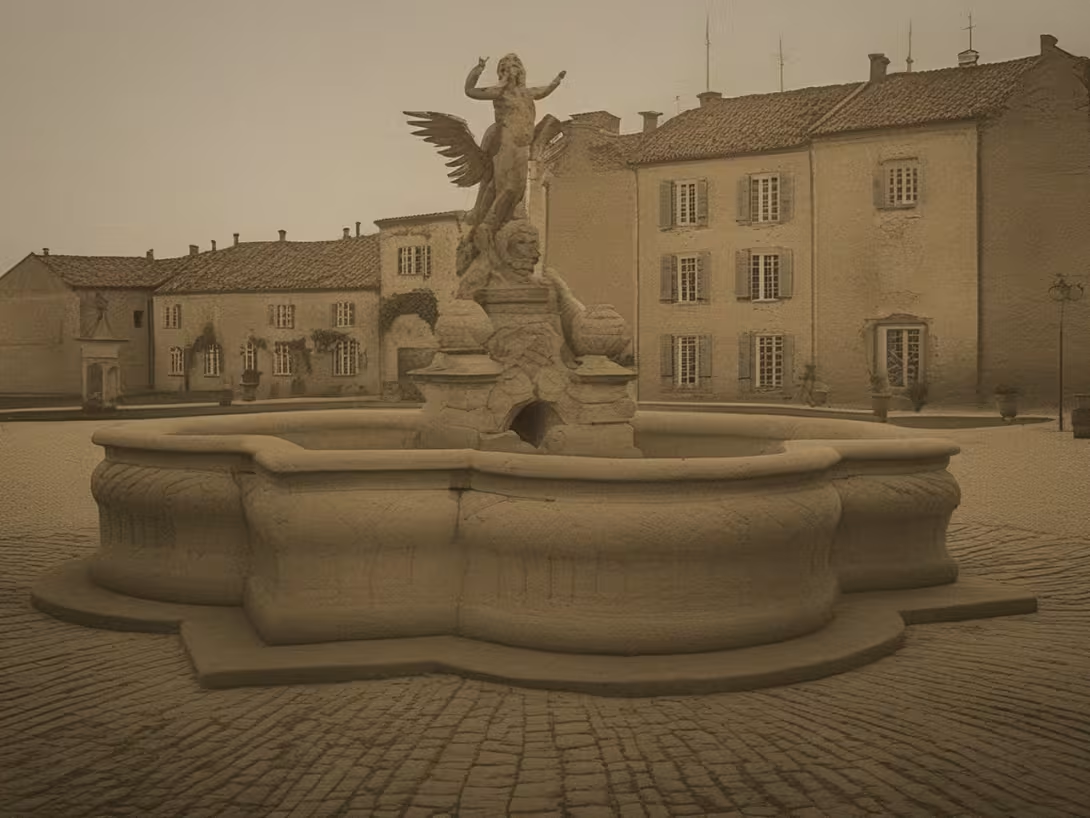
The historical appearance on the left is an AI-generated visualisation and serves as inspiration only.
Historical milestones
- 1715
- A plague in Vyškov and its surroundings.
- 1730
- Creating a Ganymede fountain downtown.
- 1958
- The fountain was declared a cultural monument.
- 2010
- The restaurant Radka Levínská has repaired the leaks and coatings of the bath.
- 2016
- Repair of technical shafts, pumps and wiring.
Architectural development
The stone fountain stands on a one-stage pedestal and its bathtub is the shape of a quadrilobed. The centre consists of a pillar pyramid rock with an eagle statue and Prince Ganymed. A sculpted lion, a dolphin and reeds serve as water gargoyles.
Historical events
1715: Plague disease in Vyškov lasting four months. 1730: The creation of a Baroque fountain in the square. 1958: The fountain has become a monument protected object. 2016: Repair of technical shafts and wiring under the fountain.
Points of interest
- Ganymedova kašna stands in the middle of Masaryk Square in Vyškov and is an important example of baroque art from around 1730, and it has been protected historically since 1958. - The object was created along with a nearby Marian pillar as a work associated with the disappearance of the plague in 1715. - The stone fountain stands on a one-stage pedestal, its bath is shaped by a four-leaf leaf and the center is made up of a pillar pyramid rock with an eagle representing Zeus and a naked child with a crown representing Prince Ganymed. - The water-gushing gargoyles are a roaring lion, dolphin and sculpted reeds in the back, while the lion does not appear in Ovidius' story or on the emblem of the city. - For many years, the fountain served together with the well excavated in 1839 as the only source of drinking water in the centre of Vyškov, but after the introduction of the water network it is no longer drinking and the water is released from it in winter.
Guide
Show guide text
This text was created by artificial intelligence and has not been editorially reviewed. It may contain inaccuracies.
Welcome to Masaryk Square in Vyškov. You are standing right in front of this amazing historical monument, which is the famous Ganymedova kašna. Take a look at this work of art in front of you, located right in the middle of the space, and at the very first glance, it captures every bystander with its unique atmosphere and decorative shapes.
Let's dive into history together and look at when and why this fountain was created. The year is seventeen hundred thirty, and in the heart of the city grows this stone work. However, the whole event has a deeper and more serious background, which is closely linked to the history of the entire region. Fifteen years earlier, in the year seventeen hundred fifteen, a very severe plague hit Vyškov and its wider surroundings. This terrible illness has caused people great suffering and fear. When the disease gave way, the people decided to express their gratitude and hope. The result of this effort is this fountain, which was created along with a nearby pillar dedicated to the Virgin Mary as a constant reminder of overcoming this evil time.
Now pay attention to the architecture itself and the details you have right in front of you. This is a very important display of baroque art, whose creators, while remaining hidden in history, do not know their names, but their craftsmanship speaks for everything. The bathtub of this fountain has a very unusual and interesting shape, which resembles four sheets with its arrangement. For years, this tank, along with a nearby well, served as the main source of water for the locals. When you look carefully at the central sculpture decoration, you see a scene that comes from ancient myths.
This story has already been written by an ancient poet Ovidius, and he tells of the lightning of a ruling god called Zeus and the young prince Ganymede. According to this myth, the mighty Zeus turned into a giant eagle and soared to the heights from where he kidnapped this handsome boy to Olympus. It is this dramatic yet fascinating moment that captures sculpture decoration standing in the middle of the water.
Even though this monument is nearly 300 years old, people are always looking after it with love, so that its beauty can endure for the next generation. In nineteen hundred and fifty-eight, it was well-deserved to be declared a cultural monument. However, time has given rise to its tracks and it was therefore necessary to make some important corrections. In the year twenty-ten, the Radka Levínská restorer took care of it, which successfully solved the leak problems and restored the coating of the stone bath. Six years later, in the year twenty-sixteen, there were further necessary improvements that concerned technical shafts, pumps and whole wiring so that the fountain could function fully again and enjoy the eye of every visitor.
It is amazing to think that the water in this tank has been flowing and refreshing the square space for so many generations. The fountain was not just an ornament, but it was once a necessary part of the daily life of people who came here for water and met here.
Before you go on further city trips, stop for a while, close your eyes and imagine the excitement in the square when people came here with pitchers in their hands. Thank you for your attention, I hope you enjoyed the tour of this place, and I wish you a beautiful rest of the day on your next discovery of Vyškov. Goodbye.
Tips for visitors
The best time to visit Ganymede's fountain on Masaryk Square in Vyškov is early morning or morning, when peace is in the square and pleasant daylight flows here ideal for admiring the baroque details of this historical work dating back to around 1730.
You can use a passenger car or local public transport for transport; Check the exact and current connection in the internet search engine. Parking is possible in the vicinity of the square on reserved construction sites for cars.
Take with you a walk through the historical centre of Vyškov comfortable footwear for walking on the pavement of the square, a bottle with a drink and during the summer months also a headgear and sunglasses because the area is open to the sun.
For the best photographic footage, use the morning sun, which radiates the statue decoration of a fountain resembling the passing of the plague. You can take pictures from all sides as the monument stands freely in the middle of the area.
In the immediate vicinity of Masaryk Square in Vyškov there is also a Mariánské pole, which you can visit during a walk together through the historical centre of the city.
Businesses nearby
Do you run a restaurant, accommodation, shop, museum, rental, wellness or other visitor service near this monument? Show yourself directly to the people heading to it — this is how they will see you in the app and on the web:
Nearby
V bezprostřední blízkosti na Masarykově náměstí ve Vyškově se nachází také Mariánský sloup.
Accommodation nearby
Trips and activities nearby
Guided tours, tickets and activities nearby from GetYourGuide
Affiliate link: if you buy from the partner, we may receive a commission. The price for you does not change.
Search tours and activities →Themed route
Here is a design of a thematic cruise route for exploring monuments in Vyškov.
1.Ganymedova kašna Type: Art fountain Why is it worth visiting: This historical fountain represents the main destination of our journey and decorate the city with its artistic decoration. It is located right in the center of the event.
2. Marian Column Type: Sacral monument Why is it worth a visit: In the immediate vicinity of Masaryk Square in Vyškov there is also this important historical building. It complements the overall atmosphere of the square and forms with the fountain harmonious whole.
Seasonal recommendations
Spring: During the spring season, Ganymedova kašna is characterized by breathtaking lighting, where the sun's rays reflect on water and highlight architectural details. It blooms the surrounding green, adding a mild, calm character to the atmosphere. For the visit it is advisable to equip yourself with warm weather clothes with the possibility to zoom in the umbrella in case of heavy rain. The best time to visit is an early afternoon when the crowds are usually smaller and you can enjoy a quiet walk.
Summer: Summer brings full sun and warm atmosphere around Ganymede's fountain. Sun rays highlight the colour of the flowers in the surroundings, making the visit even more attractive. This season may happen that the site will be visited by more people, especially on Wednesday. We recommend you come early in the morning or late in the afternoon and not grab the sun on your head. Hot clothes with short sleeves, umbrella and protective sunglasses are key for a comfortable visit.
Autumn: In autumn, Ganymedova kašna offers a unique atmosphere with darker colours of trees and sunlight that creates a romantic impression. The temperatures are mild, allowing a comfortable walk without overheating. There are probably fewer people this season than in the summer, so you can enjoy a quieter environment. We recommend taking with you a light umbrella and clothes for mild weather, because autumn can bring sudden turns.
Winter: The winter season brings Ganymede a calm atmosphere with cool temperatures and shorter days. Sun rays at noon can illuminate surfaces, but in the morning and evening it is often dark. When visiting, it is necessary to equip yourself with warm clothes, including fur and hat, to protect against cold. Opening hours may be shorter, so it is advisable to schedule a visit during daily hours. Despite cold weather, the winter walk can be quiet and comfortable due to fewer people.
Visualizations and artistic views


The visualisations are generated by artificial intelligence and serve as inspiration.
Photos from the area
Real photos taken near the monument


Zdroj a licence jsou uvedeny u každého snímku.
Tips from visitors
No tips yet. Be the first!
Log in and add your tip.
Sources and literature
Photos: cs:User:Pernak / CC BY-SA 3.0 — Wikimedia Commons. The author and licence also appear when you hover over the image.
Faktickým podkladem tohoto textu byl článek na Wikipedii, jehož autory jsou přispěvatelé Wikipedie. Článek je dostupný pod licencí CC BY-SA 4.0.
Location on the map




Příběhy a pověsti
Legendy, pověsti a příběhy spjaté s touto památkou

Fotografie návštěvníků
Zatím žádné fotografie. Buďte první, kdo přidá fotografii z návštěvy!
Log in a přidejte svou fotografii nebo hodnoťte.
Za ověřenou návštěvu v aplikaci získáte víc bodů — poznáme podle GPS, že jste na místě.
Reviews and comments