



kostel Panny Marie Sněžné (Velké Kunětice) Church
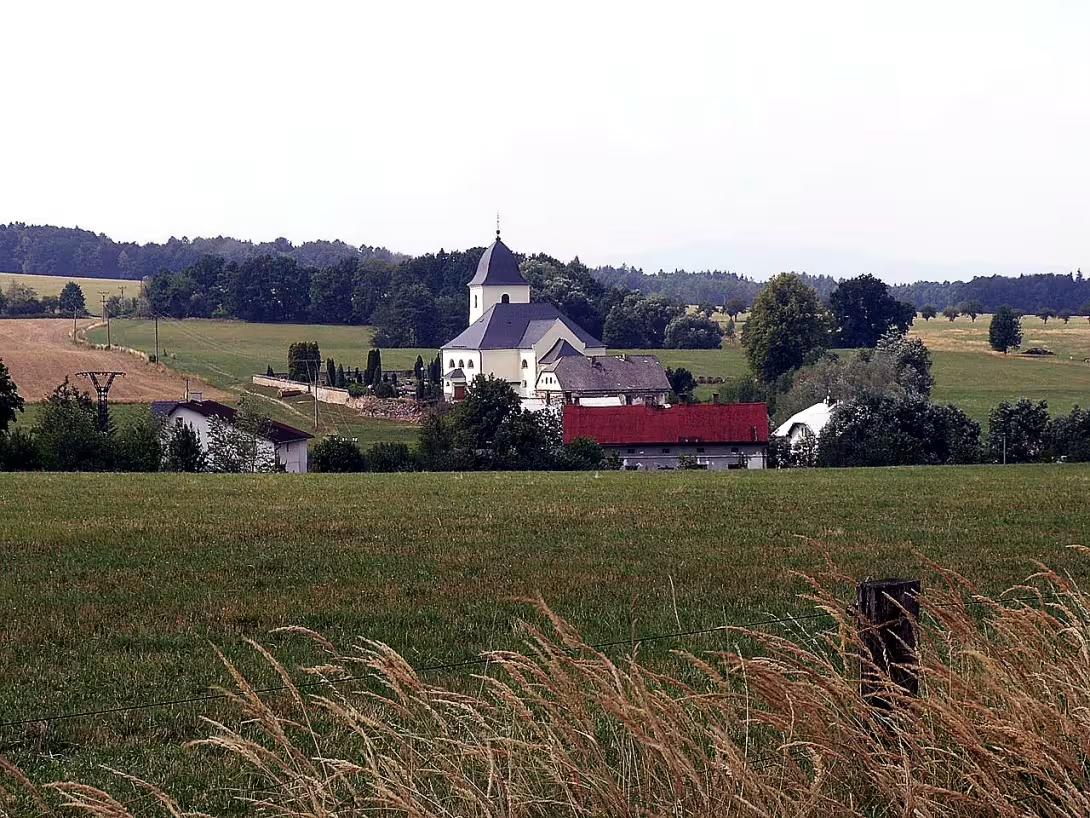
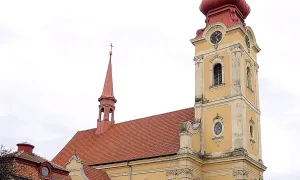
The Church of Our Lady of the Snows in Velké Kunětice is an early Gothic fortified church with an enclosing wall and gate, located in the northern part of the village. Administered by the Roman Catholic parish of Velké Kunětice since its listing as a cultural monument before 1988, this site stands out for its architectural evolution through various historical periods. Significant Baroque modifications followed damage during the Thirty Years' War and subsequent fires.
First documented in 1290 when dedicated to Saint Elizabeth of Thuringia, the church's origins date back to the late 13th century. During this period, Bohemia was part of the Holy Roman Empire under King Wenceslas II, a time marked by significant Gothic architectural development across Europe influenced by Christianity and royal consolidation.
Architecturally, the Church began as an early Gothic structure fortified in the 16th century with a stone wall and gate tower. Its design reflects various historical influences; after suffering destruction during the Thirty Years' War before 1638, it underwent Baroque renovations following a fire in 1758. The church's architecture includes original Gothic elements such as the perimeter wall of the nave and chancel with an eastern gable. Notably, between 1836-1837, the tower was heightened, and side aisles were added to enhance its structure.
Throughout its history, the church has seen several key events and curiosities that contribute to its rich narrative. In 1651, records indicated a three-level tower over the chancel with stone lower levels and a wooden upper section. By 1666, visitation logs noted a chapel with an altar and baptismal font on the south side of the church. The epitaph plaque from 1514 belonging to the Bavor family of Holovousy adds historical intrigue within its interior.
Today, the Church of Our Lady of the Snows remains under the administration of the Roman Catholic parish of Velké Kunětice and continues to be a site of cultural significance. Its blend of Gothic origins with Baroque modifications offers visitors an insightful glimpse into architectural evolution over centuries. The church's historical layers and preserved elements make it a compelling destination for those interested in exploring the rich tapestry of Bohemian history. Visitors are invited to experience this unique monument, where each stone tells a story of resilience and transformation through time.
Historical milestones
- 1290
- First documented mention when the church was dedicated to Saint Elizabeth of Thuringia.
- 1651
- Reported that a tower with three stone and wooden levels existed over the chancel.
- 1666
- Visitation records noted a chapel with an altar and baptismal font on the south side of the church.
- 1758
- The church burned down, leading to Baroque reconstruction efforts.
Architectural development
Originally built as an early Gothic church, it was fortified in the 16th century. After being damaged in the Thirty Years' War and a fire in 1758, it underwent Baroque renovations. The tower was heightened between 1836-1837, and further modifications included the addition of side aisles.
Historical events
First documented in 1290 when it was dedicated to Saint Elizabeth of Thuringia.
Fortified with a stone wall and gate tower in the 16th century.
Suffered destruction during the Thirty Years' War before 1638.
Points of interest
- The Church of Our Lady of the Snows was originally dedicated to Saint Elizabeth of Thuringia in 1290, reflecting the era's veneration for saints and their role in spiritual life during King Wenceslas II's reign.
- An epitaph plaque dating back to 1514 belonging to the Bavor family of Holovousy is housed within the church, offering a glimpse into the local nobility's connection to this religious site.
- In 1651, records describe a three-level tower with stone lower levels and a wooden upper section, highlighting medieval construction techniques that combined durability with practicality in response to available materials.
- By 1666, visitation logs mention a chapel with an altar and baptismal font on the south side of the church, indicating the site's continued expansion and adaptation for religious practices over time.
- The church underwent significant Baroque modifications following damage during the Thirty Years' War and subsequent fires, showcasing how historical events directly influenced architectural transformations.
Guide
This guide is narrated by a synthetic voice generated by artificial intelligence.
Show guide text
This text was created by artificial intelligence and has not been editorially reviewed. It may contain inaccuracies.
Welcome to the Church of Our Lady of the Snows in Velké Kunětice, a remarkable early Gothic fortified church nestled in the northern part of this quaint village. As you stand here, take a moment to absorb its serene presence and the enclosing wall that whispers tales from centuries past.
Imagine stepping back into 1290 when this sacred site was first mentioned as dedicated to Saint Elizabeth of Thuringia. The dedication reflects the spiritual fervor of King Wenceslas II's era, where saints were venerated for their divine roles in guiding the faithful.
As you gaze upon its sturdy structure, notice how it embodies a blend of historical influences. The church has undergone transformations over time, notably after a devastating fire in 1758 that led to Baroque reconstruction efforts. While the exact architects remain unknown, their vision is evident in the architectural elements before you.
Now, turn your attention to the south side where a chapel once stood with an altar and baptismal font as noted in 1666 visitation records. These details highlight the church's role not just as a place of worship but as a community cornerstone through time.
One intriguing aspect is the epitaph plaque from 1514 belonging to the Bavor family of Holovousy, hinting at personal stories interwoven with this sacred site. Such artifacts invite you to ponder the lives and legacies that have passed through these walls.
As we conclude our brief journey, I encourage you to explore further and immerse yourself in the rich history surrounding this church. Each stone has a story, each corner holds a memory—may your visit here inspire a deeper appreciation for Velké Kunětice's cultural heritage. Thank you for joining me on this exploration.
Frequently asked questions
Can the monument be visited?
Religious buildings are usually open mainly during services; at other times a visit is normally arranged with the parish or the operator. We have not verified specific times.
Where is the monument?
Location: Velké Kunětice, Olomoucký kraj. The map on this page shows the exact spot.
Why is the monument protected?
It is listed in the Central List of Cultural Monuments of the Czech Republic as a cultural monument (register no. 19762/8-1185).
Businesses nearby
Do you run a restaurant, accommodation, shop, museum, rental, wellness or other visitor service near this monument? Show yourself directly to the people heading to it — this is how they will see you in the app and on the web:
Accommodation nearby
Themed route
Thematic Walking Tour: Velké Kunětice
1. Kostel Panny Marie Sněžné (Velké Kunětice) - Church Begin your journey at the heart of Velké Kunětice with this stunning Baroque church, renowned for its architectural beauty and spiritual significance. The church is dedicated to Our Lady of the Snows, a testament to local religious traditions and historical events that have shaped the community.
2. Local Historical Museum (Velké Kunětice) - Museum A short walk from the church will lead you to the local historical museum. This cultural gem offers insights into Velké Kunětice's rich history, showcasing artifacts and exhibits that narrate the story of this charming village through the ages.
3. Traditional Craft Workshop (Velké Kunětice) - Workshop Continue your exploration by visiting a traditional craft workshop nearby. Here, you can witness artisans at work, preserving age-old techniques in pottery or woodworking. This stop highlights the enduring cultural heritage and craftsmanship that continue to thrive in Velké Kunětice.
4. Community Park (Velké Kunětice) - Park Conclude your tour with a leisurely stroll through the community park adjacent to the church. This serene spot offers a perfect setting for reflection, surrounded by lush greenery and local flora. It's an ideal place to relax and absorb the tranquil atmosphere of Velké Kunětice.
This thematic walking tour provides a comprehensive experience of Velké Kunětice, blending historical, cultural, and natural elements into a cohesive journey through this picturesque locale.
Seasonal recommendations
Spring: Visiting the Church of Our Lady of Snows during spring offers a unique experience as nature awakens around Velké Kunětice. The surrounding landscape is adorned with blooming flowers and lush greenery, creating an idyllic setting for your visit. The soft, natural light enhances the church's architectural details, making it a perfect time to appreciate its beauty. As temperatures are mild but can fluctuate, wearing layers is advisable. Spring days may be busy as visitors enjoy the rejuvenated landscape, so arriving early in the morning helps avoid crowds and provides a more tranquil experience.
Summer: Summer at the Church of Our Lady of Snows is characterized by long daylight hours that illuminate the church's intricate features, providing an ideal backdrop for photography enthusiasts. The warm weather invites visitors to explore both the church and its surroundings comfortably. However, this season also brings larger crowds, especially during peak tourist times, so planning your visit early in the day can help you avoid the busiest periods. Light, breathable clothing is recommended to stay comfortable as temperatures rise, and don't forget sunscreen for outdoor exploration.
Autumn: Autumn transforms Velké Kunětice into a picturesque landscape with vibrant foliage surrounding the Church of Our Lady of Snows. The warm hues of red, orange, and yellow create a stunning contrast against the church's architecture, offering a magical atmosphere. As days grow shorter and cooler, it’s wise to dress in layers to accommodate changing weather conditions throughout your visit. While autumn is generally less crowded than summer, some local festivals may attract visitors, so checking event schedules can enhance your experience.
Winter: Winter at the Church of Our Lady of Snows offers a serene, almost mystical atmosphere as snow blankets the landscape and enhances the church's historic charm. The shorter days mean that visits should be planned with consideration for limited daylight hours; arriving early ensures you have ample time to explore. It’s essential to dress warmly in layers, including hats, gloves, and sturdy boots, to comfortably enjoy your visit. While winter can bring fewer visitors, certain events like advent markets may increase foot traffic, so checking local schedules is beneficial.
Visualizations and artistic views


The visualisations are generated by artificial intelligence and serve as inspiration.
Photos from the area
Real photos taken near the monument


Zdroj a licence jsou uvedeny u každého snímku.
Tips from visitors
No tips yet. Be the first!
Log in and add your tip.
Sources and literature
Photos: BíláVrána / CC BY-SA 4.0 — Wikimedia Commons. The author and licence also appear when you hover over the image.
Faktickým podkladem tohoto textu byl článek na Wikipedii, jehož autory jsou přispěvatelé Wikipedie. Článek je dostupný pod licencí CC BY-SA 4.0.
Location on the map
Příběhy a pověsti
Legendy, pověsti a příběhy spjaté s touto památkou
Fotografie návštěvníků
Zatím žádné fotografie. Buďte první, kdo přidá fotografii z návštěvy!
Log in a přidejte svou fotografii nebo hodnoťte.
Za ověřenou návštěvu v aplikaci získáte víc bodů — poznáme podle GPS, že jste na místě.
Reviews and comments