



kostel svaté Anny a svatého Jakuba Většího Church
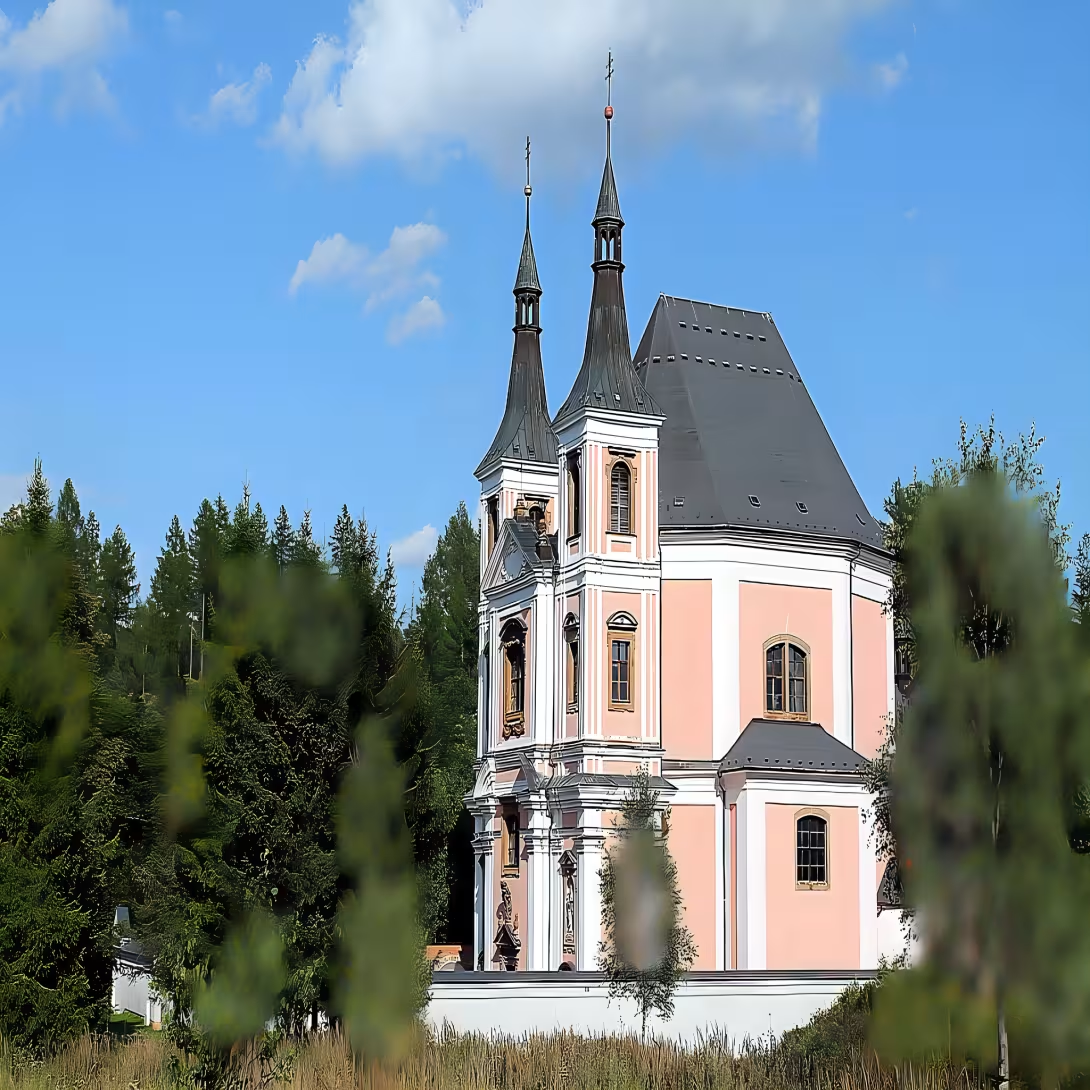
The church of St. Jacob the Greater and Saint Anna is a baroque pilgrimage temple in the extinct village of Stará Voda, which today lies in the territory of the village Město Libavá in the district of Olomouc. The village is first mentioned in 1456. Originally there was a wooden church dedicated to St. Jacob the Greater, beside which the pilgrimage chapel of St. Anne was built in the 16th century, documented in written sources since 1529. The beginning of regular tours of Olomouc minorities dates back to 1500.
The intention to build a great new pilgrimage place was created in the 1880s, but was realized by the Bishop Charles II of Liechtenstein-Castelkorn. He entrusted the design to the Emperor's court architect Giovanni Pieter Tencall, known in a number of other important buildings. The new church excelled with a central layout consisting of an octagonal boat with a double tower and side chapel - a solution unique in Moravia. The construction took place between 1683 and 1688 under the direction of the builder Matthew Partner from Kroměříž. Since 1686, the stondřej Ondřej Allio has been involved in sculpture decoration, who has worked on the railing, balustrad, pedestal and sculptures of the facade. Arched ambitions were built around the church between 1688 and 1692. The temple was consecrated in 1690, the old church of St. James was subsequently demolished. The Piarists who took over the temple completed it until 1696. On 11. października 1705 was held a ceremonial reconsecration led by the Bishop of Olomouc, Karel Josef Lorraine. From 1765 to 1767 the priesthood was extended. In 1857, the original tower fighting was replaced by needle helmets with lanterns. During the church between 1692 and 1700, a piarist college was built, which was abolished in 1784.
The church became the destination of the pilgrimage from Olomouce and other towns of Moravia and Poland. The main pilgrimage days were the feast of St. James the Greater on 25 July and the associated feast of Saint Anne and Saint Jachy on 26 July. The center of respect was the gothic polychrome statue of St. Anne's Mother of Starovoda, 25 centimeters tall. The largest number of pilgrims visited the place in 1768 when 29 250 Holy Communion was served. From 1922 to 1930 he led the Priory of the Benediktin Abbey of the Virgin Mary and Saint Jerome in Prague-Emmau, and since 1930 they managed the Temple of the Immaculate Conception of the Virgin Mary.
After World War II, in 1946 a military retreat was established on this territory. Ves Stará Voda was displaced and gradually disappeared. The church and college were confiscated in 1950 by the Czechoslovak army, the pilgrimage was banned and during the following years the inner furnishings were removed from the temple - altar paintings, statues, bells and organ. Buildings destroyed the presence of soldiers; The piarist college was demolished in the '70s to' 80s. The real possibility of rescue came with the fall of the Communist regime. After 1989 the restoration of the temple was started, which is today protected as a cultural monument and serves as a filial church of the parish Město Libavá.
Then and now
Drag the slider to compare how the landmark may have looked when it was built with the view today.
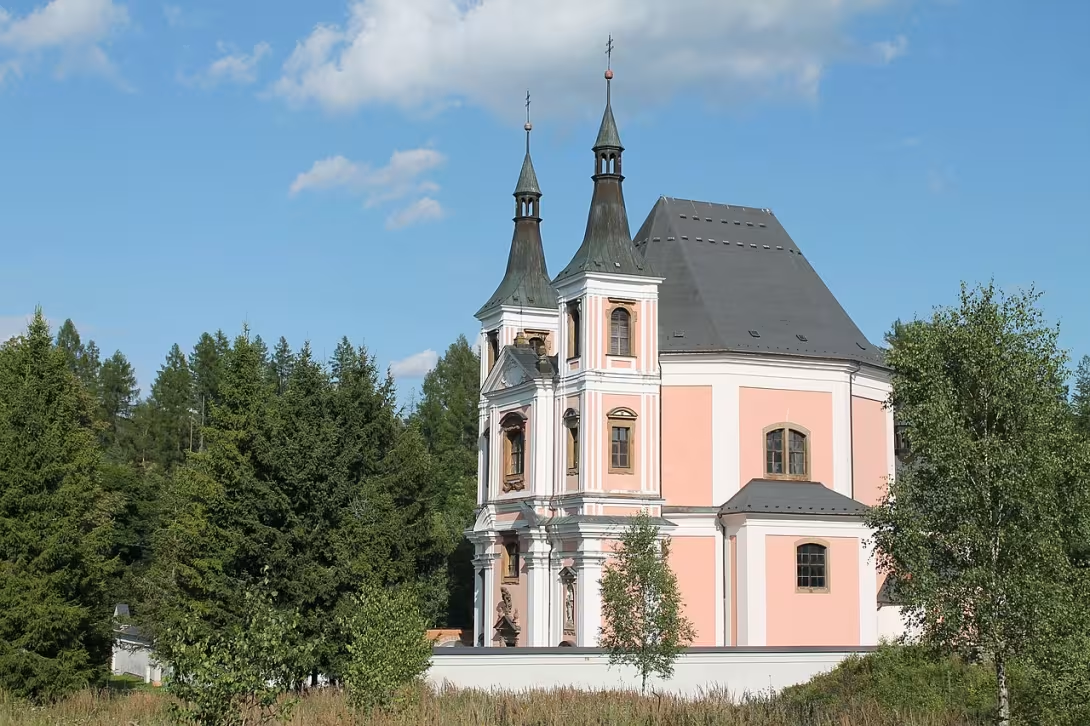
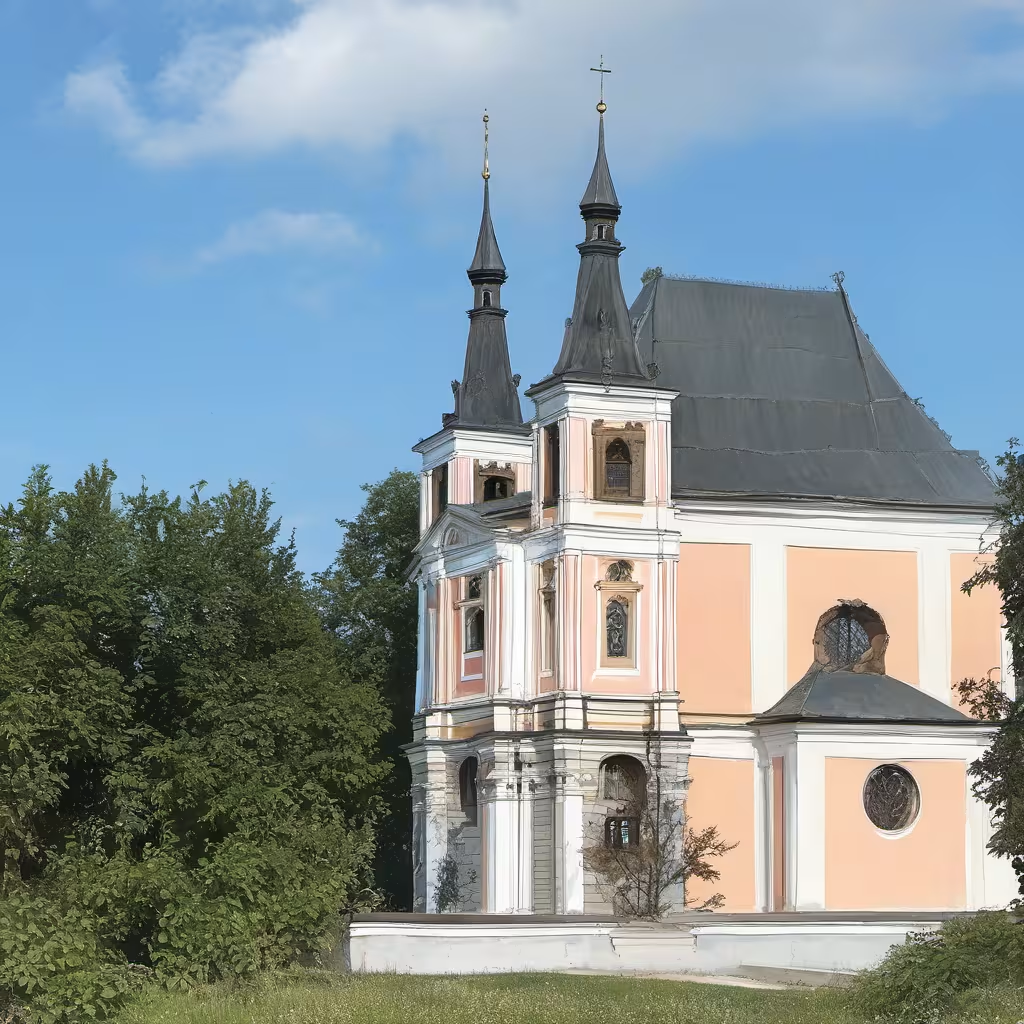
The historical appearance on the left is an AI-generated visualisation and serves as inspiration only.
Architectural development
The church was built with central octagonal layout and double towers, which is unique in Moravia. The Piarists took over the church after its completion and made further adjustments until 1696. In 1765- 1767 the priesthood was extended according to the project from 1761.
Historical events
- 1690
- 1768
- 1922-1930
Owners
Piarists (after exhibition), Olomouc Archbishop (since 1921)
Points of interest
- The Church of St. Jacob the Greater and Saint Anne is a Baroque pilgrimage temple with a central layout made up of an octagonal boat, which was an isolated solution in Moravia. - Matthew Partsch of Kroměříž led the construction of the church between 1683 and 1688. - The Piarists completed the temple until 1696, and on 11 października 1705 the ceremony took place again. - A piarist college was built around the church between 1692 and 1700, which was abolished in 1784. - After the fall of the Communist regime, the restoration of the temple, which is now protected as a cultural monument and serves as a filial church of the parish Město Libavá.
Guide
This guide is narrated by a synthetic voice generated by artificial intelligence.
Show guide text
This text was created by artificial intelligence and has not been editorially reviewed. It may contain inaccuracies.
The pilgrimage church of Saint James the Greater and Saint Anna stands in the extinct village of Stará Voda, which today belongs to the municipality of Město Libavá in the Olomouc region. It is a Baroque building with a central layout, which you will find nowhere else in Moravia.
In Stará Voda, first mentioned in 1456, there originally stood a wooden church of Saint James the Greater. Beside it, a pilgrimage chapel of Saint Anna was built, documented in writing in 1529. The Olomouc Minorites regularly made pilgrimages here from as early as 1500. A new pilgrimage site was built by the Olomouc bishop Charles the Second of Liechtenstein-Kastelkorn. He entrusted the design to the imperial court architect Giovanni Pietro Tencalla.
Tencalla designed an octagonal nave with two towers and side chapels. The church was built on the site of the original chapel between 1683 and 1688 under the direction of builder Matouš Partsch from Kroměříž. The stonemason Ondřej Allio participated in the sculptural decoration of the facade. Vaulted galleries then grew up around the church. The cathedral was consecrated in 1690 and the old wooden church was demolished. The new church was taken over by the Piarists and they continued work on it until 1696. A Piarist college was also founded near the church. In 1705, bishop Charles Joseph of Lorraine consecrated the church again with great ceremony. In 1857, pyramidal helmets with lanterns replaced the original domes of the towers.
Pilgrims came from Olomouc, from other Moravian towns and from Poland, mainly on the feast days of Saint James and Saint Anna at the end of July. They venerated above all a twenty-five centimetre tall Gothic statuette of Saint Anna with the Christ Child, called Mother of Stará Voda. The most pilgrims came in 1768, when 29,250 holy communions were received. In the twenties of the twentieth century, the Benedictines from Prague's Emmaus revived the pilgrimages.
After the Second World War, Stará Voda ended up in the Libavá military training ground. The village was evacuated and ceased to exist. In 1950, the church was confiscated from the Church and handed over to the army and pilgrimages were forbidden. The altar paintings, statues, bells and organ were removed. The cathedral deteriorated and was damaged by the presence of Czechoslovak soldiers and, after 1968, Soviet soldiers as well. The buildings of the Piarist college were demolished in the seventies and eighties. Real hope for rescue came only after the fall of the communist regime, when restoration of the church began. Today it is protected as a cultural monument.
Tips for visitors
The best time to visit the church of St. Anne and St. Jacob the Greater is in summer, especially in days without forecast rain. This period offers ideal conditions for exploring the surrounding green and peaceful visiting area of the temple when there are fewer people.
The current connection can be verified by online route search.
When visiting the temple bring protective clothing, especially if you visit the church in colder months. It is also important to have a camera or mobile phone with you to capture beautiful architecture and interiors of the temple, which offers several photos of interesting angles.
For families with children, kostel svaté Anny a svatého Jakuba Většího is an ideal place for a peaceful walk. Children can enjoy not only the beautiful interiors of the temple, but also the surrounding natural environment in the extinct village of Stará Voda. Plus, it's a good idea for a lesson in history and architecture.
If you like photography, don't forget to visit kostel svaté Anny a svatého Jakuba Většího at noon when the sun is on top. This time provides ideal lighting conditions to capture details of the Baroque architecture of the temple. Don't forget to check in advance to see if there is a need for consent to be photographed inside.
Frequently asked questions
Can the monument be visited?
Religious buildings are usually open mainly during services; at other times a visit is normally arranged with the parish or the operator. We have not verified specific times.
Where is the monument?
Location: Stará Voda, Město Libavá, Olomoucký kraj. The map on this page shows the exact spot.
Why is the monument protected?
It is listed in the Central List of Cultural Monuments of the Czech Republic as a cultural monument (register no. 21707/8-1874).
For kids
Imagine going back to the past until the beautiful kostel svaté Anny a svatého Jakuba Většího showed up. It was like entering a fairy tale where time stopped and everything was so beautiful and mysterious.
Whereas today this place is a well-known destination for tourists, once this area was full of forests and fields. People lived in small villages and grew agriculture. The church of St. Anne and St. Jacob the Greater stood in the middle of these villages and was a temple for the locals.
Businesses nearby
Do you run a restaurant, accommodation, shop, museum, rental, wellness or other visitor service near this monument? Show yourself directly to the people heading to it — this is how they will see you in the app and on the web:
Nearby
Ambient landscape, other monuments, natural elements up to 5 km or zero.
Accommodation nearby
Trips and activities nearby
Guided tours, tickets and activities nearby from GetYourGuide
Affiliate link: if you buy from the partner, we may receive a commission. The price for you does not change.
Search tours and activities →Themed route
Thematic cruise route: Church of St. Anne and St. Jacob the Greater in Libavá
1. Church of St. Anne and St. Jacob the Greater - * Type: * Religious object - * Why is it worth visiting: * This Baroque church is an architectural pearl of the town of Libavá. Its rich history and beautiful interior with excellent frescoes and statues offer a deep view of the past of this village.
2. The Square of the Republic - * Type: * Public Square - * Why is it worth a visit: * The central square of Libavá, where many historical buildings are located and is an ideal place for relaxation. The square offers a view of architecturally interesting houses and is the starting point for further discovery of the village.
3. Castle Park - * Type: * Park - * Why is it worth visiting: * Chateau park provides a quiet and green atmosphere ideal for walking. Its beautiful landscapes and old trees create a cozy environment that is a perfect addition to the historic discoveries of the city.
4. Old Town Part - * Type: * Historical area - * Why is it worth visiting: * The Old Town of Libavá is full of historic houses and alleys that tell stories of the past. Walk on these streets offers a view of authentic architecture and a sense of the time when the city developed.
5. Church of St. Anne and St. Jacob the Greater - Internal Tour - * Type: * Religious object - * Why is it worth a visit: * After a deeper view of the church from the outside is also recommended by its internal tour. Excellent artistic elements such as frescoes and statues represent an important cultural heritage of the village.
This route offers a comprehensive view of the history and culture of the town Libavá through its most prominent places.
Seasonal recommendations
Spring: During the spring period, a visit to the church of St. Anne and St. Jacob the Greater in Libava offers a unique view of the greenening surroundings, as the flowering shrubs and trees surround the historic building. The sunny days provide ideal lighting for photos of the church, which is decorated with its architectural details in the presence of lively and green nature. Visit in the morning or evening to avoid the midday doses of people seeking refuge from the sun. Short coat and warm shoes are suitable for cooler spring air.
Summer: Summer is full of life when kostel svaté Anny a svatého Jakuba Většího stands in the center of attraction for tourists. Long sunny days mean perfect lighting for visiting, but also a higher number of visitors. It is recommended to come early in the morning or later in the evening to enjoy a quiet view of the church without crowd. Wearing light clothes and sun balls is suitable for warm summer days.
Autumn: Autumn brings a special atmosphere to Libava when tree leaves turn into living colors and surround kostel svaté Anny a svatého Jakuba Většího. The sunny days with warm radiation provide ideal circumstances for photography, while cooler evenings bring peace and tranquility. Visit the church at noon to avoid the coldest times of the day, and prepare for a climate with warm clothes and a short jacket.
Winter: In winter kostel svaté Anny a svatého Jakuba Většího offers a quiet atmosphere in Libava when the surrounding area is covered with snow or wet leaves. The sunny days shine on the walls of the church, which creates a breathtaking visual effect.
Visualizations and artistic views


The visualisations are generated by artificial intelligence and serve as inspiration.
Photos from the area
Real photos taken near the monument


Zdroj a licence jsou uvedeny u každého snímku.
View from the area
This animation was generated by artificial intelligence from a real photograph of the surroundings. The motion and details are not real footage of the location.
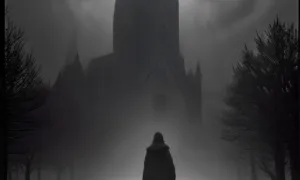
Atmosphere of the place
This atmospheric visualisation of the place and period was generated by artificial intelligence. It is not real footage of the location.
Tips from visitors
No tips yet. Be the first!
Log in and add your tip.
Sources and literature
Photos: Harold / CC BY-SA 3.0, rozlišení zvýšeno umělou inteligencí — Wikimedia Commons. The author and licence also appear when you hover over the image.
Faktickým podkladem tohoto textu byl článek na Wikipedii, jehož autory jsou přispěvatelé Wikipedie. Článek je dostupný pod licencí CC BY-SA 4.0.
Location on the map
Příběhy a pověsti
Legendy, pověsti a příběhy spjaté s touto památkou
Fotografie návštěvníků
Zatím žádné fotografie. Buďte první, kdo přidá fotografii z návštěvy!
Log in a přidejte svou fotografii nebo hodnoťte.
Za ověřenou návštěvu v aplikaci získáte víc bodů — poznáme podle GPS, že jste na místě.
Reviews and comments