






kostel svaté Kateřiny (Nové Město pod Smrkem) Church
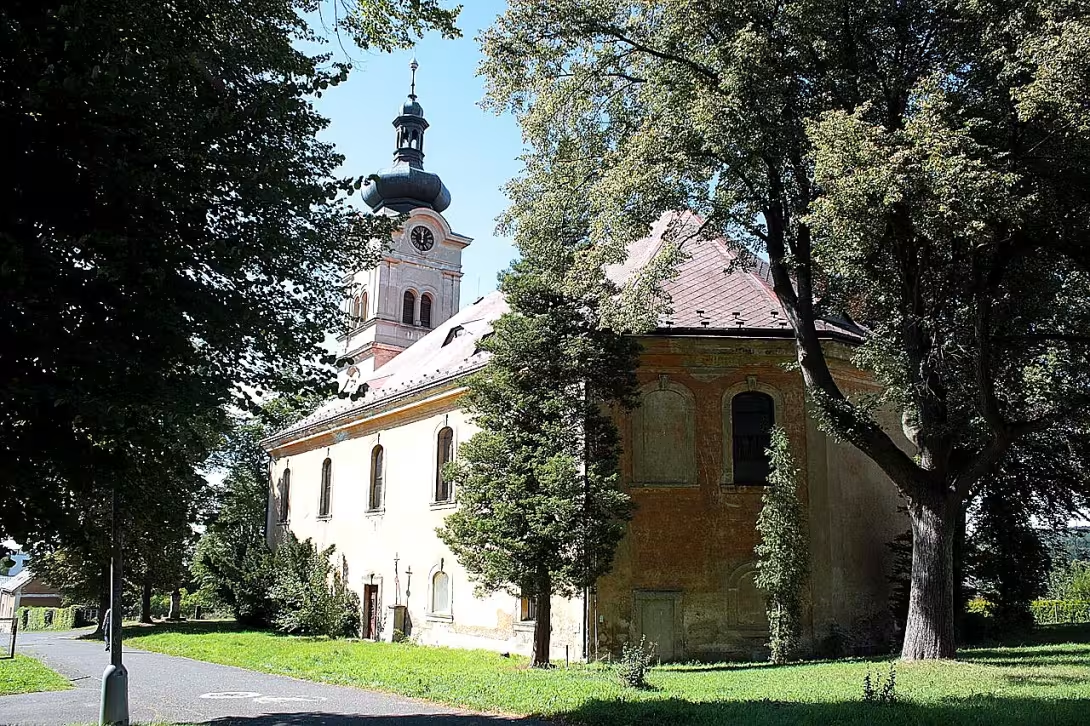
The Church of Saint Catherine in Nové Město pod Smrkem is a cultural monument reflecting the region's rich history. Situated in Frýdlantský výběžek, Liberecký kraj, it was built in 1607 by Kateřina z Redernu as a Protestant sanctuary during Bohemia's religious upheaval. Its significance grew after becoming a Roman Catholic site post-Battle of White Mountain in 1620, mirroring Europe's Counter-Reformation.
The church's origins are linked to early 17th-century Bohemia's shifting religious and political landscapes. Commissioned by Kateřina z Redernu in the Renaissance style as a Protestant church, it transitioned to Roman Catholicism under Albrecht z Valdštejna and Gallasové after the Battle of White Mountain. The conversion in 1652 exemplified the Counter-Reformation's impact on religious structures.
Architecturally, the Church of Saint Catherine has evolved significantly. Initially Renaissance-styled, it received a spire by Italian architect Markus Antonius Canevall in 1693. Most of the structure was demolished and rebuilt between 1821 and 1829 due to deterioration. In the late 19th century, it acquired a taller spire and underwent further modifications.
Ownership and administration have changed over time. Initially under Kateřina z Redernu's stewardship, it later belonged to Albrecht z Valdštejna and Gallasové after the Battle of White Mountain. These transitions influenced its religious orientation and architectural evolution.
Key events include its foundation in 1607 by Kateřina z Redernu, conversion to Roman Catholicism in 1652, and the addition of a spire designed by Markus Antonius Canevall in 1693. These milestones highlight its dynamic history within broader religious transformations.
Today, the Church of Saint Catherine is an accessible cultural monument. Visitors can explore its historical significance and architectural beauty. The interior features 19th-century artifacts, including a central painting by Josef Führich depicting Saint Catherine, a late rococo pulpit from 1778, and a baptismal font dating back to 1821. Nearby attractions include the parsonage at house number 2, a statue of Saint John Nepomucene, a cast cross on a neoclassical base, an obelisk commemorating Gottfried Menzel, and a notable oak tree named 'Buk u kostela svaté Kateřiny.'
The Church of Saint Catherine is not only architecturally and religiously significant but also offers insights into Bohemia's complex history. Its enduring presence invites visitors to explore its storied past and the cultural and spiritual transformations that have shaped this region over centuries.
Then and now
Drag the slider to compare how the landmark may have looked when it was built with the view today.
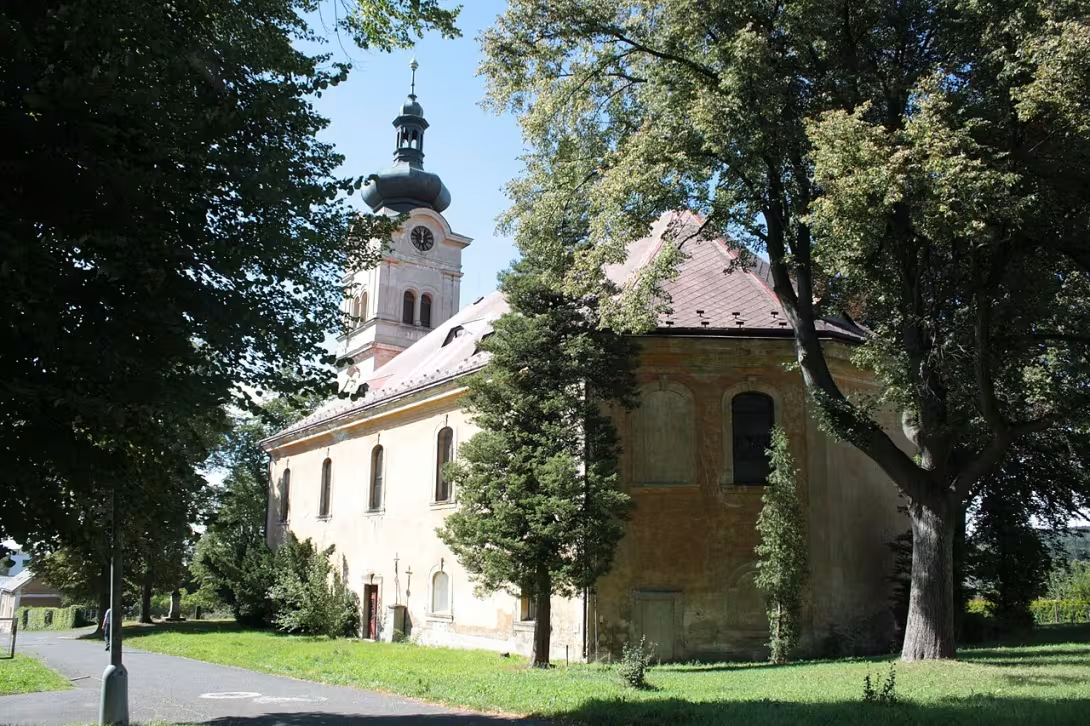
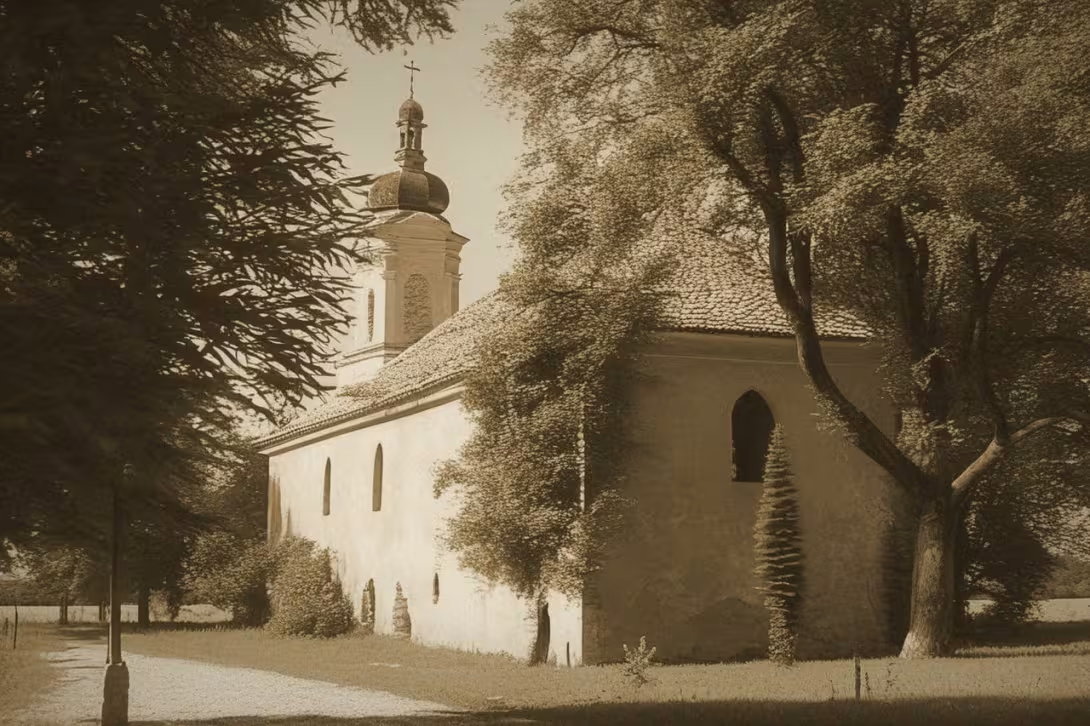
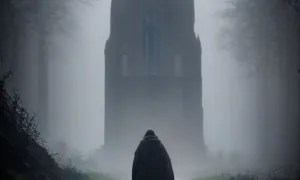
The historical appearance on the left is an AI-generated visualisation and serves as inspiration only.
Historical milestones
- 1607
- Foundation of the original Protestant church by Kateřina z Redernu.
- 1652
- Conversion to Roman Catholicism and consecration by Gallasové.
Architectural development
The church underwent significant changes over the centuries. Initially built in the Renaissance style, it was later expanded with a spire designed by Italian architect Markus Antonius Canevall in 1693. Due to deterioration, most of the structure was demolished and rebuilt between 1821 and 1829. In the late 19th century, the church received a taller spire and underwent further modifications.
Historical events
- 1607
- Foundation of the Protestant church by Kateřina z Redernu
- 1652
- Conversion to Roman Catholicism and consecration
- 1693
- Design and addition of a spire by Markus Antonius Canevall
Owners
- 1607
- after 1620
- post-Valdštejn
Points of interest
– The Church of Saint Catherine was originally built as a Protestant sanctuary during Bohemia's religious upheaval in the early 17th century, reflecting the region's shifting religious dynamics before becoming Roman Catholic.
– Architect Markus Antonius Canevall, an Italian architect, designed the church's spire in 1693, showcasing cross-cultural influences in its architectural evolution.
– The church underwent a significant reconstruction between 1821 and 1829 due to deterioration, leading to most of its original structure being demolished and rebuilt during this period.
– A notable interior artifact is a central painting by Josef Führich depicting Saint Catherine, highlighting the blend of religious artistry from different eras within the church.
– The oak tree named 'Buk u kostela svaté Kateřiny' near the church adds to its natural charm and historical ambiance, serving as a living monument alongside the church.
Guide
This guide is narrated by a synthetic voice generated by artificial intelligence.
Show guide text
This text was created by artificial intelligence and has not been editorially reviewed. It may contain inaccuracies.
Welcome to the Church of St. Catherine in Nové Město pod Smrkem, a historical monument that stands as a witness to rich chapters of Czech history. As you stand before this impressive sacred site, you can feel the significant atmosphere surrounding it. This church, with its simple courtyard and apse, is beautifully influenced by Renaissance architecture, reminding you of the time when it was originally built. Adjacent to the church are structures of side sacristies, and the roof is adorned with a slender pointed spire that draws your attention towards the west.
Let's take a look at its origins. In 1607, the Church of St. Catherine was built as a Protestant church by Kateřina z Redernu. This period represents an era of religious upheaval in the Czech lands when the region underwent deep changes. After the Battle of White Mountain in 1620, there was a conversion of the church to Roman Catholicism and it was consecrated by the Gallas family in 1652, reflecting broader religious shifts at that time.
Now let's examine the architecture. The Church of St. Catherine is the work of Italian architect Markéta Antonín Canevallus, whose design brings elegance and moving simplicity. Take a look at the façade with its straight lines and gaze upwards at the pointed spire that lifts you towards the heavens.
Key figures associated with this place include Kateřina z Redernu, whose initiative led to the original construction of the church. Albrecht z Valdštejna and the Gallas family also played key roles in the history of this site, each contributing to its religious and cultural heritage.
An interesting feature is the original Protestant nature of the Church of St. Catherine. Originally built as a place of refuge during the religious turmoil of the early 17th century, the church reflects a rich history of religious changes and adaptations in the region.
I hope you feel immersed in its heritage here. If you're keen to explore more, Nové Město pod Smrkem offers many other historical treasures to discover. Thank you for visiting St. Catherine's Church and we hope you return with new experiences and insights.
Tips for visitors
The best time to visit the Church of Saint Catherine is during late spring or early autumn when the weather is pleasant, making it ideal for exploring both the church and its surroundings. These seasons offer vibrant natural scenery, enhancing your experience as you walk through Nové Město pod Smrkem. Additionally, visiting outside peak tourist season can provide a more serene atmosphere to appreciate the historical architecture.
Parking and transportation options are convenient for visitors. The area around the church is accessible by both car and public transport. If driving, there should be nearby parking facilities; however, it's advisable to check local resources or maps in advance. For those using public transport, verify current routes and schedules through a travel app or website to ensure smooth access to Nové Město pod Smrkem.
When visiting the Church of Saint Catherine, consider bringing comfortable walking shoes as you may want to explore the surrounding area, including the nearby parsonage and statues. A camera is recommended for capturing the architectural details of the church and its Renaissance style. Additionally, carrying a water bottle and some snacks can enhance your visit, especially if you plan on spending several hours exploring.
Photography enthusiasts will find several spots around the Church of Saint Catherine ideal for capturing stunning images. The best light conditions are typically in the early morning or late afternoon when the sunlight is softer, creating beautiful shadows and highlights on the church's facade. Additionally, the statue of Saint John Nepomucene and the cast cross offer excellent opportunities for close-up shots.
For families with children visiting the Church of Saint Catherine, there are several attractions within a 30-minute drive that can make your trip more enjoyable. The nearby parsonage at house number 2 is an interesting historical site to explore. Additionally, the statue of Saint John Nepomucene and the obelisk commemorating Gottfried Menzel provide educational opportunities for children interested in history and art.
Businesses nearby
Do you run a restaurant, accommodation, shop, museum, rental, wellness or other visitor service near this monument? Show yourself directly to the people heading to it — this is how they will see you in the app and on the web:
Nearby
Near the church stands the parsonage at house number 2, built around the turn of the 18th and 19th centuries. A statue of Saint John Nepomucene from 1770 and a cast cross on a neoclassical base from 1816 are located in front of the church. An obelisk commemorating Gottfried Menzel is situated to the east, while a notable oak tree named 'Buk u kostela svaté Kateřiny' grows northeast.
Accommodation nearby
Trips and activities nearby
Guided tours, tickets and activities nearby from GetYourGuide
Affiliate link: if you buy from the partner, we may receive a commission. The price for you does not change.
Search tours and activities →Themed route
Thematic Walking Tour: Nové Město pod Smrkem
1. Kostel svaté Kateřiny Type: Church Why Visit: Begin your journey at the heart of Nové Město pod Smrkem with this stunning church, a significant architectural and spiritual landmark in the town. Its serene atmosphere offers a perfect starting point for exploring the rich history and cultural heritage of the area.
2. Farní dům (Parsonage) Type: Historical Building Why Visit: Located just a short walk from the church, this parsonage at house number 2 dates back to the turn of the 18th and 19th centuries. Its historical architecture provides insight into the town's past and its role in supporting the local parish community.
3. Statue of Saint John Nepomucene Type: Sculpture Why Visit: In front of the church stands a statue of Saint John Nepomucene from 1770, offering an opportunity to appreciate Baroque artistry. This sculpture not only adds to the spiritual ambiance but also serves as a reminder of the town's deep-rooted religious traditions.
4. Cast Cross on Neoclassical Base Type: Monument Why Visit: Nearby is a cast cross set on a neoclassical base from 1816, symbolizing the blend of artistic styles that characterize this region. This monument provides an interesting contrast to the church's architecture and enhances your understanding of local historical aesthetics.
5. Obelisk commemorating Gottfried Menzel Type: Memorial Why Visit: To the east of the church is a commemorative obelisk dedicated to Gottfried Menzel, offering a moment to reflect on the contributions of notable figures in the town's history. This site adds depth to your tour by connecting you with the personal stories that have shaped this community.
6. Buk u kostela svaté Kateřiny (Oak Tree) Type: Natural Landmark Why Visit: Conclude your tour at a notable oak tree located northeast of the church, known as 'Buk u kostela svaté Kateřiny.' This majestic tree not only provides a natural beauty to the surroundings but also represents the enduring nature and resilience of the local landscape.
Seasonal recommendations
Spring: Visiting the Church of Saint Catherine during spring offers a unique experience as nature begins to awaken around Nové Město pod Smrkem. The blooming flowers and fresh greenery create a picturesque setting, enhancing the historical charm of the church with vibrant colors and soft light filtering through budding trees. This season is ideal for capturing serene photographs without the summer crowds. Visitors should wear comfortable layers as temperatures can vary, and it's best to arrive in the morning when the light is gentle and the air is crisp.
Summer: The Church of Saint Catherine shines brightly under the full sun during summer, with its architecture casting long shadows that add depth to its historical façade. This season brings longer daylight hours, allowing for extended visits. However, it's also the peak tourist season, so arriving early can help avoid larger crowds and ensure a more peaceful experience. Light clothing is recommended due to warmer temperatures, and carrying water is advisable as you explore both the church and the surrounding natural beauty.
Autumn: Autumn transforms the Church of Saint Catherine into a stunning canvas with its warm hues reflecting off the church's stone walls. The falling leaves create a magical atmosphere, perfect for those seeking tranquility amidst nature’s splendor. This season offers fewer visitors compared to summer, providing a more intimate experience. Visitors should wear layers as temperatures can be cooler, and carrying an umbrella might be wise due to unpredictable weather.
Winter: In winter, the Church of Saint Catherine exudes a serene beauty under a blanket of snow, with its historic architecture standing out against the stark landscape. The shorter days mean earlier closing times, so planning your visit in advance is essential. Winter attire should include warm clothing and sturdy boots for navigating potentially icy paths. Despite fewer visitors during this season, it's advisable to check ahead for any changes in opening hours due to weather conditions.
Visualizations and artistic views


The visualisations are generated by artificial intelligence and serve as inspiration.
Photos from the area
Real photos taken near the monument


Zdroj a licence jsou uvedeny u každého snímku.
Tips from visitors
No tips yet. Be the first!
Log in and add your tip.
Sources and literature
Fotografie: Jan Polák / CC BY-SA 3.0 — Wikimedia Commons. The author and licence also appear when you hover over the image.
Faktickým podkladem tohoto textu byl článek na Wikipedii, jehož autory jsou přispěvatelé Wikipedie. Článek je dostupný pod licencí CC BY-SA 4.0.
Location on the map
More monuments – Nové Město pod Smrkem
Show all in the municipality

Příběhy a pověsti
Legendy, pověsti a příběhy spjaté s touto památkou
Fotografie návštěvníků
Zatím žádné fotografie. Buďte první, kdo přidá fotografii z návštěvy!
Přihlaste se a přidejte svou fotografii nebo hodnoťte.
Za ověřenou návštěvu v aplikaci získáte víc bodů — poznáme podle GPS, že jste na místě.
Reviews and comments