



Kostel svaté Ludmily (Horní Počernice) Church
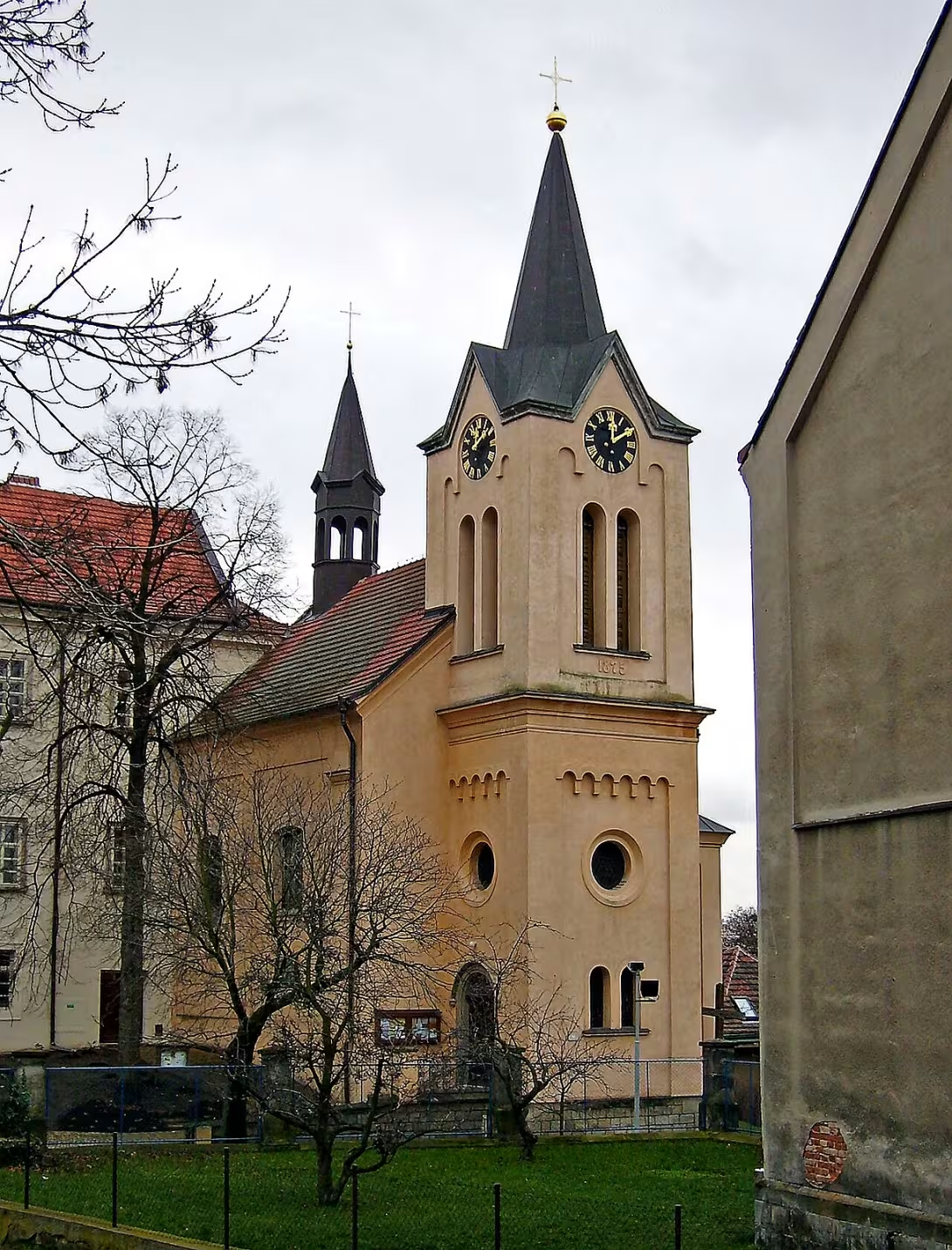
Kostel svaté Ludmily in Horní Počernice is a significant Baroque church within the Chvaly castle complex. Located in Prague-Horní Počernice, it stands as the district's second oldest preserved building. Originally built as a chapel dedicated to Saint Anne by Jesuits in 1660, it was later transformed into a parish church under Father Josef Jan Pánk between 1793 and 1794. This transformation marked its evolution from a simple chapel to a grander structure with an expanded nave and choir, notable for both historical significance and architectural development.
The origins of Kostel svaté Ludmily date back to the late 17th century when Jesuits constructed the original chapel on the site. During this period, Bohemia was under Habsburg rule, heavily influenced by Catholicism in religious and cultural life. The chapel initially served as a spiritual center for the local community, reflecting broader religious dynamics of the time. By the late 18th century, Enlightenment ideas began influencing architectural styles across Europe, including this region, setting the stage for its transformation into a church dedicated to Saint Ludmila.
Architecturally, Kostel svaté Ludmily showcases Baroque elements enhanced during its renovation in the late 18th century. The original structure was expanded from a simple chapel with a four-sided presbytery and cross-vaulted nave to include a larger nave and choir under Father Josef Jan Pánk's direction. A notable addition is the bell tower, constructed in the neo-Romanesque style in 1825, which required reinforcement for heavy bells. This architectural evolution reflects both functional needs and stylistic trends of its time.
Throughout its history, Kostel svaté Ludmily has experienced various changes in ownership and administration. Initially managed by Jesuits, it transitioned into a parish church following the suppression of the Jesuit order. The church's fortunes were notably affected during the world wars; original bells were confiscated and destroyed during World War I, with replacements installed in 1923 but removed again during World War II. These events highlight the resilience and adaptability of this historical monument.
Key events at Kostel svaté Ludmily include its transformation from a chapel to a church and the challenges it faced during wartime. The installation of new bells in 1947, facilitated by local farář František Štverák despite his imprisonment by both Nazi and communist regimes, underscores the community's dedication to preserving their spiritual heritage.
Today, Kostel svaté Ludmily stands as a testament to its rich history after undergoing comprehensive restoration between 1997 and 1999. The church now features a new facade, repaired roof, and updated electrical installations, with its interior vibrantly restored in 2007. In November 2007, the church was further enriched by the blessing of new organs by Cardinal Miloslav Vlk. As part of the Chvaly castle complex, it remains an accessible site for visitors interested in exploring its historical and architectural significance.
Kostel svaté Ludmily offers a unique glimpse into the past, blending religious history with architectural evolution. Its enduring presence invites visitors to appreciate not only its beauty but also the stories embedded within its walls. Whether drawn by its Baroque architecture or intrigued by its storied past, this church is well worth a visit for anyone interested in Czech heritage and history.
Then and now
Drag the slider to compare how the landmark may have looked when it was built with the view today.
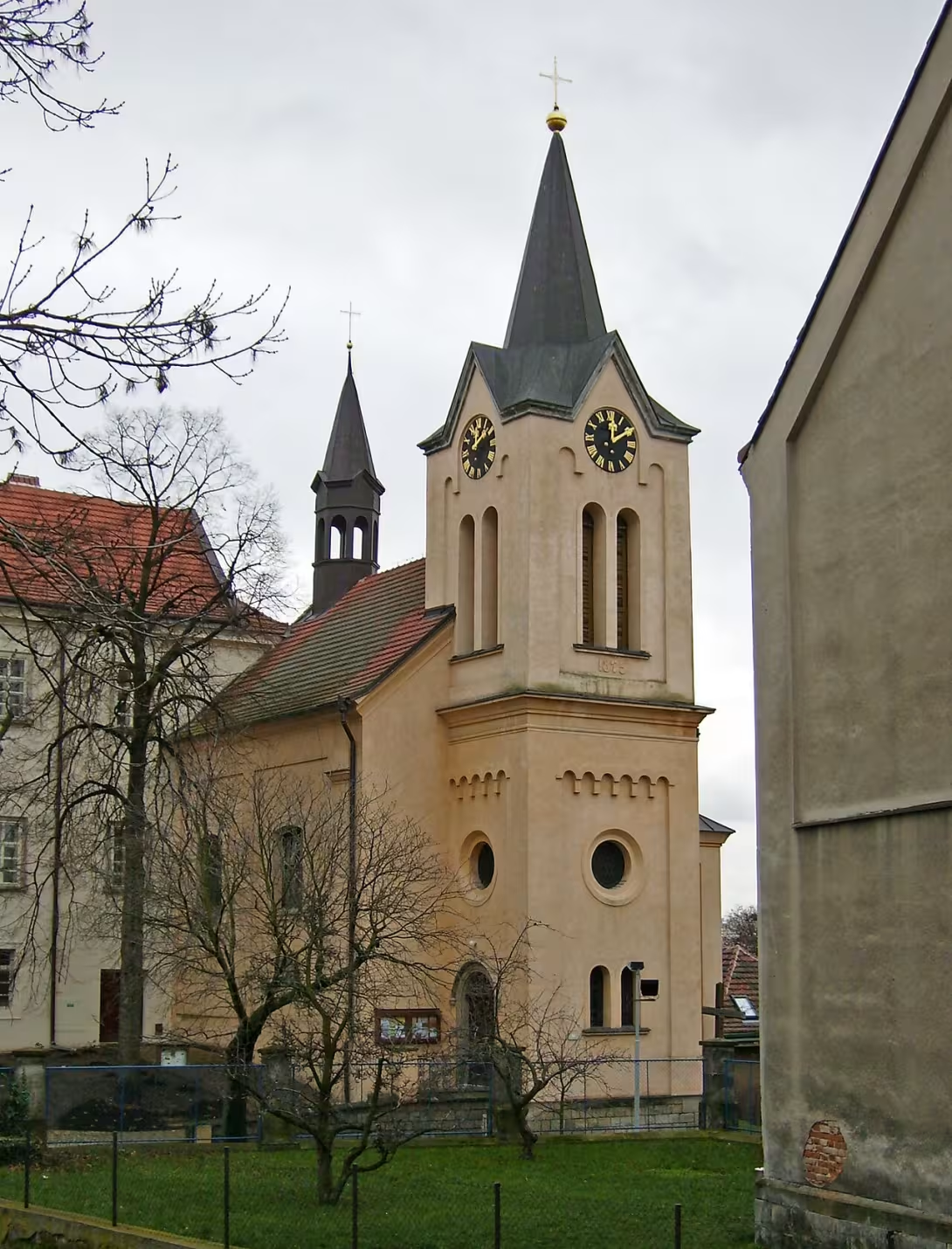
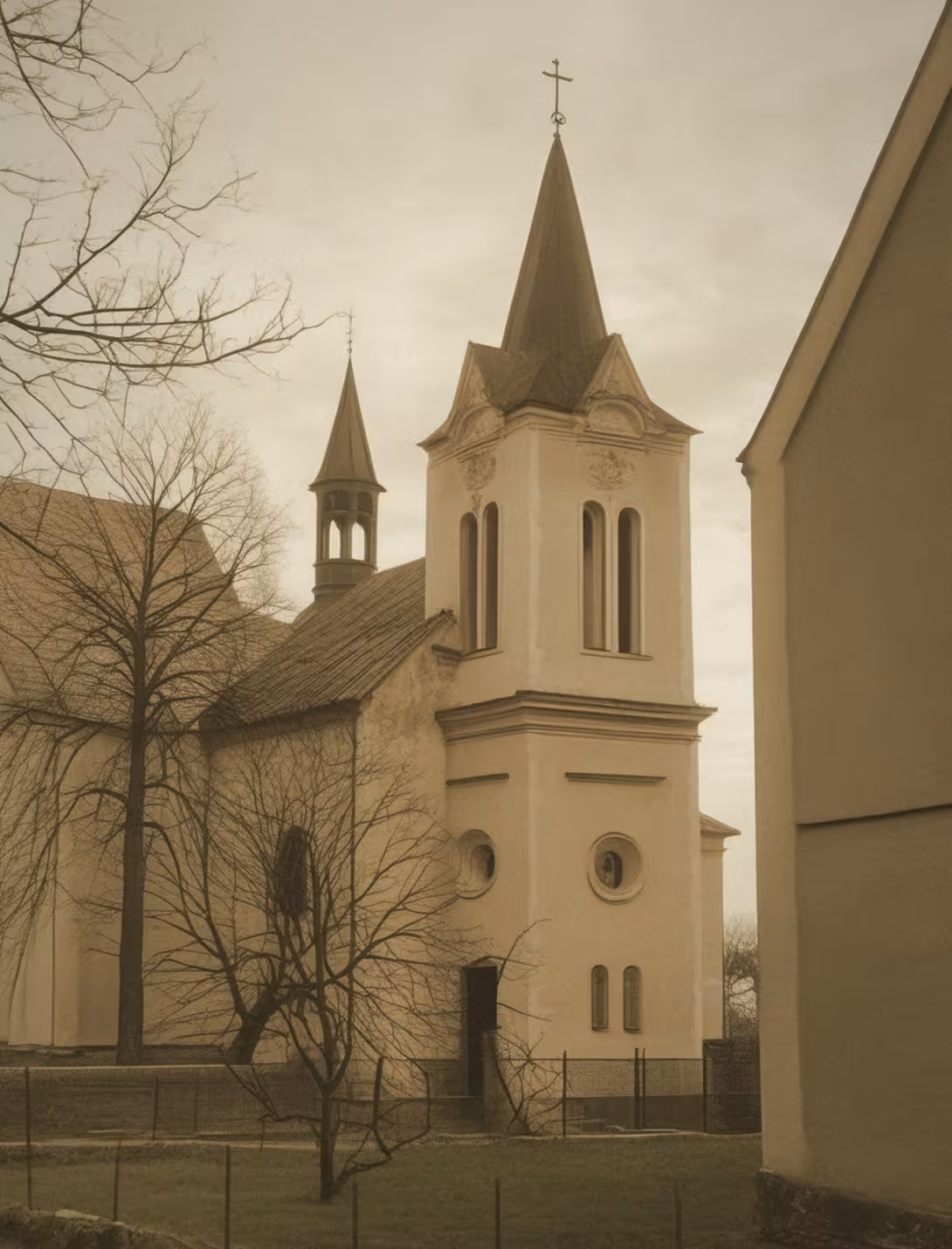
The historical appearance on the left is an AI-generated visualisation and serves as inspiration only.
Historical milestones
- 1660
- Chapel dedicated to Saint Anne built by Jesuits.
- 1793
- Transformation into a parish church began under Father Josef Jan Pánk.
- 1794
- Completion of transformation into a parish church with expanded nave and choir.
- 1825
- Construction of the neo-Romanesque bell tower.
- 1923
- Installation of new bells after World War I losses.
- 1947
- New bells installed despite wartime challenges.
Architectural development
The original structure was a simple chapel built by Jesuits in 1660. In 1793-1794, it underwent significant transformation under Father Josef Jan Pánk, evolving from a chapel into a larger church with an expanded nave and choir. The church features baroque architectural elements, including a new bell tower constructed in the neo-Romanesque style in 1825.
Historical events
In 1660, Jesuits built the original chapel dedicated to Saint Anne on the site of what is now Kostel svaté Ludmily.
Between 1793 and 1794, under Father Josef Jan Pánk's direction, the chapel was transformed into a church dedicated to Saint Ludmila.
Points of interest
- The transformation of Kostel svaté Ludmily from a chapel to a parish church was significantly influenced by Father Josef Jan Pánk, who oversaw its expansion and architectural enhancement in the late 18th century.
- Despite being confiscated and destroyed during World War I, the resilience of the community is evident as they installed new bells in 1923, only for them to be removed again during World War II; these were finally replaced in 1947 under challenging circumstances.
- The church's bell tower was constructed in a distinctive neo-Romanesque style in 1825, requiring reinforcement to support heavy bells, showcasing the blend of architectural styles and practical considerations over time.
- In November 2007, Cardinal Miloslav Vlk blessed new organs for Kostel svaté Ludmily, adding to its rich musical heritage and enhancing its role as a spiritual center within the community.
- The comprehensive restoration efforts between 1997 and 1999 revitalized the church's facade, roof, and interior, demonstrating ongoing dedication to preserving this historical monument amidst modern challenges.
Guide
This guide is narrated by a synthetic voice generated by artificial intelligence.
Show guide text
This text was created by artificial intelligence and has not been editorially reviewed. It may contain inaccuracies.
The Church of Saint Ludmila in Chvaly is the parish church of the Horní Počernice parish. It belongs to the Chvaly Castle complex and is the second oldest preserved building on the territory of today's Prague-Horní Počernice district.
Its origins date back to the year 1660. At that time, the Jesuits, who owned the Chvaly fortified farm, built a chapel of Saint Anna here. The chapel was directly adjacent to the fortified farm. It had a square presbytery with a barrel vault and a nave with a cross vault. From 1695 it served as a parish chapel, and from 1711 parish records were kept in it. Until then, Chvaly fell under the parish church of the Assumption of the Virgin Mary in Dolní Počernice.
After the Jesuit order was dissolved, the chapel underwent a major transformation. In the years 1793 to 1794, during the tenure of Father Josef Jan Pánek, it was rebuilt into the Church of Saint Ludmila. The original nave became the presbytery, and a new, larger nave with a vaulted ceiling and two wide windows was added to it. A choir loft with an organ was also created. The main altar is dedicated to Saint Ludmila, and the side altars to Saint John of Nepomuk and Saint Václav. The paintings on the altars were created in 1880 by Vilém Kandler.
The bell tower in Neo-Romanesque style dates from 1825. The widow of Antonín Ryba, a miller from Chvaly, had two bells cast in the Prague workshop of Karel Bellman, one weighing one thousand kilograms and the other five hundred kilograms. However, the tower could not support such heavy bells, so it had to be rebuilt first. The bells were hung on it only in 1875. During the First World War they were confiscated and destroyed. The faithful then organized a collection and in 1923 acquired new bells from the workshop of Arnošt Diepolt. These did not last long either; in 1942 they were removed during the Second World War. Today's bells date from 1947. Local parish priest František Štverák deserves credit for them; he was imprisoned by both the Nazis and the Communists.
Between 1997 and 1999, the church underwent a complete reconstruction. The roof and tower were repaired and the building received a new facade. In 2007, a new electrical installation and interior painting followed. That same year, on November 18, Cardinal Miloslav Vlk blessed the new organ.
Tips for visitors
The best time to visit Kostel svaté Ludmily is during the late spring or early autumn months, when the weather is pleasant for exploring both the church and its surrounding countryside. These seasons offer vibrant landscapes that enhance the beauty of the Chvaly castle complex. Additionally, visiting outside peak tourist periods can provide a more serene experience, allowing you to appreciate the architectural details without large crowds.
Parking and transportation options are convenient for visitors. The area around Horní Počernice is accessible by both car and public transport. If driving, there are parking facilities nearby where you can leave your vehicle. For those preferring public transport, local buses serve the area, making it easy to reach without a car. Always check current routes and schedules in advance to plan your trip efficiently.
When visiting Kostel svaté Ludmily, consider bringing comfortable walking shoes as there may be some walking involved, especially if you wish to explore the surrounding countryside or other historical sites within the Chvaly castle complex. A camera is also recommended to capture the stunning architecture and landscapes. Additionally, carrying a light jacket can be useful, as weather conditions can change quickly in this region.
Photography enthusiasts will find several excellent spots around Kostel svaté Ludmily for capturing its baroque beauty. The best lighting typically occurs during the golden hours of early morning or late afternoon when the sunlight creates soft shadows and highlights the intricate details of the church's facade. Exploring different angles from within the castle complex can also provide unique perspectives.
For families with children, Kostel svaté Ludmily offers a fascinating glimpse into history that can be both educational and enjoyable. The surrounding area includes other historical sites within a 30-minute walk or short drive, such as parts of the Chvaly castle complex, which can provide additional activities for curious minds. Exploring these nearby attractions allows families to spend an entire day immersed in local heritage.
Frequently asked questions
Can the monument be visited?
Yes. We verified the opening hours or admission on the official website (7. 10. 2026); you will find them in the visitor information on this page. Please double-check with the operator before you travel.
What are the opening hours and admission?
Details verified on the official website (7. 10. 2026) are listed in the visitor information on this page. Official website: https://chvalskyzamek.cz/
Where is the monument?
Location: Řešetovská 857, Horní Počernice, Praha, Hlavní město Praha. The map on this page shows the exact spot.
Why is the monument protected?
It is listed in the Central List of Cultural Monuments of the Czech Republic as a cultural monument (register no. 41237/1-1976). It is protected as part of a larger listed ensemble.
Businesses nearby
Do you run a restaurant, accommodation, shop, museum, rental, wellness or other visitor service near this monument? Show yourself directly to the people heading to it — this is how they will see you in the app and on the web:
Events nearby
Zdroj akcí: otevřená data měst a obcí ČR (Národní katalog otevřených dat) a kalendář akcí Národního památkového ústavu.
Nearby
The church is part of the Chvaly castle complex and is located within a scenic area that includes other historical sites. The surrounding landscape features typical Czech countryside elements.
Accommodation nearby
Trips and activities nearby
Guided tours, tickets and activities nearby from GetYourGuide
Affiliate link: if you buy from the partner, we may receive a commission. The price for you does not change.
Search tours and activities →Themed route
Tematická výletní trasa: Kostel svaté Ludmily a okolí
1. Kostel svaté Ludmily (Horní Počernice) - Typ: Historická památka, kostel - Proč stojí za návštěvu: Tento barokní kostel je klíčovou součástí komplexu Chvaly a nabízí pohled na bohatou historii oblasti. Jeho architektura a umístění v rámci malebného prostředí činí z něj nezapomenutelný začátek vašeho výletu.
2. Komplex Chvaly - Typ: Historický hradový komplex - Proč stojí za návštěvu: Komplex Chvaly je fascinujícím příkladem historické architektury, který doplňuje kostel svaté Ludmily. Jeho zámek a okolní budovy nabízejí vhled do minulosti oblasti a jsou ideálním místem pro pochopení kulturního dědictví regionu.
3. Okolní historická místa - Typ: Historické lokalitě - Proč stojí za návštěvu: Obklopující krajinou je plné dalších historických míst, která přidávají hloubku vašemu výletu. Tyto místa jsou propojena s komplexem Chvaly a poskytují kontext k rozvoji oblasti po staletí.
Tato trasa nabízí pohled na bohaté historické a kulturní aspekty Horních Počernic, umožňuje návštěvníkům prozkoumat nejen kostel svaté Ludmily, ale i jeho okolí v rámci komplexu Chvaly.
Seasonal recommendations
Spring: The arrival of spring at the Church of Saint Ludmila in Horní Počernice is marked by a vibrant burst of colors as nature awakens around this historic site. The surrounding gardens and pathways are adorned with blooming flowers, creating an enchanting atmosphere that complements the church's architectural beauty. This season brings moderate weather, making it ideal for leisurely visits. Visitors should consider wearing comfortable layers to accommodate fluctuating temperatures throughout the day. While crowds may not be as dense as in summer, arriving early ensures a more intimate experience with fewer people and better chances of capturing serene photographs.
Summer: Summer at Saint Ludmila's Church is characterized by long days filled with warm sunlight that beautifully illuminates the church’s intricate details. The lush greenery surrounding the site enhances its picturesque charm, making it an excellent time for outdoor photography enthusiasts. However, this season also attracts more visitors due to favorable weather conditions and school holidays. To avoid large crowds, it's advisable to visit early in the morning or later in the afternoon. Comfortable walking shoes and light clothing are recommended to navigate the site comfortably under the summer sun.
Autumn: The autumn months transform Horní Počernice into a tapestry of warm hues as leaves change color around the Church of Saint Ludmila, creating a serene and picturesque setting. This season offers a tranquil atmosphere ideal for those seeking a peaceful retreat from the hustle and bustle of city life. Although visitor numbers decrease compared to summer, it's still wise to plan ahead if you wish to explore any special autumn-themed events or exhibitions that might be hosted at the site. Wearing layers is advisable due to cooler temperatures, especially in the evenings.
Winter: Winter envelops the Church of Saint Ludmila in a quiet and mystical ambiance as snow gently blankets the landscape, enhancing its historical allure. The church may appear even more majestic against the backdrop of frosty surroundings, offering unique photographic opportunities under softer lighting conditions. However, shorter daylight hours mean that visiting early is crucial to make the most of your time at the site. Visitors should dress warmly in layers and be prepared for potential closures or reduced opening times due to inclement weather. Despite fewer crowds, it's important to check ahead for any seasonal changes in accessibility.
Visualizations and artistic views


The visualisations are generated by artificial intelligence and serve as inspiration.
Photos from the area
Real photos taken near the monument


Zdroj a licence jsou uvedeny u každého snímku.
Tips from visitors
No tips yet. Be the first!
Log in and add your tip.
Sources and literature
Photos: Petr Vilgus / CC BY-SA 3.0 — Wikimedia Commons. The author and licence also appear when you hover over the image.
Faktickým podkladem tohoto textu byl článek na Wikipedii, jehož autory jsou přispěvatelé Wikipedie. Článek je dostupný pod licencí CC BY-SA 4.0.
Location on the map
More monuments – Horní Počernice
Show all in the municipality
Příběhy a pověsti
Legendy, pověsti a příběhy spjaté s touto památkou
Fotografie návštěvníků
Zatím žádné fotografie. Buďte první, kdo přidá fotografii z návštěvy!
Log in a přidejte svou fotografii nebo hodnoťte.
Za ověřenou návštěvu v aplikaci získáte víc bodů — poznáme podle GPS, že jste na místě.
Reviews and comments