



kostel svaté Máří Magdaleny (Nepolisy) Church
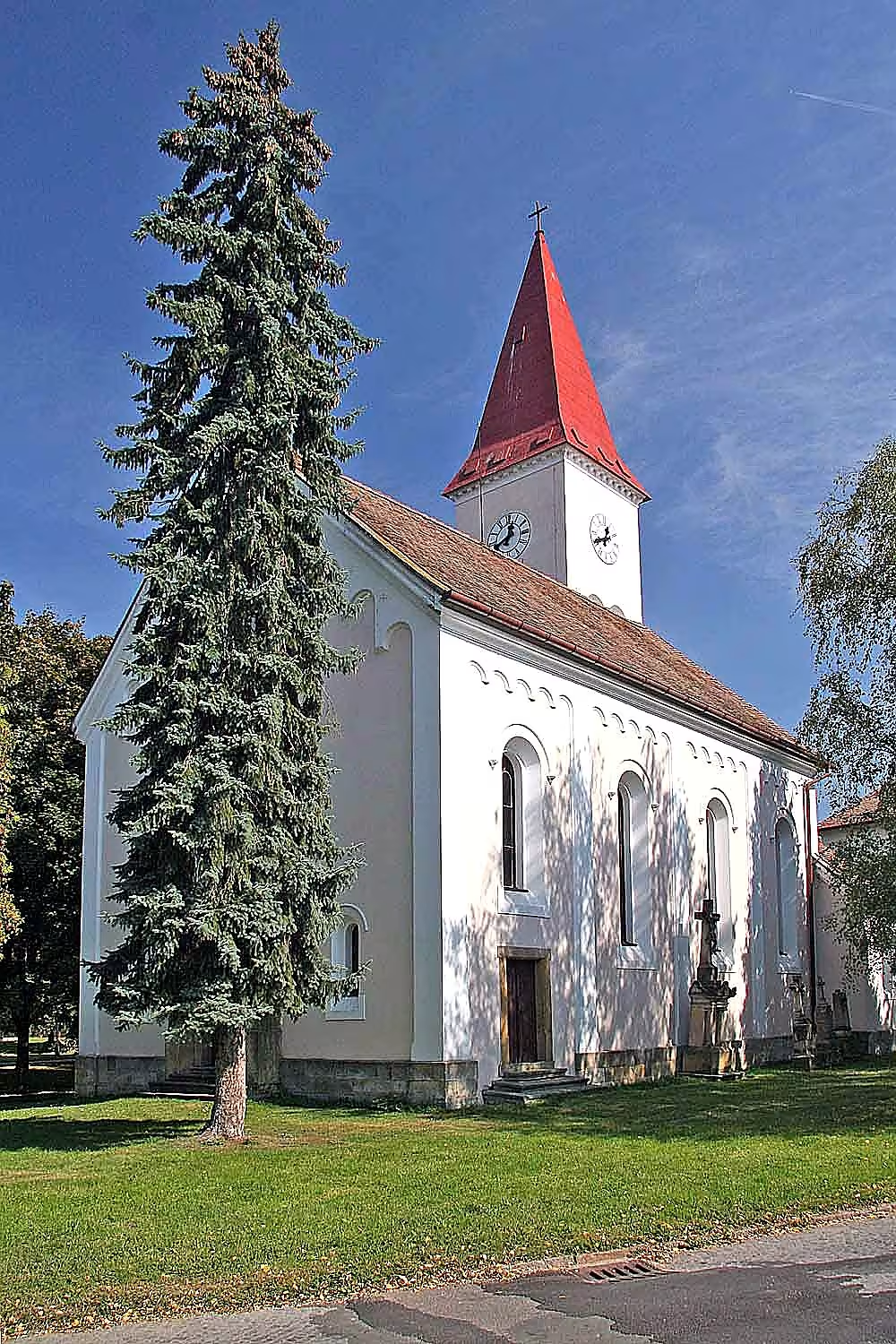
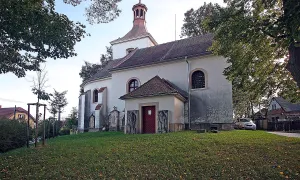
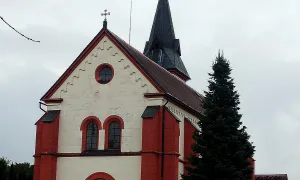
The Church of Saint Mary Magdalene in Nepolisy is a prominent Neo-Romanesque landmark in the village located in the Královéhradecký kraj region. First mentioned in historical records from 1391, it has undergone significant architectural changes over time. The current structure, consecrated in 1901, stands out for its distinctive style and historical importance as a testament to Nepolisy's architectural evolution.
The church's origins trace back to a Gothic wooden building noted in 1391. By 1707, this was replaced by a Baroque structure that eventually deteriorated. The need for renovation became clear by the late 19th century, leading to the demolition of the Baroque church in 1896. This allowed for the construction of the present Neo-Romanesque edifice, completed and consecrated in 1901. This period saw a broader European interest in medieval architectural styles, known as Historicism, inspiring many projects.
Architecturally, the Church features a single-nave rectangular layout with a semi-circular presbytery and a distinctive spire. The interior furnishings date back to the early 20th century, reflecting the style and craftsmanship of that era. Notable among these is an organ crafted in 1901 by Josef Kobrle from Lomnice nad Popelkou. Historical artifacts include a Holy Cross sculpture from 1853 and statues of Saint John Nepomucene (1860) and Our Lady of Perpetual Help (1870), adding to the church's cultural richness.
Throughout its history, the church has been integral to the local community as a filial church under the parish of Chlumec nad Cidlinou. Its architectural transformations reflect broader historical trends and local developments over several centuries. The transition from Gothic to Baroque, and eventually to Neo-Romanesque styles, illustrates the dynamic nature of ecclesiastical architecture in response to changing tastes and needs.
Today, the Church of Saint Mary Magdalene remains a significant cultural and religious site within Nepolisy. Its prominent location makes it visible from a wide area around the village, inviting visitors to explore its historical and architectural heritage. The church is not only a place of worship but also a testament to the region's rich history, offering insights into the evolution of architectural styles over time.
Visiting this monument provides an opportunity to appreciate the intricate details of Neo-Romanesque architecture and reflect on the historical journey that shaped its current form. It stands as a beacon of cultural heritage in Nepolisy, inviting both locals and tourists alike to explore its storied past and enjoy its serene presence.
Then and now
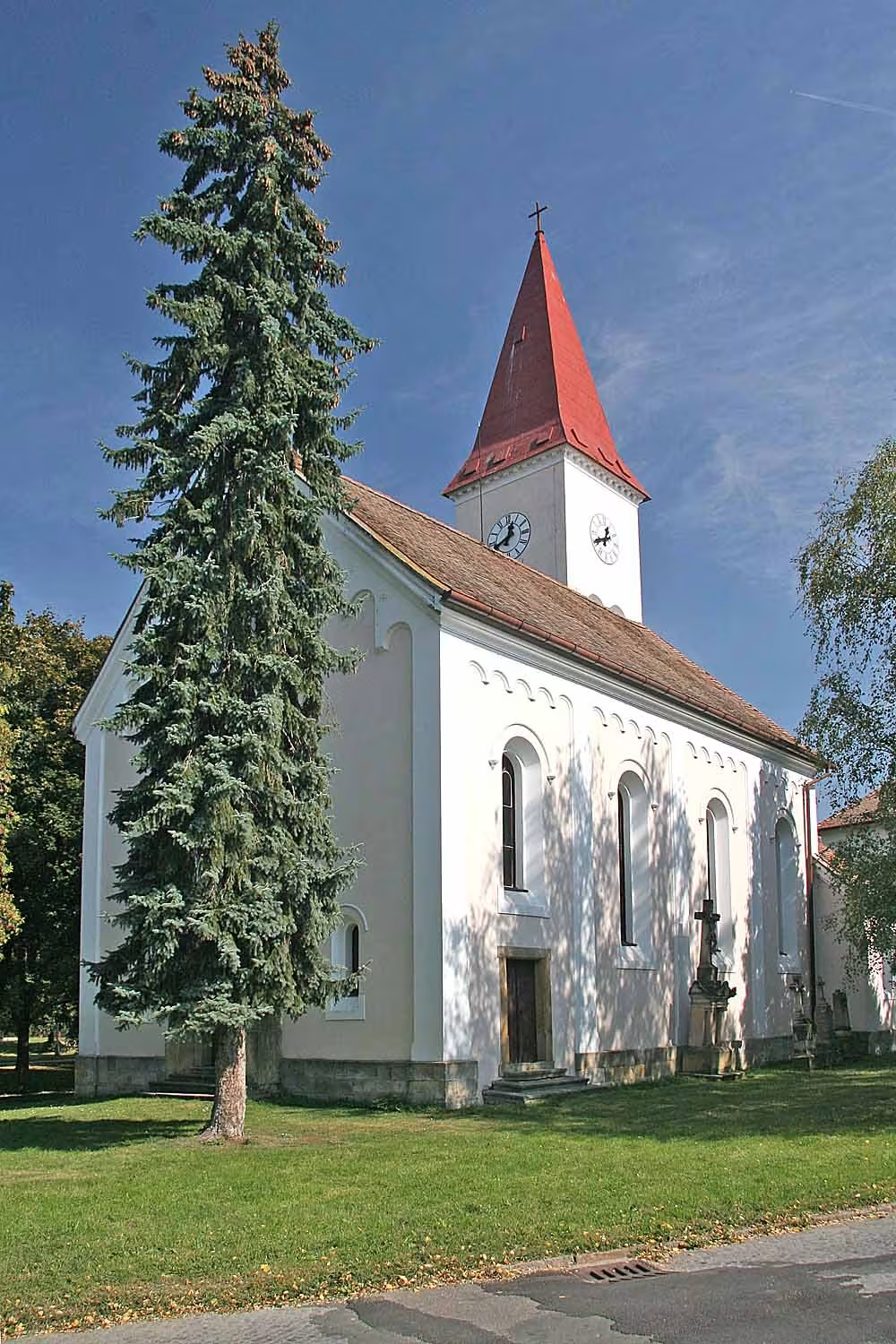
Drag the slider to compare how the landmark may have looked when it was built with the view today.
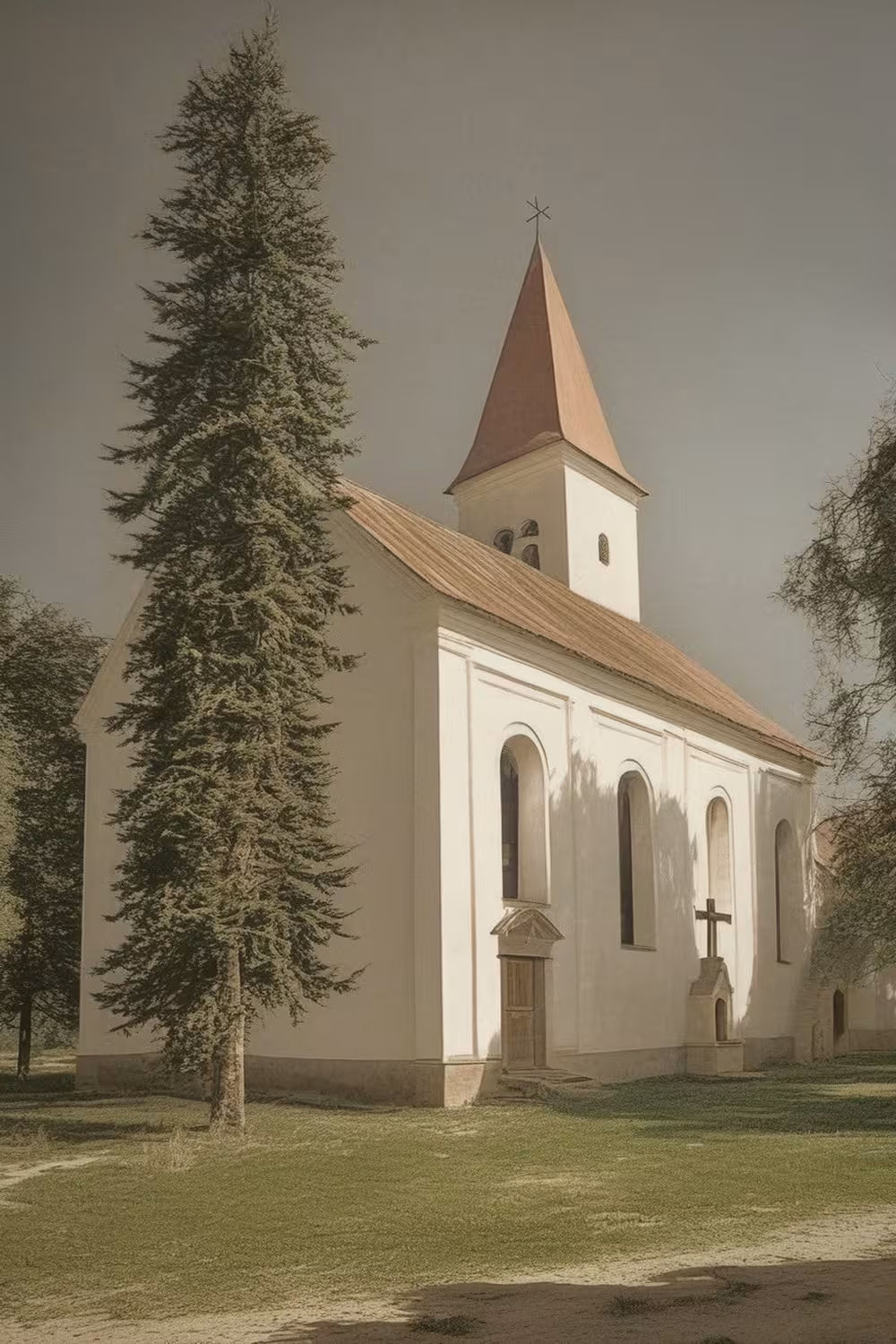
The historical appearance on the left is an AI-generated visualisation and serves as inspiration only.
Historical milestones
- 1391
- The original Gothic wooden church was mentioned.
- 1707
- The Gothic structure was replaced by a Baroque building.
- 1896
- The deteriorating Baroque church was demolished.
- 1901
- The new Neo-Romanesque church was consecrated.
Architectural development
The Church of Saint Mary Magdalene has undergone significant architectural transformations. Initially a Gothic wooden structure mentioned in 1391, it was replaced by a Baroque building in 1707. By the late 19th century, this Baroque church had deteriorated and was demolished in 1896. The current Neo-Romanesque church, completed in 1901, features a single-nave rectangular layout with a semi-circular presbytery and a spire.
Historical events
The original Gothic wooden church was mentioned in historical records by 1391.
In 1707, the Gothic structure was replaced with a Baroque building.
By 1896, the deteriorating Baroque church was demolished to construct the current Neo-Romanesque church.
The new church was consecrated in 1901.
Points of interest
- The transition from a Gothic wooden structure to a Neo-Romanesque church in Nepolisy reflects the broader European architectural trend of Historicism during the late 19th century, which saw a revival of medieval styles.
- The organ inside the Church of Saint Mary Magdalene was crafted by Josef Kobrle in 1901, showcasing early 20th-century craftsmanship and adding to the church's historical significance as part of its interior furnishings.
- Among the church’s notable artifacts is a Holy Cross sculpture dating back to 1853, which provides insight into the artistic expressions and religious sentiments prevalent during that period.
- The statues of Saint John Nepomucene (1860) and Our Lady of Perpetual Help (1870) within the church highlight its rich cultural heritage and the importance placed on religious iconography in Nepolisy's ecclesiastical history.
- Despite its architectural evolution, the Church has consistently served as a filial church under Chlumec nad Cidlinou parish, illustrating its enduring role in supporting the spiritual life of the local community over centuries.
Guide
This guide is narrated by a synthetic voice generated by artificial intelligence.
Show guide text
This text was created by artificial intelligence and has not been editorially reviewed. It may contain inaccuracies.
The Neo-Romanesque church of Saint Mary Magdalene is the dominant feature of the village of Nepolisy in the Hradec region and can be seen from far around. Today it is a subsidiary church of the parish of Chlumec nad Cidlinou.
The church in Nepolisy is mentioned as early as 1391. At that time it was a Gothic wooden structure. In 1707 it was replaced by a brick Baroque church. However, during the nineteenth century it fell into disrepair, and so it was completely demolished in 1896. In its place a new building was erected in the Neo-Romanesque style. The cornerstone was laid on April twenty-fourth, 1896 and the church was consecrated in 1901.
It is a single-nave structure with a rectangular ground plan. A semicircular presbytery adjoins the nave and the structure is completed by a prismatic tower. The interior furnishings date from the time of construction, that is from the beginning of the twentieth century. The organ was built in 1901 by Josef Kobrle, an organ builder from Lomnice nad Popelkou.
By the church wall there now stands a wayside cross from 1853. The church is also associated with two statues. The statue of Saint John of Nepomuk dates from 1860 and the statue of the Blessed Virgin Mary dates from 1870.
Frequently asked questions
Can the monument be visited?
Religious buildings are usually open mainly during services; at other times a visit is normally arranged with the parish or the operator. We have not verified specific times.
Where is the monument?
Location: Nepolisy, Královéhradecký kraj. The map on this page shows the exact spot.
Businesses nearby
Do you run a restaurant, accommodation, shop, museum, rental, wellness or other visitor service near this monument? Show yourself directly to the people heading to it — this is how they will see you in the app and on the web:
Accommodation nearby
Themed route
Tematická výletní trasa: Kostel svaté Máří Magdaleny (Nepolisy)
1. Kostel svaté Máří Magdaleny (Nepolisy) - Kostel Start your tour at the Church of Saint Mary Magdalene, which is not only a spiritual center for the village of Nepolisy but also an architectural gem. This Baroque church boasts richly decorated interiors and historical significance, making it a must-visit for anyone interested in history and architecture.
2. Nepolisy - Village Explore the village of Nepolisy itself, which surrounds the Church of Saint Mary Magdalene. The village offers peaceful streets and opportunities for short walks in its picturesque rural setting. It's a great way to immerse yourself in local culture and atmosphere.
3. Nepolský rybník - Pond No matter where you are in Nepolisy, be sure to visit the nearby Nepolský pond. This pond is an ideal spot for relaxation and enjoying nature. It's also a place where you can observe wildlife and various bird species, making it equally delightful for nature lovers.
4. Nepolské nádvoří kostela - Courtyard Visit the courtyard of the Church of Saint Mary Magdalene, where you can enjoy a peaceful moment and take in the surrounding environment. The courtyard is often a venue for various community events and serves as a gathering place for local residents.
This tour offers a combination of historical, cultural, and natural experiences around the Church of Saint Mary Magdalene and its immediate surroundings.
Seasonal recommendations
Spring: Visiting the Church of Saint Mary Magdalene in Nepolisy during spring offers a unique experience with nature at its most vibrant. The surrounding landscapes burst into life, adorned with blooming flowers and lush greenery that frame the historic architecture beautifully. This season often brings mild weather, making it ideal for exploring the church grounds on foot or by bike. While the church may still be recovering from winter closures, spring is a quieter time to visit, allowing you to appreciate its serene atmosphere without large crowds. Dress in layers to accommodate fluctuating temperatures and consider bringing an umbrella as rain showers can be frequent.
Summer: Summer at the Church of Saint Mary Magdalene is characterized by long daylight hours that illuminate the church’s intricate details, enhancing its architectural beauty. The warm weather invites visitors to enjoy outdoor activities around the area, such as picnicking or walking through nearby trails. Lightweight clothing is recommended for comfort during your visit, along with sun protection like hats and sunscreen.
Autumn: Autumn transforms the Church of Saint Mary Magdalene into a picturesque site with its stunning display of fall foliage. The changing leaves create a warm, golden glow around the church, providing a perfect backdrop for photography enthusiasts. This season is less crowded than summer, offering a more tranquil experience while still enjoying pleasant weather. It's advisable to wear comfortable walking shoes and layers, as temperatures can vary from mild days to cooler evenings.
Winter: Winter offers a serene and magical atmosphere at the Church of Saint Mary Magdalene in Nepolisy. The church is often enveloped in a quiet stillness, with snow-covered landscapes providing a stark yet beautiful contrast against its historic facade. While some services or events might be limited due to shorter daylight hours, visiting during this time allows for peaceful reflection and appreciation of the church's architecture without large crowds. Be sure to dress warmly in layers, wear waterproof boots, and check opening times as they may vary with the season.
Visualizations and artistic views


The visualisations are generated by artificial intelligence and serve as inspiration.
Photos from the area
Real photos taken near the monument


Zdroj a licence jsou uvedeny u každého snímku.
Tips from visitors
No tips yet. Be the first!
Log in and add your tip.
Sources and literature
Photos: Prazak / CC BY 2.5 — Wikimedia Commons. The author and licence also appear when you hover over the image.
Faktickým podkladem tohoto textu byl článek na Wikipedii, jehož autory jsou přispěvatelé Wikipedie. Článek je dostupný pod licencí CC BY-SA 4.0.
Location on the map


Příběhy a pověsti
Legendy, pověsti a příběhy spjaté s touto památkou

Fotografie návštěvníků
Zatím žádné fotografie. Buďte první, kdo přidá fotografii z návštěvy!
Log in a přidejte svou fotografii nebo hodnoťte.
Za ověřenou návštěvu v aplikaci získáte víc bodů — poznáme podle GPS, že jste na místě.
Reviews and comments