



Kostel svaté Máří Magdaleny (Osoblaha) Church
Objekt se nedochoval — na místě dnes nestojí. Následující text popisuje jeho historii, ne současnou návštěvu.
The Church of St. Mary Magdalena is located in Personalaga, district Bruntál in the Moravian-Silesian Region. It is a Gothic building from the 3rd quarter of the 13th century, which has been the spiritual centre of the local community for centuries. As the name suggests, it was a dean's church, a church of higher standing in the church hierarchy.
The original Gothic building was later supplemented by a Renaissance tower, which was established in the early 17th century. This tower had a characteristic polygonal topped shape and was equipped with a rarely decorated portal with a continuous feature that excelled at the naturalism of its leaf ornaments. This portal will then become one of the most important components of the construction in modern history.
There was a cemetery along the church, where it was probably buried since the 14th century, which proves the longevity and importance of the place for the surrounding inhabitants.
The Second World War brought almost complete destruction to Personalaz. The city was badly damaged, followed by a resettlement of the German population and only a partial resettlement. As part of the gradual removal of war debris, a number of houses have been demolished, which could otherwise be repaired.
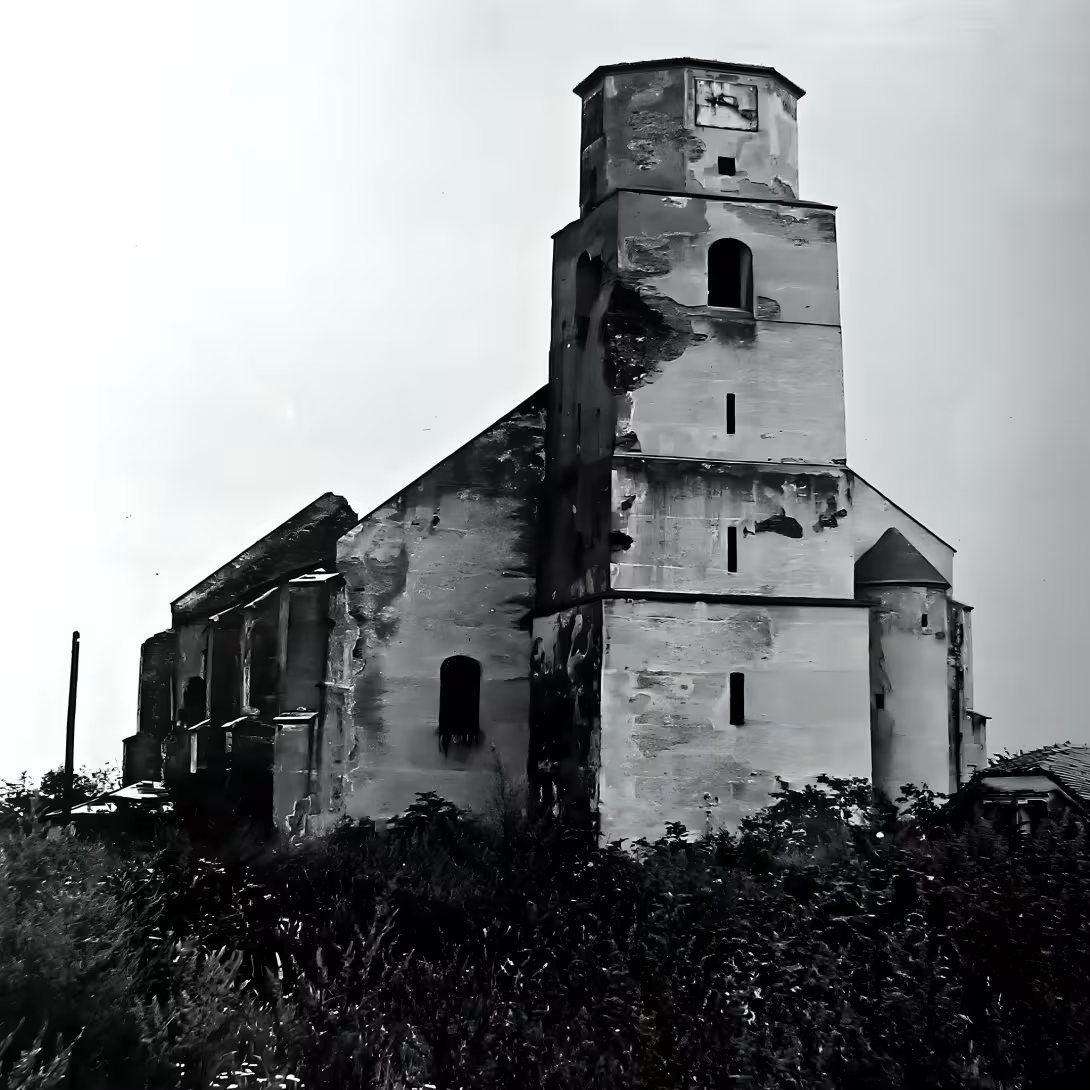
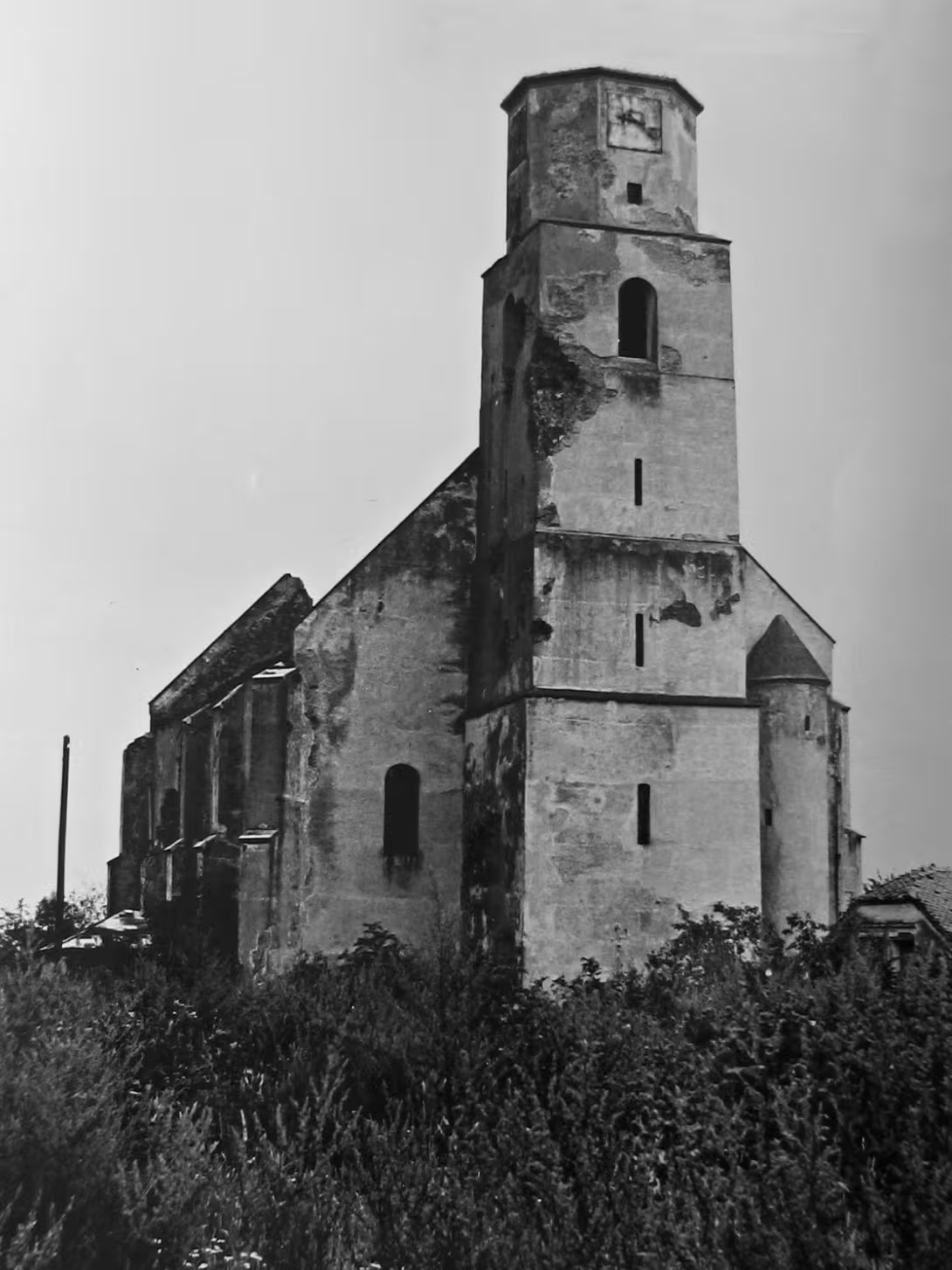
The church survived the war like a ruin. He remained without a vault, his perimeter walls were partially collapsed, but a tower with polygonal endings and especially a preserved portal remained. These remnants were considered so valuable that the portal became part of a group of 47 monuments of the first category. More importantly: he served as the only preserved part by example of early Gothic architecture in the then Ostrava region.
In 1962, however, an unexpected disaster came. The rest of the ruins of the church were completely shot without the knowledge and permission of the authorities of the memorial care. With them, these valuable architectural testimonies disappeared.
There's nothing left today. Osoblaha, however, keeps in mind the image of its medieval church, which stood here for more than seven hundred years, and its tragic end in the mid-twentieth century recalls how easily a rich architectural village can be wiped out in a moment of inattention.
Then and now
Drag the slider to compare how the landmark may have looked when it was built with the view today.

The historical appearance on the left is an AI-generated visualisation and serves as inspiration only.
Historical milestones
- 13th Century (3rd quarter)
- The founding of the early Gothic church of St. Mary Magdalena
- 17. century (beginning)
- Rebuilding and replenishing of a polygonal renaissance tower
- 1945
- Loss of vault and partial destruction of church after World War II
- 1962
- Shootout of the remains of the church without knowledge of historical care
Architectural development
Original Gothic church from a third of the 13th century with a characteristic portal. In the early 17th century, a polygonal renaissance tower was built. The building was built of stone, typical of early Gothic architecture. After the war, it lost its original functionality and was gradually destroyed.
Historical events
The beginning of construction in a third of the 13th century; rebuilding the tower in the early 17th century; loss of vault and partial collapse after World War II; The destruction of the wreckage in 1962.
Owners
Parish Osoblaha
Points of interest
- The church of St. Mary Magdalena was originally a Gothic building from the third quarter of the 13th century and served as a dean's church, a significant spiritual centre.
- At the beginning of the 17th century, a Renaissance tower with polygonal endings and a rarely decorated portal was built, which was characterized by naturalistic leaf ornaments.
- The cemetery at the church has existed since the 14th century, which shows the long-term importance of a place for local residents.
- The church survived World War II as a ruin, but preserved a tower with polygonal endings and especially a portal that became part of a group of 47 monuments of the first category.
- In 1962 the remnants of the church were shot without permission, which destroyed one of the most valuable early Gothic testimonies in Ostrava.
Guide
This guide is narrated by a synthetic voice generated by artificial intelligence.
Show guide text
This text was created by artificial intelligence and has not been editorially reviewed. It may contain inaccuracies.
The Deanery Church of Saint Mary Magdalene in Osoblaze no longer stands. We are remembering a building that was among the oldest Gothic churches in the region and only disappeared in the second half of the twentieth century.
The church was built in the third quarter of the thirteenth century. Much later, a Renaissance tower was added to it, constructed at the beginning of the seventeenth century. The most valuable part of the structure was the portal. It was decorated with a continuous frieze of leaves, executed very naturalistically, that is, faithfully according to real plants.
Around the church lay a cemetery. People were probably buried there already in the fourteenth century.
A turning point came with the Second World War. The town was almost completely destroyed during the fighting. This was followed by the expulsion of the German population, and the community was never fully resettled. When clearing the rubble, houses that could have been repaired were often demolished.
After the war, the church was left without its vault and part of its perimeter wall collapsed. However, the tower with its polygonal top survived, as did the rare portal. The portal was classified among forty-seven monuments of the first category. It was the only preserved and artistically valuable part of the early Gothic churches in the former Ostrava region.
Even this protection did not save the church. In nineteen sixty-two, the ruins of the town church were blown up, and this was done without the knowledge of the heritage preservation authorities.
For kids
Imagine going back to a time when cars had not yet died in the world and people were on foot or on horseback. This was at the time when the church of St. Mary Magdalena was one of the most important places in the city.
Are you here, too? So come back to the past with us and see what it looks like! At that time, the church was called "The Church of the Virgin Mary." It was a beautiful building with a high tower that stood over the surrounding roofs of the house. The locals thought if you looked at the church from the south, it looked like a white-coat rider.
Businesses nearby
Do you run a restaurant, accommodation, shop, museum, rental, wellness or other visitor service near this monument? Show yourself directly to the people heading to it — this is how they will see you in the app and on the web:
Nearby
There is a natural landscape typical of Moravskoslezský kraj, including forests and fields. The Hukvaldy Chateau or the Hukvaldy Nature Reserve, which are important for regional history and nature, are located near the Personlaha (within 5 km).
Visualizations and artistic views


The visualisations are generated by artificial intelligence and serve as inspiration.
Photos from the area
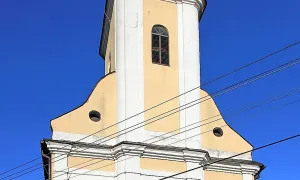
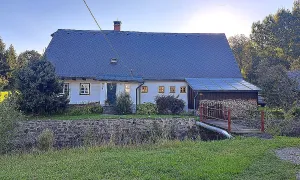
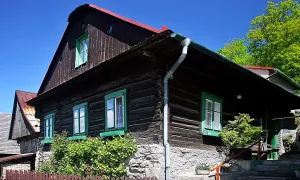
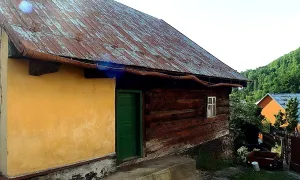
Real photos taken near the monument


Zdroj a licence jsou uvedeny u každého snímku.
Atmosphere of the place
This atmospheric visualisation of the place and period was generated by artificial intelligence. It is not real footage of the location.
Tips from visitors
No tips yet. Be the first!
Log in and add your tip.
Sources and literature
Photos: autor neuveden / Public domain, rozlišení zvýšeno umělou inteligencí — Wikimedia Commons. The author and licence also appear when you hover over the image.
Faktickým podkladem tohoto textu byl článek na Wikipedii, jehož autory jsou přispěvatelé Wikipedie. Článek je dostupný pod licencí CC BY-SA 4.0.
Location on the map
Příběhy a pověsti
Legendy, pověsti a příběhy spjaté s touto památkou
Fotografie návštěvníků
Zatím žádné fotografie. Buďte první, kdo přidá fotografii z návštěvy!
Log in a přidejte svou fotografii nebo hodnoťte.
Za ověřenou návštěvu v aplikaci získáte víc bodů — poznáme podle GPS, že jste na místě.
Reviews and comments