



kostel svatého Antonína Paduánského (Kuřimská Nová Ves) Church
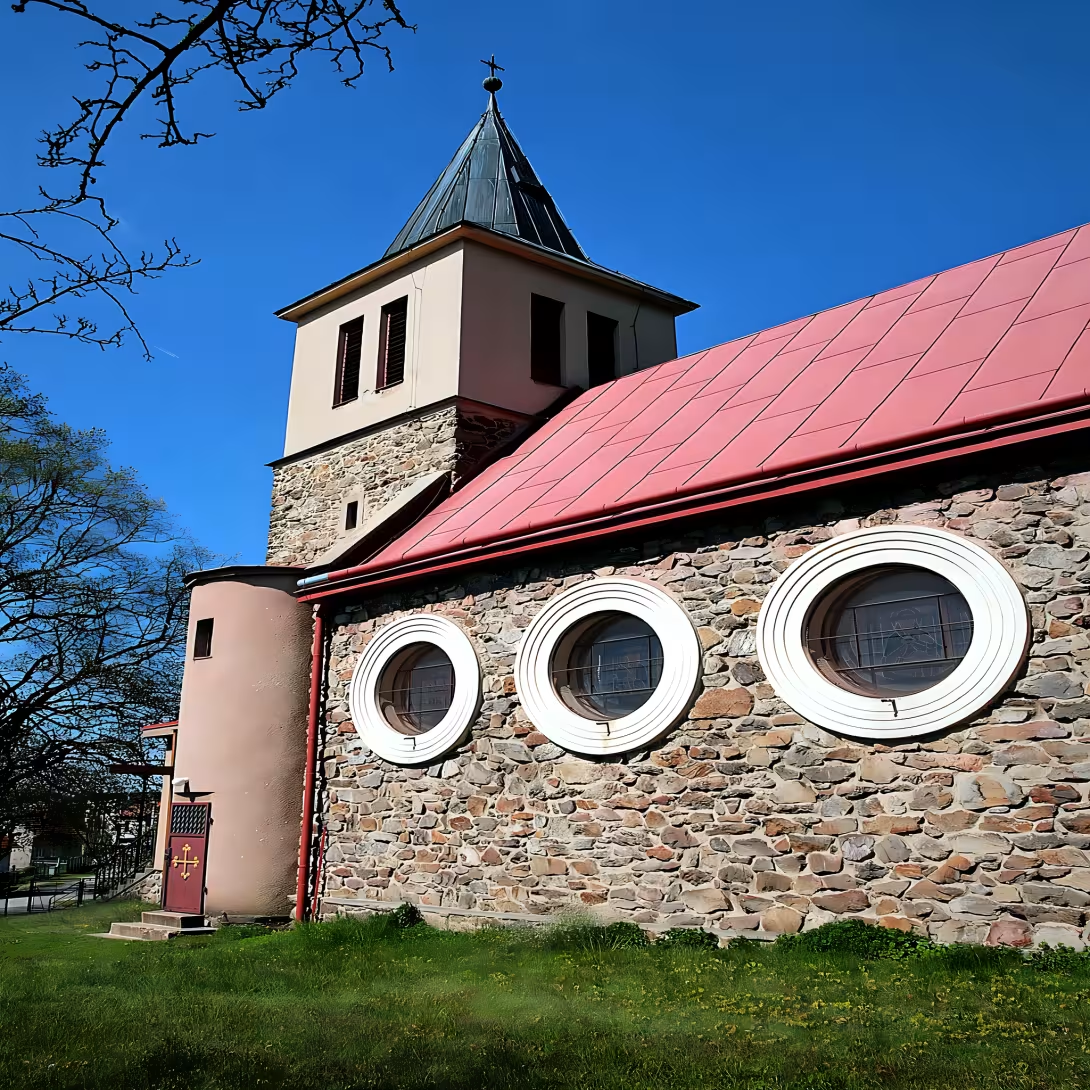
The Church of St. Anthony of Padua in Kuřimská Nová Ves is a modern Roman Catholic church in the Brno-Country District of the Czech Republic. Built in the 1930s, this church is a notable example of a community-driven project that brought the local community together to create a place of worship. The church's construction was made possible through a fundraising campaign, with the cornerstone blessed in 1933 and the church consecrated in 1937.
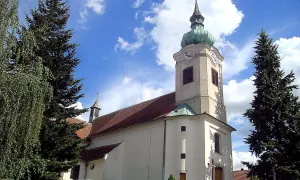
The single-nave church is made of limestone and features a square tower in its southern facade. Architect Jan Šálek designed the church, bringing the community's vision to life. As a filial church of the Deblín parish, it is closely tied to the local Catholic community.
The church's construction took place during a period of economic growth and cultural development in the Czech Republic, which was part of the First Czechoslovak Republic at the time. The community's efforts demonstrate the importance of community-driven initiatives in shaping the country's cultural landscape.
The church's architecture is characterized by its use of limestone and the square tower. Its simplicity and functionality make it a notable example of modern church architecture.
Located in a rural area surrounded by fields and forests, the church provides a serene and peaceful atmosphere. Today, the church is an active place of worship, with regular services and events taking place within its walls.
Visitors can experience the church's tranquil atmosphere and learn about the community's efforts to build this beautiful structure. The church's history and architecture make it a worthwhile destination for those interested in exploring the region's cultural heritage.
Then and now
Drag the slider to compare how the landmark may have looked when it was built with the view today.
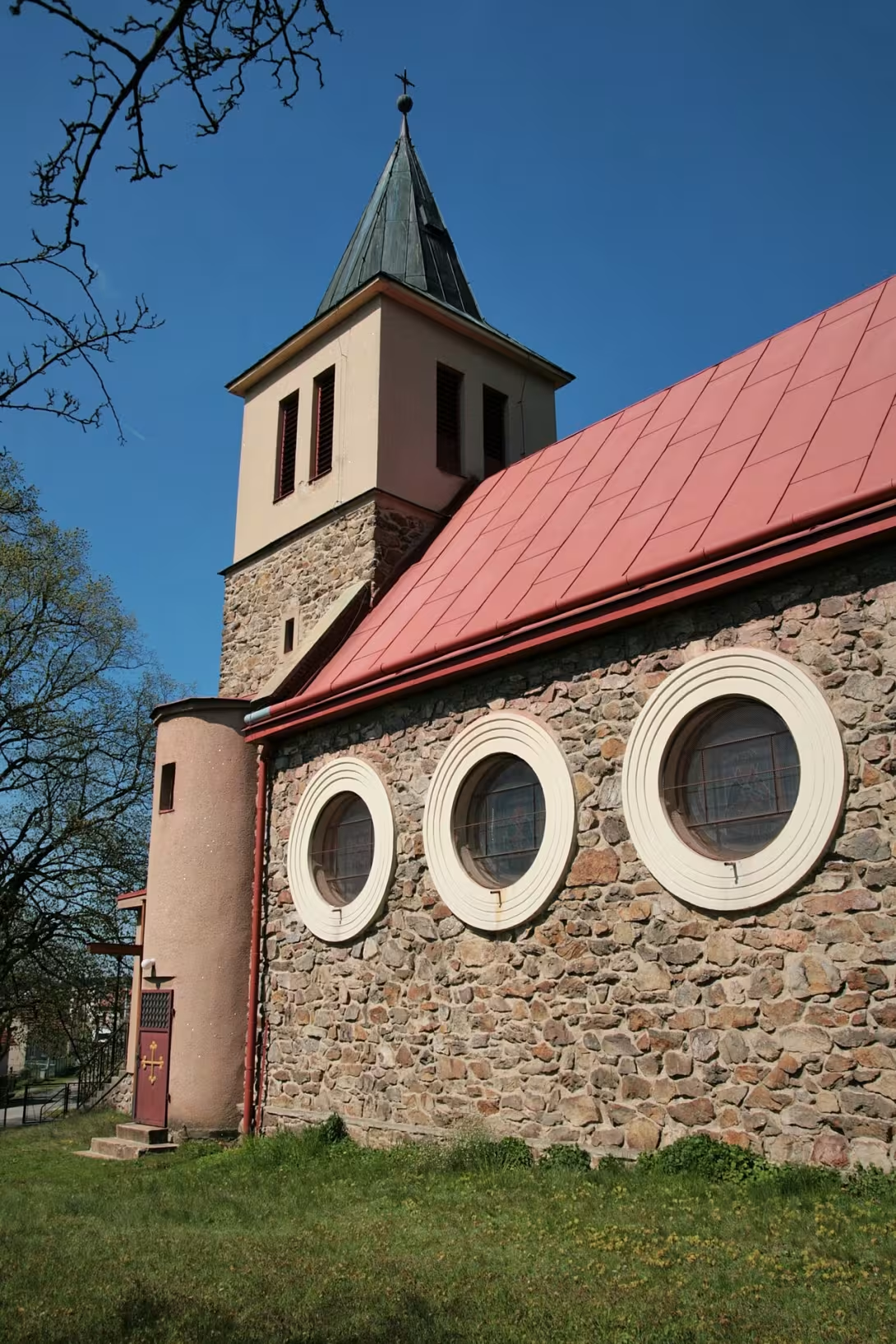

The historical appearance on the left is an AI-generated visualisation and serves as inspiration only.
Historical milestones
- 1933
- Blessing of the cornerstone
- 1937
- Consecration of the church
- kolem 1350
- Obvyklý vznik filiálních kostelů v regionu
- 1918
- Vznik první československé republiky
- 1750
- Obvyklý vznik kostelů v regionu
Architectural development
The church was built in the 1930s according to the design of Brno architect Jan Šálek. The building is made of limestone and features a square tower in the southern facade.
Historical events
The cornerstone was blessed in 1933.
The church was consecrated in 1937.
Points of interest
– The church's construction was made possible through a fundraising campaign, which was a rare occurrence in the Czech Republic at that time.
– The architect Jan Šálek designed the church, but not much is known about his personal life and professional background.
– The church's construction took place during a period of significant economic growth and cultural development in the Czech Republic, which was part of the First Czechoslovak Republic at the time.
– The church's architecture is characterized by its use of limestone and the square tower, but some sources suggest that the church's design was influenced by the Art Nouveau style.
– The church's construction was a community-driven project, with the local community coming together to raise funds and build the church, which is a rare example of such a project in the Czech Republic.
Guide
This guide is narrated by a synthetic voice generated by artificial intelligence.
Show guide text
This text was created by artificial intelligence and has not been editorially reviewed. It may contain inaccuracies.
The Church of Saint Anthony of Padua is a Roman Catholic church in Kuřimská Nová Ves in the Brno-venkov district. It did not arise from the will of the nobility or church authorities, but thanks to the local people.
A society was established in the village for its construction. This society organized preparatory work and held fundraising collections. The foundation stone was blessed in nineteen thirty-three. After four years, in nineteen thirty-seven, the church was completed and consecrated on June twenty-seventh.
The project was designed by the Brno architect Jan Šálek. The church is single-nave and built mostly from unplastered brickwork. In the southern façade stands a prismatic tower.
The church belongs as a subsidiary to the parish in nearby Deblín.
Frequently asked questions
Can the monument be visited?
Religious buildings are usually open mainly during services; at other times a visit is normally arranged with the parish or the operator. We have not verified specific times.
Where is the monument?
Location: Kuřimská Nová Ves, Jihomoravský kraj. The map on this page shows the exact spot.
Businesses nearby
Do you run a restaurant, accommodation, shop, museum, rental, wellness or other visitor service near this monument? Show yourself directly to the people heading to it — this is how they will see you in the app and on the web:
Events nearby
Zdroj akcí: otevřená data měst a obcí ČR (Národní katalog otevřených dat) a kalendář akcí Národního památkového ústavu.
Nearby
The church is located in a rural area surrounded by fields and forests.
Accommodation nearby
Trips and activities nearby
Guided tours, tickets and activities nearby from GetYourGuide
Affiliate link: if you buy from the partner, we may receive a commission. The price for you does not change.
Search tours and activities →Themed route
Kuřimská Nová Ves Church Trail
1. Kostel svatého Antonína Paduánského (Kuřimská Nová Ves) - the main destination of the trail, worth visiting for its unique architecture and history.
2. Lokální fara (Kuřimská Nová Ves) - worth visiting for its historical significance and stylistic architectural solutions.
3. Kuřimská Nová Ves (obec) - worth visiting for its peaceful environment and the opportunity to explore local architecture.
Seasonal recommendations
Jaro: In the summer, St. Anthony of Padua Church is surrounded by beautiful nature, with trees in full leaf and flowers blooming. The atmosphere is relaxed and calm. Practical tips: the best time to visit is in the morning or late afternoon to avoid crowds of tourists. We recommend bringing sunglasses and comfortable shoes for a walk around the area.
Léto: During the main summer season, St. Anthony of Padua Church is very popular, so it's good to arrive early. The lighting is natural, making it an ideal time for photography. Practical tips: bring sunshades and water with you, as you may spend a longer time here.
Podzim: In the autumn period, the nature around St. Anthony of Padua Church is beautifully colored, and the atmosphere is calm. The lighting is natural and pleasant. Practical tips: the best time to visit is before bad weather sets in to avoid rain. We recommend bringing an umbrella and comfortable shoes.
Zima: In winter, St. Anthony of Padua Church is pleasantly lit and quiet. The atmosphere is calm and soothing. Practical tips: the best time to visit is at noon when it's open longer. We recommend bringing warm clothing and boots with good grip to avoid slipping on ice.
Visualizations and artistic views


The visualisations are generated by artificial intelligence and serve as inspiration.
Photos from the area
Real photos taken near the monument


Zdroj a licence jsou uvedeny u každého snímku.
Tips from visitors
No tips yet. Be the first!
Log in and add your tip.
Sources and literature
Photos: Martin Strachoň / CC BY-SA 4.0, rozlišení zvýšeno umělou inteligencí — Wikimedia Commons. The author and licence also appear when you hover over the image.
Faktickým podkladem tohoto textu byl článek na Wikipedii, jehož autory jsou přispěvatelé Wikipedie. Článek je dostupný pod licencí CC BY-SA 4.0.
Location on the map


Příběhy a pověsti
Legendy, pověsti a příběhy spjaté s touto památkou

Fotografie návštěvníků
Zatím žádné fotografie. Buďte první, kdo přidá fotografii z návštěvy!
Log in a přidejte svou fotografii nebo hodnoťte.
Za ověřenou návštěvu v aplikaci získáte víc bodů — poznáme podle GPS, že jste na místě.
Reviews and comments