






Kostel svatého Antonína Paduánského (Loučky) Church
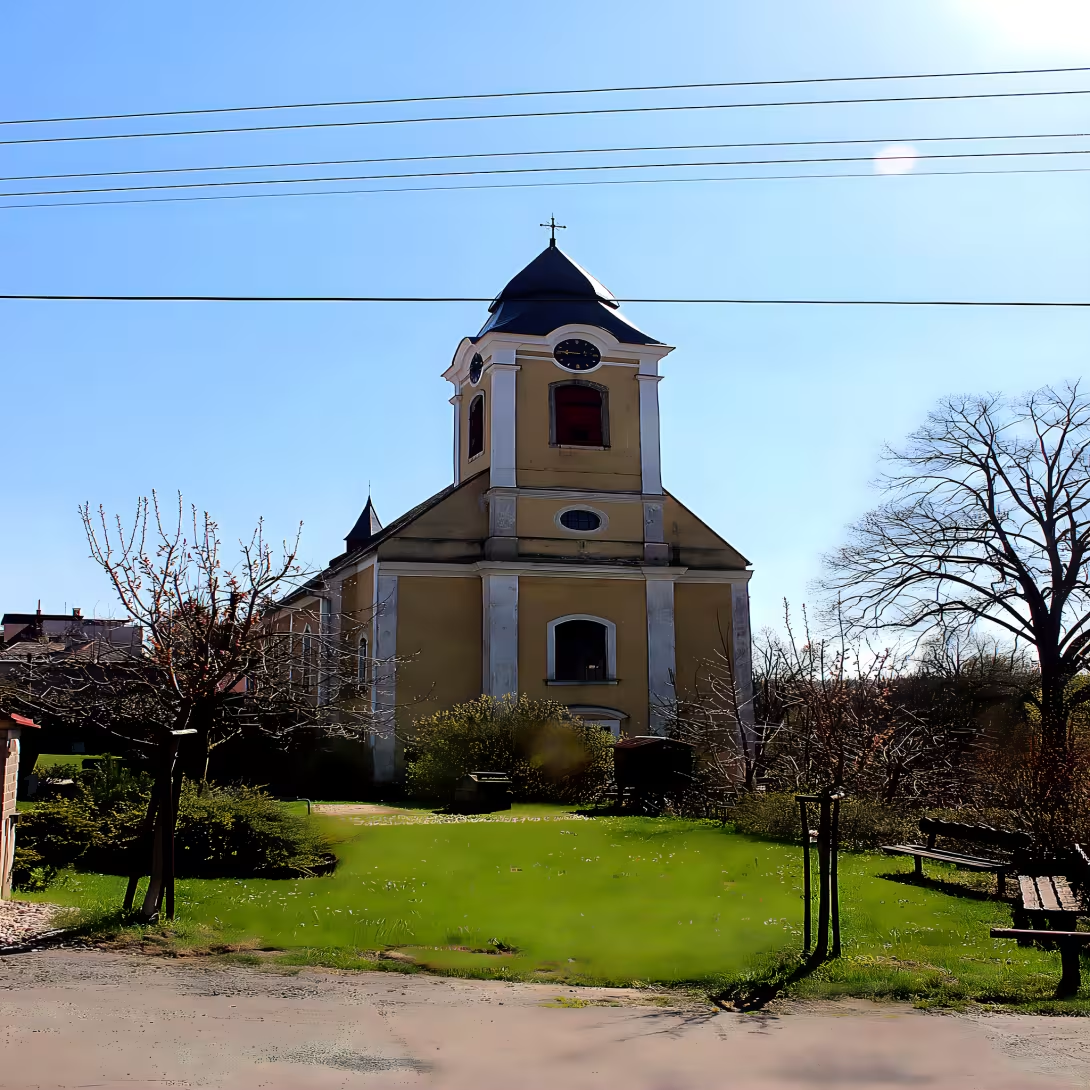
The Church of Saint Anthony of Padua in Loučky is an outstanding example of Baroque architecture located at the heart of this small community in the Semily District of Liberecký kraj. Built between 1785 and 1792 by the Des Fours family, it was destroyed by fire in 1915 but meticulously restored from 1919 to 1921. Recognized as a cultural monument since January 19, 2009, this church is notable for its historical significance and architectural features reflecting the late Baroque style of its initial construction.
The origins of the Church of Saint Anthony of Padua date back to the late 18th century when Bohemia was part of the Habsburg Monarchy. During this period, Enlightenment ideas influenced art and architecture across Europe, including the Baroque style that characterizes this church. The Des Fours family commissioned its construction, contributing a structure to Loučky's cultural landscape that would endure through time despite adversity.
Architecturally, the church is a single-nave building with a semi-circular presbytery and a bell tower above the western facade. Its design features simplicity, with a flat ceiling inside and minimal decorative elements. The exterior includes a three-bay presbytery and an adjoining sacristy on the north side. This style reflects late Baroque influences of its time, emphasizing both functionality and aesthetic appeal.
Throughout its history, the church has experienced significant events that shaped its current form. After being destroyed by fire in 1915, it underwent careful restoration from 1919 to 1921, preserving its historical essence. The interior houses several notable features, including a main altar with an 18th-century sculpture of Saint Anthony of Padua and a crucifix on the triumphal arch from the same period. Additionally, the church contains a baptismal font adorned with ornaments and figurative reliefs from the late 18th century, as well as two rococo-style wooden frames.
Today, the Church of Saint Anthony of Padua remains accessible to visitors interested in its historical and architectural significance. Situated at Loučky's center along a local road, it is surrounded by a historic cemetery enclosed by a sandstone block wall. The church's preservation as a cultural monument underscores its importance to the community and its role in reflecting the region's rich history.
Visiting this church offers an opportunity to appreciate the enduring legacy of Baroque architecture and the resilience of a structure that has withstood both time and adversity. Its historical significance, coupled with architectural beauty, makes it a worthwhile destination for those interested in cultural heritage and religious art.
Then and now
Drag the slider to compare how the landmark may have looked when it was built with the view today.
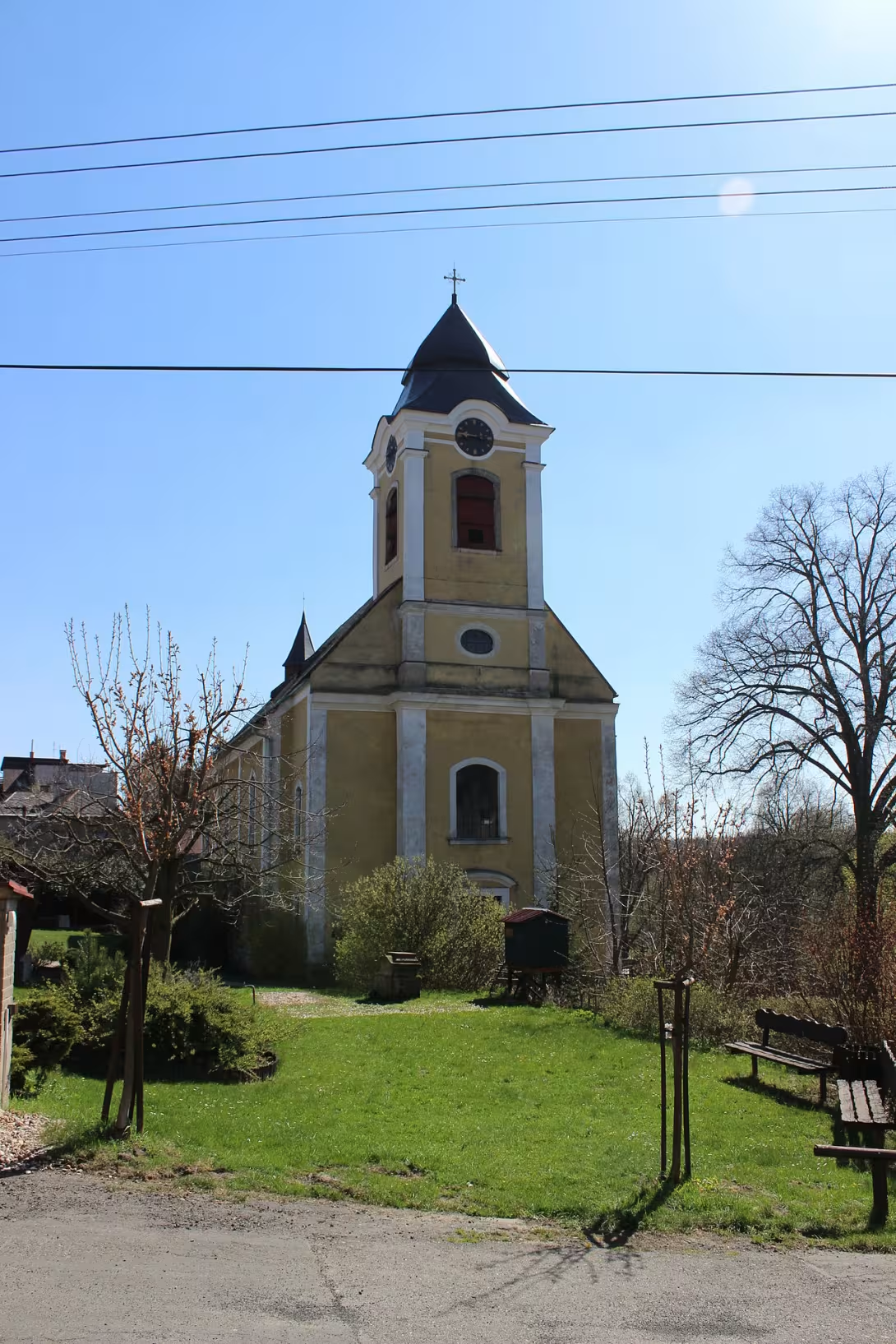
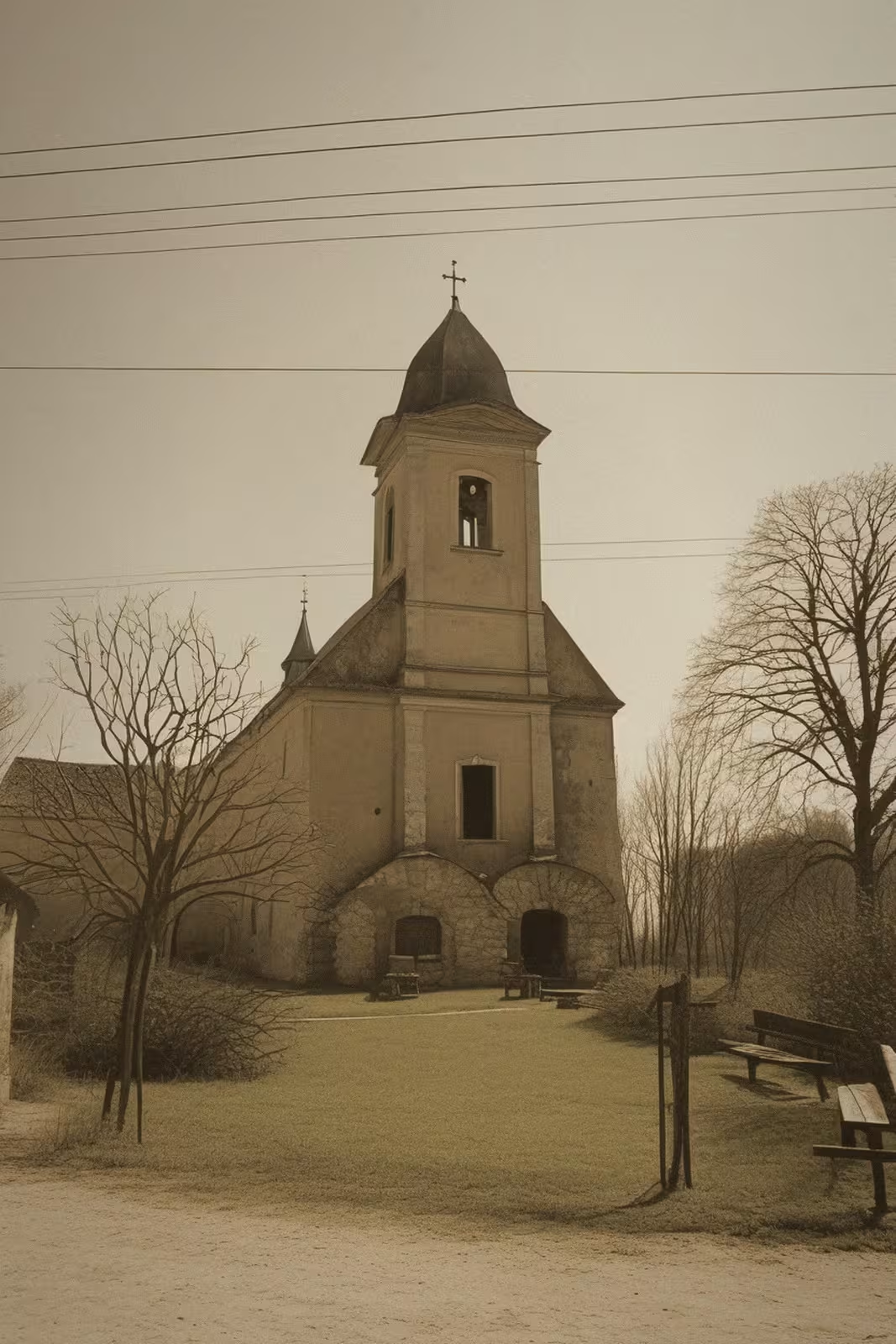
The historical appearance on the left is an AI-generated visualisation and serves as inspiration only.
Historical milestones
- 1785–1792
- Construction of the original church.
- 1915
- The church was destroyed by fire.
- 1919–1921
- Restoration and reconstruction of the church.
Architectural development
The Church of Saint Anthony of Padua underwent significant architectural development, initially built in the late Baroque style. After being destroyed by fire in 1915, it was carefully reconstructed between 1919 and 1921, maintaining its historical and cultural essence.
Historical events
The original church was constructed between 1785 and 1792.
It burned down in 1915 and was restored from 1919 to 1921.
Guide
This guide is narrated by a synthetic voice generated by artificial intelligence.
Show guide text
This text was created by artificial intelligence and has not been editorially reviewed. It may contain inaccuracies.
The Roman Catholic parish church of Saint Anthony of Padua in Loučky is a Baroque building. It belongs to the parish of Klokočské Loučky and has been protected as a cultural monument of the Czech Republic since January 19, 2009.
The original church was built between 1785 and 1792. In 1915 it caught fire and was repaired in the years 1919 to 1921.
It is a single-nave structure. The presbytery, that is the space around the main altar, is closed from the outside by a three-sided apse, but rounded inside. A sacristy adjoins the northern side and above the western façade rises a prismatic tower. The interior has a flat ceiling and is otherwise not particularly articulated.
The altars date from a later period of the church, but they bear older decoration. On the main altar stands a statue of Saint Anthony of Padua from the eighties of the eighteenth century. On the triumphal arch, which separates the nave from the presbytery, hangs a crucifix from the second half of the eighteenth century.
The church has two Stations of the Cross. The one in the presbytery bears features of South German workmanship. The other is in the nave and dates from after 1700.
Also interesting is a wooden baptismal font from the end of the eighteenth century, decorated with ornaments and figural reliefs. In the sacristy is placed a statue of Saint John of Nepomuk from the second half of the eighteenth century. The furnishings also include two wooden carved frames in Rococo style.
Frequently asked questions
Can the monument be visited?
Religious buildings are usually open mainly during services; at other times a visit is normally arranged with the parish or the operator. We have not verified specific times.
Where is the monument?
Location: Loučky, Liberecký kraj. The map on this page shows the exact spot.
Why is the monument protected?
It is listed in the Central List of Cultural Monuments of the Czech Republic as a cultural monument (register no. 103423).
Businesses nearby
Do you run a restaurant, accommodation, shop, museum, rental, wellness or other visitor service near this monument? Show yourself directly to the people heading to it — this is how they will see you in the app and on the web:
Events nearby

Zdroj akcí: otevřená data měst a obcí ČR (Národní katalog otevřených dat) a kalendář akcí Národního památkového ústavu.
Accommodation nearby
Trips and activities nearby
Guided tours, tickets and activities nearby from GetYourGuide
Affiliate link: if you buy from the partner, we may receive a commission. The price for you does not change.
Search tours and activities →Themed route
Trasa: Kostel svatého Antonína Paduánského a okolí
1. Kostel svatého Antonína Paduánského (hlavní cíl) Tento kostel je významnou památkou v obci Loučky a stojí za návštěvu díky své historii a architektuře. Kostel je zasvěcen svatému Antonínovi Paduánskému a nabízí jedinečnou příležitost prohlédnout se dovnitř a zhluboka se vypořádat s jeho bohatou minulostí.
2. Fara u kostela svatého Antonína Paduánského Fara u kostela svatého Antonína Paduánského je další zajímavou památkou v blízkosti kostela. Její historie sahá do středověku a nabízí jedinečnou příležitost prohlédnout se dovnitř a zhluboka se vypořádat s její bohatou minulostí.
3. Kaple svaté Rodiny Kaple svaté Rodiny je malou kaplí, která se nachází v blízkosti kostela svatého Antonína Paduánského. Její jedinečná architektura a klidná atmosféra ji činí ideálním místem pro odpočinek a modlitbu.
Seasonal recommendations
Jaro
Spring is the ideal time to visit St. Anthony of Padua Church in Loučky. The green foliage and flower beds around the church create a pleasant atmosphere. The lighting is mild, allowing you to observe the architectural details of the church. You can visit in a peaceful environment without large crowds. We recommend coming early to avoid the largest number of visitors.
Léto
In summer, St. Anthony of Padua Church in Loučky is visited by many people. We recommend arriving early to beat the crowd. During peak summer season, temperatures are mild, but don't forget to bring sunshades and protect yourself from the sun's rays with water-based sunscreen. The atmosphere is relaxed and calm, yet you can still feel the energy of the visitors.
Podzim
In autumn, St. Anthony of Padua Church in Loučky is surrounded by colorful foliage. The atmosphere is quiet and serene, allowing for a deeper exploration of the monument. We recommend visiting the church during dry weather to minimize the impact of rain on the quality of your visit.
Zima
A winter visit to St. Anthony of Padua Church in Loučky offers a unique experience. The church's lighting is brighter, helping visitors navigate more easily. We recommend visiting when the weather is dry to minimize the impact of snow on the quality of your visit. Additionally, it’s advisable to wear warm clothing and shoes with good grip to prevent frostbite.
Visualizations and artistic views


The visualisations are generated by artificial intelligence and serve as inspiration.
Photos from the area
Real photos taken near the monument


Zdroj a licence jsou uvedeny u každého snímku.
Tips from visitors
No tips yet. Be the first!
Log in and add your tip.
Sources and literature
Photos: Jan Polák / CC BY-SA 3.0, rozlišení zvýšeno umělou inteligencí — Wikimedia Commons. The author and licence also appear when you hover over the image.
Faktickým podkladem tohoto textu byl článek na Wikipedii, jehož autory jsou přispěvatelé Wikipedie. Článek je dostupný pod licencí CC BY-SA 4.0.
Location on the map
Příběhy a pověsti
Legendy, pověsti a příběhy spjaté s touto památkou
Příběh: Kostel svatého Antonína Paduánského (Loučky)
Bylo to v pondělí ráno, kdy Martin zjistil, že nikdo v Loučkách nebude znát jeho tajemství déle. Vstal brzo, než slunce probodlo mračna nad horami Libereckéh…
Číst příběh
Pověst: Kostel svatého Antonína Paduánského (Loučky)
Podle místní pověsti, která se v Loučkách vypráví od pradávna, byl kostel svatého Antonína Paduánského postaven na místě, kde sám světec jednou zachránil zbl…
Číst příběhFotografie návštěvníků
Zatím žádné fotografie. Buďte první, kdo přidá fotografii z návštěvy!
Log in a přidejte svou fotografii nebo hodnoťte.
Za ověřenou návštěvu v aplikaci získáte víc bodů — poznáme podle GPS, že jste na místě.
Reviews and comments